
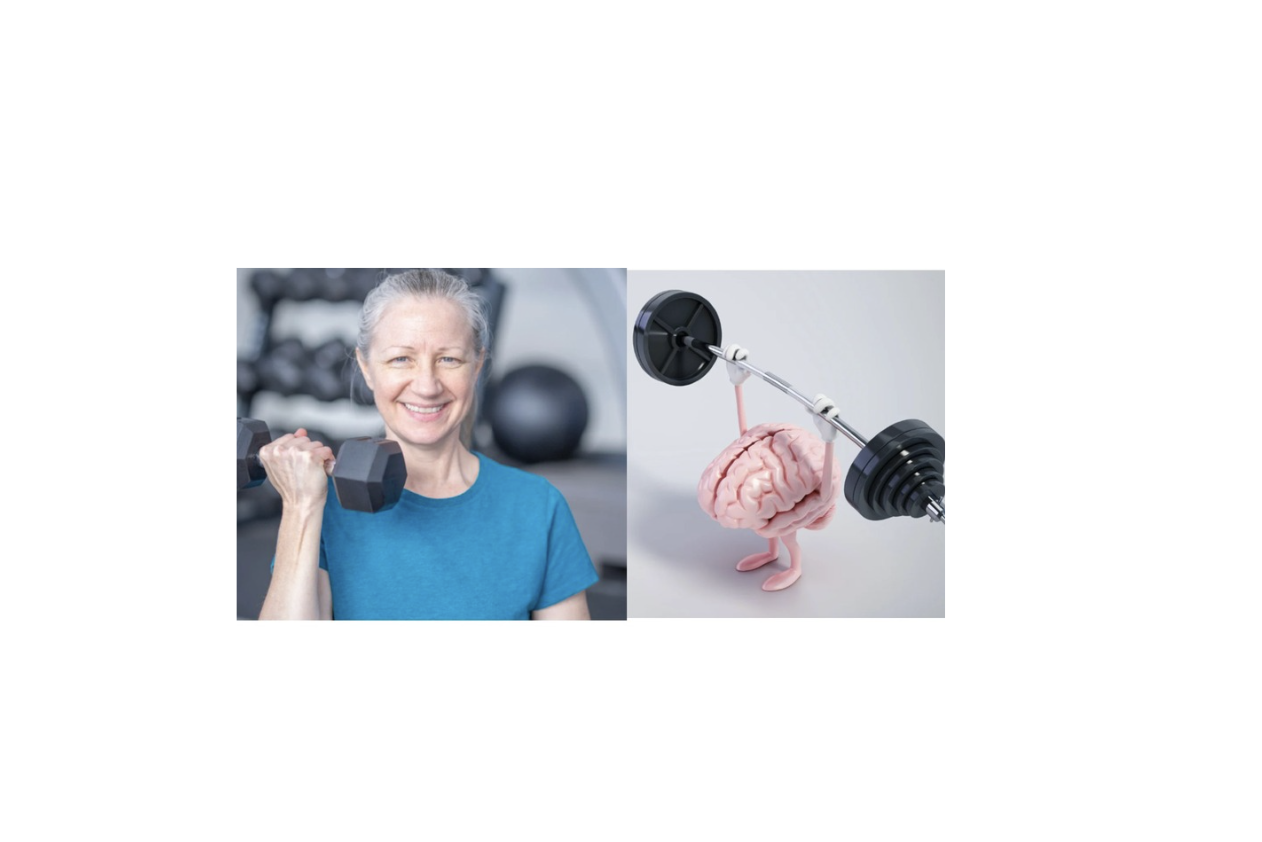
As time goes by, more and more people are concerned about cognitive decline as they age. There are many supplements, brain-boosting foods, and mind-exercising games recommended to keep your brain active and healthy. However, a study done in January 2025 is showing something that helps your body can help keep your brain healthier, too: lifting weights.
The results of research at State University of Campinas (UNICAMP) in São Paulo, Brazil found that weight training and resistance exercise not only strengthens and builds up muscles in the body but prevents parts of the brain from atrophying, too. The scientists gathered 44 participants with mild cognitive impairment, a condition that indicates a higher risk of developing dementia and is a sign of possible Alzheimer’s disease in the future. After six months of weight training twice per week, the participants not only showed improvement in their memories and recall, but also showed protection against atrophy in the hippocampus and precuneus, the parts of the brain associated with Alzheimer’s disease.
“We already knew that there would be a physical improvement. Cognitive improvement was also imagined, but we wanted to see the effect of weight training on the brains of older people with mild cognitive impairment,” said Isadora Ribeiro, the first author of the study, to SciTechDaily. “The study showed that, fortunately, weight training is a strong ally against dementia, even for people who are already at high risk of developing it.”
Along with neurological tests, the participants in the study were given MRI tests to see if their brains showed any physical changes. The participants that were given the twice-weekly weight training regiment saw their hippocampuses remain the same size or even grow, along with showing significant neuron growth. The control participants that didn’t train with weights had worse brain parameters than when the experiment started six months prior. This confirmed the researchers’ hypothesis: weight training stimulates the production of neurons and reduces inflammation in the body.
“Any physical exercise, whether weight training or aerobic activity, is known to increase levels of a chemical involved in brain cell growth. It can also mobilize anti-inflammatory T-cells. This is key,” said Marcio Balthazar, the study supervisor. “After all, the more pro-inflammatory protein that is released in the body, the greater the chance of developing dementia, accelerating the neurodegenerative process and forming dysfunctional proteins that eventually kill neurons.”
The result of this study shows a possible inexpensive treatment plan for older adults that have mild cognitive decline compared to other options.
“For example, the new anti-amyloid drugs approved in the United States indicated for the treatment of dementia and for people with mild cognitive impairment, cost around $30,000 a year. That’s a very high cost,” said Balthazar. “These non-pharmacological measures, as we’ve shown is the case with weight training, are effective, not only in preventing dementia but also in improving mild cognitive impairment.”
Weight lifting not only provides a brain boost, as this study shows, but is highly recommended for people to commit to as they age. Resistance training helps keep muscles from atrophying as we get older, helps maintain bone density, and offers other benefits to seniors. It could be the key for some older people to continue to live independently.
So it appears that weight training is not just good for your body, but your brain’s health as well. But there are some people who either cannot afford a membership to their local gym or cannot make the time to dedicate to making a trip there. Fortunately, there are plenty of options to get decent resistance training at home.
There are plenty of exercises a person can do at home or during breaks at the office while standing in place or seated in a chair with dumbbells or resistance bands that you can find on YouTube. If you cannot find or afford proper weights or resistance bands, many of these exercises can be done with soup cans, filled water bottles, and other handheld items.
So the next time you struggle to get out of bed to workout, know that it’s not just for your body, your heart, and your waistline but for your brain, too.