The holidays have a way of drawing even the most secular people toward houses of worship. So whether religion is part of your everyday life or Christmas Eve is the last time anyone will spot you near an altar until Easter, it’s likely you’ll encounter someone undergoing a spiritual experience in the coming days. Ask someone what it’s like to “feel the spirit,” and they’ll probably describe it as mysterious, even unknowable. Yet, thanks to new research, neuroscientists can tell us exactly what’s happening in the brain at that moment.


According to recent findings published in Social Neuroscience as part of an ongoing study called the Religious Brain Project, researchers have found evidence that when a brain is “on God,” its reward circuits are activated—just as they are when listening to music, having sex, getting high, or falling in love.

[quote position=”left” is_quote=”true”]I have had spiritual experiences where I think they must be like getting high, but without the hangover.[/quote]

Michael Ferguson, a postdoctoral associate in the department of Human Development at Cornell University who does not practice any religion, served as the lead researcher for the study, which he says he undertook in an attempt “to understand the nature of the exquisitely powerful experiences” of the Mormon faith of his upbringing. Together with colleagues at the University of Utah, Ferguson drew on the large Mormon population in the area to initiate the first leg of this multireligion project, inviting 17 practicing Mormon participants to engage in religious activities typical of Mormon worship while inside a functional magnetic resonance imaging scanner.

These activities included quiet personal prayer, reading scripture from The Book of Mormon, and watching videos of religious leaders preaching. Participants were asked to report when they were—as noted above—feeling the spirit. “We used the cultural lexicon rather than trying to generate some type of awkward scientific language for the questions,” Ferguson says.

To Ferguson’s delight, when participants reported religious connection, their brain’s “dopaminergic reward circuitry” lit up—the same part activated by drugs or gambling. The structure is known as the nucleus accumbens, connected to the medial prefrontal cortex, which is associated with focused attention. These results might explain why people’s experiences of religious or spiritual experience often seem to have an element of ecstasy or euphoria, one akin to more illicit behaviors.

Lissa Provost, a Pentecostal Christian from California who has never had a drink or taken drugs, says she was once pulled over for drunk driving after a church service. “There have been times when I have had spiritual experiences where I think they must be like getting high, but without the hangover.”

[quote position=”right” is_quote=”true”]Religious or spiritual connectedness could offer protective benefits against depression.[/quote]

The Utah study did reveal some slight differences in the way the reward system lights up during religious experience that differs from drugs, however. “This wasn’t just a release of dopamine,” Ferguson clarifies. “We saw high levels of thought and abstract engagement from prefrontal regions, which we think are probably amplifying the phenomenal components of this religious experience.”

In other words, a drug experience will activate the nucleus accumbens independent of other brain regions, whereas a religious experience brings about a “coordination of regions.” While Ferguson says that a case can be made that religious experience is “habit-forming,” much like drugs or alcohol, he makes clear that “to just immediately dismiss all habit-forming behavior as vice and unhealthy is unwarranted.”

For Boston writer Britni de la Cretaz, who primarily considered herself an atheist and “a nonpracticing Jew” until she got sober, “a spiritual experience and connection with a higher power” wasn’t just a healthier habit. It was the thing that stopped her from drinking and doing drugs, she says.

“When I was an atheist, I fancied myself too smart to believe in God,” she says. Yet it was through the spiritual component of the Twelve Step recovery program, Alcoholics Anonymous, that de la Cretaz connected with a higher power and finally became sober. “I’ve been sober five years, and I credit that to forces greater than me because everything in my power I’d ever tried up until I tried believing in God hadn’t worked,” she says.

Jameelah Obadiah Schmidt, who was raised in an Islamic family, had a memorable religious moment of ecstasy in “a dream of the world ending in fire.” She says that Islam teaches that “for those who have properly prepared for and executed the five daily prayers on the Day of Judgment, there would be a glow about you.” After that dream, she says, “I never saw the world the same again. Every color was brighter, every laugh more joyful, every hug more warm and meaningful than before.”

[quote position=”right” is_quote=”true”]To just immediately dismiss all habit-forming behavior as vice or unhealthy is unwarranted.[/quote]

Even those with spiritual practices that don’t use “God” in their language, like Amy Elizabeth Robinson, a practicing Zen Buddhist, says she has felt “held by something larger than myself, larger than the apparent objective universe” as a result of her regular meditation practice.

Excited by his early results, Ferguson aims to look deeper into the “genetic, biological aspects of the dopaminergic system,” recruited in the religious experiences of his participants. “I’m very interested to understand why one person is just not susceptible to belief and they maintain states of disbelief and doubt, whereas other individuals seem to be very susceptible to speculative ideas or supernatural ideas.” He wonders if this might be linked to differences in “dopamine physiological variations.”

The idea that one’s propensity for religious experience might be rooted in biology brings some relief to Rebecca Chamaa, who attends a Lutheran Christian Church and who has schizophrenia, a brain disorder that can lead to psychosis. “Considering that there is always someone waiting to tell me I am demon-possessed—which I find cruel beyond measure—I find this oddly comforting,” she says.

[quote position=”full” is_quote=”true”]After a religious dream, I never saw the world the same again. Every color was brighter, every laugh more joyful, every hug more warm and meaningful than before.[/quote]

Chamaa, who feels closest to God when she is “contemplating or witnessing in action the teachings of Christ,” has had her most intense connections with God during her numerous psychotic episodes, and misses those conversations when they end.

“It does seem like a reasonable hypothesis that religious or spiritual connectedness could offer protective benefits against depression or feeling hopelessness, but we would need to do follow-up studies,” says Ferguson. Next up, he will work to deepen science’s understanding of religious ecstasy and euphoria by studying Catholic and Muslim populations—revealing unexplored realities about the social function of religious and spiritual experiences, grounded in biology.

  • New research says that if you want an entrepreneur to be successful, tell them they will fail
    Entrepreneurs tend to be more motivated by disbelievers, research finds.Photo credit: Canva

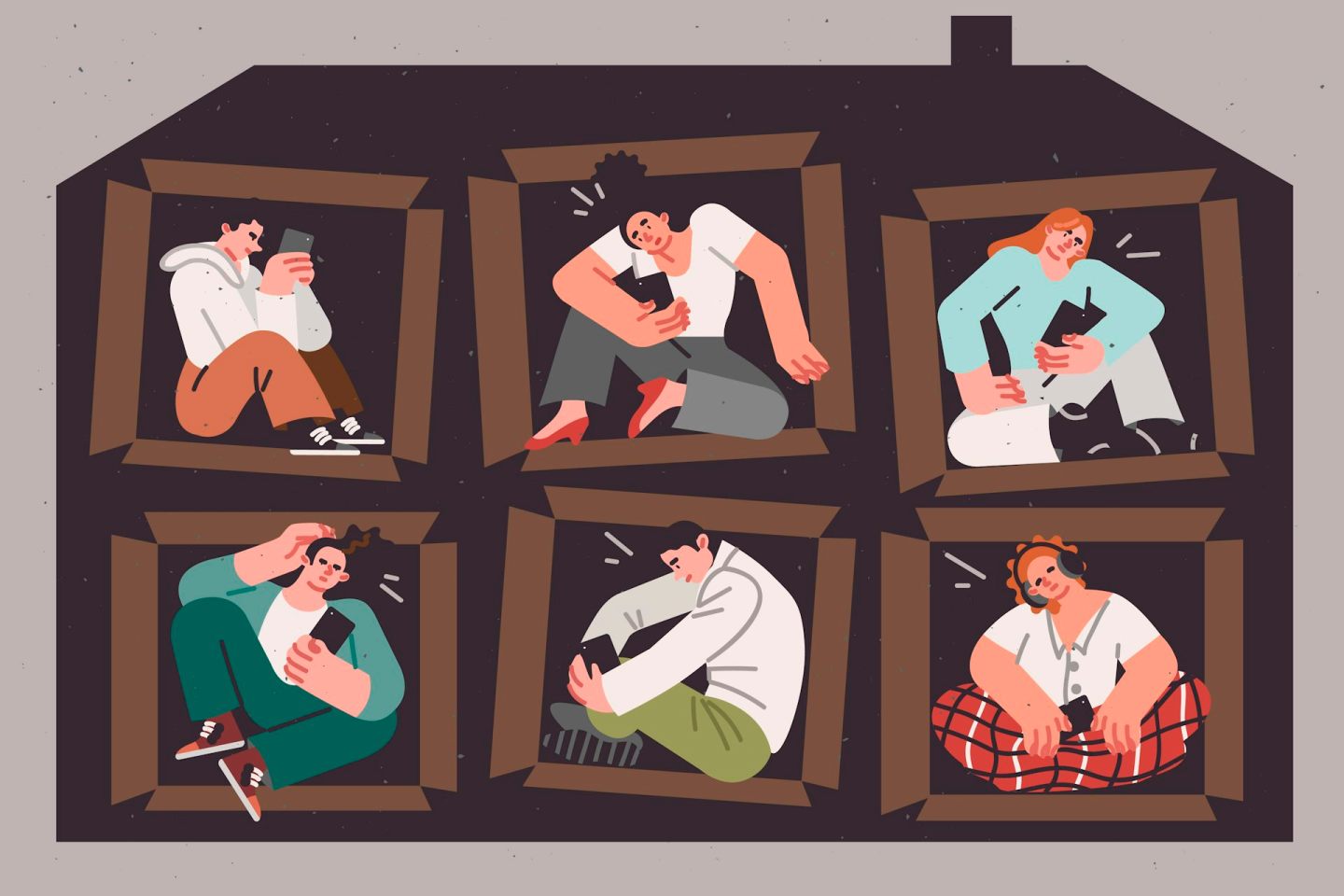
    Tackling a new business venture as a budding entrepreneur requires persistence and perseverance. Most entrepreneurs and start-ups fail, so it makes sense to think encouragement from friends, family, and peers would help morale. However, research suggests that what may be even more helpful is a baseless critic telling them they’ll fail.

    A team at North Carolina State University gathered research from three studies involving a combined 1,400 participants. They found evidence that the majority of those who defined themselves as entrepreneurs were more driven when told they would fail. In fact, the less credible the critic, the more persistence the entrepreneur displayed to prove them wrong.

    The researchers explained this “underdog effect” as part of Psychological Reactance Theory. The theory suggests that when a person’s freedom is challenged, they tend to push back harder and stronger than before. In this case, when someone tells an entrepreneur they’ll fail, the response tends to be, “Watch me!”

    Entrepreneurs offer their thoughts

    Entrepreneurs and business leaders spoke to GOOD to weigh in on this discovery. Many related to the entrepreneurs who felt more motivated after being disregarded by critics. However, they also urged caution against basing decisions and motivation solely on proving others wrong.

    “This resonates with me to a degree. I think someone should be able to intuit when their persistence has become too much,” said Nathan Silvernail, co-founder and CEO of Plantd. “Often, folks are unwilling to pivot when a pivot is required. They’re afraid of change or hesitant to course-correct even when all of their signals are telling them to. Stubbornness paired with ignorance is a dangerous combination in any regard. A truly successful person will understand what this means.”

    “Being told you might fail can absolutely strengthen someone’s resolve. But entrepreneurship isn’t just about endurance,” said Samyr Laine, co-founder and managing partner at Freedom Trail Capital. “If you ignore every piece of criticism because you’re trying to prove people wrong, you damage relationships and miss useful signals. Business is relational. Investors, customers, employees, they’re all giving you feedback in some form…You need resilience, but you also need self-awareness.”

    “Proving others wrong might push you to short-term wins, but it’s consistency over time that drives championship-level results,” said Christina Reckard, president of the Pat Summitt Leadership Group. “The entrepreneurs that make it the distance can’t wait for a critic to give them the fire inside they need to motivate them, they need to have a great product or service, with the customer at the center, and the self-discipline to pursue excellence regardless of the obstacles.”

    “For those of us who don’t have unlimited personal resources, entrepreneurship takes against-the-odds tenacity…If you’re deterred by a dismissive word, you’re not an entrepreneur for very long,” said Matt Graber, co-owner of Cool Hand Movers. “When acute adversity hits, or is even implied, the urge to swim upstream naturally kicks into high gear. Is this a healthy dynamic? Probably not. The results aren’t surprising but I wouldn’t go searching for negative reinforcement in place of traditional coaching and productivity tools.”

    Psychology experts weigh in

    Psychiatrists and therapists who spoke to GOOD explained why entrepreneurs can get a boost from such negativity. However, they also warned that persistence can turn into stubbornness, causing entrepreneurs to miss opportunities to learn and improve.

    “When a person feels as though their competence is being challenged, they may become more motivated to prove themselves,” said Krista Walker, a therapist and clinical director at The Ohana. “This may be especially true for entrepreneurs, in particular. That is because their identity may be tied to their business or performance. It can feel like a personal challenge.”

    “When we cling too tightly to an idea, an approach, or a specific outcome, we lose flexibility,” said psychiatrist Dr. MaryEllen Eller. “It can become easy to confuse commitment with rigidity and stubbornness for strength.”

    Balance is key

    “Being told ‘you’ll fail’ or ‘you can’t’ can actually make us want it more. It fuels a drive to self discover autonomy and prove your abilities,” said psychiatrist Dr. Sam Zand. “However when this fuel is from resentment, it can become unhealthy if it takes over who you truly are. Some of the biggest entrepreneurs use stories and experiences of doubt as fuel, but stay open to constructive criticism and learning.”

    Based on the thoughts of these professionals, it seems best to pay attention to any data that conflicts with your vision in case changes need to be made.

  • These seven simple phrases could be the secret to deepening trust and romance in your relationship
    A happy couple enjoys coffee togetherPhoto credit: Canva
    , , ,

    These seven simple phrases could be the secret to deepening trust and romance in your relationship

    If you want a more secure relationship a Harvard expert recommends using these seven phrases.

    Maintaining a deep sense of connection and trust in a long term relationship is often easier said than done. Even for couples who have been together for years, the daily grind can sometimes dull the spark of romance. However, Dr. Cortney Warren, a psychologist trained at Harvard Medical School, has identified a specific set of verbal habits that distinguish highly successful, trusting couples from those who struggle.

    Dr. Warren recently shared seven phrases that secure partners use every day to reinforce their commitment. These small shifts in language are designed to foster vulnerability, safety, and a sense of shared purpose.

    The first few phrases focus on the core of any partnership: the belief that your partner is on your side.

    @drcortneywarren

    Feeling that twinge of jealousy or insecurity in your relationship? It happens to all of us, but how you respond can make all the difference. Instead of immediately reacting, try this: pause and ask yourself: What does my reaction to this situation say about me? Is it about fear of being unloved? A belief that you’re “not enough”? Often, our strongest emotional reactions are more about our own insecurities than about our partner’s actions. Taking the time to reflect on your triggers, where they come from, and how you can strengthen your self-esteem can help you communicate with your partner in a healthier, more productive way. This clip is from my recent conversation with Shanenn Bryant on the Top Self Podcast. #SelfAwareness #EmotionalIntelligence #HealthyRelationships #JealousyTriggers #TopSelfPodcast #RelationshipAdvice

    ♬ original sound – DrCortneyWarren – DrCortneyWarren

    1. “I trust you.”

    Simple, to the point, and clear. This communicates that you know your partner and that you believe they have your best interest in heart, even if you get into an argument. It also allows them to feel safe making some decisions on both of your behalf.

    2. “You see me as I am.”

    This not only tells your partner that they know all there is to know about you without fear of hiding parts of yourself, but that you’re comfortable being vulnerable should a difficult subject come up. It communicates that you trust your partner will respond with compassion, not judgment, while implying that they can trust you to do the same in return.

    Dr. Cortney Warren, relationship advice, Harvard psychologist, building trust, healthy communication, romance tips, non-verbal cues, marriage success, intimacy, partnership
    A couple on a romantic date. Credit: Canva

    3. “We’ll get through this.”

    Arguments, fights, and conflicts happen in even the most solid relationships. However, saying this phrase reinforces that while things still need to be sorted out, there is no intention of breaking the relationship over the disagreement. It allows more open communication and reiterates that it is you and your partner against the problem, not each other.

    4. “Go have fun with your friends/Thanks for giving me space!”

    If your relationship is solid, time apart shouldn’t be a threat. Alone time is natural and, frankly, healthy. Respecting your partner’s independence in turn respects yours.

    Dr. Cortney Warren, relationship advice, Harvard psychologist, building trust, healthy communication, romance tips, non-verbal cues, marriage success, intimacy, partnership. Credit: Youtube

    5. “I miss you.”

    As a counterbalance to the previous phrase, “I miss you” isn’t an indicator of being too clingy unless you’re not offering your partner the trust to have space. It’s just a nice way of saying that you look forward to being together and builds upon that when you reunite, whether it’s after a long business trip or later in the evening after work.

    6. “Let’s make a plan!”

    A growing relationship means mutually planning and investing in each other’s futures to further turn “your plans” and “my plans” into “our plans.” This phrase relays to your partner that you want them around for the long haul.

    7. “Can we talk?”

    Communication issues are one of the primary reasons relationships fail. Asking this simple and direct question accompanied with the previous phrases as foundations in your relationship will allow trust for you to ask and be asked when something troubling occurs with either of you.

    While verbal communication is important in sustaining relationships, it’s good to incorporate non-verbal gestures of support, love, and trust, too.

    Now, pairing these loving wordless gestures that expertscounselors, and psychologists recommend with the previous seven phrases could help your relationship develop deeper connection and trust.

    1. Eye contact

    Seeing eye-to-eye literally helps you both see eye-to-eye better when discussing a difficult topic or when you want to express loving attention to your partner.

    2. Smile

    Smiling is a nonverbal cue to reiterate that your partner’s presence is welcomed and safe. It also reminds your partner that you’re both okay, too.

    3. Supportive touch

    Caressing a shoulder, a peck on the forehead, holding hands, or a tight hug—any of these and all of these are ways to provide comfort and reassurance along with your words. It could also be a way to indicate your interest in further intimacy.

    4. Mirroring

    Matching your partner’s posture and pose helps foster connection while also indicating you’re absorbing what they’re verbally communicating to you. So, when you adjust your posture to meet theirs when they’re discussing something important to them, they’ll know you think it’s important, too. On the other end, if you match their relaxed pose, they’ll in turn feel more relaxed, too.

    5. Enjoy quiet time together

    Being able to enjoy the silence in the same room bolsters feelings of safety and comfort. It shows that you and your partner don’t feel panicked or stressed about the other feeling bored, awkward, and you don’t cary the pressure of needing to be entertained/entertaining. Shared silence is precious in a relationship.

    6. Handwritten notes

    Okay, this might be a cheat technically, but written notes and letters can be left for your partner to find when they wake up after you have left for work early, on the kitchen table, or on a bathroom mirror as ways to express those previous seven phrases. For some people, written communication is much easier for them than speaking, too, so there’s that factor to consider.

    7. Acts of service

    This is a bit of a grab bag as what acts of service are depends on who you are in the relationship with. It could be making them coffee each morning the way they like it so they don’t have to. It could be doing a chore they hate doing. It could be cooking them their favorite food after finding out that they had a long day. These acts remind your partner that they’re known and safe with you.

    This article originally appeared last year.

  • New Chinese study suggests meat eaters are more likely to reach 100 than people on plant-based diets
    A man eating a piece of meat. Photo credit: Canva

    While there are general guidelines, a healthy diet can still look different from person to person. Some people eat meat, stick to a vegetarian diet, or go fully vegan for a variety of reasons. With that in mind, a recent study suggests something that may seem surprising at first. The study indicates that eating meat could increase your chances of reaching 100 years old.

    Starting in 1998, research from the Chinese Longitudinal Healthy Longevity Survey followed the diets of more than 5,200 adults aged 80 and above who were free of cardiovascular disease, diabetes, and cancer. The group included omnivores, pesco-vegetarians, ovo-lacto vegetarians, and strict vegans. In 2018, twenty years after the research began, results showed that among the 1,459 centenarians, a higher percentage were omnivores compared to the other groups.

    One might think this would debunk the idea that plant-based or vegan diets are healthy, but that’s not necessarily the case. Vegetarian and vegan diets have been shown to reduce the risk of cardiovascular disease, diabetes, hypertension, dementia, and cancer, among other ailments. However, the results of the research could be due to our bodies’ needs in later years.

    As our bodies age, it becomes harder to maintain muscle mass and bone density. On top of that, our appetites tend to decline. Animal-based foods like meat are natural sources of protein and calcium that can help prevent declines in muscle strength and bone density, as well as malnutrition in adults who eat less. So while a plant-based diet might be more beneficial to younger people, a more omnivorous diet could be better for great-grandpa.

    “Older adults may face distinct nutritional challenges,” said researcher Kaiyue Wang of Fudan University in Shanghai. “Our study suggests that dietary recommendations for the oldest-old should emphasise balance and nutritional adequacy, rather than strict avoidance of animal foods, especially for underweight older adults.”

    However, this doesn’t mean that you should call grandma to make sure she’s eating bacon cheeseburgers. The National Institute on Aging recommends that older adults eat seafood, low-fat dairy products, beans, lentils, peas, and fortified soy products to get their protein fix. It cannot be stressed enough that while eating meat, per this study, appears to be beneficial to older people, that doesn’t mean they should switch to an all-meat diet.

    As with diets in general at any age, lean, unprocessed meat is preferred, with an emphasis on fish and poultry, as well as how they are prepared. Frying meat tends to add excessive fat, while certain sauces paired with meat dishes can add fat, sugar, sodium, and unnecessary calories.

    As mentioned previously, a healthy diet looks different from person to person depending on their age, needs, and health challenges. It’s best to consult with your personal physician to establish the best diet for you, or if you want to make any changes to your current one. They can also refer you to a licensed dietitian who can help, whether you prefer turkey, tofurkey, both, or neither.

Explore More Health Stories

Health

New Chinese study suggests meat eaters are more likely to reach 100 than people on plant-based diets

Health

Whether it’s yoga, rock climbing or Dungeons & Dragons, taking leisure to a high level can be good for your well-being

Health

Medical expert explains what to do after reaching weight loss goal on GLP-1 medications

Editorial

Behavioral expert explains why people should regularly treat themselves after starting a new workout