Our brain loves repetitive patterns of easy, stimulating imagery and sound. The addictive nature is so strong that there’s a term to describe it: doomscrolling. It’s so easy to engage, and considerable research and investment have been made to encourage us to stare mindlessly at our phones. For some of us, it’s a simple distraction. For others, its an addiction is robbing them of a big part of their lives.

Given that the average person spends over four hours a day staring at their phones, imagine what could happen if we used that time for something more positive and productive. Doomscrolling isn’t just bad for our mental health, but it’s a time thief that prevents us from engaging in activities that build us up.

What do you do instead of doomscrolling?

A new Reddit thread on r/simpleliving posed an interesting question: “What do you do instead of doom scrolling?’

Redditors started chiming in with helpful alternatives that have worked for them. These are seven thoughtful solutions related to stopping the highly addictive and unproductive distraction of digital entertainment. It’s a compelling suggestion to consider what we could be doing instead of endlessly scrolling.

1. Check out a book from the public library
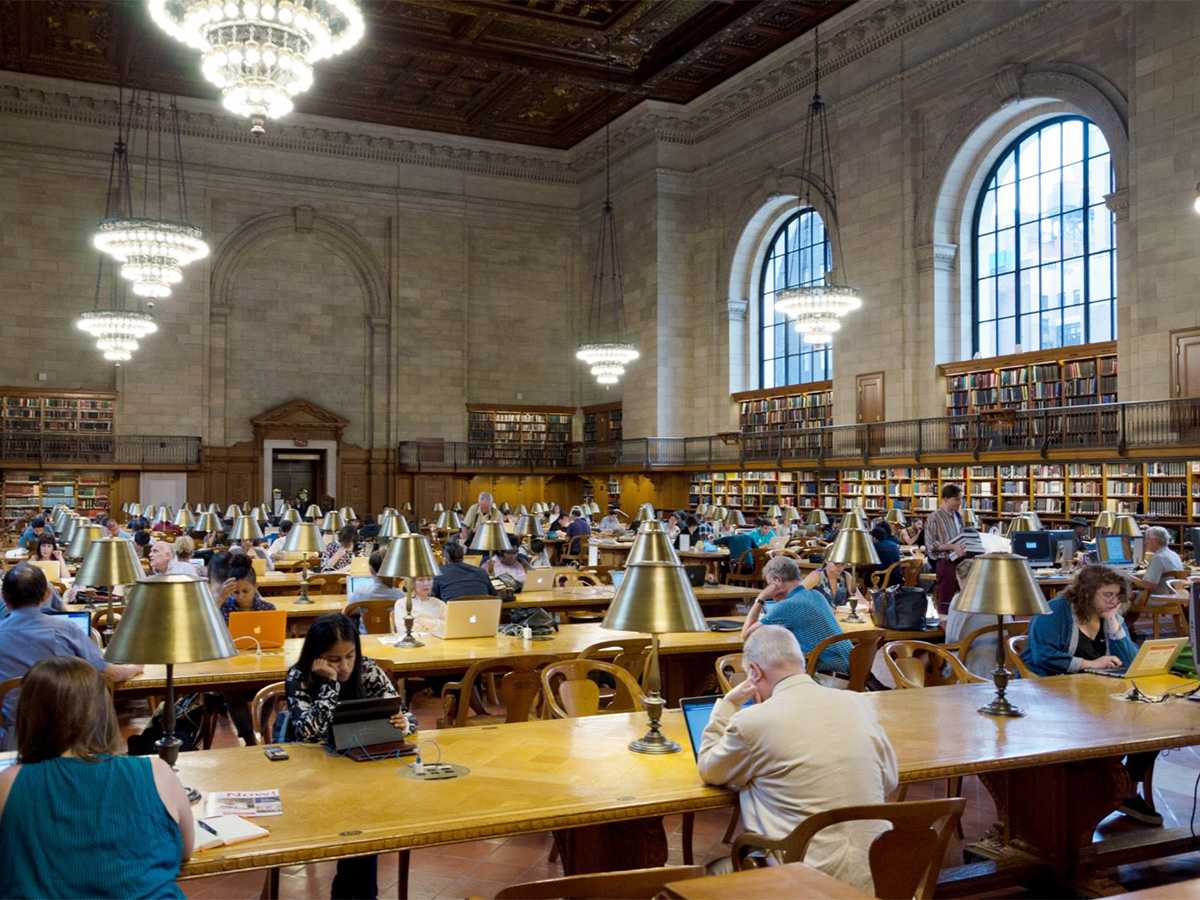
library, books, resources, inspirational ideas, readers, library card, book borrowing
People at a public library. Image via Canva – Photo by USA-Reiseblogger

Because of easy access to the internet, many of us have forgotten about this incredible resource. Feeling inspired by the idea was MajorEntertainment65: I read so much and am absolutely amazed by how few people read! The library is a free resource and depending on your library, they may have access to audiobooks and movies and tv shows, etc.”

As great an adventure as a trip to the public library can be, not everyone has the time to be there. However, that doesn’t have to define your ability to take advantage, said Brayongirl: “Do you have a book reader? With my library card, I can borrow books for my reader from home. Also, all libraries have a book chute. So you can go borrow a bunch of books on your day off and put them in the chute when you are done, even if the library is closed.”

2. Master the art of folding paper
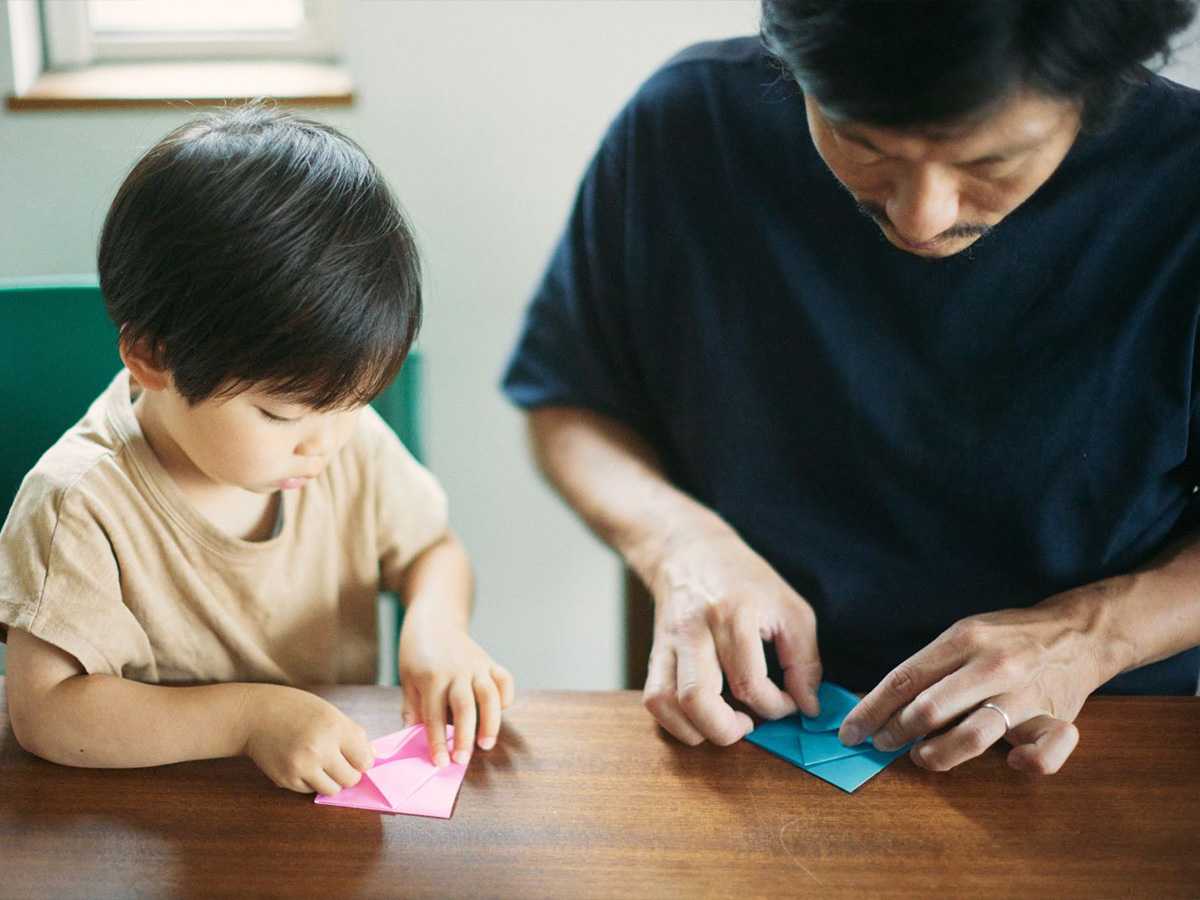
paper, origami, stress reliever, concentration, paper folding, origami crane, technique, crafts
Father and child making origami together. Image via Canva – Photo by Aflo Images

One of the amazing benefits of a practice like folding paper—origami—is it’s an incredible stress reliever. A 2025 study published in the Journal of Pharmacy & BioAllied Sciences found origami therapy to be a simple and effective intervention for reducing anxiety among hospitalized children.

Feeling a bit swaggy about the whole thing was low-fish saying, “Learn to fold an origami crane by memory from any piece of paper.”

3. Invest time into self-care

self-care, showers, baths, quality of life, health, daily practice, love and kindness
Woman takes a bath. Image via Canva – Photo by simonapilolla

Take a hot mindful shower followed up by a hot cup of chai with my favorite creamer,” suggested Virtual-Magician2384. Finding time to cultivate love and kindness for ourselves is an important practice many of us fail to utilize.

A 2022 study in the Journal of Medical Internet Research found that self-care improved people’s quality of life. Managing one’s physical and mental health gives someone a feeling of control and overall well-being.

4. Get yourself in the kitchen

You can watch this video, with over 2 million views, which teaches you the basics of cooking.

Suggesting some adventure in your own kitchen was Outrageous_Guess_794: “cook something nice, it doesn’t have to be expensive, just cook something new.”

A healthy and more affordable option, said RufousMorph, is to “Make your own foods rather than buying highly processed foods (technically this uses less money).”

5. Go for a walk

There are many health benefits to be gained from a simple walk. A 2023 study in Science Daily found that walking only 4,000 steps a day reduces the risk of death “from any cause.” Seems like a simple and highly beneficial self-care action.

“Hiking is free.99, great for your mental and physical health, and you might see a cool bug, plant, mushroom or animal!” said Pokemon_and_Petrucci with some creative energy.

Getting in a little productive work on the house as a bonus was suggested by dogma202: “Move. Get outside and hike, do yard work.”

6. Puzzles and mind games

puzzles, crosswords, psychological stress, skill builders, games, brain, focus
Older man solving newspaper crossword on a street table. Image via asdf – Photo by Mathias Reding

Puzzles and games are healthy ways to stimulate brain activity. These are creative and cognitive skill builders. A 2022 study in the National Library of Medicine used puzzle-style games to reduce psychological stress, boost sustained attention, and significantly improve focus.

Activating the mind is a good thing, wrote kfbrewer:“Bonus points that puzzle games are good for the brain.”

A game that requires two people was suggested by mick_au: “Chess!!”

7. Enjoy some childhood activities from your past

Finding a meditative and relaxed state of joy was Purple-Spray-709: “I’ve been really enjoying doing some cute colouring books with my special alcohol based markers. I tried the adult colouring trend before and never liked it but having a cute/cozy book with thicker lines and using the right markers I’ve really been really enjoying it as a simple pleasure”

A 2020 study in the National Library of Medicine found that structured coloring, like a mandala, lowered anxiety and showed noticeable mood improvement.

bikes, bike ride, happiness, outdoors, exercise, stretching, letters, mood, parents
Happy seniors ride bikes. Image via sdf – Photo by Syda Productions

Engaging in more positive actions that break the cycle brings better moods and an overall happier life. Some other quick solutions for a reset: ride a bike, stretch, write a handwritten letter to a friend, call your parents, meditate, and send positive thoughts to someone you know who’s experiencing a difficult moment.
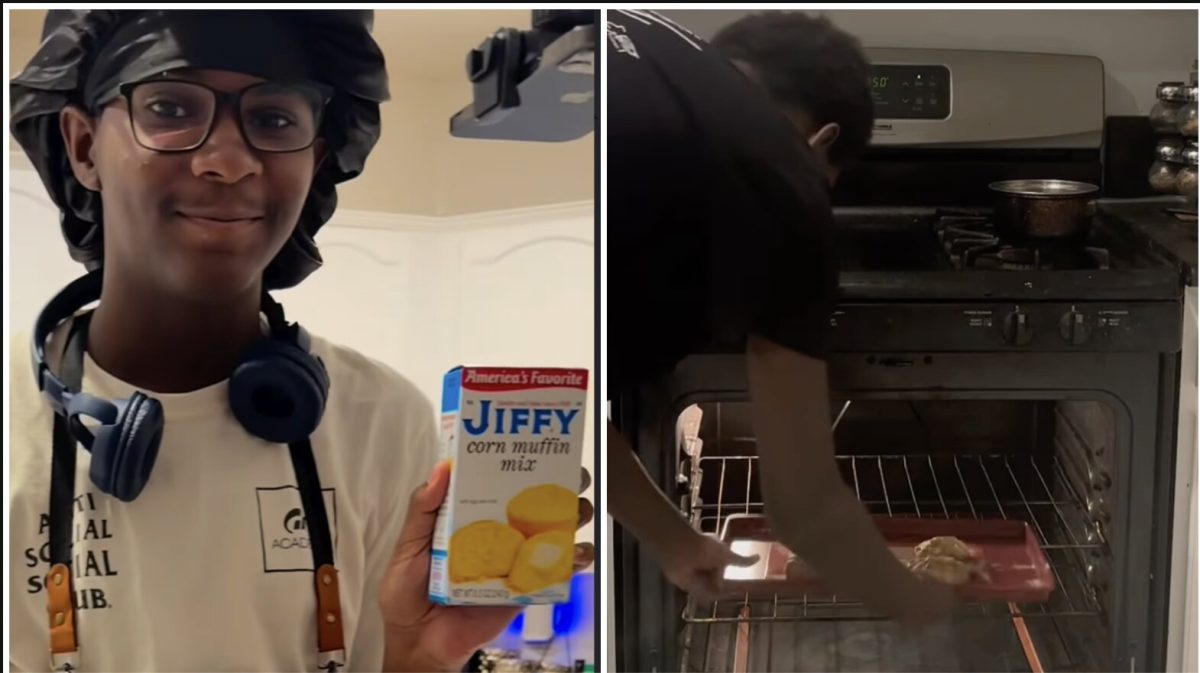

  • During one of Peter Gabriel’s final Genesis shows, a roadie got naked for one amazing prank
    Photo credit: Unknown photographer via Wikimedia Commons, Creative Commons Zero, Public Domain Dedication, cropped (left) / Canva (Africa images), cropped (right)A roadie got naked for a hilarious prank during one of Peter Gabriel's final shows with Genesis.

    The 1974 Genesis double-LP, The Lamb Lies Down on Broadway, is one of the most ambitious (and, to some, inscrutable) concept albums in rock history, following a character named Rael along a cosmic journey through the shadowy New York City streets, elaborate chambers of 32 doors, surreal cages filled with stalactites and stalagmites, underground rivers, and caves with spooky creatures. It was like a proggy Pilgrim’s Progress as envisioned by Alejandro Jodorowsky.

    When it came time to translate that vision to the concert stage, Genesis made a risky choice: debuting the entire 94-minute saga, front to back, with large chunks of the audience likely unfamiliar with the songs. (The first date of the tour, November 20, 1974 in Chicago, occurred two days before The Lamb hit stores.) The visual side of the project was as trippy as the lyrics, including scene-setting projections and a number of bizarre costumes for front man Peter Gabriel—like one particularly grotesque monstrosity, The Slipperman, that drummer Phil Collins later called an “inflatable dick.” (“It was all very Spinal Tap,” he said in an interview for the album’s 2007 reissue.) 

    If you ever wanted to appear naked onstage, this was probably the perfect time to do it—and one of the band’s roadies pulled off that hilarious prank as the tour neared its end. The silliness was especially notable, given the brooding atmosphere within Genesis—Gabriel, feeling constrained by the band’s schedule and eager to stretch his wings, had already informed his bandmates that he planned to leave following the Lamb tour. Perhaps the roadie, whom the band recalls being Geoff Banks, was attempting to add some levity. What we do know is that he made his nude cameo during one of the final shows, building on the suspense from a visual trick.

    “There was a point in The Lamb where Rael sort of splits, and we did that on stage,” Gabriel told filmmaker John Edginton in a full-band documentary interview. “I would be in the Rael outfit, and there was a dummy on the other side in exactly the same outfit. There wasn’t a lot of lighting, so it would explode, and you wouldn’t know [which was which]…Of course, for the crew, as we approached for the end of things—first of all, [Rael’s] jeans would have their flies undone with a banana hanging out. Gradually, they’d have more and more fun…”

    Keyboardist Tony Banks also talked about this infamous moment in a passage from the 2007 book Genesis: Chapter and Verse. “No one apart from the group, and the immediate circle of the group, knew that Pete was leaving and that this could well be our last tour ever,” he said. “And the roadies always had to have some fun. There was this moment in the show where Pete would be on one side of the stage with a dummy on the other side, and the strobe lights would flash on them so you couldn’t tell which was which. And, of course, for one of the last shows, one of the roadies got up there naked on the other side and took up the pose in place of the dummy…There were people watching this, my wife, for instance, practically in tears because they thought that it might be all over for Genesis, and we had a naked roadie on stage[—]was this how it was all going to end?”

    But all’s well that ends well, and Genesis managed to carry on after Gabriel’s departure by upgrading Collins to the dual role of drummer-singer. In a testament to their continued friendship, Genesis even reunited with their old singer in 1982 to help him escape mounting debts. 

    This article originally appeared last year. It has been updated.

  • 41 years ago Bono’s Live Aid stage antics ended up saving a female fan from being crushed
    Photo credit: Screenshot from YouTube / @LiveAidU2 singer Bono embraces a fan pulled out of the crowd during the band's 1985 performance at Live Aid.

    By July 13, 1985, U2 was a massively popular rock band: riding the wave of two successive chart-topping U.K. albums (War and The Unforgettable Fire), even being anointed the “Band of the ’80s” in a Rolling Stone cover story. But their definitive moment of that year was a performance at Live Aid, a benefit for Ethiopian famine relief staged before 72,000 at London’s Wembley Stadium and broadcast to well over 1 billion TV viewers. They were already larger than life, but now they had the perfect venue and grandiose crowd interaction to showcase it.

    Their short set featured a 12-minute version of their atmospheric 1984 song “Bad,” which they stretched out to include some quotes from The Rolling Stones’ “Ruby Tuesday” and, more famously, to accommodate the stage maneuvering of front man Bono. Halfway through the track, the singer gestured to the audience with a “come on”-type motion, eventually requesting a few female audience members be lifted out of the crowd by security.

    According to some accounts, including viral social media posts, this was some kind of “rescue” attempt, and while it’s unclear precisely why Bono took action, the story has become a staple of the U2 canon.

    In the above clip, you’ll see two fans guided to the apron area in front of the stage, where Bono briefly embraces them. But the most notable moment is when he jumps into the muddy area by the barricade, asking security to hoist over a teenager, with whom he slow-dances and offers a kiss on the cheek. Cameras, of course, caught the whole thing. Bono was a showman from day one, after all.

    Over the years, there’s been a lot of debate and discussion about this Bono-meets-fan moment. In a detailed breakdown of the performance, Rolling Stone reports that the third fan was 15-year-old Kal Khalique. Someone by that name shared their Live Aid memories with the BBC, writing that they weren’t even at the show to see U2: “My sister and I were desperate to see Wham!, so we had made it down to the front of the stage. Half way through the day U2 came on suddenly Bono was pointing to me in the crowd and after a [number] of other girls were pulled out, he finally jumped down and got the security guys to pull me out and danced and hugged me, and I even got a kiss. I’ve been a huge U2 fan ever since.”

    In 2011, The Guardian cited an article by The Sun, who apparently tracked down Khalique. “The crowd surged,” she reportedly claimed, “and I was suffocating—then I saw Bono.” But The Guardian also notes that Bono “had long made a habit of pulling girls out of the audience and dancing with them.” Was this just another example, only amplified by the drama of a hungry rock band playing the biggest stage imaginable? 

    Reasoning aside, it’s the kind of larger-than-life moment that came to define U2. It also happened at an ideal time, just ahead of their next album, 1987’s The Joshua Tree, a critically acclaimed and multi-platinum blockbuster that topped the Billboard 200 and spawned some of the bands most enduring singles, including “When the Streets Have No Name,” “With or Without You,” and “I Still Haven’t Found What I’m Looking For.”

    Live Aid also spawned one of rock’s most celebrated performances ever: Queen’s triumphant eight-track set featuring anthems like “We Are the Champions,” “Radio Ga Ga,” and “Crazy Little Thing Called Love.” That show was even etched into film history with an exacting recreation in the 2018 Freddie Mercury biopic Bohemian Rhapsody

    This article originally appeared last year. It has been updated.

  • Catherine O’Hara’s tear-jerking eulogy for John Candy was a master class in memorializing a true friend
    ,

    Catherine O’Hara’s tear-jerking eulogy for John Candy was a master class in memorializing a true friend

    Now that O’Hara has also passed, the beautiful words she spoke for Candy resonate in a new and painful way.

    The comedy world lost two of its great lights decades apart. John Candy in 1994, and Catherine O’Hara on January 30, 2026. But O’Hara left something behind from that first loss: a nine-minute eulogy that remains one of the most moving tributes one friend has ever paid another.

    Candy was the big-hearted comic-actor best known for his string of charismatic film roles in the 1980s and early 1990s, from Stripes to Planes, Trains, and Automobiles to Uncle Buck. He died at just 43 in 1994, following a heart attack. O’Hara, his close friend and collaborator from SCTV, Second City Toronto, and Home Alone, delivered the eulogy at his memorial service in Toronto, and in nine minutes she managed to capture everything that made him irreplaceable.

    She opened the beautiful eulogy by summarizing all of the ways he “enriched” other people’s worlds, including so many small acts of kindness.

    “I know you all have a story,” she says in the clip. “You asked him for his autograph, and he stopped to ask you about you. You auditioned for Second City, and John watched you smiling, laughing. And though you didn’t get the job, you did get to walk away thinking, ‘What do they know? John Candy thinks I’m funny.’ You walked behind John to communion. You carried his bags up to his hotel room, and he said, ‘Hey, that’s too heavy. Let me get that for you.’ And then he tipped you. Or was that a day’s pay?…you caught a John Candy scene on TV one night, right when you needed to laugh more than anything in the world.” 

    Meeting John Candy

    O’Hara also shares her own story of meeting Candy in 1974, when he was director of the Second City touring company.

    “When I joined him in the main cast, he drove us all the way to Chicago to play their Second City stage,” O’Hara recalls. “And I had a crush on him, of course, but he was deeply in love with [his wife, Rosemary]. So I got to be his friend, and I closed the Chicago bars with him, just to be with him. We did SCTV together. When we all tried to come up with opening credits that would somehow tell the audience exactly what we were trying with the show to say about TV, it was John who said, ‘Why don’t we just throw a bunch of TVs off a building?’”

    The whole eulogy is filled with lovely details, as O’Hara reflects on Candy’s graciousness, his collaborative spirit, and the overall sparkle of his comedy.

    “His movies are a safe haven for those of us who get overwhelmed by the sadness and troubles of this world,” she says. “As if he knew he’d be leaving us soon, John left us a library of fun to remember him by.”

    And she ends with a moving note to illustrate their closeness: “God bless, dear John, our patron saint of laughter. God bless and keep his soul. I will miss him. But I hope and pray to leave this world too some day and to have a place near God—as near as any other soul, with the exception of John Candy.” 

    The Candy legacy

    After the eulogy video resurfaced on Reddit, dozens of fans shared their emotions.

    “I was eight years old when he passed, and to this day no celebrity death has ever hit me harder,” one user wrote. “How could such a bright light be gone so early? She’s right, his films are a safe haven for the soft-hearted. RIP.” Another added, “John Candy died over 30 years ago, but it still stings like it was yesterday. He left such an incredible and rare cultural mark.”

    Candy was also the subject of the 2025 Amazon Prime documentary John Candy: I Like Me, directed by Colin Hanks and produced by Ryan Reynolds, in which O’Hara herself appears alongside other friends and collaborators. Conan O’Brien has talked frequently about how much he loved the SCTV star; he once talked to Howard Stern about his impactful meeting with Candy back in 1984, when O’Brien was a 21-year-old student at Harvard University (and president of the Harvard Lampoon).

    “We ended up hanging out,” O’Brien recalled, “and what I remember most clearly is that he was everything I wanted him to be. He was John Candy.” 

    This article originally appeared last year. It has been updated.

Explore More Everyday Economics Stories

Everyday Economics

Man breaks down how much he makes from Uber, enraging both drivers and passengers

Everyday Economics

Are you a good tipper? Turns out your generation might have something to do with it.

Everyday Economics

Hold on tight: 5 reasons why ‘job hugging’ might be the best way to save your career

Everyday Economics

Photographer captures parents’ goodbyes for 27 years, including final farewell