When you look back at how people lived 50 years ago, in 1975, many things appear quite ridiculous through a modern lens. Back then, people used to smoke everywhere, it was common for people to throw litter out of their car windows while driving, and they rarely wore seatbelts. In retrospect, it seems like a pretty savage time.

That begs the question: what things will people do in 2025 that will appear ridiculous when those in 2075 look back on us? There are likely to be many aspects of our everyday lives that we accept without judgment, which will make people shake their heads in the future.

future, science breakthroughs, entertainment, judgments, modern lens, 1975, people
Manu00a0looks through a looking glass. Image via Canva – Photo by RichVintage

A new thread on r/TrueAskReddit posed an interesting question: “What’s something we do today that people in the future will probably think is totally ridiculous?”

Redditors started chiming in with opinions on what we’ve collectively decided is socially acceptable. They offered both a humorous and critical commentary on everything from our health practices to entertainment. It’s a captivating thought experiment to consider what our everyday habits might look like in the not-so-distant future.

1. Store it in plastic
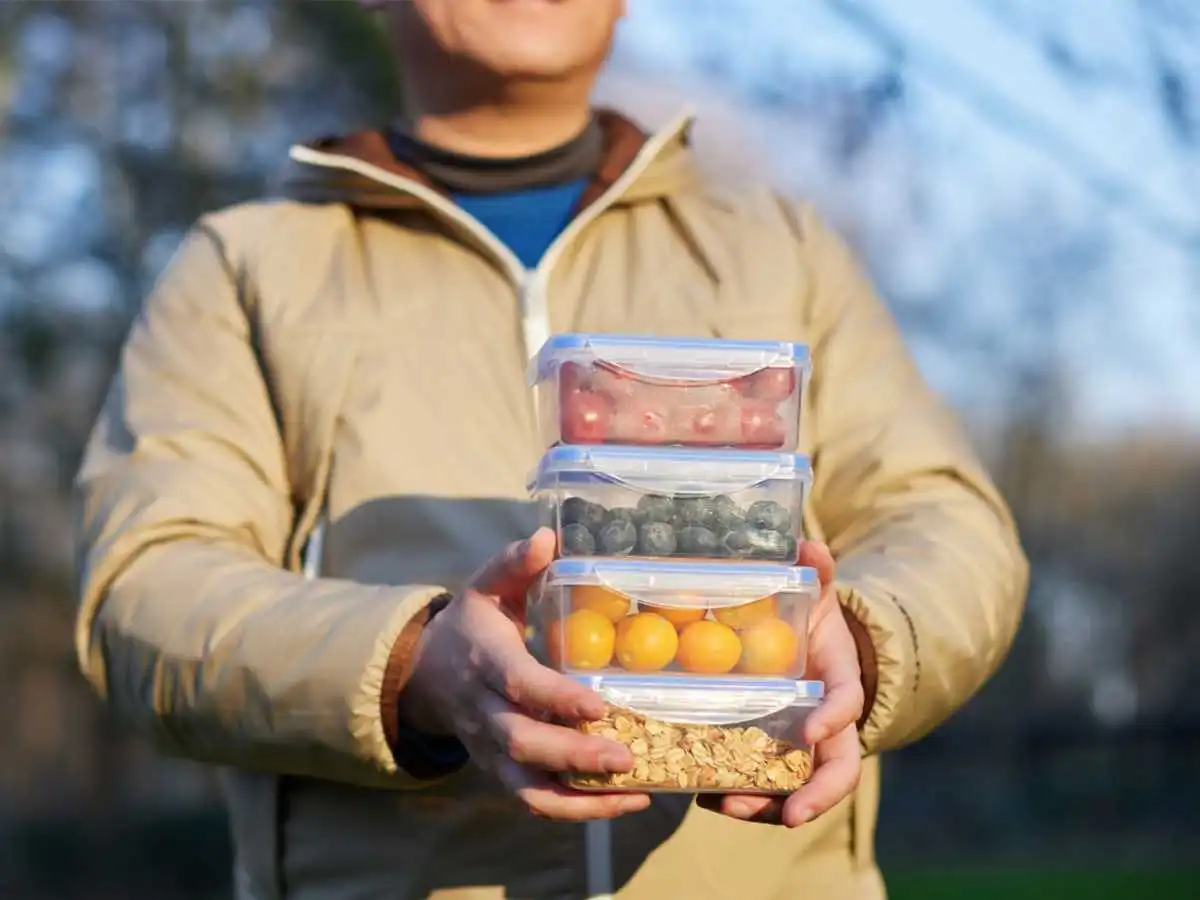
plastic, tupperware, plastic plates, dishwashers, food, stores, microwave, packaging, reusable plastic
Man holding Tupperware. Image via Canva – Photo by shisheng ling

We not only store our food in plastic, but we also place that same food in the microwave. User u/Wolly_wompous said, Packaging all our food in plastic, drinking from (and reusing) plastic water bottles, putting plastic plates and cups in dishwashers or microwaves. Microplastics galore, running through our bloodstream.”

Mentioning how past generations dealt with the issue of lead poisoning, u/HugeTheWall responded, Plastic is the lead of our generation.”

A 2025 study on plastic in The Guardian found that microplastics were invading our blood vessels. This plastic infestation of our bodies leads to reproductive issues and developmental problems in infants.

2. Chemotherapy as a health treatment

physical health, doctors, chemotherapy, treatments, anesthesia, cancer, mortality, medicine
Receiving Chemotherapy. Image via Canva – Photo by Fatcamera

Acknowledging the challenges of treating health issues with aggressive medicine, u/ImGoingToSayOneThing felt, “I think chemotherapy is going to go in the same bucket as doctors amputating people without anesthesia, not washing hands, not sterilizing, and all the other weird medical things we stupidly did.”

In the sad but true category, u/AnaWannaPita added, “Yeah, chemo is basically hoping the cancer dies before the person does.”

Chemotherapy, when combined with other therapies, leads to improved survival rates. However, the effectiveness varies greatly based on type, treatment regimen, and individual patient factors. According to the 2025 figures published by the American Cancer Society, over a five-year period, about 69% of people survive from all cancers. That’s up from 49% which was the success rate for the 1970s.

3. Surgery for beauty

beauty standard, plastic surgery, botox, aesthetics, surgery, filles, community, status, attractiveness
Young woman receives Botox injection. Image via Canva – Photo by Prostock-studio

The need to be more aesthetically attractive by any means necessary was expressed by u/thethunder92 as, “Plastic surgery is very bizarre. I think they’ll have to have something better than putting plastic in your body.”

u/Difficult-Secret-540 added, “It’s crazy to think that the best option we have right now is basically just stuffing plastic or fillers into people.”

4. Generational complaints about the newer generation

Kids never do it right, as expressed by u/Difficult-Sevret-540, “Our parents thought we were lazy and glued to screens, and now people say the same thing about Gen Z. In a few decades, today’s kids will be ranting about how their kids never put down their neural implants. It’s just the circle of life.”

Summing up the repeated pattern was u/jackfaire writing, “My peers and I used to mock how our parents would freak out about our generation. Now my generation does the same thing about our kids. When our kids have kids, I’m sure they’ll complain too.”

5. Non-self-driving cars

self-driving car, transportation, navigation, AI, driverless, government, accidental death, road trips
Smart self-driving car. Image via Canva – Photo by RyanKing999

We have to get a driver’s license today, but the future will probably all be driverless cars, as mentioned by u/pdeichler. “I think people in the future will think we were crazy to drive on our own due to the risk of accidents/death. Also, they’ll wonder what we did on long road trips since they won’t have to drive and can do whatever they want while riding in the car.”

Stating concern over governmental control and lack of freedom was u/Sorrysafarisanfran saying, “Everything will be preprogrammed and approval will be given based on social credit units.”

6. Social media obsession

social media, camera, trending videos, healthy relationships, friends, posts, viral video, YouTube, TikTok
A social media break on campus. Image via Canva – Photo by FatCamera

People not only watch, but also try to get famous, as stated by u/Attila-t-h-452-72, “Inflict Pain and do stupid stuff that is dangerous for likes…” They continued, “Albeit they are pretty funny and sometimes just stupid like the guy who went up in a self-made parachute (I think) during the last hurricane with a camera. I don’t think the future will think it was very smart or funny.”

U/OfTheAtom mentioned the world’s obsession with social media, “Obviously it’s truly a place of understanding and getting to know each other, but future generations may have a healthier relationship with the technology to extract the good things and leave the noise.”

The United States is a bit obsessed when it comes to social media. According to a 2025 article in Demandsage, the average time people spend on daily social media is 141 minutes. That’s down two minutes a day from the 143 minutes spent by people in 2024.

7. Using fossil fuels

fosil fuels, gas, petroleum, natural gas, chemistry, electricity, cars, heat, envirnoment
Using the gas pump at the gasoline station. Image via Canvau00a0- Photo by 89Stocker

“Burning natural gas for electricity; while having plenty of other tech to do the same thing. Natural gas is a marvelous feedstock for chemistry (you know things like fertilizers that feed the world), it’s far too much valuable, and limited, to be casually burn for heat and electricity,” added u/233C, thinking about the other more beneficial uses that are wasted.

8. Using chemical pesticides
pesticides, chemicals, poison control, poison, food resources, farming, agriculture, insects
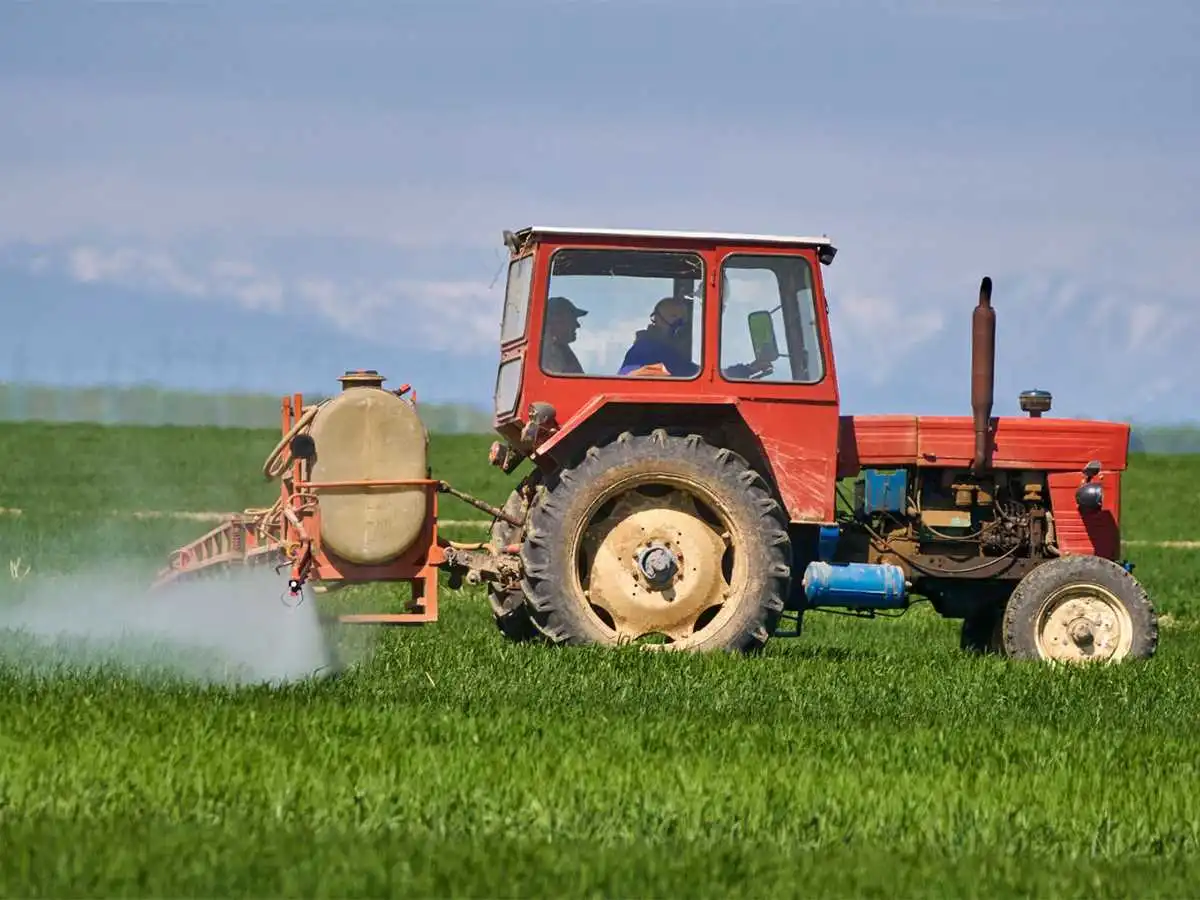
Tractor spraying pesticides Image via Canva – Photo by Slatan

The amount of poison we use to manage our food resources is frightening, as mentioned u/tboy160, “Imagine soaking your lawn in chemicals, then having your kids and dogs play in the chemicals?!?”

A 2024 study in ScienceDirect found that communities close to agricultural areas had increased levels of pesticides in the dust around their homes. It’s another example of how our behaviors infiltrate and affect all aspects of our lives.

9. Capitalism

The system of self-promotion through working hard to achieve more was questioned by u/Mioraecian, who said, “People talk about the end of capitalism being workers’ unions and wealth equality, etc. I’ll know capitalism has truly ended when our approach to consumerism and packaging has changed.”

10. Thoughts about the future and this thread

The most common consensus among these ideas is that the future will be better. “If, however, we experience some sort of catastrophe that knocks society back to the dark ages, I would imagine future generations will look back and think all the first-world bs we argued about is ridiculous while they have to fight daily for shelter, food, and water,” u/Smoth-Like-Buttah expressed an interesting viewpoint.

It isn’t easy to know exactly what the future holds, but it’s also clear these folks have strong opinions about the present. Let’s hope that when we get there, the things that need the most change evolve, what works endures, and what can’t be improved teaches us how to move forward more wisely.

  • Second-grade teacher asks her students for marriage advice. Here’s their 7 best responses.
    A married couple (left) and students raise their hands (right). Photo credit: Canva

    Children form strong worldview opinions at a very young age. Naturally curious, their thinking and insights can lead to blunt but brilliant relationship advice.

    Klarissa Trevino, a second-grade teacher, had a fun idea: to ask her students for advice ahead of her marriage. In a TikTok post, she shared some of their favorite responses, which they were genuinely thrilled to share.

    @itsklarissat

    This was so cute to do with them before I came back as a “MRS” after spring break 🥹🤍 *TEMPLATE is NOT mine its from TPT #teachersoftiktok #weddingadvice #lifeofateacher

    ♬ original sound – ✶𝓵𝓸𝓾𝓲𝓼𝓮✶

    Teacher hands out worksheets

    Trevino wanted to find a way to involve her second-grade students in her wedding, so she printed out worksheets with the prompt, “The marriage advice I give my teacher is…”

    Sharing some of her favorite responses in a TikTok post, Trevino quickly went viral. She told People, “Being able to get a glimpse of their version of marriage and love was very sweet. It made me so happy that they have homes that have shown them the true meaning of it.”

    One of her favorite responses was, “do not eat each other’s snacks.”

    prompt, professional opinions, snacks, five-star, middle school
    Students write.
    Photo credit: Canva

    Marriage advice from second graders

    This is the best marriage advice these second graders had to offer—some might argue it’s as helpful and supportive as any professional’s opinion. Here are some of their responses to the prompt, “The marriage advice I give my teacher is…”:

    “to be kind and love each other.”

    “care and care for each other! Happy marriage!”

    “do not eat each others snacks.”

    “is to give her flowers.”

    “get her Starbucks evrey day.”

    “to take her on a date/ and go to a five star restraunt.”

    “care for [each other] And Love her. do not hurt her!”

    classroom, teaching, advice,
marriage, students
    Students raise their hands in class.
    Photo credit: Canva

    People are delighted by insightful second graders

    Viewers in the comments were delighted by the second graders’ advice, and some of their own responses were just as insightful as the kids’.

    “Kids are so smart.”

    “The best advice ever..”

    “Imagine how many marriages could’ve been saved if ppl just left eachother’s snacks alone”

    “This is legitimately better marriage advice than you see on TikTok.”

    “You should publish this, because people could really learn a thing or two from your students”

    “I’m teaching the wrong grade!!”

    “These are signs that these kids have wonderful parents and figures in there life’s …. and a wonderful teacher who loves and cares for them”

    elementary school, kids, friendship, meaningful insight, family
    Students pose for a picture.
    Photo credit: Canva

    Studies show that kids have meaningful insights

    These second graders shared straightforward, thoughtful insights. Yet research shows that children offering meaningful perspectives is nothing new. A 2025 study found that kids begin to understand other people’s feelings, beliefs, and even motivations at a very young age. They aren’t boxed in by adult expectations, which helps keep their thinking fresh and profound.

    A 2025 study found that even children as young as four understand far more than we might think. They’re capable of problem-solving and experience “aha!” moments that can make others grin.

    Kids often cut straight to the truth because they’re naturally curious. A 2025 study found that adults underestimate how organized children’s ideas can be. Like adults, kids’ beliefs shape how they act and feel, forming a worldview that is surprisingly detailed, consistent, and stable.

    These young students’ advice may seem simple, but that’s exactly what makes it so powerful. They remind us that kindness and honesty don’t require much effort to make a lasting impact on any relationship. Sometimes the truth comes from the smallest voices, and Trevino understood the value of listening.

  • Teacher spots suspicious bare feet under a school bench, but the ‘lockdown’ scare has a surprising explanation
    A teacher (left) and bare feet (right). Photo credit: Canva

    Teachers are trained to expect the unexpected. One day, Alissa, a history teacher who posts on TikTok under the name @teachinginstyle, looked out the window of her high school classroom and noticed a pair of bare feet hanging from a school bench.

    She knew something wasn’t right. In a split-second decision most teachers hope they’ll never have to make, she locked her classroom door. Then Alissa called the school’s safety number, which nearly triggered a lockdown.

    “One: stranger danger,” she explained in a video. “And two, I have a room full of sixteen-year-olds that I need to keep safe.”

    @teachinginstyle

    STORY TIME ✨ how I almost caused a lock-down at my old school 🔒 HAPPY FRIDAY & SKI WEEK ❤️ #teachersoftiktok #teachertok #teacherlife #teacher

    ♬ Piano famous song Chopin Deep deep clear beauty – RYOpianoforte

    Nearly causing a school lockdown

    A pair of unfamiliar, bare adult feet resting on a school bench is enough to warrant further investigation by any responsible teacher.

    “Outside my classroom, there were these wooden benches. And kids would sit there during break,” she continued. “My class was quietly working, and I glance outside, and I see a pair of bare feet. Like just feet, sticking out from the bench.”

    Wondering whether it was a student and if they were okay, she headed outside to investigate, only to find an unfamiliar adult asleep on the bench. Immediately frightened, she recalled, “Three things come to mind. One: Are they alive? Two: Why is there a random adult on campus? And three: Oh my God, are we going to have to go on lockdown?”

    Alissa locked her classroom door and called the safety number, describing the situation over the phone. It turns out the feet belonged to a substitute teacher. She concluded, “It was a sub—a substitute teacher—taking a nap on the bench, like wanting to get some sun on the dogs (their bare feet). Oops. How was I supposed to know that?”

    education, teachers, school safety, campus awareness
    Teachers pose in the hallway.
    Photo credit: Canva

    A story that’s both chaotic and funny

    Viewers had mixed opinions about Alissa’s story. Some thought she did the right thing, while others were more concerned about the substitute teacher’s behavior. Here are some of the comments:

    “I would do the same…”

    “OK, but as a sub, I could never imagine taking a nap.”

    “not just any nap, a nap on a bench with your shoes off”

    “You are 100”

    “What on EARTH????”

    “there is NOT enough diet coke to handle this..”

    “I think anybody would’ve done the same thing in that situation”

    Training programs, campus safety, crisis, drills, preparedness
    A school building on a sunny day.
    Photo credit: Canva

    Prepared for school safety

    To prepare for the unexpected, teachers must go through training. A 2025 study analyzed a training program designed to help teachers and staff prepare for emergencies. The results showed that participants felt more psychologically prepared and ready to handle a crisis.

    It’s important for students to feel safe and prepared, too. But do the drills help, or do they cause more problems for kids? A 2023 study found that 27% of children said the drills made them anxious. Overall, caregivers still supported the preparation, even though some kids felt uncomfortable.

    bare feet, substitute teachers, school preparedness, lighthearted
    A teacher talks with students.
    Photo credit: Canva

    The substitute teacher’s bare-feet fiasco turned out to be far less dangerous than it first appeared, but it highlights a real challenge teachers face every day. Alissa’s story is a lighthearted reminder of the serious nature of school preparedness, though sometimes there can be a surprisingly simple explanation.

    Anyone with concerns about handling different kinds of disasters can visit the FEMA website, where many free preparedness videos are available.

  • Teacher chaperones a kindergarten field trip and shares 3 moments that perfectly capture how little kids think
    (LEFT) Curious kindergartener and (RIGHT) teacher caught off-guard.Photo credit: Canva
    ,

    Teacher chaperones a kindergarten field trip and shares 3 moments that perfectly capture how little kids think

    A middle school teacher, Mr. Lindsay, chaperoned his son’s kindergarten field trip to the zoo. He explains in his TikTok video 3 funny moments that perfectly capture how little kids think. If you ever need proof that young kids see the world a little differently, just listen to what they have to say on this…

    A middle school teacher, Mr. Lindsay, chaperoned his son’s kindergarten field trip to the zoo. He explains in his TikTok video 3 funny moments that perfectly capture how little kids think.

    If you ever need proof that young kids see the world a little differently, just listen to what they have to say on this field trip. From a silly animal mix-up to a candid family comment, this recap by Lindsay captures why kindergarteners are some of the funniest storytellers on earth.

    Excited To See The Leprechauns

    Lindsay describes the first experience, “A kid walks up to me, and he goes, ‘Mr. Lindsay, I can’t wait to see the leprechauns.’” Lindsay responds that the zoo doesn’t have leprechauns, to which the kindergartener says, “No, I’m serious, the leprechauns. The ones with the spots.” The child was talking about the leopards.

    A pretty cute mistake that commonly occurs with younger children. They often reshape unfamiliar words to fit sound patterns they already know. A 2023 study of speech-sound substitution in the National Library of Medicine explained that the near matches of words can be termed “markedness.” The simple mistakes gradually end after they gain better control of their mouth.

    kindergarteners, funny conversations, childhood, cute mistakes
    Boy plays in a kindergarten playground tunnel.
    Photo credit Canva

    My Stepdad Is Much Younger

    In the second story, a kindergartner walks up saying that he is thirsty. Lindsay suggests getting some water when the kid suddenly stops, stares, and says, “My one dad is 53, but my other dad, who’s my stepdad, is 21.” Lindsay offers a surprised look to the camera after recounting the unexpected honest exchange.

    A 2024 study in Nature Human Behaviour reported that researchers studied kindergarten students to see whether trust would encourage honesty. They found that kids who were shown trust cheated less often. The research suggests that when adults instill trust in young people, they can encourage greater honesty.

    field trip, hygiene, healthy habits, education
    Kids on a field trip walk in a straight line.
    Photo credit Canva

    Gross And Unfortunately Familiar

    In the third story, when he catches one of the kindergartners picking his nose, Lindsay tells the child not to do that. The kid then wipes the booger on the ground and exclaims, “Well, I wiped it on the ground. It’s natural.” Yikes. Lindsay wraps the video saying, “So, not much different than teaching middle schoolers, but some good moments.”

    Kindergarten-aged kids are still learning basic hygiene habits. A 2024 review in the National Library of Medicine found kids were especially vulnerable to infections because of poor hygiene. Teaching healthy practices like hand washing, body hygiene, and oral care in school helped children stay healthier.

    kids, honest communication, trust, stories, school
    Cute little girl smiles.
    Photo credit Canva

    Kids Speak Their Truth

    There were some cute comments from fellow TikTokers who appreciated the stories and added a few of their own:

    “My son started kindergarten in the fall of 2020 so it was it all virtual on google meets. There was a kid in his class that would occasionally pop on camera in a Batman costume and say ‘I’m Batman.’ It was hilarious.”

    “Bless Kindergartner teachers- hardest job of them all!”

    “And this is why I teach kindergarten.”

    “One of my pre-k students came over to me during indoor recess, I thought the kid need help or someone hit him, he was making a face, when I asked ‘What’s wrong’ he gave a serious look and proceeds to tell me ‘I just needed to fart’ it was a nasty one”

    “Yup, sounds like kindergarteners! “

    Kindergarteners may not always know the right thing to say, but they certainly can say the honest thing. It’s a good reminder that teaching young kids means being ready for absolutely anything. Lindsay’s video offers a fun way to remind us.

Explore More Culture Stories

Culture

Second-grade teacher asks her students for marriage advice. Here’s their 7 best responses.

Internet

Teacher spots suspicious bare feet under a school bench, but the ‘lockdown’ scare has a surprising explanation

Culture

Teacher chaperones a kindergarten field trip and shares 3 moments that perfectly capture how little kids think

Internet

13 heartbreaking and hilarious voicemails people refuse to delete