“One of the problems with algae is that they tend not to stay where they are,” says Todd Kuiken, a senior research associate with the Wilson Center’s Synthetic Biology Project. “If anyone tells you that algae won’t escape, they’re lying or they don’t understand how algae works.”
It doesn’t matter if the algae are grown in contained systems or in open-air ponds, although the latter system offers more opportunities for a breakout. The algae that scientists have altered to help produce biofuels will escape into nature, whether on a quick breeze, a shirtsleeve, or a bird’s foot. They will bring with them genetic material that humans have tinkered with and, in some cases, manufactured wholesale. The results are often nothing, but in a worst case scenario, the engineered algae thrive or transfer their human-made genes to other algae, and a piece of DNA made in a lab leads to irrevocable changes in a once-diverse and thriving ecosystem.
Synthetic biology is a somewhat mushy term, but think of it as a more ambitious form of genetic engineering. Humans started manipulating the genes of plants through cross-breeding and later graduated to genetically modifying plants to perform super-vegetal feats of strength like resisting pesticides or producing their own. Scientists now know enough about genes that they can use them to program simple organisms, which will spit out a specified product.
For scientists working to create better biofuels, that product is often sugar, which can be processed into a fuel like ethanol. Algae, yeast, and bacteria like E. coli—the organisms used in biofuel plants—can be manipulated, and scientists are seeking out strands of genetic materials that will allow those organisms to produce sugar or break down plant materials into sugar more efficiently. In some cases, scientists create the genes themselves, either by splicing together different strands from nature or creating synthetic bits of DNA.
Concerns about the organisms engineered for biofuel production are similar to the those about genetically modified crops, but there’s little information about specific risks of synthetic biology. Last year, the President’s Commission on Bioethics published a report on synthetic biology, which concluded that the government should keep a close eye on the field. There haven’t been many studies of these organisms, and there aren’t many examples of algae breaking into the wild. “I don’t think we can say all synthetic organisms are safe or all of them are dangerous,” Dr. Allison Snow, who’s an expert in the risks of genetically modified crops, told the commission.
Over the summer, the Wilson Center gathered a group of ecologists and other experts to discuss potential problems. “You’re basically worried about gene transfer and what that implies in the nature ecosystem, and how that can change the balance,” Kuiken says. At the end of the session, the participants were most interested in pursuing research about what would happen to the man-made DNA after its host organism died and how a “novel organism” comes to differ from its “wild” precursor.
Algae grown in open ponds spanning hundreds of acres are more likely to escape than yeast trapped in a silo, but in any biofuel production process, there’s a chance that a synthetic organism will get out. Brewing biofuels is a bit like brewing beer, and “beer producers have problems with contamination all the time,” says Eric Hoffman, of Friends of the Earth, an environmental organization that is skeptical of the benefits of biofuels and worried about the synthetic biology’s potential harms. Yeasts from beer-making processes are always escaping, Hoffman points out, and microbes from outside are contaminating the vats. “It’s not a contained system,” he says.
In 2010, FOE argued that synthetic organisms are “a serious threat to biodiversity, the environment, and public health.” The group’s worry, in part, is that biofuels are diverting funds and momentum from renewable energy projects like wind and solar and creating synthetic organisms to further biofuel development while courting unknown risks to the environment.
“They’re coming up with systems to create thousands of new organisms at one time,” says Hoffman. “How are we going to assess the risk of those organisms? We have a hard enough time assessing genetically engineered corn, and the USDA gets sued every time it tries.”
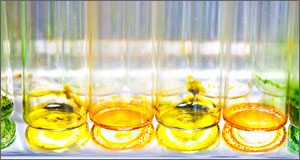
Photo courtesy of Dennis Schroeder, National Renewable Energy Laboratory