English is wildly inconsistent and often maddening, especially if you’re learning it as a second language. Plus, depending on where you live—say, the U.S. versus the U.K.—you may utilize it in very different ways. (This is technically even true in other parts of America. I used to teach public speaking at the college level, and I often asked my students to share common idioms from their home state. I’d estimate I recognized about 20% of them at best.)

Suppose you’re a British-born person visiting or living in the U.S.. In that case, you’ve probably experienced an adjustment period—just like Juliette Amie, a self-described “Brit in Boston” who often posts on social media about her life in the States. In one recent video, she shared a list of “things I never said until I moved to the U.S.” More specifically, these are expressions Amie has picked up through cultural osmosis and now wants to keep in her rotation. It’s interesting to watch this clip as an American—some of these phrases are so ingrained in my regular speech that it seems weird even to find them notable. It’s also interesting to hear her describe them as positive and affirming—maybe we’re being nicer to each other than we realize.

“Have a good one.”

The first phrase is, “Have a great one,” though she later amends it in the video caption to “Have a good one.” “It’s when you are saying goodbye to someone—an Uber driver drops you off or [you] see someone on the street and they meet your dog,” Amie says. “You part ways, and you say, ‘Have a [good] one.’ You don’t really do it with, like, your friends or people close with you—or I don’t. I tend to only use it when it’s someone I don’t know. They’d be like, ‘Okay, see ya!’ I’d say, ‘Have a [good] one, and it’s such a nice saying…[It’s] my favorite way to close off a conversation with someone I’m not familiar with.”

I have to admit my ignorance here—I just assumed most people in English-speaking countries said some iteration of this one. It’s notable that several Instagram users tried to correct the expression to include “good” instead of “great,” but one person added their perspective: “People are being dramatic. You can absolutely say, have a great one. It’s a simplification of ‘have a good/great day.’ There’s nothing linguistically wrong or terribly unheard of about it at all. No one would give you a look. It’s just extra enthusiastic. I’ve for sure said it.”

“All set”

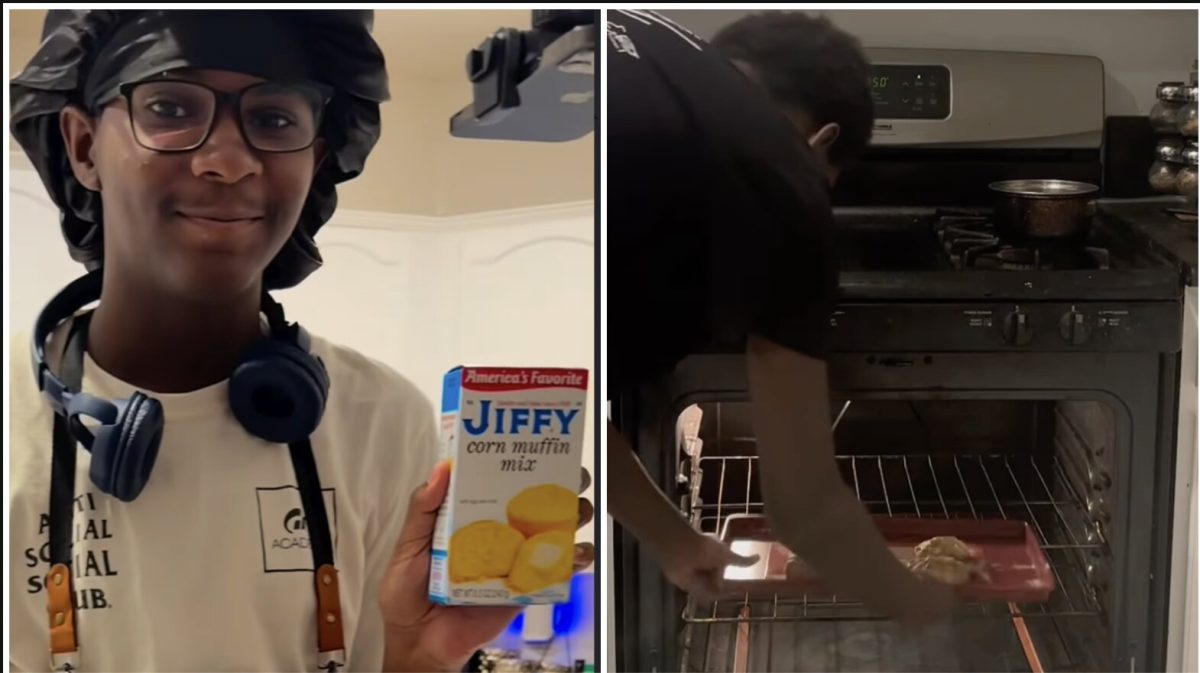
The next one is “all set” or “you’re all set”—something she’s heard service-industry workers say. “If someone’s packing your Trader Joe’s bag, they’ll be like, ‘You’re all set!’ at the end or ‘All set!’” she says. (In the video, she wonders if it’s actually “a Boston thing,” but I can at least confirm this is common elsewhere in the Eastern U.S. Regardless, people debate that point in the comments, with one person saying they’d “never heard it used in that way” until moving to the Boston area. Interesting!)

“Appreciate it”

The list also includes “you’re good” (as in the equivalent of “no worries”), but Amie admits she doesn’t necessarily like that one. But her favorite appears to be “appreciate it” or “appreciate you,” which she calls a “really lovely thing to say” that she’s going to “start using…more.”

The comments section of this post is pretty revealing—one might assume this is a tension-free space, but there are plenty of debates, arguments, and varying perspectives. That in itself proves, again, how strange the English language can be. But is that also part of its beauty? This whole conversation can also extend outward into how we talk, as YouTuber The New Travel documented in a 2024 video featuring 65 distinct English accents.

Also, that year, the publication English World-Wide published some fascinating research on an emerging variant of English called “Miami English,” which blends English and Spanish. Professor Phillip Carter, Director of the Center for Humanities in an Urban Environment at FIU, told IFL Science that, “All words, dialects, and languages have a history,” adding, “In Miami, there are many ways of speaking English. The variety we have been studying for the past 10 years or so is the main language variety of people born in South Florida in Latinx-majority communities.”

  • Actor shares with Harrison Ford that he was her late dad’s favorite actor. His reply was perfect.
    Photo credit: Apple TV on YouTubeMimi Fletcher acting next to her father's favorite actor.

    Mimi Fletcher has the prototypical origin of a successful working actor: moving out from the Midwest to Los Angeles to become a star. She got her start doing background gigs and now is doing recurring guest roles on television. However, one acting gig she’ll treasure forever was when she got to work with Harrison Ford.

    Ford is a part of the main cast of Shrinking, an Apple+ show starring him and Jason Segel. The show is about a therapist (Segel) who, motivated by grief, takes a more proactive and candid approach with his patients. Ford plays Paul, a senior therapist at the practice who suffers from Parkinson’s disease.

    When Fletcher met Ford

    In 2023, Fletcher got to do scenes with Ford and Segel. It would be one of the biggest highlights of her career so far. However, recently on Threads, Fletcher shared that it was also a highlight of her life that she’ll never forget.

    Fletcher shared that her father was a big fan of Harrison Ford. Her dad was also a big fan of his daughter and very encouraging of her acting dream. She shared how her father supported and believed in her, even when she made decisions that her dad wouldn’t approve of. Her dad passed away in 2005 before Fletcher truly “made it” as a Hollywood actor. She wishes she was able to make him proud.

    Before going on set, Fletcher was waiting in the holding room with both Harrison Ford and Jason Segel. As they were all waiting, Fletcher thought of her father. She approached Ford and said:

    “You know, Harrison, my Dad was a big fan of yours. I remember him taking me to see Witness when I was a little girl. I did some things that I know disappointed him, but he still supported me. He never got to see me do any professional acting, but I’d like to think that today, he’d be proud of me.”

    Harrison Ford’s perfect response

    Fletcher tried to keep it professional, but the tears she was holding back spilled out. Immediately, Ford rushed to give her a hug.

    “He wrapped me in his arms, and held me as I cried. He then kissed my forehead and said, ‘Your dad’s here, he sees you, and he’s proud of you.’”

    In sharing the story, Fletcher expressed her gratitude to Ford and everyone on Shrinking. Fletcher felt compelled to tell this story since her father passed away over twenty years ago this June. And since June is also when we celebrate Father’s Day, he’s been on her mind. While Fletcher still mourns her loss, she treasures this happy memory.

    Fletcher was able to get comfort from a person her father respected even when Ford didn’t have to do anything more than say, “Thanks for sharing.”

    “A little bit of my broken heart was healed that day, through the goodness of Harrison Ford…” she wrote. “I miss and love you, Dad.”

  • Voice actor explains why Americans instantly trust people with British accents, even if they’re lying
    Photo credit: CanvaA traditional town crier, left, and a happy, applauding audience, right.

    Americans have this strange love of British accents—so much so that even when someone is speaking absolute gibberish, we find ourselves transfixed and absurdly trusting them.

    Tawny Platis, a professional voice actor and content creator, expertly captured the phenomenon in her YouTube video, “Why Americans Love This Accent.” In the video, she analyzes why Americans find Billy Butcher’s voice so compelling despite the character’s violent and morally chaotic behavior on the TV show The Boys.

    Americans trust and love rough, working-class British masculinity

    “So Karl Urban is a New Zealander doing a Cockney, working-class, East End London accent,” Platis explained. Regardless of how well the actor nails the accent for his character, Butcher, Americans buy right into it anyway. “That’s because working-class English masculinity is coded in American media as authenticity,” she added.

    She goes on to give examples to help substantiate her point: “Every Guy Ritchie movie, British gangster film, and working-class antihero from Michael Caine to Tom Hardy has trained American audiences to hear that voice as unfiltered and honest.”

    A 2024 study published in SAGE Journals found that listeners unconsciously form social biases based on accents. People rapidly make assumptions about personality and identity.

    decision making, accents, familiarity, credibility
    A young businessman speaks into a microphone.
    Photo credit: Canva

    Make ordinary information sound important

    The accent becomes a shortcut the brain uses to make immediate decisions about intelligence, honesty, confidence, warmth, and even competence. When it comes to characters like Butcher, the key detail isn’t so much the “Britishness” itself—it’s the association.

    “Butcher is using the working-class Brit voice to showcase honesty,” Platis said. “Butcher is a liar who manipulates Hughie, hides things from his team, and is willing to take out children. But the audience keeps forgiving him because his voice sounds like a man who’s earned the right to do all that, when he very much hasn’t.”

    Psychologists believe part of this effect comes from something called “processing fluency.” A 2023 study published in Scientific Reports found that increased exposure to certain accents reduced listeners’ cognitive effort. As a result, people made more positive social judgments about the speaker.

    Accents that feel familiar after years of movies, television, and media unconsciously influence people. Audiences automatically attach credibility and trustworthiness to them. Simply put, people mistake familiarity for truth.

    A 2024 study found that Americans rate the standard British accent most positively, strongly associating it with traits like intelligence, status, and competence. The Northern English accent is viewed slightly less favorably. Scottish accents are considered strong and friendly. Meanwhile, the Welsh accent falls somewhere in the middle, depending on how well the listener recognizes it.

    factual, educated, casual interactions, performance
    Blocks spell out the words “fact” and “fake.”
    Photo credit: Canva

    Accent bias sways people’s opinions

    The same instinct that makes one accent sound “trustworthy” can also make another sound “unreliable.” In real-world interactions, working-class accents can be perceived as less intelligent or less educated. This can affect hiring decisions and even workplace promotions.

    A 2024 study focusing on “Americanness” found that accented speakers were perceived as “less American.” In simulated hiring scenarios, they were less likely to be hired, demonstrating that an accent can override other judgments.

    When a person speaks, people instantly begin building a story about who they are. Many decide whether a voice sounds trustworthy long before consciously realizing it. Platis points out that a lifetime of exposure to social media, movies, and television has shaped that perspective.

    “Butcher’s accent is the most effective because it’s the only one many viewers don’t even recognize as a performance,” Platis said. Which basically means somewhere out there right now, a confident British accent is talking nonsense that feels totally believable.

  • Italian man claims to be ‘human cheetah’ with lightning-fast reflexes
    Photo credit: CanvaA man with fast reflexes.

    At first glance, this probably looks like a camera trick. Ken Lee, an Italian content creator, has built a massive online following by doing something that doesn’t quite feel real. Viewers refer to him as the “human cheetah” because it appears he has near-instant reflexes.

    Grabbing objects out of the air with uncanny precision, flicking clothespins and lighters, and throwing a blur of punches and kicks at impossible speeds, it is easy to call him unbelievable. Half the audience thinks his viral speed videos are fake. The other half is just as convinced they are watching something incredibly rare.

    Hands so fast they blur time

    In the video above, a timer runs to confirm its authenticity. In what looks like half a second, he reaches out and snags the lighter from the table. To prove it is real, he does it twice.

    Having amassed millions of followers on his TikTok page, the identity behind the mysterious influencer remains largely unknown. Active since around 2022, with almost 100 million accumulated likes, Lee has cultivated a fandom around his self-proclaimed “Superhero per Hobby!”

    Do you believe it is real? Is this person the fastest human alive? Many followers cannot wait for the next video to be posted. Plenty of his fervent fans are Italian, so sifting through the remarks takes a bit of hunting. Here are some comments that sum up how much people enjoy the fun and the spectacle:

    “Ken lee the fastest and the best”

    “Most dangerous human”

    “Is this what the lighter sees before my homie steals it”

    “It was sped up during he grabbed the lighter, if u count up with the timer u would be off by like 0,5 seconds whenever he grabs the lighter.”

    “If the flash were human”

    “How is it possible to get such powers ?”

    “I blinked and I missed it”

    People love good entertainment

    The awe of peak performance attracts people to watch elite athletes, musicians, or even dancers. There is something that deeply satisfies all of us when a human appears to push a skill to its limit. Whether it is real or fake seems to matter less than the opportunity to chime in on some good entertainment.

    How far could any of us go by practicing and repeating a particular motion over and over until it is mastered? Beneath the flashy nickname and his viral speed videos, Lee’s content has a way of drawing people in. This is not a superpower. Just repetition. Focus. Obsession. And maybe some digital wizardry.

    Testing the science of speed

    If you wish to question the validity of Lee’s performances, maybe some basic science can help. Human reaction time is not just a reflex. A 2024 study found that the nervous system can fine-tune responses in real time. Practice can make movements appear almost automatic.

    It has been well established in research that the gap between seeing something and responding has a limit. A 2025 study concluded that the most elite extremes allow for reaction times of 100 milliseconds. At that speed, the human brain can barely process that something has happened.

    Science explains Lee is not necessarily moving as fast as we might perceive him to be. And therein lies all the fun of it. We cannot prove it is real, nor can we actually prove that it is fake.

    Maybe Lee is the “fastest man alive” or the so-called “human cheetah.” Or maybe he is just a remarkable entertainer. Either way, he has clearly tapped into something strange and fascinating: a blend of human ability and fantasy that people do not want to miss.

    To give context to Lee’s videos, watch this performance on Tú Sí Que Vales:

Explore More Culture Stories

Film & TV

Actor shares with Harrison Ford that he was her late dad’s favorite actor. His reply was perfect.

Culture

Voice actor explains why Americans instantly trust people with British accents, even if they’re lying

Internet

Italian man claims to be ‘human cheetah’ with lightning-fast reflexes

Culture

Despite all the likes, literallys and dropped g’s, English isn’t decaying before our eyes