This story is part of an ongoing campaign called the Alphabet of Illiteracy. By using letters themselves—the foundation of reading and writing—Project Literacy examines the ways illiteracy underpins some of the greatest challenges facing the world today. Below, we explore the letter P for “poverty.”
Imagine you’re four years old. Your life so far has been unstable to say the least. Your father is incarcerated; your mother is struggling with addiction and largely absent. You and your siblings have been living in foster care. Soon you’ll move in with your grandmother, though she doesn’t know how she’ll support you and your four siblings.
What does your life look like from here? This was where Natasha found herself at such a young age. She remembers her childhood as one where full diapers were often left unattended, strangers frequented the couch, and food on the table was scarce.
Natasha’s family lived in poverty. Improving their situation, like in so many cases, was more complicated than simply addressing the amount of income supporting the household. No one in previous generations had attended college—her mother had not even completed middle school. Her father’s life was one entangled with the criminal justice system. Her mother, pregnant at 16, fought both mental illness and substance abuse issues and was in and out of their lives. Her grandmother, scraping by financially, took care of the five children alone. Natasha remembers a lot of fighting at home.
Poverty in their house was one issue among many that made their circumstances difficult to change.
It’s not uncommon to be born into poverty in the US. More than one in five American children live below the federal poverty level, or $23,550 a year for a family of four. That’s 16 million kids. Proportions globally are even higher: one-third, or roughly 200 million, of the world’s children were estimated to live in poverty as recently as 2013.
Upward mobility is not as easy to achieve in this country as it is in some others, but Natasha did it. She found a hidden love for reading, finished high school, went on to college, and earned her degree.
Natasha attributes at least some of this success to outside help that many kids born into a similar situation lack: a mentor. She and her older brother, Randy, both had a mentor for nearly their entire educational careers, spending hours with them every single week.
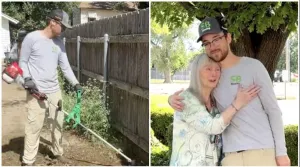
“I came home one day and I randomly was like, ‘Who is this weird guy in my house?’” Natasha remembers thinking as a little girl of the man in her living room, wearing an AmeriCorps t-shirt, a Stanford University hat, and socks with sandals. That was her first time meeting Neil, Natasha’s brother’s mentor. It was Neil who encouraged Randy, and in turn Natasha and her other siblings, to go to college.
“In our household everyone would tell us we were stupid all the time that we (the kids) were stupid so we believed it,” says Natasha, recounting specifically the intimidation and difficulty she experienced learning to read in elementary school. “My grandmother, my mother, everyone.”
But reading eventually became Natasha’s favorite pastime, and something she did regularly with her mentors. By eighth grade, she says, she was reading books at an adult level.
“At home there was a lot of fighting and arguing—reading was a way to kind of escape that reality.”
The organization founded in Portland that connected Natasha and her brother to their mentors, Friends of the Children, was created with the idea that long-term mentorship—12.5 years long, to be exact—has the potential to break the cycle of generational poverty for kids most in need. While it may not yet be feasible in its existing model on a global level, Friends of the Children’s 120-strong paid full-time staff mentor 1,400 students in a handful of cities across the US.
The mentors, called “friends,” observe classrooms as part of the six-week selection process, looking for children displaying aggressive behavior or social withdrawal, repeatedly wearing the same clothes, or that are behind academically. Beyond that, consideration is given to children in foster care, who have a parent that is incarcerated, or who are in extreme poverty (though all the schools Friends of the Children work with serve primarily low-income students).
Friends of the Children’s three main goals are to ensure that the students graduate high school, and that they avoid the juvenile justice system and teen pregnancy. Since its start in 1993, they’ve found success with the 265 graduates of the program to date: half had parents who were incarcerated, but 93 percent managed to avoid the criminal justice system; 60 percent were born to parents lacking a high school diploma, but 83 percent graduated; and a staggering 98 percent avoided early pregnancy though most, 85 percent, were born to a teen parent.
Weekly mentorship that lasts over a decade is certainly no quick fix, nor a small investment.
Gregg Lavender, a current mentor, spends well over the required four hours per week with his participants. His emotional investment is significant, as is the trauma that many of the children that he mentors face. In the span of one recent week, Gregg had two children share their own experiences with sexual abuse. A second-grader Gregg works with is homeless and missed 45 days of school last year. Even when his mentees are in school, Gregg, who regularly sits in to observe, says that large classes of 35 students or more pose challenges in giving individual help to the children. This further exacerbates already high academic needs, as well as social and emotional ones.
There’s no question that many of the children involved in the mentorship program are forced to grapple with tragic and serious realities. But watching Gregg pick up an exuberant eight-year-old for an afternoon of board games and bike rides, it seems that something as relatively simple as a mentor could actually have a real impact. “Friends” are meant to actively partner with parents rather than work independently of them. And many, like Gregg, also come from families where similar barriers to escaping poverty existed.
Natasha is another such example.
After graduating from the program, she went on to college and a career. But when Neil, her brother’s mentor, passed away years later, Natasha was drawn back to the organization. Now she’s a mentor to eleven young girls herself, determined to help each “find her spark” the way Natasha’s mentors helped her.
For some children, it seems the spark lies in the special bond with a mentor, over years of quality time and consistent care.