
Do you have anxiety? Have you tried just about everything to get over it, but it just keeps coming back? Perhaps you thought you had got over it, only for the symptoms to return with a vengeance? Whatever your circumstances, science can help you to beat anxiety for good.

Anxiety can present as fear, restlessness, an inability to focus at work or school, finding it hard to fall or stay asleep at night, or getting easily irritated. In social situations, it can make it hard to talk to others; you might feel like you’re constantly being judged, or have symptoms such as stuttering, sweating, blushing or an upset stomach.

do it badly, perfectionism, procrastination, wait to worry, self forgiveness, helping others, anxiety symptoms, generalized anxiety disorder
Representative Image: Anxiety can manifest in many different ways. Canva

It can appear out of the blue as a panic attack, when sudden spikes of anxiety make you feel like you’re about to have a heart attack, go mad or lose control. Or it can be present all the time, as in generalized anxiety disorder, when diffuse and pervasive worry consumes you and you look to the future with dread.

Most people experience it at some point, but if anxiety starts interfering with your life, sleep, ability to form relationships or productivity, you might have an anxiety disorder. Research shows that if left untreated, anxiety can lead to depression, early death and suicide. And while it can indeed lead to such serious health consequences, the medication that is prescribed to treat anxiety doesn’t often work in the long-term. Symptoms often return and you’re back where you started.

How science can help

The way you handle things in life has a direct impact on how much anxiety you experience. By tweaking your coping strategy you can lower your anxiety levels. Here are some of the top coping skills that have emerged from our study at the University of Cambridge, which will be presented at the 30th European Congress of Neuropsychopharmacology in Paris.

This may sound strange, but the writer and poet GK Chesterton said, “Anything worth doing is worth doing badly.” And he has a point. This works so well because it speeds up your decision-making process and catapults you straight into action. Otherwise, you could spend hours deciding how or what you should do, which can be very time-consuming and stressful.

“Anything worth doing is worth doing badly.”

— GK Chesterton

People often want to do something “perfectly” or wait for the “perfect time” before starting. However, this can lead to procrastination, long delays, or even prevent us from doing it at all, which causes stress and anxiety.

Instead, why not just start by “doing it badly” and without worrying about how it’s going to turn out? This will not only make it much easier to begin, but you’ll also find that you’re completing tasks much more quickly than before. More often than not, you’ll also discover that you’re not doing it that badly after all—even if you are, you can always fine-tune it later.

Using “do it badly” as a motto gives you the courage to try new things, adds a little fun to everything, and stops you worrying too much about the outcome. It’s about doing it badly today and improving as you go. Ultimately, it’s about liberation.

Forgive yourself and ‘wait to worry’

Are you particularly critical of yourself and the blunders you make? Well, imagine if you had a friend who constantly pointed out everything that was wrong with you and your life. You’d probably want to get rid of them right away.

But people with anxiety often do this to themselves so frequently that they don’t even realize it anymore. They’re just not kind to themselves.

So perhaps it’s time to change and start forgiving ourselves for the mistakes we make. If you feel like you’ve embarrassed yourself in a situation, don’t criticize yourself – simply realize that you have this impulse to blame yourself, then drop the negative thought and redirect your attention back to the task at hand or whatever you were doing.

Another effective strategy is to “wait to worry.” If something went wrong and you feel compelled to worry (because you think you screwed up), don’t do this immediately. Instead, postpone your worry – set aside 10 minutes each day during which you can worry about anything.

If you do this, you’ll find that when you come back to the situation that triggered the initial anxiety, you won’t perceive it as bothersome or worrisome. Our thoughts actually decay very quickly if we don’t feed them with energy.

Find purpose in life by helping others

It’s also worth considering how much of your day is spent with someone else in mind? If it’s very little or none at all, then you’re at a high risk of poor mental health. Regardless of how much we work or the amount of money we make, we can’t be truly happy until we know that someone else needs us and depends on our productivity or love.

This doesn’t mean that we need people’s praise, but doing something with someone else in mind takes the spotlight off of us (and our anxieties and worries) and places it onto others – and how we can make a difference to them.

Being connected to people has regularly been shown to be one of the most potent buffers against poor mental health. The neurologist Viktor Frankl wrote:

“For people who think there’s nothing to live for, nothing more to expect from life — the question is getting these people to realise that life is still expecting something from them.”

“…the question is getting these people to realise that life is still expecting something from them.”

— Viktor Frankl

Knowing that someone else needs you makes it easier to endure the toughest times. You’ll know the “why” for your existence and will be able to bear almost any “how”.

So how can you make yourself important in someone else’s life? It could be as simple as taking care of a child or elderly parent, volunteering, or finishing work that might benefit future generations. Even if these people never realize what you’ve done for them, it doesn’t matter because you will know. And this will make you realize the uniqueness and importance of your life.

Olivia Remes is a PhD Candidate at the University of Cambridge.

This article first appeared on The Conversation. You can read it here.

This article originally appeared last year.

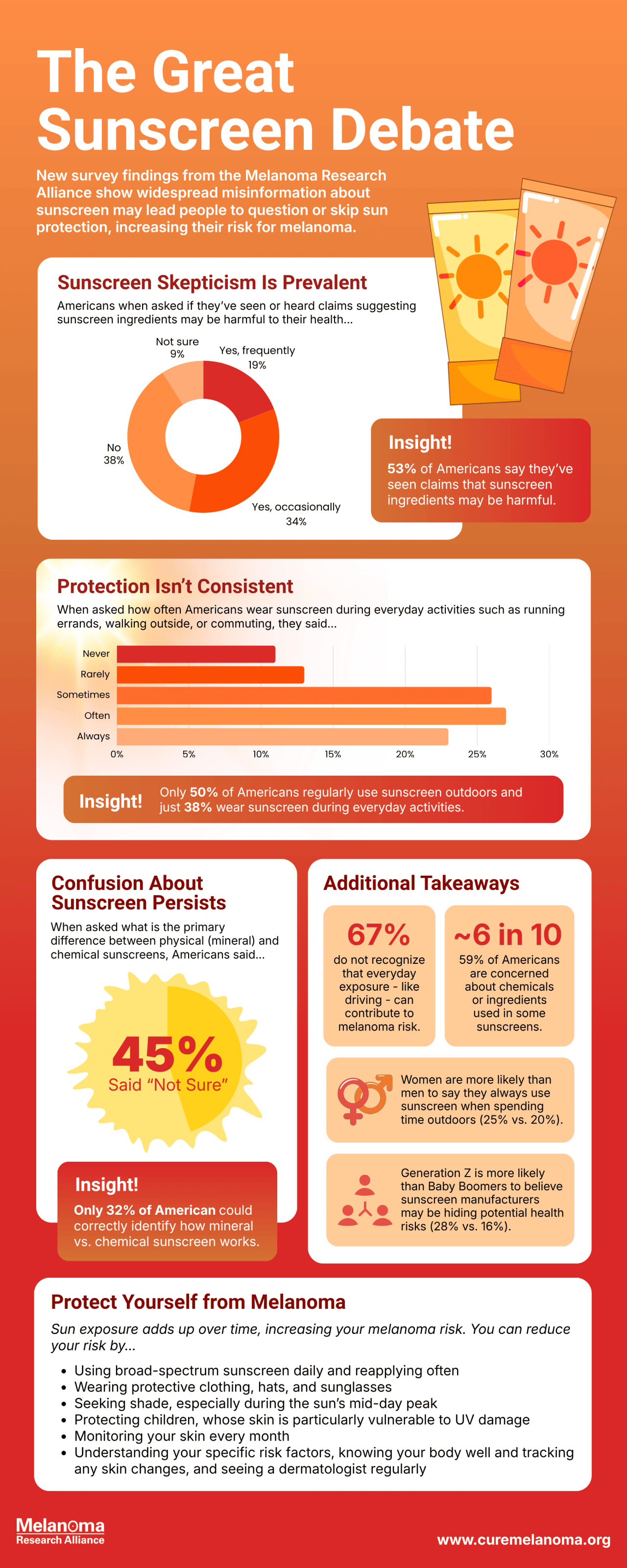
  • 59% of Americans worry about sunscreen chemicals. Only 32% understand how sunscreen works.
    Two persons applying sunscreen while sitting on a beach.

    Tiffany Miller for Melanoma Research Alliance

    Many Americans think of sunscreen at the beach. Fewer consider wearing it for the drive there. And many are questioning if they should wear sunscreen at all.

    These trends, uncovered in a new national survey from the nonprofit Melanoma Research Alliance (MRA), highlight a central challenge in skin cancer prevention.

    Skin cancer is the most common form of cancer in the United States, according to the CDC. Nine in 10 skin cancers, including melanoma, are linked to exposure to ultraviolet (UV) radiation, according to the MRA. Reducing exposure to UV radiation lowers the risk of skin cancer, making sunscreen a key part of prevention.

    A survey of 2,000 adults found that most Americans have a basic understanding of the risks of sun exposure, but that awareness doesn’t always translate into action. More than 8 in 10 recognize that spending long hours in the sun contributes to melanoma risk, yet roughly one-quarter say they rarely or never use sunscreen when spending time outdoors.

    Then there are those everyday moments that most people don’t recognize as risky. The light coming through the window over the sink. The short walk from the parking lot. The hour in the bleachers with the sun hitting one side of your face. A single sunburn can be dangerous, but it’s the accumulation of exposure over time that often drives risk.

    Sunscreen is widely recognized as an effective tool for skin cancer prevention, yet confusion and misinformation persist, especially on social media. Fifty-three percent of respondents say they have seen claims that sunscreen ingredients may be harmful. Fifty-nine percent say they are concerned about what’s in sunscreen, and 38% don’t believe sunscreen is safe and effective.

    An infographic on Melanoma Research Alliance's surveys on sunscreen facts and usage.

    Many Americans also say they aren’t sure how sunscreen works. Only about a third can correctly explain the difference between types of sunscreens, while a much larger share reports being unsure.

    Sunscreen works by absorbing or blocking UV radiation from reaching the skin, preventing DNA damage that can cause skin cancer. In the United States, the active ingredients in sunscreen undergo rigorous review by the Food and Drug Administration, which evaluates them as over-the-counter drugs. This drug-level standard requires extensive testing and contributes to a more limited set of approved UV filters compared with Europe, where sunscreens are regulated as cosmetics. The FDA is currently evaluating additional methodologies for assessing sunscreen ingredients, a process that could expand the number of approved UV filters available to U.S. consumers.

    All of this is unfolding during a period of real progress in melanoma research. While melanoma remains the deadliest form of skin cancer, more than 8,500 Americans are expected to die from it in 2026, roughly one person every hour, according to the American Cancer Society. Recent advances are improving outcomes for many patients with advanced disease, though approximately 50% of patients do not respond to current treatments, according to MRA, underscoring why prevention and early detection remain critical.

    Survey methodology: The Melanoma Research Alliance commissioned Atomik Research to conduct an online survey of 2,000 U.S. adults between March 27 and April 1, 2026. The sample is nationally representative based on gender, age, and geography. Margin of error: ±2 percentage points at a 95% confidence level. Atomik Research, part of 4media group, is a creative market research agency.

    This story was produced by Melanoma Research Alliance and reviewed and distributed by Stacker.

  • You know exercise is good for you – so why is it so hard to put it into practice?
    Photo credit: Jordi Salas/Moment via Getty ImagesResearch shows that doing exercise around other people improves your chances of sticking with it.
    ,

    You know exercise is good for you – so why is it so hard to put it into practice?

    Laura Baehr Physical activity is one of the most powerful health tools people have to improve mood, energy and sleep, even after just a few sessions. But the real superpower of an active lifestyle is what it can do for health and quality of life over time. Scientific evidence repeatedly demonstrates that physical activity reduces the risk of developing chronic conditions…

    Physical activity is one of the most powerful health tools people have to improve moodenergy and sleep, even after just a few sessions.

    But the real superpower of an active lifestyle is what it can do for health and quality of life over time. Scientific evidence repeatedly demonstrates that physical activity reduces the risk of developing chronic conditions such as heart disease, diabetes and even some cancers. Despite this, most Americans are not getting enough physical activity in their daily lives.

    So why are so few people physically active when the benefits are widely known?

    As a physical therapist and rehabilitation scientist who studies how to boost movement for people living with chronic conditions and physical disabilities, I spend a lot of time thinking about that question.

    The short answer is that understanding the importance of exercise usually doesn’t translate into exercising. Making it a part of your lifestyle requires believing you can do it and knowing you can do it.

    Exercise is a lifestyle choice that helps reduce the likelihood of developing a chronic illness. But the good news is that if you’re one of the 194 million Americans already living with one or more chronic illnessesbeginning or maintaining an exercise routine can slow the progression, reduce symptoms and improve health outcomes.

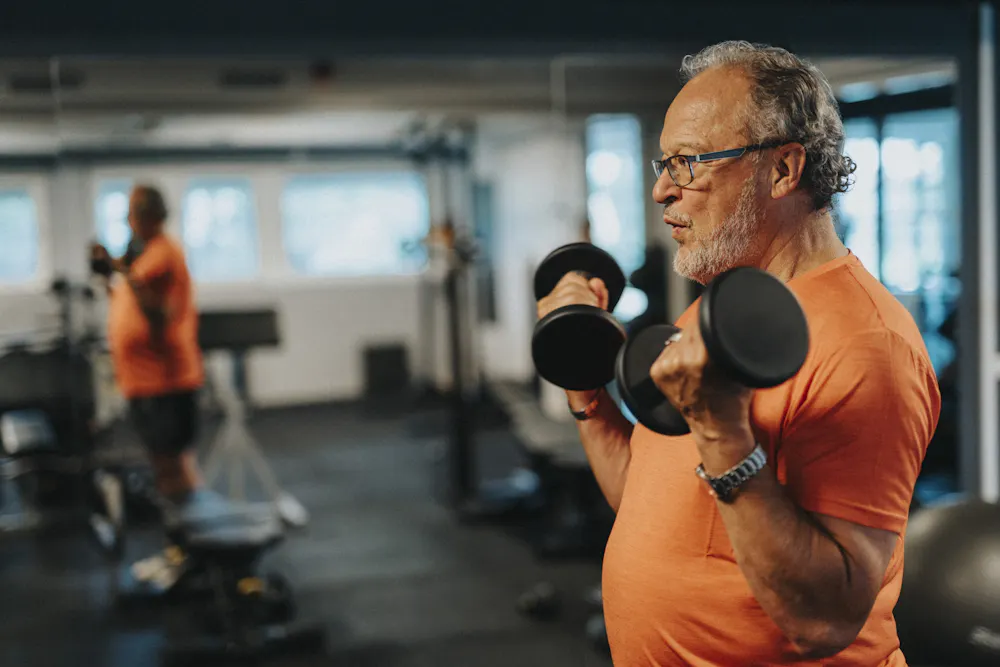
    Side view of active senior man with dumbbells exercising at health club.
    It’s never too late to reap the benefits of being active. Maskot/DigitalVision via Getty Images

    The difference between knowing and doing

    People are perpetually being sold on the benefits of physical activity, whether it’s from national healthcare organizations, their medical teams or social media influencers.

    But research is clear that education alone does not predict changes in behavior.

    Instead, shifting your beliefs about the barriers preventing you from exercise might actually be the key to get you moving more.

    In 1977, a psychologist named Albert Bandura proposed that the ability to perform a task even when it’s difficult – a concept called self-efficacy – is the most important personal characteristic that drives healthy changes in behavior.

    Half a century later, self-efficacy is still considered one of the most crucial personal factors for behavioral change when it comes to long-term physical activity. Researchers who develop and test exercise interventions, including me, evaluate novel tools and programs that are built to boost self-efficacy.

    Someone with high self-efficacy might say that they can get back to their exercise routine even if they miss a day. Or they might find a way to still exercise when they’re busy or tired. Someone with lower self-efficacy might be thrown off their routine if presented with the same obstacles.

    But how do you build this crucial trait and get moving more? A meta-analysis found that despite its importance, there is not one magic way to boost self-efficacy.

    That’s because people’s behavior is more complicated than individual factors alone. People and groups have varying needs and contexts that require tailored approaches.

    Smiling Black woman in swimsuit holding onto rails in indoor pool.
    Doing exercise you enjoy is one key to consistency. Luis Alvarez/DigitalVision via Getty Images

    Tips increase exercise self-efficacy

    Self-efficacy may be affected by multiple factors, but people can still apply techniques to boost their ability to start and stay with an exercise routine.

    Make it manageable. It may seem intuitive to set personal goals, but many of us aim too high and end up discouraged. Goals focused on weight loss, heart health or muscle strength are fine, but they can take a long time to achieve. Long-range goals don’t tend to be motivating in the difficult moments – like when you want to hit snooze but promised yourself that you were going to take a long walk before work.

    Instead, try short-term goal-setting – such as aiming to get a set number of lunchtime walks in during the workweek. This will move you toward your long-term goals, while making it easier to see and feel progress.

    In 2026, the American College of Sports Medicine refreshed its guidance on strength training, which represents synthesized findings from 137 systematic reviews and the first update since 2009. The biggest recommendation difference? Consistency matters more than specificity of strength programs. What that means is that doing any strength training has health benefits as long as it is the kind you will keep doing.

    Make it add up. The CDC’s recommended 150 minutes of aerobic activity is meant to be spread throughout the week – not done all at once. Research shows that small bursts of activity still have significant impacts on your overall health, and you’re much more likely to stick with them.

    Only have 15 minutes while your kid is asleep? Have a short exercise video or app cued up for nap time. Waiting for your next Zoom meeting to start? Climb your stairs once or twice. Microwaving your lunch? Hold on to the counter and lift and lower your heels until the timer goes off. Every little bit matters to your mind and body.

    Make it meaningful. Prioritize doing things you enjoy. The gym is not for everyone, and luckily this style of structured exercise is just one of many options for physical activity. Go bird-watching, join a gardening group, binge watch your favorite show on the treadmill. Any activity you do that uses energy is like dropping a coin into your weekly physical activity bank.

    Make it more fun. Choose to be around people who are already exercising – and who encourage you to do it, too. Research shows that people who are sedentary will increase their physical activity by socializing with someone who is active.

    Another study shows that older adults can tap into the energy of their peers during group exercise, helping to build self-efficacy. Exercising with others can even reduce social isolation and loneliness. As a bonus, choosing physical activities you enjoy can improve your mood and boost your confidence.

    Overcoming the hurdles

    These strategies come with a very important caveat: Increasing self-efficacy is empowering, but context also matters.

    Some structural barriers to physical activity are beyond the scope of our individual motivation. Researchers and health professionals know that lower socioeconomic statusdecreased neighborhood safety and lack of access to exercise programs make being and staying active even more difficult.

    But the thing to remember is that even small improvements can have big impacts. It is consistent practice – not perfection – that is key to reaping all the benefits physical activity has to offer.

    This article originally appeared on The Conversation. You can read it here.

  • Photographic memory is a myth – here’s what research really says about remembering
    Photo credit: F.J. Jimenez/Moment via Getty ImagesYour memory is not a camera.

    Hollywood loves a superpower. Not all involve capes or cosmic rays. Some are cognitive: characters who can remember everything. In movies and on TV, viewers repeatedly encounter those with extraordinary minds who glance once at a page, a room or a face – and later recreate every detail with surgical precision.

    You see it everywhere: “Suits,” “Sherlock” and “The Girl with the Dragon Tattoo.” Even in children’s literature there’s fifth grader Cam Jansen, who activates her photolike memory by saying “Click!”

    Most recently, it appeared in the television series “The Pitt,” set in a hospital emergency department. When the digital patient board suddenly went offline, medical student Joy Kwon saved the day by effortlessly reciting from memory every lost detail – names, rooms, doctors, conditions, vitals. It’s a gripping moment. The stakes are high, recall is perfect, and the implication is clear: Some people have minds that function like high-resolution cameras.

    The idea of photographic memory is simple and powerful: Experience is captured objectively, stored completely and retrieved perfectly. See it once, keep it forever.

    There’s just one problem. There’s no scientific evidence it exists.

    Your memory doesn’t record, it reconstructs

    As a memory researcher, I understand that belief in photographic memory is common and the idea is compelling. But it is simply wrong.

    Human memory does not work like a recording device. It’s a reconstructive process even among those with the most extraordinary skills. When you recall an event, memory doesn’t just hand you your experiences the same way every time. It’s never a matter of simply accessing, retrieving and playing back a static record of a stored slice of the past.

    hands with photo negatives on a lightbox, with magnifying glass
    Memory doesn’t scan through a bank of static, stored memories. janiecbros/iStock via Getty Images Plus

    Rather, you reconstruct the past by piecing together the remnants of experience available to you in the moment of recollection. It’s a process shaped by a range of factors, including the search cues you use; your present knowledge, attitudes and goals; and your current state of mind or mood.

    Because each of these factors is dynamic and changing, you’ll remember the past differently today – if ever so slightly – from how you remembered it yesterday, and differently from how you’ll remember it tomorrow. What you remember is not only incomplete but also inexact.

    A closer look at extraordinary memory

    Some people, such as memory competition champions, do have extraordinary memories. They can memorize thousands of digits or entire decks of cards in minutes. Their feats are real, but they don’t come from a memory that takes mental snapshots.

    Instead, these people rely on strategies – mental frameworks built through thousands of hours of deliberate practice to scaffold their memory in specific domains. Without these strategies and in other aspects of life, their recall looks pretty much like everyone else’s. Experts’ performance reflects better methods, not different machinery.

    In the scientific literature, the ability that comes closest to photographic memory is eidetic imagery: a form of visual mental imagery in which people claim they can briefly continue to “see” pictures they carefully studied and that are then removed from view.

    This ability is rare, is seen mostly in children, and usually disappears by adolescence. Even at its peak, however, it falls short of the Hollywood ideal. Eidetic images fade quickly and are not perfectly accurate. They can include distortions and even details that were not seen.

    It’s exactly what you’d expect from a reconstructive memory system – and exactly what you would not expect from a literal recording.

    Forgetting is a feature and not a flaw

    The myth about photographic memories feeds into the idea that your memory has failed if you can’t remember – that if your memory worked right, it would operate like a camera. When you can’t retrieve information or you lose it entirely, it can feel like something has gone wrong.

    In reality, forgetting is functional. Without it, we’d never get by.

    For instance, people use their memories of the past to forecast the future. Perfect memory would be a liability. Forgetting washes out the details of specific episodes and retains the gist so you can apply past experiences to novel situations, not just those that exactly match what happened before.

    Forgetting also guards your emotional health. The dulling of memories for negative events, like say an embarrassing episode, makes it easier for you to move on than if you reexperienced all the details in full force every time the event came to mind.

    Forgetting protects your sense of self as well. Memories of your past form the foundation of your identity. To help maintain a stable self-concept, people selectively modify or even forget those memories that challenge their views of themselves.

    view from above of two people looking at black and white photos in an album
    Even mundane moments can be recalled by the rare people with highly superior autobiographical memory. Slavica/iStock via Getty Images Plus

    The rare individuals who come closest to having near-perfect memory often reveal the downsides. People with highly superior autobiographical memory can remember nearly every day of their lives in vivid detail. If you ask one of these people to recall what they did on Nov. 24, 1999, they likely can tell you.

    Their extraordinary ability seems to come from a habitual, even compulsive, reflection on their past and a focus on anchoring memories to dates. However, this skill is limited to autobiographical events, and they are prone to various kinds of memory distortions and errors just like everyone else.

    While this ability might sound like an advantage, many people with highly superior autobiographical memory describe it as exhausting. They struggle to move past negative experiences because their memories make them seem as sharp as ever.

    Accurate – and empowering – view of memory

    Beliefs about “perfect memory” shape how people judge studentseyewitnessespatients and even themselves. They influence legal decisions, educational practices and unrealistic expectations about what human minds can – and should – do.

    Letting go of the camera metaphor could be a step toward better understanding how memory works. The brain is not a roll of film, it’s a storyteller – one that edits, interprets and reshapes the past in light of the present.

    And that’s not a limitation. It’s a superpower.

    This article originally appeared on The Conversation. You can read it here.

Explore More Health Stories

Well-being

You know exercise is good for you – so why is it so hard to put it into practice?

Health

Photographic memory is a myth – here’s what research really says about remembering

Well-being

How workplace stress hijacks the nervous system to cause headaches − and a neurologist’s guide to managing them

Health

Pollen allergies are brutal this year – a doctor explains why, and how to find relief