Benjamin Franklin is famously credited with the saying “Early to bed and early to rise, makes a man healthy, wealthy, and wise.” However, a new study has revealed that “early risers” may not always be wiser than “night owls.” Instead, researchers at Imperial College, London, have found that the brains of night owls are sharper than those of early risers. They published the findings in BMJ Public Health.

Representative Image Source: Pexels | Tim Samuel

The team of researchers combed through the bank of data extracted from more than 26,000 people and analyzed how different aspects of sleep like duration, patterns, and quality, affect mental sharpness and cognitive ability. They gathered information from these adults whether they called themselves a “morning person” or “evening person.”

Representative Image Source: Pexels | Olly

As the results emerged, the researchers were surprised. Night owls seemed to show better “cognitive scores” than those who said they were morning larks. In one group of adults, the night owls scored 13.5% higher than morning larks, whereas, in another group, they scored around 7.5% higher than the larks. This led to a remarkable shattering of previously held notions, as children are usually taught to be morning persons and never night owls who wander sleeplessly during the night.


via GIPHY


However, the results aren’t that surprising, because some of the most creative people in history are known to be night owls, including President Obama, Charles Darwin, Adolf Hitler, Winston Churchill, James Joyce, Marcel Proust, Keith Richards, and Elvis Presley, per The Independent.

Representative Image Source: Pexels | Cottonbro

“Our study found that adults who are naturally more active in the evening (what we called ‘eveningness’) tended to perform better on cognitive tests than those who are ‘morning people.’ Rather than just being personal preferences, these chronotypes could impact our cognitive function,” said lead study author, Dr. Raha West.


via GIPHY


A 2009 study by evolutionary psychologist Satoshi Kanazawa also predicted that more intelligent individuals are more likely to be nocturnal than less intelligent individuals. Writing for Psychology Today, he said, “Those with a childhood IQ of less than 75 go to bed around 23:41 on weeknights in early adulthood, whereas those with a childhood IQ of over 125 go to bed around 00:29.” This, however, was not common in the ancestral environment, because during this time, predators outside roamed free and people were at the risk of becoming their prey. So, they naturally developed the habit of sleeping at night and waking up early.

Representative Image Source: Pexels | Olly

Apart from timekeeping, another factor that researchers of Imperial College investigated was “sleep duration.” They found that a 7-to-9-hour sleep is optimum for good brain function, whereas sleeping for less than 7 hours or more than 9 hours can have detrimental effects on brain function. They also discovered that healthier lifestyles are associated with better cognitive function than lifestyles seething with chronic illnesses or alcohol consumption. Other factors that influence the brain’s capability include age, gender, bedtime routines, and consistent sleep schedules.


via GIPHY


However, this doesn’t mean that all morning larks are duller than all the night owls. The important thing is what one’s body demands and what is its rhythm. Explaining this, Dr. West concluded, “While understanding and working with your natural sleep tendencies is essential, it’s equally important to remember to get just enough sleep, not too long or too short. This is crucial for keeping your brain healthy and functioning at its best.”

  • Arizona firefighter donates her kidney to a fellow firefighter—her husband
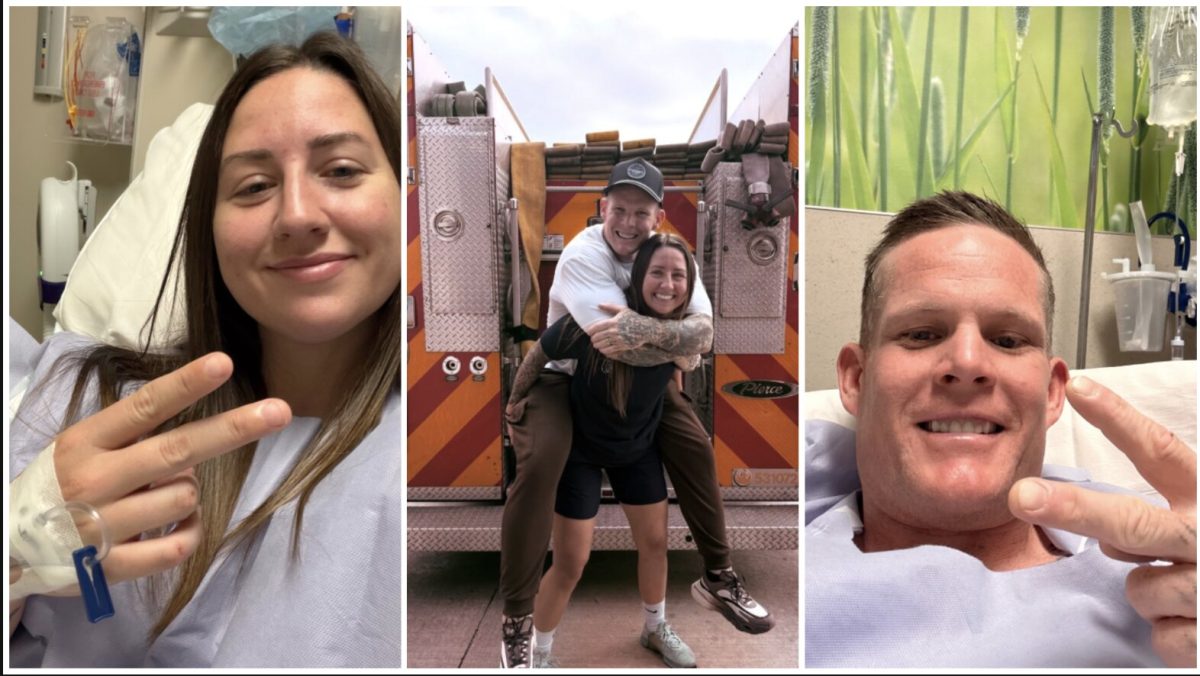
    Photo credit: The Coleman Family via Caitlyn Driscoll on GoFundMeFirefighter Maddie Geer saved the life of her husband, firefighter Robert Coleman Jr.
    ,

    Arizona firefighter donates her kidney to a fellow firefighter—her husband

    Husband and wife firefighters go through a kidney transplant together.

    Firefighter Maddie Geer was shocked when she heard the news. Another firefighter was diagnosed with stage five kidney failure out of nowhere. She rushed to volunteer her kidney to save her colleague’s life. That colleague also happened to be her husband.

    Geer and her husband, Robert Coleman Jr., fell in love while training to become firefighters at different stations. Last year, they got married. This year, after visiting a doctor to address fatigue issues, Coleman found that he was diagnosed with a rare kidney disease. 

    It was a total surprise

    “What really threw us for a loop, though, is the fire department does very thorough physicals, and nothing was caught with my blood pressure,” Coleman told Action News 5. “Blood pressure was good when I was going into my doctor’s meetings, but at night, my blood pressure was just going out of control. So, that’s what the scary part is.”

    Not only that, but Coleman had stage five kidney failure. He needed a new kidney as soon as possible. Geer leapt to volunteer.

    “Ever since he got diagnosed with it, I was like‚ ’If I’m a match, it’s meant to be because I’m going to give you my kidney,’” said Geer.

    “(Maddie) was just itching to help me in any kind of way. It ended up being the most miraculous way,” Coleman told 12 News.

    A perfect match

    Geer took the necessary tests and found she was a perfect donor match for her husband. They underwent the transplant to rounds of cheers from friends, family, and hospital workers. After the transplant, Coleman immediately felt the change.

    “Once I saw him, he looked like a new person,” said Geer. “His face was lit up; he had a smile I hadn’t seen in a while.”

    “I felt alive again,” he said. “She gave me a chance at a second life.”

    While the two are itching to get back to their jobs, they have to wait until they’re fully recovered. Knowing that taking the proper time off to heal impacts their income, Geer’s sister Caitlyn has set up a GoFundMe for the couple. The money will be used to help with household expenses and follow-up doctor’s visits.

    Check for signs, see your doctor regularly

    There’s one thing that Robert Coleman Jr. hopes people do after hearing his story. He’s advocating that everyone gets their annual physical and regular checkups with their doctors. 

    “No one is invincible, and I learned the hard way,” he said.

    It’s important to be mindful and alert about any changes in your body. The signs for kidney disease can be pretty mundane. Symptoms include swelling in the ankles and feet, frequent urination, and trouble sleeping among others. If you are experiencing any of these symptoms, it’s probably best to check with your doctor. It may be scary, but it’s best address any issue you may experience for the best chance of an optimal outcome.

  • After 40 years in a Portuguese circus, elephant retires to become the first resident of a new sanctuary
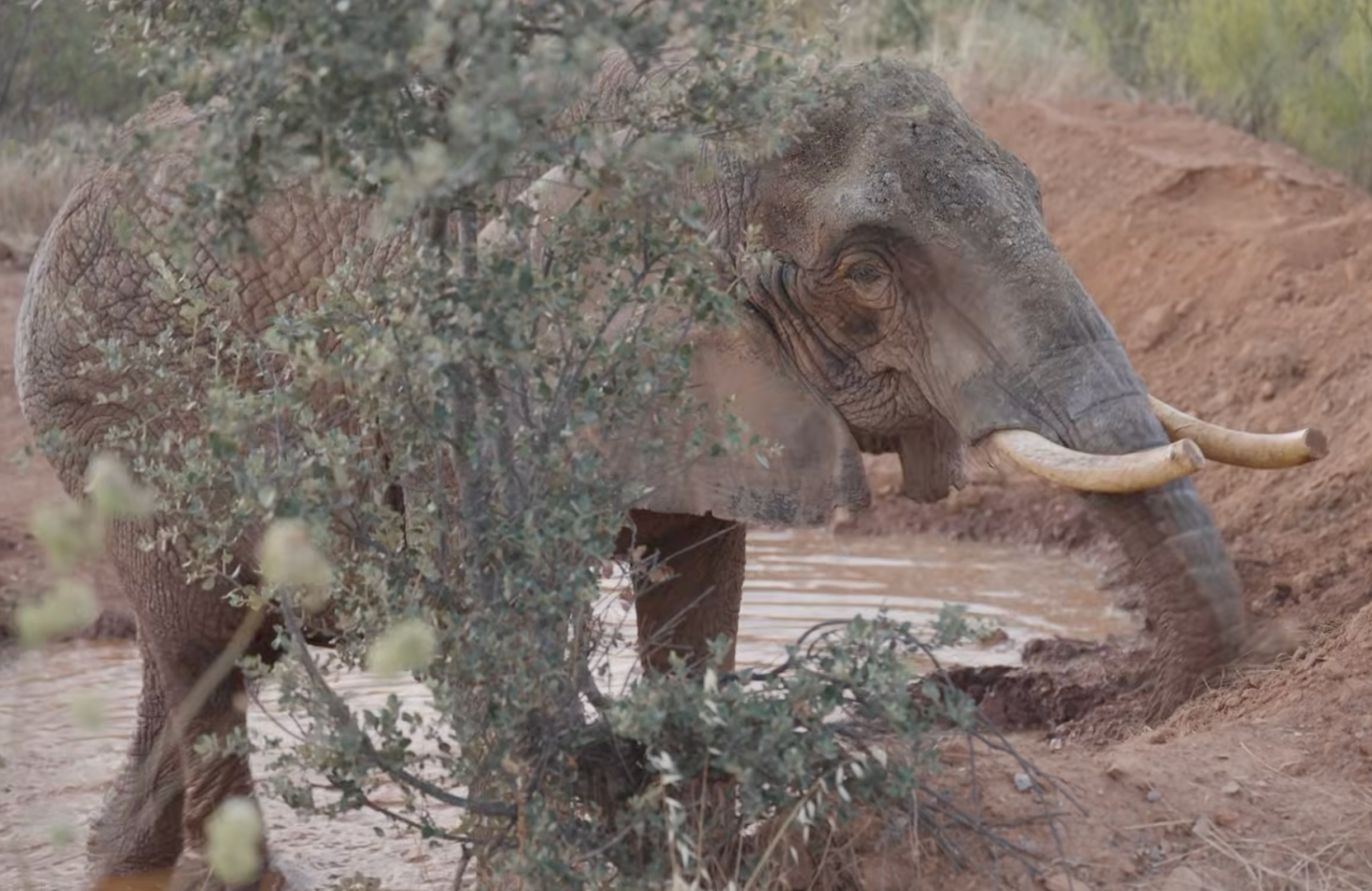
    Photo credit: Pangea Elephant Sanctuary/YouTubeJulie at the Pangea Elephant Sanctuary.

    Around 40 years ago, a young elephant named Julie was captured in Africa. Since 1988, she has performed with the Victor Hugo Cardinali Circus. Now, as the last circus elephant in Portugal, she’s finally getting the retirement she deserves—becoming the first resident of the Pangea Elephant Sanctuary.

    In 2018, Portugal officially banned wild animals from performing in circuses. The law was fully implemented in 2024 with the circus’s full cooperation. Since then, the circus has continued caring for Julie while Pangea built a home for her and other elephants.

    Getting Julie to her new home

    “This has not been an easy decision, as she has been a member of our family for nearly forty years,” Vítor Hugo Cardinali told The Portugal News. “But we believe it is the right decision for Julie. Working with Pangea on her transition to her new home was a critical factor in our deliberations.”

    Now Julie is enjoying mud baths and her new surroundings at the sanctuary in Alentejo, Portugal. Pangea’s officials hope to make Julie’s final years the best they can provide.

    “We cannot be sure; elephants in the wild live for more than 70 years,” Kate Moore, Pangea’s director-general, told The Associated Press. “Unfortunately, elephants born in captivity have half the life expectancy of an elephant born in the wild, so we cannot know exactly how much time she has left. She has had a hard life, but I must say she has been very energetic at Pangea this week, so we remain hopeful.”

    About the sanctuary

    The elephant sanctuary spans 400 hectares and is designed to welcome up to 30 elephants, giving them space to live and thrive. Later in 2026, the sanctuary will welcome a second elephant, Kariba, who is also around 40 years old and currently lives at a zoo in Belgium. Until more elephants arrive, socialize, and get settled, the sanctuary will remain closed to visitors.

    Students adopt and support Julie’s new living space

    Julie also has some little human friends cheering her on as she settles into her new home. The pupils at Wenhaston Primary School near Halesworth, Suffolk, England, are keeping track of Julie’s progress during their science lessons. After learning about Julie’s life in the circus, they wanted to show their support. They were delighted to hear that Julie was enjoying her new life at the sanctuary.

    “I was a bit upset that Julie was taken away from her mum when she was really young,” 9-year-old Mars told BBC News. “[I am] really happy [she’s been given a new life] because in the wild it’s their natural habitat. I think she feels really happy.”

    The children’s teacher, Emma Skinner, added, “[The students are] just completely in love with the fact that she’s been released and is in a wonderful place, doing all these wonderful things that she’s not been able to do for such a long time.”

    With the support of schoolchildren, her former trainer, and Pangea, Julie’s golden years are looking brighter than ever.

  • 14-year-old Montana kid rescues a drowning man with his lasso and rodeo skills
    Photo credit: CanvaYoung Jory Thomas saved a life with his roping skills.

    A teenager is being praised for pulling off a heroic act straight out of an American western film. The boy saved a man from drowning by lassoing him like a cowboy.

    Fourteen-year-old Jory Thomas was just visiting with his grandparents on their campground near Yellowstone River. Jory had his lariat to practice the roping skills he’d been learning for the past year. That’s when he heard cries for help from the nearby river.

    “We all heard, ‘Help, help,’” Jory said to KTVQ News. “There’s two or three people floating down the river, one hanging on to the cooler, and he wasn’t saying anything.”

    A raft carrying four people crashed into a bridge pillar, knocking them all into the Yellowstone River. While three of them made it to shore, the fourth was drifting quickly downstream as he clung to a cooler. Jory emptied his pockets and grabbed his lariat, immediately rushing to help.

    Practice prepared him for this moment

    “This current was pretty fast then, and he was moving pretty quickly,” said Jory. “Only thing I could focus on was helping him get out of the water because I didn’t want to see anyone go in front of me.”

    Jory had been practicing using a lariat to rope a dummy on his parents’ ranch nearly every afternoon when the weather was fair. Ready for action, Jory ran into the shallower part of the river, getting chest-deep into the water. Letting his training do the work, Jory took his 12-foot lariat and lassoed the drowning man.

    “Luckily, I caught him first try,” he said.

    Jory slowly pulled the man to shore as first responders arrived.

    “I felt pretty good afterwards that I knew he was okay and was out of the water,” he said. “God was basically putting me in the place of all this. God was just telling me all of this at the time and saying, ‘Go get him, you got it, and I believe in you.’”

    Jory’s instinct was to help

    Jory’s family was proud but not too surprised that he leapt into action. To them, being helpful was just Jory being Jory.

    “His first instinct always is to help other people. He’s always been that way,” said Sandy, Thomas’ grandmother. “The whole community is proud of him. We’ve had a lot of feedback, but that’s Jory. He’s always there to help somebody else.”

    “We’ll be in town at the grocery store, and you’ll see an elderly person,” Jase, Jory’s father, told Cowboy State Daily. “They can’t pack the groceries, and he never says a word. He goes over and gets their groceries and packs them out. That’s just who he is.”

    The local police also praised Jory for taking action.

    “My opinion, Jory saved the individual’s life, 100%,” said Sweet Grass County Sheriff Alan Ronneberg. “Had Jory not acted, I believe the chances of this individual making it to shore were very slim.”’

    “Jory saw another in trouble and acted, not for himself but for another,” Ronneberg added. “Jory is a lesson for all of us in this day and age and showed us what is courageous and right.”

Explore More News Stories

World

After 40 years in a Portuguese circus, elephant retires to become the first resident of a new sanctuary

Local

14-year-old Montana kid rescues a drowning man with his lasso and rodeo skills

Nation

One man’s bad day led to a legacy of love from the ‘Kissing Tree’ for the whole Victoria community

Local

11-year-old Kentuckian rescues man drowning in apartment complex pool