
Steve Wozniak, one of the top electronic engineers of his generation, cofounded Apple Inc. alongside Steve Jobs and Ronald Wayne. “Woz” as he’s affectionately called, was different from his two other co-founders, selling his stock in Apple in the 1980s. Had he kept the stock, there is no doubt that he would be significantly richer today, perhaps even becoming a trillionaire. A debate regarding this issue arose on an online message board, with critics arguing that Woz made a bad move. That’s when a rebuttal from Woz himself popped up.

The conversation occurred on a forum on Slashdot, a social news site that billed itself as “News for Nerds.” In the thread about Wozniak’s lawsuit against Internet scammers, commenters engaged in a discussion about whether Wozniak would be a multi-billionaire today if he hadn’t sold his stake in Apple in the 1980s. One comment read, “Smart man. Great engineer. Bad decision. Happens to all of us.” Little did they know that Wozniak was lurking in the forum.

It turns out that Wozniak was still an active reader of Slashdot and decided to browse the forums on his 75th birthday. Wozniak still had an active account, one that was created when he did a Q&A for readers in the forum back in 2012. While he had barely posted himself since then, he saw this critique of his early sale of Apple stock and decided to weigh in on his “bad decision” with an eye-opening retort.

“I gave all my Apple wealth away because wealth and power are not what I live for,” Wozniak wrote. “I have a lot of fun and happiness. I funded a lot of important museums and arts groups in San Jose, the city of my birth, and they named a street after me for being good. I now speak publicly and have risen to the top. I have no idea how much I have, but after speaking for 20 years it might be $10 million plus a couple of homes. I never look for any type of tax dodge. I earn money from my labor and pay something like 55% combined tax on it. I am the happiest person ever. Life to me was never about accomplishment, but about happiness, which is smiles minus frowns. I developed these philosophies when I was 18 to 20 years old, and I never sold out.”

Wozniak pointed out that while he wasn’t the richest of the rich, he was still rich, both in life and in his bank account. He saw value in what he could do to help and what he could enjoy with the money he had, rather than in holding onto his Apple stock.

Bear in mind, a great portion of us would likely be happy, too, if we ended up as multi-millionaires like Wozniak. While the saying goes, “Money doesn’t buy happiness,” it can ease stress, cover basic needs, and solve many everyday problems—making most people considerably happier than they are now.

But then the question is no longer, “Does money provide happiness?” but “How much money provides happiness?” Along with that, “Is there a cap on where money just can’t make a person happier?”

“How much money provides happiness?”

There’s no real concrete number in your bank account that can guarantee happiness, but there are some interesting benchmarks. According to a 2023 study, Millennials overwhelmingly stated that they would need over $500,000 to be happy, whereas Boomers, Gen X, and Gen Z all quoted ranges under $200,000. While each generation has its challenges, a theory suggests that the Millennial generation’s higher price range for happiness is largely due to their struggle to achieve certain life milestones, such as owning a home and raising children, while also dealing with student debt.

The amount of money you’d need to be happy can also depend on where you live and what trade-offs you’re willing to make. If you love the beach, you won’t love that it costs an average salary of $188,160 to be happy and have your needs met in Hawaii, whereas you’d only need slightly under $90,000 to be living well and happy in West Virginia. There are also differences in cost depending on whether you live in a city, a town, or a rural community within each state.

“Is there any point in which money doesn’t impact happiness?”

There’s no clear answer to this question either, as people’s needs and situations differ from person to person; however, there is a general guideline. A 2022 University of Virginia study found that most indicators of happiness related to finances plateaued when a person earned more than $500,000. That said, the majority of people who participated in that study didn’t earn that much. However, the data showed that while the quality of life and well-being continued to improve among the participants as their annual income increased, overall happiness started to plateau around the $100,000 range and didn’t increase significantly from there.

It’s also important to consider all the other elements that contribute to a person’s happiness, such as relationships, family, community, health, and the like. The 2025 World Happiness Report ranks over 140 countries based on their happiness, considering several factors. They don’t ask the participants if they’re happy, but instead analyze factors such as the country’s GDP, average life expectancy, and generosity. One striking element to note is that while the United States has the fourth highest GDP per capita among all the other countries in the report, it ranks 24th in overall happiness.

While finances and pursuing more money are indeed important, it’s also important to recognize that they’re a part in growing your happiness and shouldn’t be the sole focus. As Steve Wozniak has shown, there are many different ways and perspectives that make a person truly rich.


  • Millions of Illinois residents wake up to find that $2.6 billion of their medical debt has been eliminated
    Photo credit: CanvaMillions in Illinois had their medical debt paid for.

    Regardless of how well or poorly the overall economy is doing, many Americans are saddled with crushing medical debt. Such debt can hold people in a dangerous place: they can’t prosper or build wealth because they’re too deep in the hole, and they might make their health worse by forgoing necessary care in order to save. However, one million residents in Illinois are breathing a sigh of relief knowing their medical debt has been paid for.

    Partnering with officials in Cook County and Undue Medical Debt, Illinois Gov. J.B. Pritzker worked on the Illinois Medical Debt Relief Program based on a Cook County Medical Debt Relief Initiative. The patients needn’t apply for the relief initiative; they just had to be Illinois residents with a household income at or below 400% of the federal poverty level. They could still qualify if they had medical debts equal or more than 5% of their annual household income. If qualified, the resident would receive a confirmation letter that their debt had been paid.

    Debt today, gone tomorrow

    “In Illinois, we believe healthcare is a human right—and affordability is central to that promise,” Lieutenant Gov. Juliana Stratton said in a press release. “No one should ever delay care because of cost or face financial ruin simply because they got sick. The Illinois Medical Debt Relief Program is about lifting that burden, strengthening families, and ensuring every Illinoisan can seek the care they need. When we make healthcare more affordable, we build healthier and stronger communities.” 

    “Combined with our partners here in Cook County, who have erased $1.5 billion, we have delivered more than $2 billion in relief to over a million Illinoisans in all 102 counties of our state, with an average elimination across the state of $1,200 per patient,” Pritzker told The Center Square.

    Another state collaboration with Undue Medical Debt

    If this story sounds familiar, GOOD recently covered the state of Connecticut partnering with Undue Medical Debt in a similar fashion. To put it simply, the strategy UMD and their partners use is to purchase medical debt from bill collectors. They bundle and purchase the debt for a discount and, since they are buying so much debt at once, they’re typically able to negotiate a good deal. This means that they’re able to purchase most debt for pennies on the dollar.

    It’s not without critics

    While this has been bringing relief to many folks, there are still critics. A 2024 National Bureau of Economic Research study found that medical debt erasure didn’t improve the recipients’ overall financial well-being. While no longer having medical debt relieves a burden, it doesn’t automatically raise a person’s wages, assist housing needs, etc. 

    They also argue that having medical debt relieved wouldn’t improve a person’s access to healthcare. A patient may accrue new, additional debt because of ongoing care. A person may also still avoid getting necessary care to avoid a new bill.

    It will be interesting to see if this version of medical debt relief becomes even more common or if different solutions are inspired from it.

  • The states with the highest rates of uninsured drivers and what it costs everyone else
    Photo credit: mojo cp // ShutterstockAn insurance agent explaining a policy to a customer.
    ,

    The states with the highest rates of uninsured drivers and what it costs everyone else

    Coverage gaps leave insured drivers and taxpayers footing the bill.

    Jeff Temple

    Nearly every state requires drivers to carry auto liability insurance, yet millions of motorists are still on the road without it.

    In 2023, 15.4% of U.S. drivers were uninsured, according to the Insurance Research Council, meaning more than 1 in 7 motorists lacked coverage that could pay for injuries or damage they caused in a crash. The rate has increased since 2017 and remains elevated after a pandemic-era jump that affected nearly every state.

    The burden is not limited to those driving without coverage. When an uninsured driver causes a crash, costs can shift to injured people, insured drivers, insurers, public systems, and households already dealing with higher auto insurance prices.

    Temple Injury Law, a Las Vegas personal injury law firm, examined national insurance and crash-cost data to understand where uninsured driving is most common and how those costs ripple beyond the crash scene.

    Mississippi, New Mexico, and D.C. had the highest uninsured-driver rates

    The highest uninsured-driver rate in 2023 was in Mississippi, where 28.2% of motorists were uninsured, according to the IRC. New Mexico followed at 24.1%, and the District of Columbia ranked third at 23.1%. At the other end of the spectrum, the lowest rates were in Maine at 5.7%, Utah at 6.2%, and Idaho at 6.4%.

    Those gaps show how differently the uninsured-driver problem plays out across the country. In Mississippi, the share of uninsured motorists was nearly five times Maine’s rate. Nationally, the National Association of Insurance Commissioners notes that uninsured-motorist rates range from 5.7% in Maine to 28.2% in Mississippi, despite near-universal legal requirements to carry coverage.

    The Insurance Research Council says several factors are associated with state-to-state differences, including economic conditions, insurance costs, and state insurance laws and regulations. That makes uninsured driving both a compliance issue and an affordability issue: A state can require insurance, but that does not guarantee every driver can afford or maintain it.

    Most states require insurance, but enforcement varies

    Auto liability insurance is compulsory in 49 states and the District of Columbia. New Hampshire is the only state without a compulsory auto insurance law, though drivers there must meet financial responsibility requirements in certain circumstances.

    Liability coverage is meant to protect other people when a driver causes a crash. But minimum coverage requirements vary by state, and so do enforcement systems. Some states use electronic insurance verification programs, registration checks, fines, license suspensions, or other tools to discourage uninsured driving. Others rely more heavily on proof-of-insurance checks after traffic stops or crashes.

    The result is a system in which uninsured driving can remain undetected until a collision occurs. By then, the financial problem has already moved from a compliance question to a question of who pays.

    The cost often shifts to insured drivers

    The NAIC describes uninsured motorists as a cost burden on drivers who comply with compulsory insurance laws. When uninsured drivers cause crashes, some of those costs are integrated into uninsured-motorist coverage purchased by insured drivers, which can help pay for injuries or vehicle damage caused by someone without insurance.

    That does not mean uninsured drivers are the only reason premiums rise. Auto insurance prices are affected by many factors, including accident rates, traffic density, vehicle theft, repair costs, medical and legal costs, population density, weather, and state liability requirements, according to the NAIC’s 2023 Auto Insurance Database report.

    Still, uninsured driving adds another layer of risk to an already expensive system. The NAIC reported that the countrywide average auto insurance expenditure was $1,281 in 2023, up 13.98% from the previous year. The countrywide combined average premium rose 14.41% to $1,438.

    For households living close to the edge, those increases can matter. In its 2023 household well-being survey, the Federal Reserve found that not all adults could cover an unexpected $400 emergency expense with cash or its equivalent, underscoring how a relatively small financial shock can force trade-offs for some families.

    Crash costs reach far beyond insurance claims

    The financial consequences of uninsured driving sit inside a much larger crash-cost system. The Bureau of Transportation Statistics estimated that motor vehicle crashes in 2019 incurred $340 billion in economic costs, including medical care, lost productivity, legal and court costs, emergency services, insurance administration, congestion, property damage, and workplace losses. Public revenues covered roughly 9% of all motor vehicle crash costs in 2019, amounting to about $30 billion, or $230 in added taxes for every U.S. household.

    Those figures are not limited to crashes involving uninsured drivers. But they help explain why insurance gaps matter: When the person responsible for a crash lacks coverage, the costs do not disappear. They are absorbed elsewhere. It can be through another driver’s insurance, out-of-pocket expenses, health coverage, legal systems, public services, or uncompensated losses.

    Underinsurance is growing, too

    Uninsured driving is only part of the problem. In 2023, 18% of U.S. drivers were underinsured, meaning they had liability insurance but not enough to cover the injury costs caused by a crash, according to the Insurance Research Council. Combined, IRC found that about 1 in 3 drivers was either uninsured or underinsured.

    That distinction matters for crash victims and insured motorists. A driver may technically comply with state insurance requirements and still carry limits too low to cover serious injuries, medical bills, lost income, or long-term care. IRC noted that rising underinsured-motorist rates are driven by upward pressure on the severity of bodily-injury claims.

    For drivers, the practical risk is similar: Even when another motorist has some insurance, the available coverage may fall short of the crash’s actual cost.

    What the numbers show now

    The latest public data points to a persistent national problem: Uninsured driving remains common, the highest-rate states have uninsured-driver shares above 20%, and underinsurance is rising alongside it.

    For insured drivers, the issue is not only whether another motorist is following the law. It is whether the financial safety net that is supposed to follow every vehicle on the road is strong enough when a crash happens. In states with the highest uninsured-driver rates, that safety net is missing for roughly one-quarter of motorists.

    This story was produced by Temple Injury Law and reviewed and distributed by Stacker.

  • South Korea creates a website that allows you to pretend to order takeout to get the dopamine rush without spending a dime
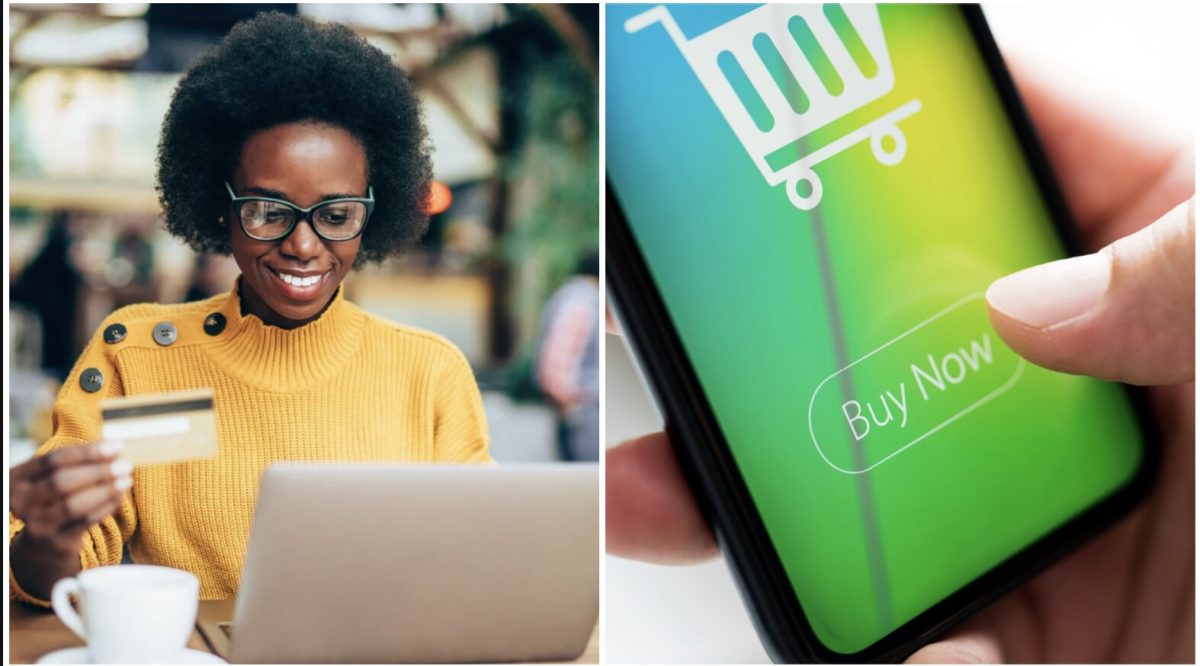
    Photo credit: CanvaGet the excitement of shopping without spending money.

    Have you ever done “retail therapy”? You feel stressed and overwhelmed so you decide to shop for some clothes or order food from an app? Sure, it can help you feel better in the moment, but not if you’re trying to save money. But what if you could get the same feeling of anticipation and the feel-good experience of shopping without spending anything? South Korea cooked up a solution.

    One of the latest trends that started in South Korea and is turning global are what are being called “dopamine sites.” These websites and apps provide realistic-looking digital storefronts that allow a person to add items to their cart, a fake credit card to fill out orders, and even simulate delivery trackers. The store, items, and everything about the transaction is fake but your brain gets that dopamine hit anyway.

    One example of this is FoodNeverComes, a fake delivery app in the vein of DoorDash and UberEats. The app is full of different eye-catching pictures of food to “order” like in those apps, allowing you to pick and choose. Users have said this app allows them to satisfy late-night cravings and get that feel-good buzz of ordering takeout without actually buying anything. If a person really does want a dish that’s on the app, FoodNeverComes provides a recipe so users can make it at home if they really want it.

    Abandoning the cart, feeling good anyway

    So why are people feeling the emotional payoff of making a purchase without actually buying anything? The psychology behind it is similar to the feeling some people get when they visit a website, add a bunch of items into the cart, and then abandon it. Psychologists found that anticipation of receiving an item is what triggers a better mood rather than actually having it in hand.

    Psychologist Dr. Deborah Ko explains in a video that this is due to what she called the endowment effect. She explains that putting items in a digital cart allows a person to feel like they “have” those items. Once you “have” those items it makes your brain already feel like you own it. 

    “It was the act of shopping that was the reward, not the product itself,” she says.

    These dopamine sites and apps simulate all of that and allow the brain to get that hit but eliminate the temptation and consequences of hitting the “buy” button.

    Are these dopamine sites good?

    Many psychologists are mixed as to whether these dopamine sites are beneficial. On one hand, it could help a person who regularly impulse buys food or products they cannot afford while also satisfying that urge. It could also help people adopt better habits while still keeping certain rituals. 

    For example, let’s say a person who typically orders pizza every Friday but wants to eat better or save money by removing that weekend-starting ritual. They could possibly benefit from “ordering” pizza through these fake food delivery apps. It will allow them to go through the motions and get that dopamine hit while they hit their fitness or financial goals.

    On the other hand, some argue using these dopamine sites won’t address certain harmful compulsive behaviors. They say that these apps and sites could just act as placebos and substitutes rather than truly address troubling issues.

    Whether an app or something like these dopamine sites can help or not, it is still important to learn, know, and discern how to best use the money you do have in real life.

Explore More Money Stories

Everyday Economics

The states with the highest rates of uninsured drivers and what it costs everyone else

Smart Spending

South Korea creates a website that allows you to pretend to order takeout to get the dopamine rush without spending a dime

Money

US giving grew 3% in 2025, crossing the $600B mark for the first time

Money

The ‘right to repair’ movement has a point, but consumers should read the warranty fine print first