What the “perfect body” looks like varies greatly from country to country. Superdrug Online Doctors created a project called “Perceptions of Perfection” to highlight the different views of beauty from 18 different countries. They hired a designer from each of the countries included and had them all Photoshop the same image to reflect the beauty standards of each country.
In the current economy, people are looking for ways to make and save money more than ever, given the poorer economic outlook. One way folks have been trying to make extra money, or even a full living, is through rideshare services like Uber. However, after one man shared his take-home pay once Uber took its cut, the result has both passengers and drivers seething.
An English Uber driver shared a breakdown of his seven-day earnings summary. He worked 13 hours, with Uber taking out 1.5% of his pay for rider promotions, 4.5% in third-party fees, and a whopping 26.1% going directly to Uber itself. In the end, the driver took home only 67.9% of his earnings. That means that out of the 13 total hours he drove, he was effectively paid for just under nine hours of work. How is this the case?
In 2023, Uber introduced an algorithm to determine fares and pricing, dubbed “dynamic pricing,” as an alternative to the old “surge pricing” model, which increased fares during periods or areas of high rideshare demand. The new system uses a different supply-and-demand formula to calculate the cost of a ride. There was a presumption that while rides would cost more, a greater portion of the fare would go directly toward the driver’s earnings.
In 2025, a study from the University of Oxford found that Uber’s “dynamic pricing” not only raised the cost of rides for passengers but also took a significantly larger cut of the driver’s overall pay. Research by academics at Columbia University found that the algorithm harmed both American Uber drivers and their passengers..
Haa anybody heard of Uber’s “dynamic pricing”? First it was surge pricing & NOW you’re just showing us cheap prices to charge us expensive prices once the ride is complete?
According to study author Len Sherman, Uber’s dynamic or “upfront” pricing model has allowed the rideshare company to “raise rider fares and cut driver pay on billions of rideshare trips, systematically, selectively, and opaquely.”
This is just one of several issues that has led Uber drivers to take the company to court. After all, many frequent Uber passengers assume that higher fares mean drivers earn more, not less—especially when those same drivers take a financial hit for rider discounts or promotions they aren’t responsible for offering.
There’s also the reminder that Uber drivers are still considered independent contractors, meaning that fuel costs, repairs, and other vehicle maintenance are their responsibility and must be paid out of pocket in order to work. However, some areas have driver pay rates or compensation structures that are fixed or adjusted to comply with state or city laws, but those changes appear to be handled on a case-by-case, city-by-city basis.
If you want to see improvements in both prices and driver take-home pay, rideshare drivers and frequent riders should contact their app’s customer service and reach out to local elected officials to push for fairer fares in their area. After all, drivers and riders should benefit more than the company that isn’t even in the vehicle.
Your tipping generosity might be related to your generation. – Photo credit: Canva, pixelshot (left, cropped) / Garakta Studio from Garakta Studio (middle, cropped) / Imágenes de gabriel paz (right, cropped)
Tipping is awkward because there are so many unwritten, ever-shifting social niceties at play. This is a somewhat embarrassing confession, but I didn’t realize until about 10 years ago—as a full-grown man with a mortgage—that many people add a bit extra for haircuts. I grew up in a small town with two tiny barber shops, and absolutely no one tipped for that service. I would have happily done so if I’d known better, but there wasn’t a sign on the wall. (As with most things in life, my wise wife had to school me on that one.) And this is all before factoring in the amount you’re supposed to tip.
All of that makes me wonder: Is there a generational element involved here? If you get used to one price of gas or a fast-food combo meal, you probably groan when you see those numbers inflate. There are a ton of factors to consider, but perhaps researchers can shed some light on them. In June 2025, the personal-finance site Bankrate published the results of an in-depth survey of the tipping habits of 2,445 adults. They found several trends, including that 63% had at least one negative view of tipping. Their results also showed that the likelihood of tipping generally increased with age, with Gen Z and Millennials as the “least frequent tippers.”
Which generation tips the best?
They found that 25% of Gen Z and 45% of Millennials “always tip their hair stylist/barber,” while Gen X (67%) and Boomers (71%) are at much higher rates. That pattern continued for both “always” tipping at sit-down restaurants (Gen Z at 43%, Millennials at 61%, Gen X at 83%, and Boomers at 84%) and “always tipping taxi/ride-share drivers (Gen Z at 23%, Millennials at 36%, Gen X at 50%, and Boomers at 61%).
Point-of-sale company SpotOn took a different approach, surveying 1,000 U.S. restaurant industry workers in 2024. The respondents voted the most generous tippers as Gen X (35%), followed by Millennials (31%), Boomers (17%), Gen Z (10%), and The Silent Generation (7%). Asked the inverse, 48% picked The Silent Generation as the worst tippers, with Gen Z at 42%.
But why exactly? It’s hard to say for sure.
So why do certain generations tip more than others? We have to assume there are exceptions to even the loosest rule—it’s not as if everyone from Gen Z is automatically a bad tipper, despite how many surveys roll in with similar results. “This trend might be cultural, economic, or both,” BankRate noted. “Notably, the two younger generations were most likely to say not having a stable income is the reason money negatively impacts their mental health, according to Bankrate’s 2025 Money and Mental Health Survey. If a young person’s paycheck is already stretched thin, they may be less inclined to add extra dollars to the bill.”
No matter who’s tipping or who they’re tipping or how much they’re tipping, the whole custom is the subject of seemingly never-ending debate. In one recent example, one Redditor went viral by sharing their encounter at a restaurant. After being handed a bill for $197.87, they left what they thought was a sensible tip of $25. But the server disagreed, handing it back to them and stating they only accepted tips in the 18-20% range.
Our brain loves repetitive patterns of easy, stimulating imagery and sound. The addictive nature is so strong that there’s a term to describe it: doomscrolling. It’s so easy to engage, and considerable research and investment have been made to encourage us to stare mindlessly at our phones. For some of us, it’s a simple distraction. For others, its an addiction is robbing them of a big part of their lives.
Given that the average person spends over four hours a day staring at their phones, imagine what could happen if we used that time for something more positive and productive. Doomscrolling isn’t just bad for our mental health, but it’s a time thief that prevents us from engaging in activities that build us up.
Redditors started chiming in with helpful alternatives that have worked for them. These are seven thoughtful solutions related to stopping the highly addictive and unproductive distraction of digital entertainment. It’s a compelling suggestion to consider what we could be doing instead of endlessly scrolling.
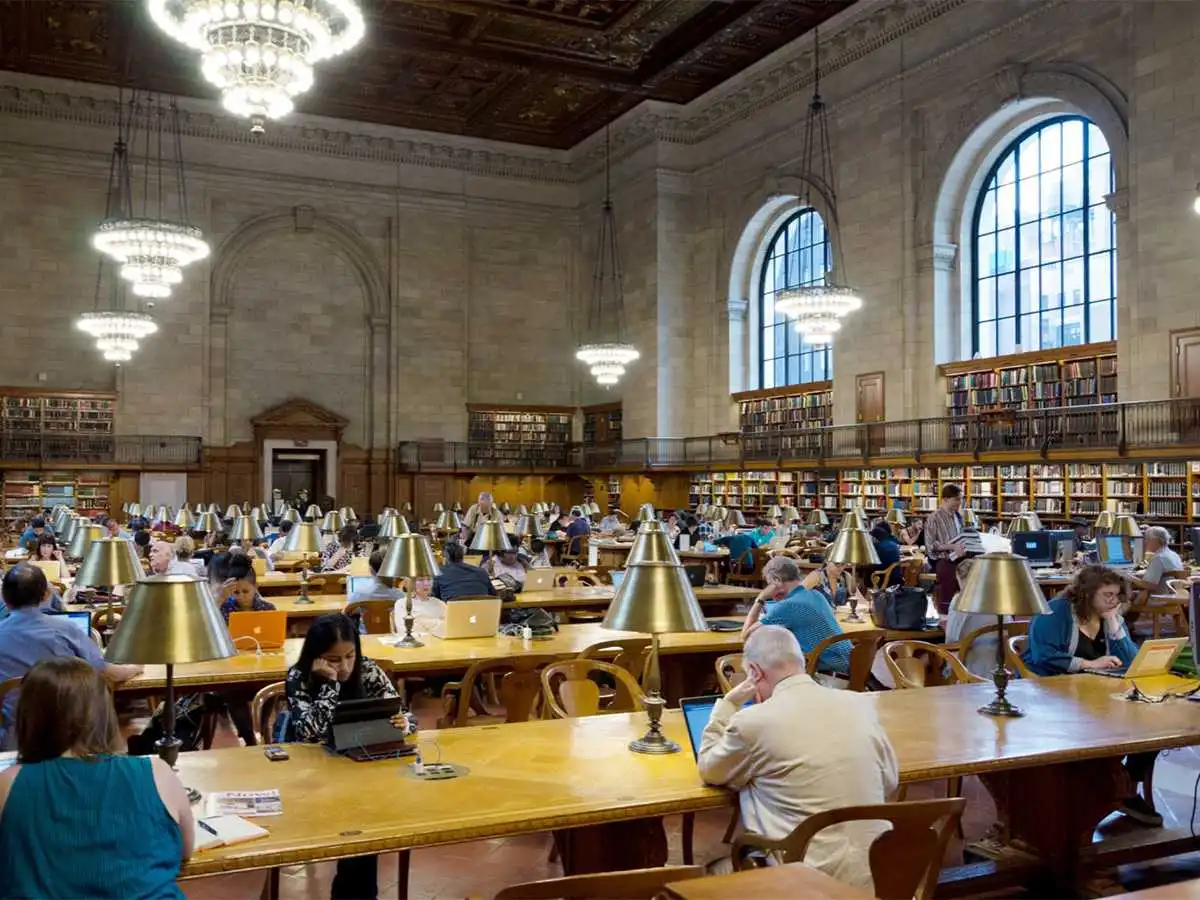
Because of easy access to the internet, many of us have forgotten about this incredible resource. Feeling inspired by the idea was MajorEntertainment65: “I read so much and am absolutely amazed by how few people read! The library is a free resource and depending on your library, they may have access to audiobooks and movies and tv shows, etc.”
As great an adventure as a trip to the public library can be, not everyone has the time to be there. However, that doesn’t have to define your ability to take advantage, said Brayongirl: “Do you have a book reader? With my library card, I can borrow books for my reader from home. Also, all libraries have a book chute. So you can go borrow a bunch of books on your day off and put them in the chute when you are done, even if the library is closed.”
One of the amazing benefits of a practice like folding paper—origami—is it’s an incredible stress reliever. A 2025 study published in the Journal of Pharmacy & BioAllied Sciences found origami therapy to be a simple and effective intervention for reducing anxiety among hospitalized children.
Feeling a bit swaggy about the whole thing was low-fish saying, “Learn to fold an origami crane by memory from any piece of paper.”
“Take a hot mindful shower followed up by a hot cup of chai with my favorite creamer,” suggested Virtual-Magician2384. Finding time to cultivate love and kindness for ourselves is an important practice many of us fail to utilize.
A 2022 study in the Journal of Medical Internet Research found that self-care improved people’s quality of life. Managing one’s physical and mental health gives someone a feeling of control and overall well-being.
4. Get yourself in the kitchen
You can watch this video, with over 2 million views, which teaches you the basics of cooking.
Suggesting some adventure in your own kitchen was Outrageous_Guess_794:“cook something nice, it doesn’t have to be expensive, just cook something new.”
A healthy and more affordable option, said RufousMorph, is to “Make your own foods rather than buying highly processed foods (technically this uses less money).”
5. Go for a walk
There are many health benefits to be gained from a simple walk. A 2023 study in Science Daily found that walking only 4,000 steps a day reduces the risk of death “from any cause.” Seems like a simple and highly beneficial self-care action.
“Hiking is free.99, great for your mental and physical health, and you might see a cool bug, plant, mushroom or animal!” said Pokemon_and_Petrucci with some creative energy.
Getting in a little productive work on the house as a bonus was suggested by dogma202: “Move. Get outside and hike, do yard work.”
6. Puzzles and mind games
Older man solving newspaper crossword on a street table. Image via asdf – Photo by Mathias Reding
Puzzles and games are healthy ways to stimulate brain activity. These are creative and cognitive skill builders. A 2022 study in the National Library of Medicine used puzzle-style games to reduce psychological stress, boost sustained attention, and significantly improve focus.
Activating the mind is a good thing, wrote kfbrewer:“Bonus points that puzzle games are good for the brain.”
A game that requires two people was suggested by mick_au: “Chess!!”
7. Enjoy some childhood activities from your past
Finding a meditative and relaxed state of joy was Purple-Spray-709: “I’ve been really enjoying doing some cute colouring books with my special alcohol based markers. I tried the adult colouring trend before and never liked it but having a cute/cozy book with thicker lines and using the right markers I’ve really been really enjoying it as a simple pleasure”
A 2020 study in the National Library of Medicine found that structured coloring, like a mandala, lowered anxiety and showed noticeable mood improvement.
Happy seniors ride bikes. Image via sdf – Photo by Syda Productions
Engaging in more positive actions that break the cycle brings better moods and an overall happier life. Some other quick solutions for a reset: ride a bike, stretch, write a handwritten letter to a friend, call your parents, meditate, and send positive thoughts to someone you know who’s experiencing a difficult moment.