On 11 March, 2011, Japan was struck with a powerful earthquake from its main island, Honshu. This triggered a savage tsunami that hit much of the northeastern coast of the nation. Following the disaster, casualties reached over 19,000, with many more people marked “missing.” Among the missing persons was Yuko Takamatsu, the wife of Yasuo Takamatsu. Despite losing her to the tsunami, Yasuo remains hopeful of recovering her last remains and continues to dive into the ocean to find her. 

Image Source : Destroyed vehicles lie near the rubble after the earthquake and tsunami devastated the area on March 16, 2011 in Minamisanriku, Japan. The 9.0 magnitude strong earthquake struck offshore on March 11 at 2:46pm local time, triggering a tsunami wave of up to ten metres which engulfed large parts of north-eastern Japan. The death toll continues to rise and could well reach 10,000 in a tragedy not seen since World War II in Japan. (Photo by Chris McGrath/Getty Images)
Image Source: Destroyed vehicles lie near the rubble after the earthquake and tsunami devastated the area on March 16, 2011, in Minamisanriku, Japan. The 9.0 magnitude strong earthquake struck offshore on March 11 at 2:46 pm local time, triggering a tsunami wave of up to ten meters which engulfed large parts of north-eastern Japan. (Photo by Chris McGrath/Getty Images)

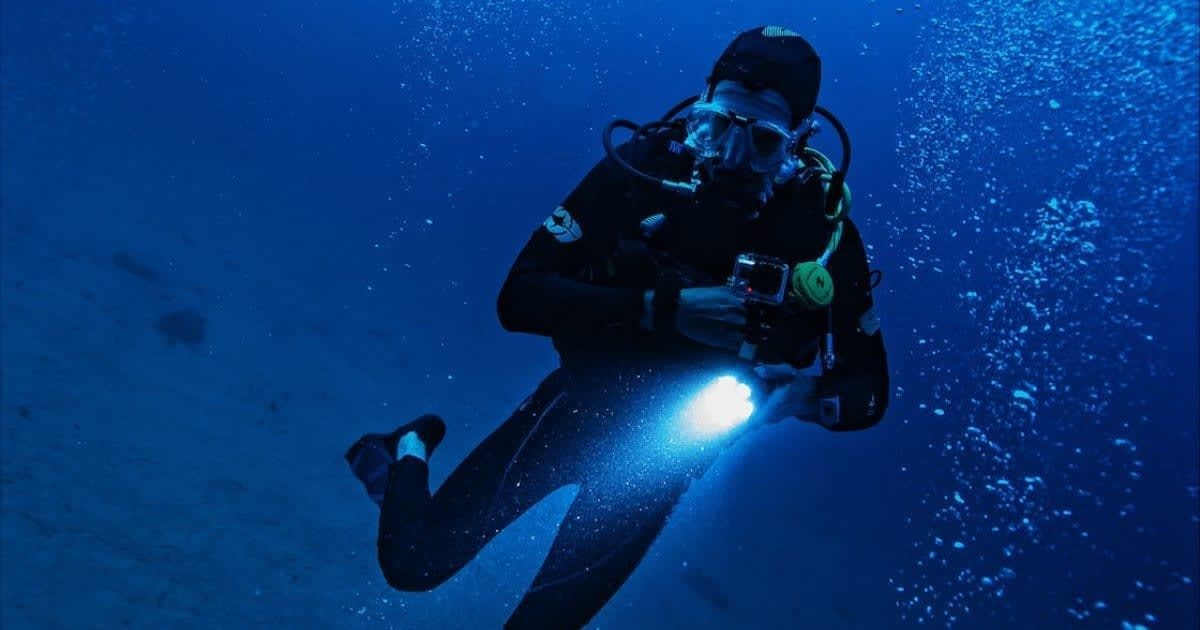
To retrieve her body, Yasuo decided to take up diving lessons at 56 to venture into the deep ocean. From 2013 to date, he has made hundreds of dives into the ocean in an attempt to find her but unfortunately, he has not been able to trace her remains. However, Takamatsu’s undying love for Yuko keeps him going and he is still hopeful that one day he will be able to find her. 


via GIPHY


According to a report by the NY Times, the couple first met in 1988, when Yuko was 25 and an employee at the 77 Bank in Onagawa. Takamatsu, on the other hand, was a soldier in Japan’s Ground Self-Defense Force and his boss introduced them. Since the day they met, they fell in love instantly. He described her as gentle and said that he liked her smile and modest nature. Yuko was always interested in listening to classical music and had a knack for painting as she used watercolors on canvasses  – which she showed to no one but her dearly beloved husband.


Finding a body in the depths of the ocean was never going to be an easy ask for Takatmatsu, with many even discouraging him from taking the task. Finding Yuko in the vast spaces of the ocean would be comparable to finding a needle in a haystack. But Takamatsu remains adamant about his choices and says, “At the age of 56, the reason I’m actually interested in learning to dive is that I’m trying to find my wife in the sea.”

Representative Image Source: Pixabay
Representative Image Source: Pexels | Pixabay

The search has not been easier for the husband. “I expected it to be difficult,” Takamatsu said and added, “And I’ve found it quite difficult, but it is the only thing I can do. I have no choice but to keep looking for her. I feel closest to her in the ocean.”

Months after the tsunami, Takamatsu had found his wife’s cell phone in the parking lot of her workplace with a gut-wrenching unsent text that he couldn’t receive. “So much tsunami,” it read, as per The Wrap. Meanwhile, Tetsuya Takagi, a forensic pathologist at Tohoku Medical and Pharmaceutical University in Sendai, talked about the fate of bodies that are washed away into the oceans. 
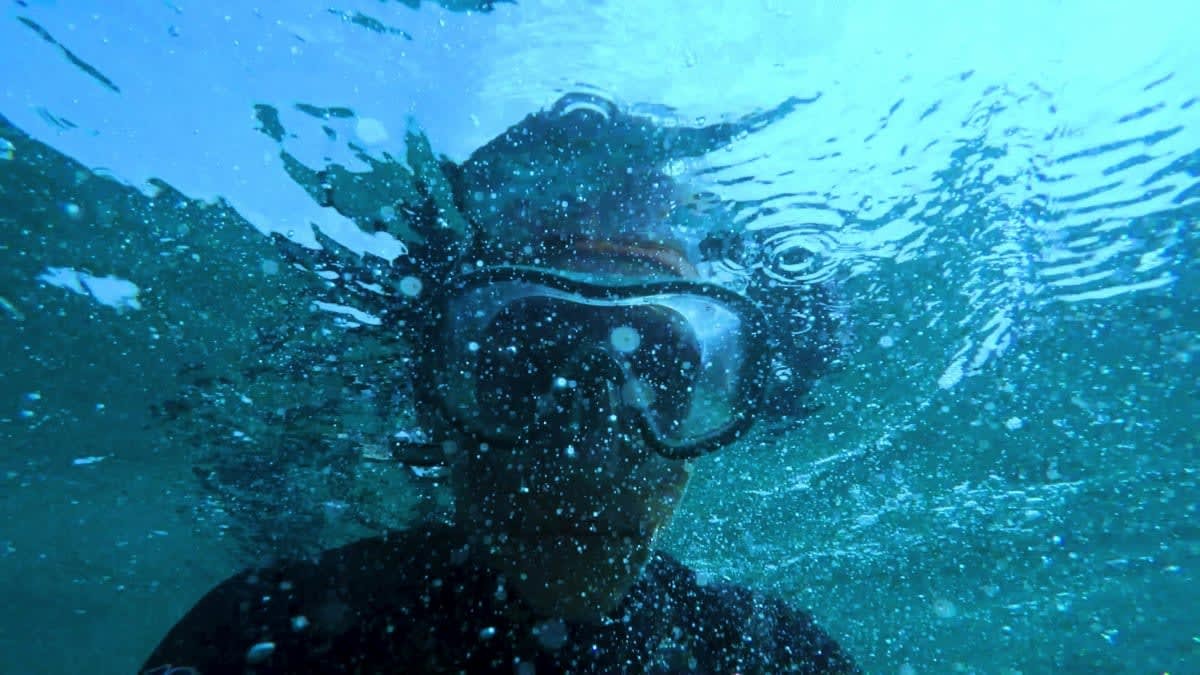
Representative Image Source: Pexels | Stuart Pritchards

“If a body is taken into the ocean and disappears, it’s hard to say what happens to it. No one ever really knows how the sea moves or flows. If a body is pulled down to a certain depth, it stays there. If it catches in fishing equipment, it might float across the Pacific and turn up in Hawaii. A body in the sea will mostly become soft as cheese so that if you touch it, the skin falls apart. In other cases the body may become encased in a substance called grave wax that makes it turn hard like plaster,” he said. 


via GIPHY


A short film based on the life of Yasuo Takamatsu has also been made and screened at various film festivals. Titled “Nowhere to Go but Everywhere,” the documentary has been directed by Erik Shirai and Masako Tsumura. 


https://youtube.com/watch?v=Rfixn5OySzE%3Fsi%3D7d3ffxgjhea49vCd

This article originally appeared 7 months ago.

  • Stunning photo taken from Artemis II commander Reid Wiseman has rebooted the world’s love of space
    Photo credit: NASA/Reid Wiseman (cropped image)Artemis II Commander Reid Wiseman took this picture of Earth from the Orion spacecraft's window

    Commander Reid Wiseman’s photo, taken from Artemis II as it pushed away from Earth and races toward the Moon, reveals the majestic blue planet we all call home. NASA released the image shortly after liftoff, instantly turning it into one of the defining visuals of the mission so far.

    It’s been more than 50 years since man last traveled to the moon on Apollo 17 in 1972. For younger generations, the Artemis II flyby and the eventual Artemis IV landing, might be the first time space exploration feels less like science and more like a shared human experience.

    NASA’s mission to the moon

    Artemis II has a simple yet extremely complicated mission to fly around the moon. Expected to take around 10 days, the crew of 4 will fly aboard NASA’s Orion spacecraft.

    After orbiting twice around the Earth to ensure everything is working properly, they will perform a propulsion move called the transluna injection burn. This will send the Orion 4,600 miles beyond the far side of the moon. During the rest of the journey, the crew will test emergency procedures, conduct some science experiments, evaluate the radiation shelter, and observe the Moon.

    For the return leg home, the Orion spacecraft will rely on Earth’s gravity to pull them back. Orion is scheduled to splash down in the Pacific Ocean on April 10th. There, it will be picked up by the U.S. Navy.

    NASA shared in their Mission Overview, “Through Artemis, NASA will explore more of the Moon than ever before and create an enduring presence in deep space, while simultaneously preparing to land the first astronaut – an American – on Mars.”

    NASA inspires people to dream big

    For many Americans, this is the first time humanity has ventured this far from Earth in their lifetime. The Artemis II mission feels less like a run-of-the-mill space mission and more like the return of a dream we had quietly abandoned.

    A 2025 study in Frontiers showed that experiencing awe about space can make people feel more like “science people,” sparking their curiosity about learning more science in the future. During the total 2024 solar eclipse, when the moon completely blocks the sun, people remained in awe and felt inspired even 6 months later.

    Nature Reviews Psychology shared a 2024 study that showed experiencing awe can make people feel smaller in a good way. Individuals become less focused on themselves and more connected to the world. Awe has a positive influence upon thinking, motivation, social interactions, and well-being.

    This most recent mission by NASA proves that humanity can still commit to projects bigger than the daily news cycle. Some achievements are worth pursuing not for immediate gratification, but because they expand the young minds that will shape our future.

    NASA, spacecraft window, Reid Wiseman, Orion, astronaut
    Image from Artemis II window looking back to Earth.
    Image Credit: NASA

    People are inspired to talk about Artemis II

    A Reddit post, First photo taken from Artemis commander Reid Wiseman had people excitedly sharing on the momentous achievement. Several people seemed inspired, others tried to be funny, and many seemed appreciative of the experience itself. These are a small collection of thoughts from the comments:

    “In outer space you develop an instant global consciousness, a people orientation, an intense dissatisfaction with the state of the world, and a compulsion to do something about it.’

    “You think any astronaut at one point did the finger pinchy thing where they’re crushing the planet?”

    “Unlike watching from near-Earth orbit, this image has not been seen by human eyes in over fifty years. Mankind is able to do great things, when we all work together!”

    “Lot of water/earth in front of me on that photo”

    “That’s here. That’s home. That’s us. On it everyone you love, everyone you know, everyone you ever heard of, every human being who ever was, lived out their lives.”

    “HELLO WORLD !!!”

    “Flat-earthers gonna be upset. Lol”

    “That beautiful silver line of the atmosphere the shines across the border of the globe is so surreal. Literally looks like a magic border in fantasy novels…”

    NASA astronauts, mission specialist, Launch Complex, journey to Moon, rockets
    From right to left, NASA astronauts Christina Koch, mission specialist; Reid Wiseman, commander; Victor Glover, pilot; and CSA (Canadian Space Agency) astronaut Jeremy Hansen.
    Image Credit: NASA

    10 days to bring our astronauts home

    NASA’s 4 astronauts are only beginning the long journey that carries hope, wonder, and promise of future space discoveries. Mission specialist Christina Koch, commander Reid Wiseman, pilot Victor Glover, and fellow astronaut Jermey Hansen are already gathering information that can lead to eventual Moon landings and even a trip to Mars.

    Weisman’s photo so beautifully captures the fragile yet powerful planet we live on. It’s a spectacular image that highlights so much of a planet most of us will see far too little of in our lifetimes. Mission specialist Koch expressed the effect of witnessing Earth from space, saying,

    “… you see the Earth as it exists with the whole universe in the background. You see the thin blue line of the atmosphere, and then when you’re on the dark side of the Earth, you actually see this very thin green line that shows you where the atmosphere is. What you realize is every single person that you know is sustained and inside of that green line and everything else outside of it is completely inhospitable. You don’t see borders, you don’t see religious lines, you don’t see political boundaries. All you see is Earth and you see that we are way more alike than we are different.”

  • Dog missing for 11 years ‘acts like he’s a puppy again’ after emotional reunion with owner
    Photo credit: CanvaA woman pets a pit bull.
    ,

    Dog missing for 11 years ‘acts like he’s a puppy again’ after emotional reunion with owner

    She kept his microchip information up to date for over a decade after he went missing from her backyard.

    When Jourdyn Koziak got a phone call saying her lost dog had been found, she thought it was a sick joke. After all, her pit bull, Forty-Cal, had gone missing 11 years earlier, back when she lived in Philadelphia. Since then, she had gotten married, had another child, and moved to Luzerne County, Pennsylvania. Yet when she took a chance and drove to the Philly shelter, there he was.

    “I am overwhelmed. I am shocked. I am in disbelief,” Koziak told Fox 29 News. “I had tunnel vision of him walking down that hallway.”

    How the lost pit bull was found

    Back in 2015, Forty-Cal and another of Koziak’s dogs went missing from their backyard, presumably stolen. While the other dog was found, Forty-Cal never returned home. Despite this, Koziak never stopped putting up missing signs and kept Forty-Cal’s microchip information up to date.

    “I never gave up hope because, obviously, I’m relentless,” Koziak told CBC Radio.

    Apparently, Forty-Cal walked up to a little girl in Philadelphia and befriended her. The girl and her parents took him home, fed him hot dogs, and called Animal Control. The shelter then used the information from Forty-Cal’s microchip to contact Koziak and reunite them after more than a decade.

    The shelter warned Koziak and her family that Forty-Cal might be overwhelmed and that it could take time for him to recognize them. However, it took only moments for Forty-Cal to realize he was back home.

    “We put our hands out, he sniffed us, and then proceeded to pull us towards the door, like, ‘Let’s go,’” said Koziak.

    While what happened to Forty-Cal over the past eleven years remains a mystery, Koziak is just grateful that he appears to have been cared for. When Forty-Cal was found, he was clean and well-fed. He was also friendly enough to approach the young girl who found him.

    “He acts like he’s a puppy again,” she said. “He wants to go for a walk. He’s wagging his tail…I had other animals in the house, as well, that were family pets, but Forty was my dog. I paid for him with my own money at 16 years old.”

    Now that he’s back home, both Forty-Cal and Koziak are making up for lost time.

    “I’m over the moon,” she said. “It’s like Christmas morning every day.”

    Tips to prevent lost dogs

    This reunion wouldn’t have been possible if Koziak hadn’t had Forty-Cal microchipped and kept the information up to date. It’s important to have your dog microchipped and registered for this reason, among others.

    There are other ways to help prevent a dog from becoming lost, as well as simple ways to find them should the worst happen. When outdoors, keep your dog leashed and within your line of sight at all times. Make sure your pup is also well trained and responsive to your commands.

    @thehannahestelle

    ❤️‍🩹 with how common this apparently is, I wanted to share all the resources we used to find our girl. Relieved doesn’t even begin to cut it. Safe to say miss Fifi is never leaving our side again. #lostdog #dallaspets #lostpets #24petconnect #petcolovelost #dogsofdallas #dogsofinstagram #lostdogfound #dallaspetsalive

    ♬ original sound – hannahestelle

    Along with microchipping your dog and keeping their tags up to date, there are additional collar options to consider. A bright, vibrant collar can help your dog stand out in the dark and among trees and bushes. A Martingale collar is also recommended, as it stays secure on a dog’s neck without choking them. Lastly, there are collars with built-in GPS systems, as well as devices like the Apple AirTag, which you can attach to a collar to track and pinpoint your dog’s location.

    This story is a reminder that sometimes a reunion between a lost pet and its owner takes determination, community, and patience.

  • 10 boys and 10 girls were left alone in separate houses. The results were shockingly different.
    Photo credit: CanvaA girl plays with block while two young boys play a game
    , , ,

    10 boys and 10 girls were left alone in separate houses. The results were shockingly different.

    Videos showed the children living normally for the first two days, but then the experiment took a chaotic turn.

    It sounds like the plot of William Golding’s Lord of the Flies, but in the mid-2000s, it was a very real, and very controversial, reality television experiment. Footage from the UK Channel 4 documentary “Boys and Girls Alone” is captivating audiences all over again, offering a fascinating—and chaotic—look at what happens when you remove parents from the equation.

    The premise was simple but high-stakes: 20 children, aged 11 and 12, were split into two groups by gender. Ten boys and ten girls were placed in separate houses and told to live without adult supervision for five days.

    While there were safety nets in place—a camera crew was present (though instructed not to intervene unless safety was at risk), and children could ring a bell to speak to a nurse or psychiatrist—the day-to-day living was entirely up to them. The houses were fully stocked with food, cleaning supplies, toys, and paints.

    As the resurfaced footage shows, the results between the two houses could not have been more different.

    In the boys’ house, the unraveling was almost immediate. The newfound freedom triggered a rapid descent into high-energy chaos. They engaged in water pistol fights, threw cushions, and in one memorable instance, a boy named Michael covered the carpet in sticky popcorn kernels.

    The destruction escalated to the walls, which the boys covered in writing, drawing, and paint. But the euphoria of freedom eventually crashed into the reality of consequences.

    “We never expected to be like this, but I’m really upset that we trashed it so badly. We were trying to explore everything at once and got too carried away in ourselves,” one boy admitted in the footage.

    Their attempts to clean up were frantic and largely ineffective, involving scraping paint and messily mopping floors. Nutrition also took a hit; despite having completed a cooking course, the boys survived mostly on cereal, sugar, and the occasional frozen pizza. By the end of the week, the house was trashed, the garden was littered with garbage, and the group had fractured into opposing factions.

    The girls’ house, however, looked like a different planet.

    In stark contrast to the mayhem next door, the girls immediately established a functioning society. They organized a cooking roster, with a girl named Sherry preparing their first meal. They baked cakes, put on a fashion show, and drew up a scrupulous chores list to ensure the house stayed livable.

    While their stay wasn’t devoid of interpersonal drama, the experiment highlighted a fascinating divergence in socialization. Left to their own devices, the girls prioritized community and maintenance, while the boys tested the absolute limits of their environment until it broke.

    This article originally appeared last year.

Explore More News Stories

Local

Dog missing for 11 years ‘acts like he’s a puppy again’ after emotional reunion with owner

Nation

10 boys and 10 girls were left alone in separate houses. The results were shockingly different.

Nation

A ‘Severance’ fan with Stage 4 cancer made a ‘bucket list’ request. Ben Stiller’s reply is perfect.

World

Aaron Paul recalls heartbreaking exchange with his daughter that made him rethink smartphone use