

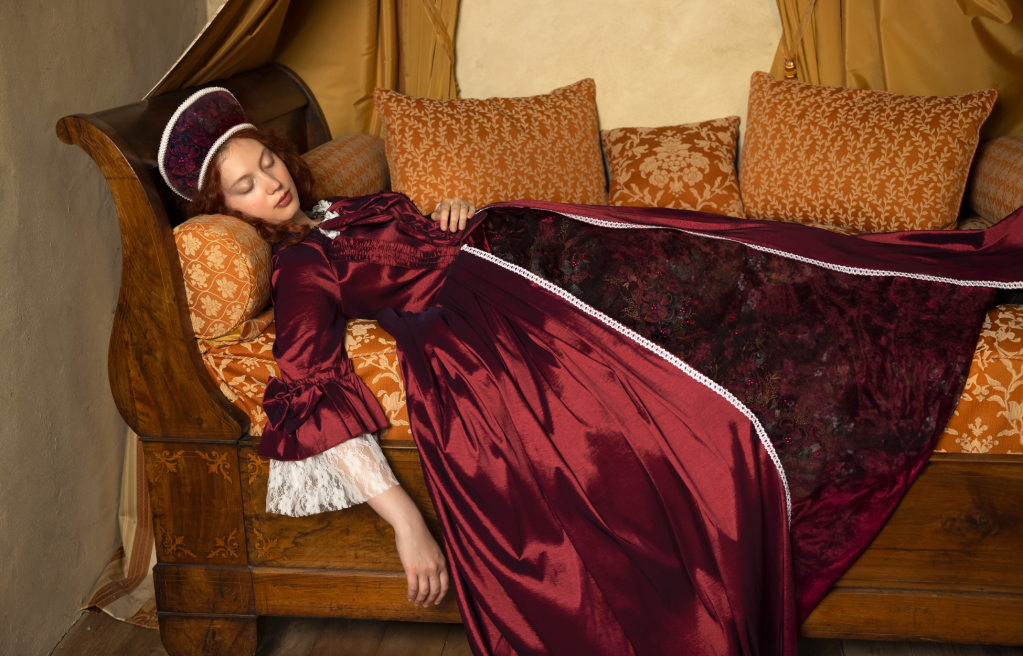
Famous author Charles Dickens suffered from severe insomnia. It led him to wander the gas-lit streets of London at midnight. While he famously chronicled these “night walks,” Dickens wasn’t alone in experiencing such fragmented sleep patterns.
Long before electric lights, many people followed a similar sleep routine. A 2015 paper in Current Biology revealed that three pre-industrial societies in Tanzania, Namibia, and Bolivia also practiced this “split sleep” habit.
A report by Inverse linked this medieval sleep pattern to what we now refer to as “polyphasic sleep.”
What is it?
In this research, scientists studied hunter-gatherer societies that lacked access to electricity. Their only source of light after dark was a campfire.
They found that these people stayed up for hours after sunset. They slept for 4 to 5 hours and then woke up to do certain activities like reading, walking, or eating small meals before going back to sleep. This looks similar to the Spanish “siesta,” where shops close during noontime for a nap.
“Polyphasic sleep” or “segmented sleep” is the practice of sleeping in multiple smaller segments during the day as opposed to sleeping once in a solid block.
Apart from Dickens, some of the most eminent personalities in history used to have this habit. The list includes Thomas Edison, Nikola Tesla, Napoleon Bonaparte, Salvador Dali, Benjamin Franklin, and even Albert Einstein.
Alen Juginović is a doctor and researcher at Harvard Medical School who studies the effect of poor sleep quality on health. He explained in an article that these habits offer a unique lens to explore the human experience.
“These peculiar sleep patterns remind us that, throughout history, sleep has been as much an art as it is a science,” Juginović wrote.
The Modern Problem
Researchers of the 2015 study related the cause of modern day insomnia to the advent of electric lighting.
“The invention of the electric light, followed by the development of television, the Internet, and related technologies… has greatly shortened sleep duration from ‘natural’ levels and disrupted its evolved timing,” they wrote.
They noted that this reduction in sleep duration is linked to obesity, mood disorders, and a host of other physical and mental illnesses.
The Pros and Cons
One of the greatest advantages of polyphasic sleep is that it enables the person to directly plunge into deep sleep.
“If you look at the standard sleep period, our sleep is typically deepest at the beginning of the night, and then it’s getting more and more shallow,” Mathias Basner, professor of sleep psychiatry at the University of Pennsylvania, told Inverse. “You’re basically capitalizing on this deeper sleep at the beginning of the sleep period.”
However, this kind of sleep pattern has its downsides. Basner noted that switching between the processes of falling asleep and waking up is not simple.
“The brain needs time to come online again to fire up all the systems,” he said. “It can take up to an hour or even longer… to be fully alert again.”
This is called sleep inertia. It could possibly impact productivity and hamper a person from using their daytime to the fullest.
Should you try it?
Roger Ekirch is likely the world’s leading expert on segmented sleep. He believes that this kind of sleep is extremely beneficial for those who regularly suffer from insomnia.
He explained to Harpers Magazine that segmented sleep can help insomniacs “fall back asleep by easing their anxiety.”
If you wake up in the middle of the night, don’t panic. Just accept it as a “first sleep” and know a “second sleep” is coming.
However, for people who don’t have insomnia, the regular 7 to 8 hour sleep is likely the best thing to continue. Changing it could disturb your circadian rhythms.
“There’s no going back because conditions have changed,” Ekirch told the BBC.
This article originally appeared last year.