But only because he has to.

In a new feature in The Atlantic, James Fallows argues that “clean coal,” something most environmentalists regard as an industry chimera, is actually the only way to save the planet from baking under a canopy of carbon. He reasons that a growing reliance on coal is inevitable—especially with China’s economic explosion—so developing carbon-free coal is our only option.


Precisely because coal already plays such a major role in world power supplies, basic math means that it will inescapably do so for a very long time. For instance: through the past decade, the United States has talked about, passed regulations in favor of, and made technological breakthroughs in all fields of renewable energy. Between 1995 and 2008, the amount of electricity coming from solar power rose by two-thirds in the United States, and wind-generated electricity went up more than 15-fold. Yet over those same years, the amount of electricity generated by coal went up much faster, in absolute terms, than electricity generated from any other source. […]

Similar patterns apply even more starkly in China. Other sources of power are growing faster in relative terms, but year by year the most dramatic increase is in China’s use of coal.

Fallows makes a compelling case that it’s unrealistic to think the global use of coal will decrease at all. This chart, from the latest International Energy Agency World Energy Outlook report, provides a nice (er, scary) illustration of the point. To hear the IEA tell it, so far China has just barely whet its appetite for coal.

The problem with Fallows’ piece, however, is that while he does make a compelling case that we can’t reduce carbon without clean coal, he doesn’t do much to convince a reader that we’ll actually develop workable clean coal technology (it doesn’t exist right now in a scalable form). His argument that we will—which rests on a lot of handwaving about “innovation” and “experimentation”—is pretty thin. One might as well hope for some unforeseen, transformative breakthrough in solar energy.

  • 5 things to do when the car’s check engine light comes on before spending money at the mechanic
    Photo credit: CanvaThe check engine light can turn on for a wide range of reasons.

    Imagine you’re driving around and all of the sudden you see that orange light appear on your dashboard. That light delivers a message of mystery and dread: “Check engine.” It could mean something very wrong is happening to your car. Then again, it could just be a loose gas cap

    Sure, a loose gas cap is usually the best case scenario, but you still wasted time and may even be saddled with an unnecessary bill from your mechanic. Still, ignoring the check engine light entirely is dangerous. It could mean you vehicle is unsafe or damaged. The longer you ignore it, the more damage (and cost) can build up. So, what can you do?

    Luckily, there are things you can investigate yourself when the check engine light comes on. When you know what to do, you have a better chance of identifying and eliminating easy-to-solve problems. thus saving yourself a trip to the mechanic and any big bills that might come with it. If you find the problem is over your head, you then know without a doubt an expert’s eye is needed.

    That said, here is what to check for when your check engine light suddenly comes on:

    Make sure the gas cap is tightly on

    As mentioned above, the check engine light could be on when your gas cap isn’t. Double check to make sure it’s screwed on tight every time you fill up the tank. If the light pops back on after you tighten the gas gap, check it again. Examine the gas cap’s rubber seal for any debris, cracks, or hardening. If it’s sealed tight and the light’s still on, you’ve got a different issue on your hands.

    Check your oxygen sensors

    Oxygen sensors help keep the air-fuel mixture in balance in modern engines. If there is a problem with it, it can’t accurately measure exhaust oxygen which can lead to inefficient combustion, higher emissions, and other issues. Other telltale signs of an oxygen sensor issue include more frequent fill-ups, rough idling when the engine is already warmed, and rotten egg-like smell coming from the tail pipe.

    Take a look at your oxygen sensors for corrosion or damage. They’re typically in the exhaust system near the catalytic converter or exhaust manifold, but look through your car’s manual to make sure. Make sure the wires connected to them aren’t cut or damaged either. If everything looks good but the oxygen sensor looks dirty, clean it with the proper cleaner. That might do the trick.

    However, if the oxygen sensor is damaged, it might be time for a pro or a trip to the autoparts store if you’re handy. But if they look good and you’re not experiencing any of the symptoms, it could be a different problem.

    Examine the car battery

    The check engine light can come on if there is an issue with your car battery. Check to see if everything is connected and make sure there’s no corrosion. You’ll also want the battery tested, perhaps at an auto parts shop or through services like AAA. If the battery is clean, connected, and powered-up, then your search for what’s causing the check engine light continues.

    See if it’s a dirty catalytic converter

    A check engine light can come on when the catalytic converter is damaged. If it is ,then there are likely other issues with your car that helped cause that damage. Sometimes, though, the catalytic converter isn’t damaged—it could just be dirty. If so, a good cleaning could fix the issue. 

    You’ll have to purchase a cleaner specialized for catalytic converters from an auto parts store or online. It should cost you around $30 (and will likely be cheaper than a visit to the auto repair shop.) 

    If the clean catalytic converter doesn’t do the trick, there’s something more that’s causing the check engine light.

    Analyze your mass air flow (MAF) sensor for dirt, bugs, and leaves

    The mass air flow (MAF) sensor is installed in the air cleaner duct or housing so it can meter the air that enters your engine. Depending on your car’s make and model, it could have a VAF Signal Voltage style sensor or the less common Karman Vortex air flow sensor. If there is no sign of damage but the sensor is dirtied by the elements, the check engine light could be resolved by giving it a good clean. However, know which type of MAF sensor you have because a Karman Vortex air flow sensor should NOT be cleaned.

    It’s important to note that the MAF sensor is delicate and requires a cleaner that is specifically made for it. An auto parts store can help you find the right cleaner and provide you with additional tips. Depending on your handiness, it might not be worth doing this yourself.

    Know when you need to pay a pro for safety’s sake

    If you have done these checks and the light is still on, it’s time to get a professional. Ignoring a check engine light can be incredibly dangerous. It could lead to further damage to the car and possibly an accident if left unattended.

    “Never ignore a warning light. It’s the biggest mistake car owners make and if it’s left too long, a small fix can quickly become a big bill,” automotive specialist Luke Oswald tells GOOD.

    If it’s time for a mechanic, be sure to be extra cautious driving your vehicle to them. You may want to get your car towed to them, especially if the check engine light is flashing. Many cars also have built-in diagnostic capabilities that can report trouble codes and even schedule service appointments through them, saving you time.

    No one wants to pay more than they need to, however safety should always be a top priority.

  • Broken household items bring people to Repair Cafés but community keeps them coming back
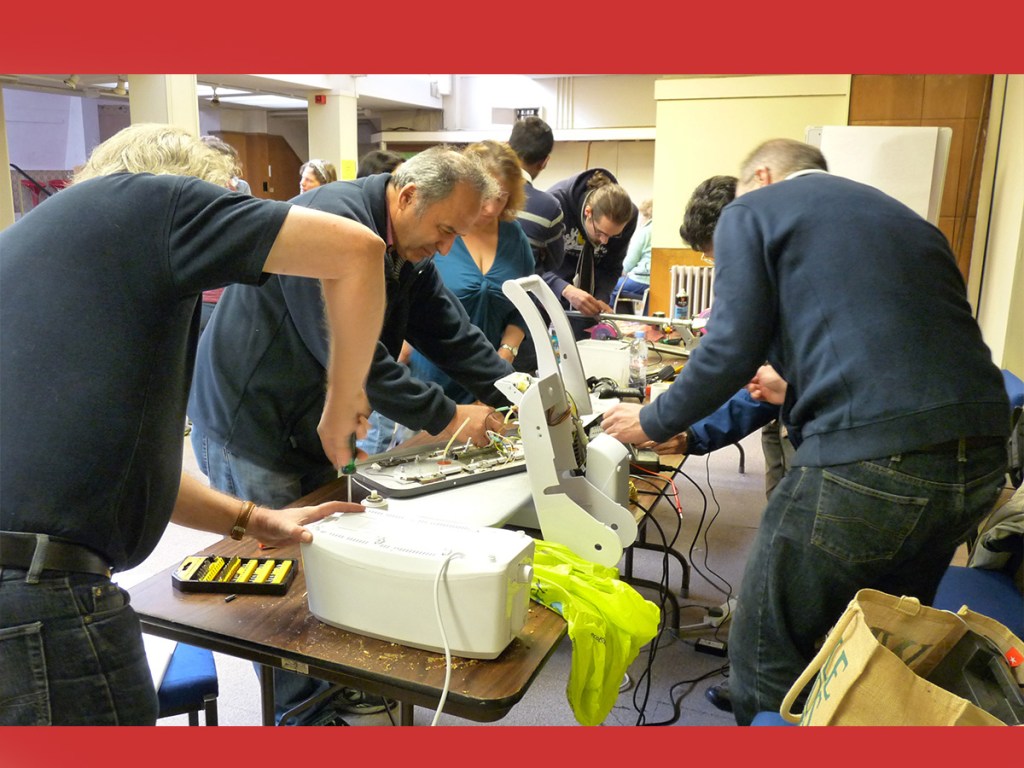
    Photo credit: Julian Paren/Wikimedia Commons (Cropped)Repair Cafe, Fortrose Free Church.

    The toaster oven burns everything, a lamp constantly flickers, or maybe a favorite coat has lost all its buttons. These random irritations around the home usually lead to a simple choice: throw it out, get a new item, or live with it.

    A growing number of communities have found a more productive solution called a “Repair Café.” People are bringing their broken household items and gathering around shared tables. Know-how volunteers offer a more environmentally friendly solution that has people coming back for more than simple repairs.

    Sewing, textiles, neighbors, communal bonding
    Reading Repair Café – Textiles and Sewing Repairs.
    Karen Blakeman/Wikimedia Commons/(Cropped)

    Neighbors helping neighbors

    Repair Cafés are free community events where neighbors help neighbors fix the everyday objects that would probably end up in the trash. It’s a community-building opportunity that turns frustration into a shared, hands-on experience.

    The Associated Press reports that people arrive at a local church basement carrying blunt knives, malfunctioning zippers, and other things most don’t know how to fix themselves. The volunteers with repair skills open devices, test parts, sew torn fabric, and troubleshoot issues. There’s no charge, no appointment, and no expectation that everything gets fixed.

    The unique idea, according to the Repair Café Foundation, is a free meeting place where repairing things becomes something people do together instead of alone. Using shared tools and knowledge, items might get fixed and friendships might blossom.

    With rising concerns about the cost of living and growing frustration with disposable consumer habits, repair culture is gaining momentum. Rather than replacing broken items, people are looking to make them last longer. It’s a planet-friendly model for reducing waste and challenging “throwaway culture.” This is an active attempt at shifting the way people think about consumption.

    VCR, broken items, reducing waste
    Trying to fix a VCR.
    HellasX/Wikimedia Commons/(Cropped)

    Repair Cafés are building community

    While the concept is often framed as a way to save money and reduce waste, research suggests they serve another purpose as well. A 2024 study in Cleaner Production Letters found they also function in building community. Visitors are often motivated not only by the opportunity to fix things, but also to learn from others and engage in shared activities.

    People are finding a real sense of satisfaction that goes beyond whether the item is repaired or not. Sitting with strangers, asking questions, and learning small skills creates an engagement increasingly rare in modern lifestyles.

    In an article for the The Guardian, author Nyima Jobe quotes Sophie Heathscott, an arts magazine manager in London, saying, “There is a real joy in being able to fix something for someone, and then showing them how.”

    workshop, volunteer event, networking, engagement
    Reading Repair Cafe – DIY workshop.
    Karen Blakeman/Wikimedia Commons/(Cropped)

    Working on a global scale, fixing thousands of items

    The concept has grown into a global network with thousands of locations across multiple countries. Through volunteer-led events, countless household items have been repaired instead of discarded. However, the appeal goes beyond practicality. It may be damaged things that bring people through the door, but a repaired lamp is rarely the only thing they take home.

    Repair Cafés offer something harder to find and impossible to manufacture. These gatherings give neighbors a chance to solve problems while working together on a common goal. Whatever the outcome, the main takeaway is communal connection.

  • The conversations people avoid may be the ones they would enjoy the most 
    Photo credit: CanvaTwo women enjoy some small talk.

    Before having a conversation with a stranger, many people assume the interaction will be boring, uncomfortable, or simply not worth the effort. A recent study found that people routinely underestimate how enjoyable and meaningful these interactions can be.

    In a recent paper, “Conversations About Boring Topics Are More Interesting Than We Think,” researchers suggest one of the biggest obstacles to human connection may be our own expectations. Across nine experiments involving 1,800 participants, talking on topics people expected to be boring turned out to be far more engaging than they predicted.

    human connection, anxiety, relationship science, conversation skills
    A good conversation.
    Photo credit Canva

    People unknowingly avoid meaningful conversations with strangers

    Elizabeth Trinh, a doctoral student at the University of Michigan and lead study author, placed people in conversations about topics that they identified as boring. Options varied from the stock market to cats to vegan diets.

    The study asked participants to predict how a conversation with unfamiliar people might go. Most participants expected less enjoyment, less connection, and less value from the exchange. The results suggest that people are surprisingly poor at forecasting their own social experiences.

    After the interaction with a stranger, the majority believed it went far better and was more engaging than they had predicted. In an American Psychological Association press release, Trinh said, “People consistently expected conversations about seemingly boring topics to be less interesting than they turned out to be.”

    The study indicates people might place too much emphasis on the topic and situation itself. Because once people start actually talking, the content matters far less than the interaction. “What really drives enjoyment is engagement,” explained Trinh.

    “Feeling heard, responding to each other, and discovering unexpected details about someone’s life can make even a mundane topic meaningful,” she added.

    psychology, interpersonal perception, social interactions
    Co-workers enjoy a good conversation.
    Photo credit Canva

    People opt out of potential connections

    The study shows that people may be opting out of potential connections because they assume that opportunity isn’t worth their time and energy. It also challenges the idea that meaningful conversations require a special chemistry or a pre-existing relationship.

    Instead, ordinary interactions with neighbors, coworkers, or people standing in a line may offer more emotional value than once believed. “Even a brief conversation about everyday life may be more rewarding than we expect,” said Trinh.

    Researchers have repeatedly found that people feel better after engaging with strangers, even when expectations of awkwardness are high. They report feeling happier and more connected. Responding to another person, sharing experiences, and discovering unexpected connections far outweigh the importance of a strong starting point.

    An epidemic of loneliness

    These findings offer a reassuring contrast to the belief that modern loneliness is a growing problem that may not be easily solved. Avenues for connection may be far more abundant than many people think.

    Several proposed solutions to loneliness and social isolation involve building new friendships through social groups and new hobbies. But Trinh’s research suggests a far simpler approach. People may be surrounded by opportunities that they routinely dismiss. Most of us assume boring, small talk won’t go anywhere, yet even a brief chat with a coworker or stranger may offer more social value than people realize.

    The basic, everyday exchanges people have been avoiding might actually be some of the most valuable. Rather than planning the perfect social outing, a willingness to talk with a stranger that we might otherwise avoid could lead to a more meaningful experience.

Explore More Stories

Health

Social media before bedtime wreaks havoc on our sleep − a sleep researcher explains why screens alone aren’t the main culprit

Health

It’s more than OK for kids to be bored − it’s good for them

Work

6 phrases to use to tactfully disagree with your boss and not jeopardize your job

Care

A dementia patient and his wife got their lives back thanks to a ‘coat rack-like’ robot