On September 5, thousands of people flooded into Kinigi, a tiny town in Rwanda’s northern Musanze district. Many were locals, but many were foreigners as well—not just tourists but dignitaries and members of the international press. Even Paul Kagame, the notoriously efficient (and perennially controversial) president of Rwanda, showed up. They’d all converged on the village for Kwita Izina, a festival in which officials read out the names of 24 mountain gorillas born in the nearby national park over the previous year while around two dozen youths danced around in rubber gorilla suits. At first, Kwita Izina sounds like a cute ceremony, but not one that would captivate the world, given its remote location and simple premise. But the festival has been a huge success for over a decade now, naming more baby gorillas, generating more funds, and gaining more attention every year—in large part because it embodies and promotes the extraordinary and instructive (though slightly controversial) success of Rwanda’s radical, interventionist mountain gorilla conservation and ecotourism program.


For much of the 20th century, it seemed impossible that any country in the region could create an effective mountain gorilla conservation program. Since 1902, when European explorers first encountered this unique species of gorilla in their mountain forest homelands (on the border of the modern Democratic Republic of Congo, Rwanda, and Uganda), these animals’ habitat and population has dwindled steadily. Between hunting, poaching, environmental degradation linked to precious metal and oil extraction, and the general chaos from decades of regional conflict, mountain gorillas had been driven into two very remote highland regions—about 175 square miles of the transnational Virunga massif, and 125 square miles of Uganda’s Bwindi Forest. Exposed to species-hopping human diseases, and continually pushed into higher altitudes and more remote areas, natural mortality rates started to fall rapidly as well. By 1981, researchers estimated that there were as few as 254 mountain gorillas in the Virunga area, and 540 in the world. Given all the pressures, alongside their long and fragile infancies (mountain gorillas have about a 26 percent infant morality rate even in the best circumstances), their extinction seemed all but guaranteed.

But in recent years, newfound attention to the gorillas’ plight, driven by the work (and unsolved murder) of primatologist Dian Fossey in the ‘80s, has led to an explosion of conservation initiatives that have helped mountain gorillas bounce back. Today, mountain gorilla populations are estimated at about 900 worldwide; a 2011 study found that between 1967 and 2008 the apes had experienced an average population growth of about 4 percent, making them the only primate species in the world whose numbers are increasing. It’s an amazing regional success story. But the most amazing work has been done in Rwanda, where a 2010 gorilla census put the local annual growth rate at 26.3 percent. Some observers in the country think that this count may actually even be low—the 2010 census claims that Rwanda’s Volcanoes National Park (their chunk of the Virunga massif) is home to 302 mountain gorillas, but officials and commentators venture to guess that the 2015 number could be as high as 500.

Some of Rwanda’s exceptional conservation success stems from the general increased attention, funding, and physical protection now afforded these gorillas in the wider region. From the 1980s onwards, Fossey’s research center and its progeny have established effective tracking programs, allowing nations to set clear borders for gorilla territory and efficiently allocate guards to discrete, targeted regions. Combined with education programs and a healthy amount of local and international attention, local rangers—not just in Rwanda but also in the DRC and Uganda—say they’ve managed to drastically reduce poaching.

But even within this general heightened push for preservation, it’s Rwanda’s program that manages to stand out, using researchers’ tracking and research data to enable proactive veterinary interventions in the local mountain gorilla population. The country’s Gorilla Doctors, a force of about 15 (mostly local) veterinarians, basically hear about any gorilla showing signs of illness or caught in a hunting snare (a common accident) and immediately show up to treat them. They handle about 18 cases per year and, according to that 2011 gorilla population report, these interventions may account for up to 40 percent of Rwanda’s exceptional conservation success.

[youtube ratio=”0.5625″ position=”standard” ]

Rwanda has also managed to sell gorillas to the nation as a collective economic asset more valuable than poaching or the land upon which the animals live. Key to this is Rwanda’s exceptional gorilla-tracking tourism program, where rangers tracking the apes take up to 10 groups of up to eight people a day to visit their primate charges. Locals pay just $50 for a trip, while resident foreigners pay about $375 and tourists pay $750. The pricing is deliberately high for outsiders to keep their numbers manageable while milking them for funds to sustain the preservation program. The results have been good as well—as of 2014, 27,000 gorilla tourists generated $15 million for the country. That’s a small chunk of the nation’s annual $252 million tourism revenue—but it’s a growing chunk, up from 20,000 visitors generating $8 million in 2008, and rising steadily.

Many nations and organizations tout the idea of making conservation economically attractive, but they sometimes encounter pitfalls when that money doesn’t make it back to populations living in protected areas, who then have incentives to poach or hack away at endangered species’ lands. That sort of defection is a big concern in the Virunga region, which is one of the most densely populated rural landscapes in the world and also fairly poor and hard to police. But Rwandan officials have taken special care to make sure that everyone living around the mountain gorillas is both philosophically onboard with conservation, and economically benefitting from it. Five percent of all proceeds made on gorilla tourism go back into community projects—that’s $1.83 million in the past decade, which has funded 57 schools and 360 community projects, from infrastructure to agriculture. The National Park authorities employ 800 locals directly in conservation efforts, and Gorilla Doctors makes sure to primarily include local (rather than international) doctors, who provide free health services to humans and livestock in nearby towns both as a matter of goodwill and to prevent regional disease outbreaks. By employing locals and providing clear-cut economic benefits, the program creates dedicated conservation acolytes—something the DRC and Uganda have not managed to emulate in any meaningful way.

There are a lot of moving parts and complex programs involved in Rwanda’s conservation operation, but many of them unite in the Kwita Izina gorilla-naming celebration, a tradition started in 2005 and inspired by traditional Rwandan naming ceremonies. The ceremony is only possible thanks to close tracking of mountain gorilla families, allowing officials to name and mark the birthday of every single new ape in Volcanoes Park. Meanwhile, the gaggle of performers and celebrities it attracts, as well as the cute spectacle of it all, is (as The Guardian labeled it this year) “canny tourist bait,” generating a ton of income for Kinigi, one of the main villages neighboring the gorillas. The naming ceremony is extremely successful at highlighting the benefits of local conservation while raising awareness and empathy for the baby gorillas, who are then humanized in reports that refer to them as individuals. And like the conservation program at large, thanks to the spectacle, precision, and beneficial buy-in around the festival, it’s grown every year, attracting more and more attendees and celebrating more and more births in an attention-grabbing upward spiral—this year’s 24 babies was the highest number ever named in one go.

The only problem facing Rwanda, Kwitna Izina, and the conservation program it represents is the fact that not all conservationists buy into the basic premise behind the project. Traditional conservationism holds that it’s best to leave animals alone, rather than habituating them to humanity through veterinary interventions, tourist treks, and giving them people names. Dian Fossey herself fell into this group of naturalist skeptics, who worry that even positive attention and fund-raising tours can be dangerous.

Yet even wary conservationists can’t deny the success of Kwitna Izina and what it embodies. Studies of Rwanda’s proactive and comprehensive program suggest that while reducing human contact with mountain gorillas to zero would be ideal, it is functionally impossible given the distribution of people and the size of existing ape habitats. Given existing conditions, the Rwandan model of intervention, habituation, humanization, hype, and directly experienced benefits may be the best model we have—and a good guide for other nations struggling with how to revamp their failing national conservation programs.
  • 5 things to do when the car’s check engine light comes on before spending money at the mechanic
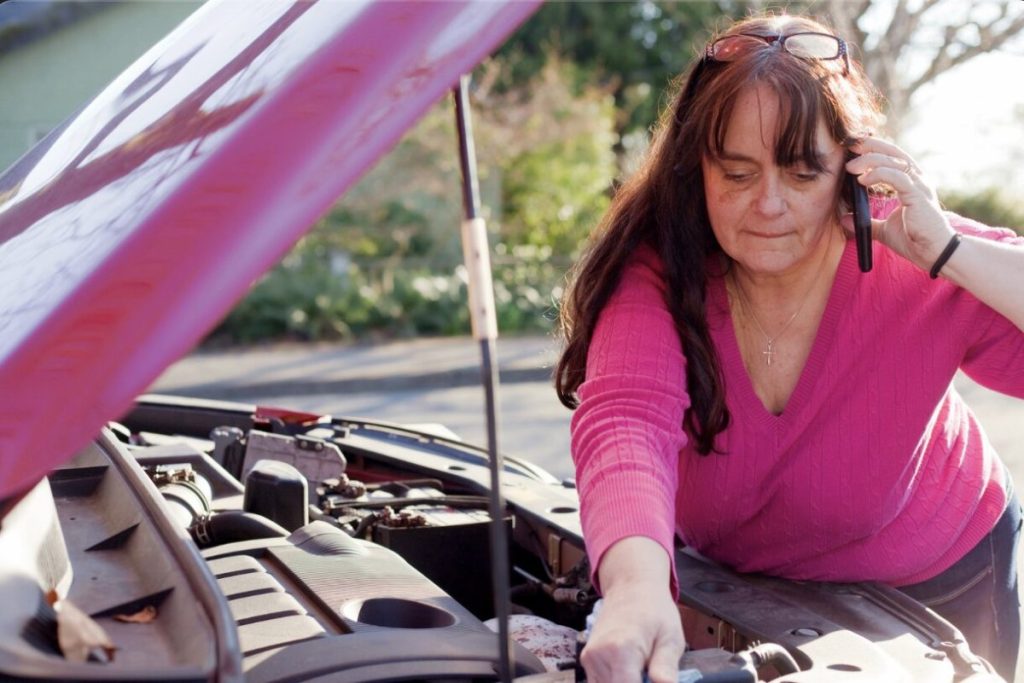
    Photo credit: CanvaThe check engine light can turn on for a wide range of reasons.

    Imagine you’re driving around and all of the sudden you see that orange light appear on your dashboard. That light delivers a message of mystery and dread: “Check engine.” It could mean something very wrong is happening to your car. Then again, it could just be a loose gas cap

    Sure, a loose gas cap is usually the best case scenario, but you still wasted time and may even be saddled with an unnecessary bill from your mechanic. Still, ignoring the check engine light entirely is dangerous. It could mean you vehicle is unsafe or damaged. The longer you ignore it, the more damage (and cost) can build up. So, what can you do?

    Luckily, there are things you can investigate yourself when the check engine light comes on. When you know what to do, you have a better chance of identifying and eliminating easy-to-solve problems. thus saving yourself a trip to the mechanic and any big bills that might come with it. If you find the problem is over your head, you then know without a doubt an expert’s eye is needed.

    That said, here is what to check for when your check engine light suddenly comes on:

    Make sure the gas cap is tightly on

    As mentioned above, the check engine light could be on when your gas cap isn’t. Double check to make sure it’s screwed on tight every time you fill up the tank. If the light pops back on after you tighten the gas gap, check it again. Examine the gas cap’s rubber seal for any debris, cracks, or hardening. If it’s sealed tight and the light’s still on, you’ve got a different issue on your hands.

    Check your oxygen sensors

    Oxygen sensors help keep the air-fuel mixture in balance in modern engines. If there is a problem with it, it can’t accurately measure exhaust oxygen which can lead to inefficient combustion, higher emissions, and other issues. Other telltale signs of an oxygen sensor issue include more frequent fill-ups, rough idling when the engine is already warmed, and rotten egg-like smell coming from the tail pipe.

    Take a look at your oxygen sensors for corrosion or damage. They’re typically in the exhaust system near the catalytic converter or exhaust manifold, but look through your car’s manual to make sure. Make sure the wires connected to them aren’t cut or damaged either. If everything looks good but the oxygen sensor looks dirty, clean it with the proper cleaner. That might do the trick.

    However, if the oxygen sensor is damaged, it might be time for a pro or a trip to the autoparts store if you’re handy. But if they look good and you’re not experiencing any of the symptoms, it could be a different problem.

    Examine the car battery

    The check engine light can come on if there is an issue with your car battery. Check to see if everything is connected and make sure there’s no corrosion. You’ll also want the battery tested, perhaps at an auto parts shop or through services like AAA. If the battery is clean, connected, and powered-up, then your search for what’s causing the check engine light continues.

    See if it’s a dirty catalytic converter

    A check engine light can come on when the catalytic converter is damaged. If it is ,then there are likely other issues with your car that helped cause that damage. Sometimes, though, the catalytic converter isn’t damaged—it could just be dirty. If so, a good cleaning could fix the issue. 

    You’ll have to purchase a cleaner specialized for catalytic converters from an auto parts store or online. It should cost you around $30 (and will likely be cheaper than a visit to the auto repair shop.) 

    If the clean catalytic converter doesn’t do the trick, there’s something more that’s causing the check engine light.

    Analyze your mass air flow (MAF) sensor for dirt, bugs, and leaves

    The mass air flow (MAF) sensor is installed in the air cleaner duct or housing so it can meter the air that enters your engine. Depending on your car’s make and model, it could have a VAF Signal Voltage style sensor or the less common Karman Vortex air flow sensor. If there is no sign of damage but the sensor is dirtied by the elements, the check engine light could be resolved by giving it a good clean. However, know which type of MAF sensor you have because a Karman Vortex air flow sensor should NOT be cleaned.

    It’s important to note that the MAF sensor is delicate and requires a cleaner that is specifically made for it. An auto parts store can help you find the right cleaner and provide you with additional tips. Depending on your handiness, it might not be worth doing this yourself.

    Know when you need to pay a pro for safety’s sake

    If you have done these checks and the light is still on, it’s time to get a professional. Ignoring a check engine light can be incredibly dangerous. It could lead to further damage to the car and possibly an accident if left unattended.

    “Never ignore a warning light. It’s the biggest mistake car owners make and if it’s left too long, a small fix can quickly become a big bill,” automotive specialist Luke Oswald tells GOOD.

    If it’s time for a mechanic, be sure to be extra cautious driving your vehicle to them. You may want to get your car towed to them, especially if the check engine light is flashing. Many cars also have built-in diagnostic capabilities that can report trouble codes and even schedule service appointments through them, saving you time.

    No one wants to pay more than they need to, however safety should always be a top priority.

  • Broken household items bring people to Repair Cafés but community keeps them coming back
    Photo credit: Julian Paren/Wikimedia Commons (Cropped)Repair Cafe, Fortrose Free Church.

    The toaster oven burns everything, a lamp constantly flickers, or maybe a favorite coat has lost all its buttons. These random irritations around the home usually lead to a simple choice: throw it out, get a new item, or live with it.

    A growing number of communities have found a more productive solution called a “Repair Café.” People are bringing their broken household items and gathering around shared tables. Know-how volunteers offer a more environmentally friendly solution that has people coming back for more than simple repairs.

    Sewing, textiles, neighbors, communal bonding
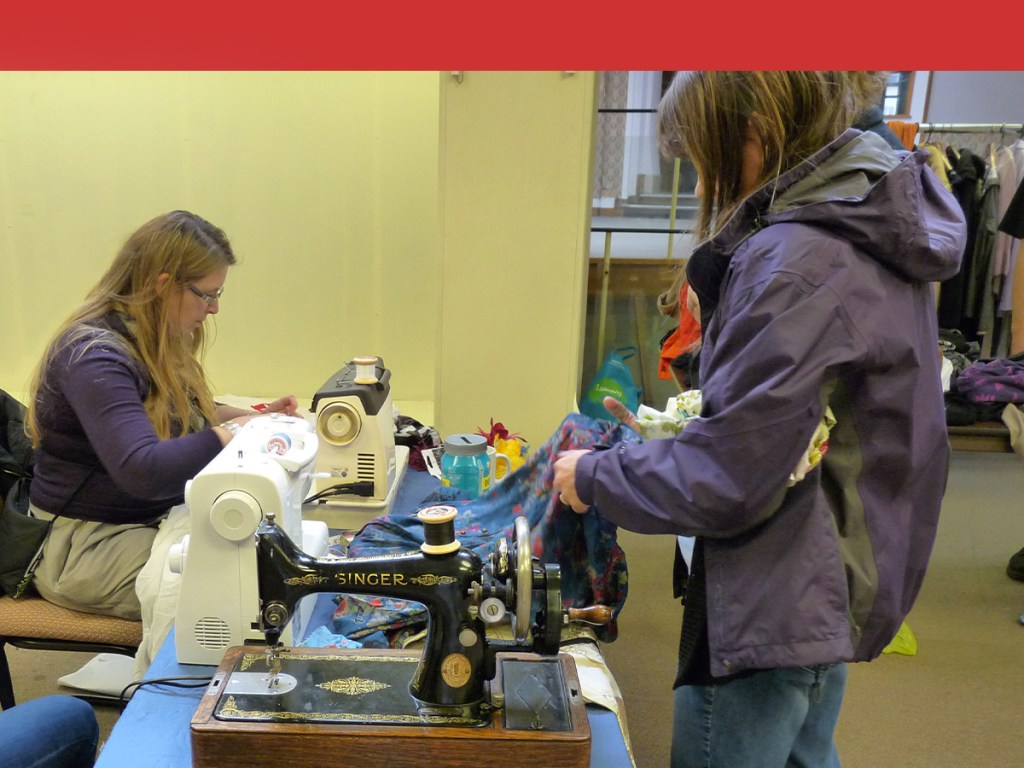
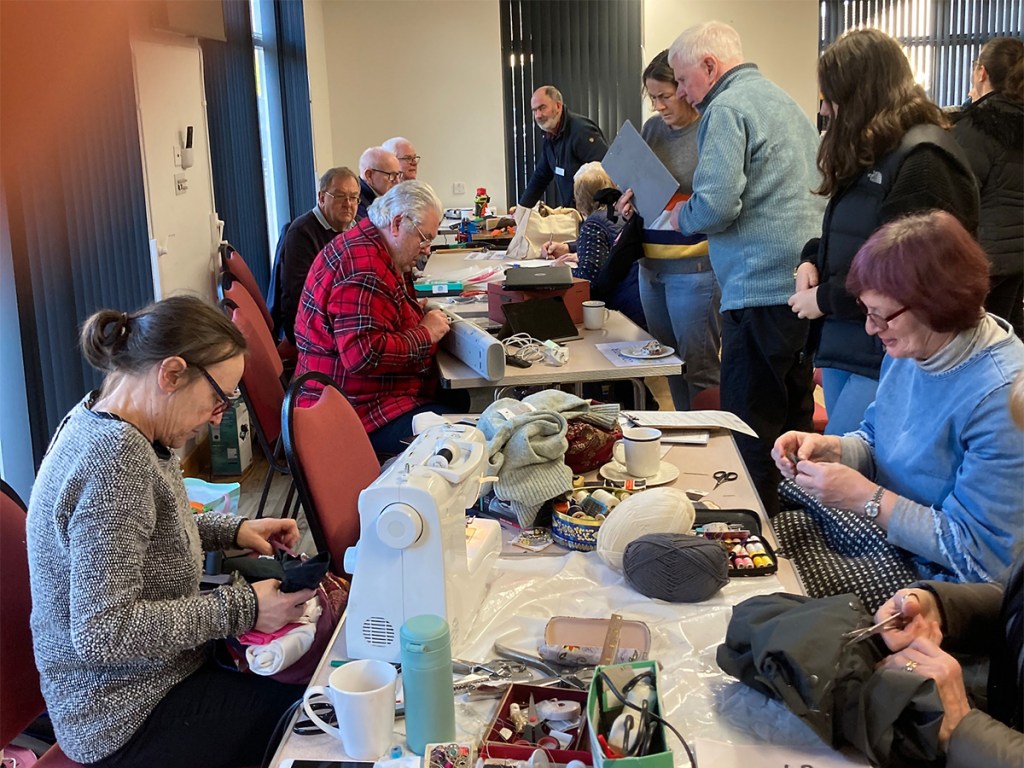
    Reading Repair Café – Textiles and Sewing Repairs.
    Karen Blakeman/Wikimedia Commons/(Cropped)

    Neighbors helping neighbors

    Repair Cafés are free community events where neighbors help neighbors fix the everyday objects that would probably end up in the trash. It’s a community-building opportunity that turns frustration into a shared, hands-on experience.

    The Associated Press reports that people arrive at a local church basement carrying blunt knives, malfunctioning zippers, and other things most don’t know how to fix themselves. The volunteers with repair skills open devices, test parts, sew torn fabric, and troubleshoot issues. There’s no charge, no appointment, and no expectation that everything gets fixed.

    The unique idea, according to the Repair Café Foundation, is a free meeting place where repairing things becomes something people do together instead of alone. Using shared tools and knowledge, items might get fixed and friendships might blossom.

    With rising concerns about the cost of living and growing frustration with disposable consumer habits, repair culture is gaining momentum. Rather than replacing broken items, people are looking to make them last longer. It’s a planet-friendly model for reducing waste and challenging “throwaway culture.” This is an active attempt at shifting the way people think about consumption.

    VCR, broken items, reducing waste
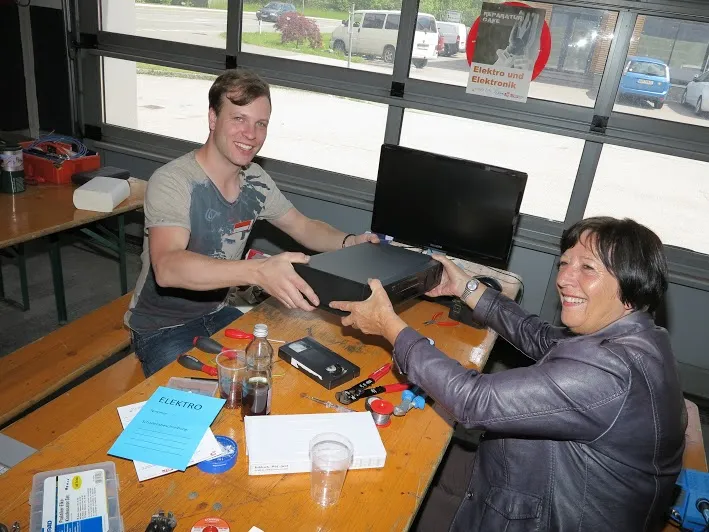
    Trying to fix a VCR.
    HellasX/Wikimedia Commons/(Cropped)

    Repair Cafés are building community

    While the concept is often framed as a way to save money and reduce waste, research suggests they serve another purpose as well. A 2024 study in Cleaner Production Letters found they also function in building community. Visitors are often motivated not only by the opportunity to fix things, but also to learn from others and engage in shared activities.

    People are finding a real sense of satisfaction that goes beyond whether the item is repaired or not. Sitting with strangers, asking questions, and learning small skills creates an engagement increasingly rare in modern lifestyles.

    In an article for the The Guardian, author Nyima Jobe quotes Sophie Heathscott, an arts magazine manager in London, saying, “There is a real joy in being able to fix something for someone, and then showing them how.”

    workshop, volunteer event, networking, engagement
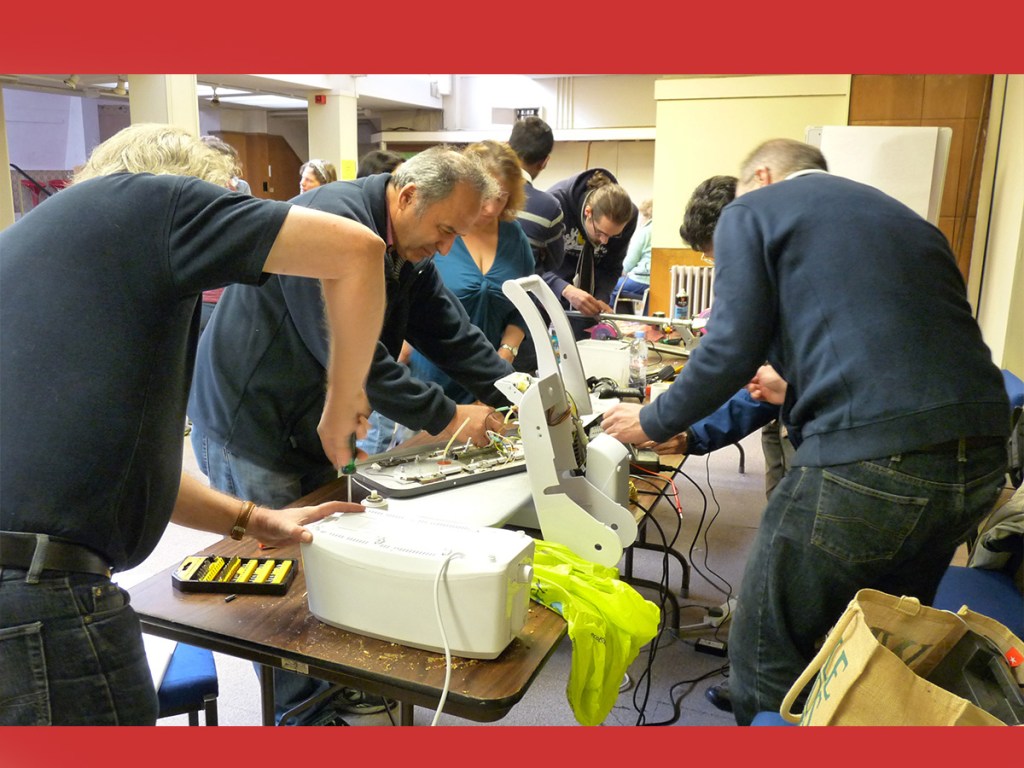
    Reading Repair Cafe – DIY workshop.
    Karen Blakeman/Wikimedia Commons/(Cropped)

    Working on a global scale, fixing thousands of items

    The concept has grown into a global network with thousands of locations across multiple countries. Through volunteer-led events, countless household items have been repaired instead of discarded. However, the appeal goes beyond practicality. It may be damaged things that bring people through the door, but a repaired lamp is rarely the only thing they take home.

    Repair Cafés offer something harder to find and impossible to manufacture. These gatherings give neighbors a chance to solve problems while working together on a common goal. Whatever the outcome, the main takeaway is communal connection.

  • The conversations people avoid may be the ones they would enjoy the most 
    Photo credit: CanvaTwo women enjoy some small talk.

    Before having a conversation with a stranger, many people assume the interaction will be boring, uncomfortable, or simply not worth the effort. A recent study found that people routinely underestimate how enjoyable and meaningful these interactions can be.

    In a recent paper, “Conversations About Boring Topics Are More Interesting Than We Think,” researchers suggest one of the biggest obstacles to human connection may be our own expectations. Across nine experiments involving 1,800 participants, talking on topics people expected to be boring turned out to be far more engaging than they predicted.

    human connection, anxiety, relationship science, conversation skills
    A good conversation.
    Photo credit Canva

    People unknowingly avoid meaningful conversations with strangers

    Elizabeth Trinh, a doctoral student at the University of Michigan and lead study author, placed people in conversations about topics that they identified as boring. Options varied from the stock market to cats to vegan diets.

    The study asked participants to predict how a conversation with unfamiliar people might go. Most participants expected less enjoyment, less connection, and less value from the exchange. The results suggest that people are surprisingly poor at forecasting their own social experiences.

    After the interaction with a stranger, the majority believed it went far better and was more engaging than they had predicted. In an American Psychological Association press release, Trinh said, “People consistently expected conversations about seemingly boring topics to be less interesting than they turned out to be.”

    The study indicates people might place too much emphasis on the topic and situation itself. Because once people start actually talking, the content matters far less than the interaction. “What really drives enjoyment is engagement,” explained Trinh.

    “Feeling heard, responding to each other, and discovering unexpected details about someone’s life can make even a mundane topic meaningful,” she added.

    psychology, interpersonal perception, social interactions
    Co-workers enjoy a good conversation.
    Photo credit Canva

    People opt out of potential connections

    The study shows that people may be opting out of potential connections because they assume that opportunity isn’t worth their time and energy. It also challenges the idea that meaningful conversations require a special chemistry or a pre-existing relationship.

    Instead, ordinary interactions with neighbors, coworkers, or people standing in a line may offer more emotional value than once believed. “Even a brief conversation about everyday life may be more rewarding than we expect,” said Trinh.

    Researchers have repeatedly found that people feel better after engaging with strangers, even when expectations of awkwardness are high. They report feeling happier and more connected. Responding to another person, sharing experiences, and discovering unexpected connections far outweigh the importance of a strong starting point.

    An epidemic of loneliness

    These findings offer a reassuring contrast to the belief that modern loneliness is a growing problem that may not be easily solved. Avenues for connection may be far more abundant than many people think.

    Several proposed solutions to loneliness and social isolation involve building new friendships through social groups and new hobbies. But Trinh’s research suggests a far simpler approach. People may be surrounded by opportunities that they routinely dismiss. Most of us assume boring, small talk won’t go anywhere, yet even a brief chat with a coworker or stranger may offer more social value than people realize.

    The basic, everyday exchanges people have been avoiding might actually be some of the most valuable. Rather than planning the perfect social outing, a willingness to talk with a stranger that we might otherwise avoid could lead to a more meaningful experience.

Explore More Stories

Health

Social media before bedtime wreaks havoc on our sleep − a sleep researcher explains why screens alone aren’t the main culprit

Health

It’s more than OK for kids to be bored − it’s good for them

Work

6 phrases to use to tactfully disagree with your boss and not jeopardize your job

Care

A dementia patient and his wife got their lives back thanks to a ‘coat rack-like’ robot