
By design, you’re not supposed to root for the villain. They’re the antagonist. They’re a character that’s supposed to show off the worst of people in their actions, attitude, or personality. But there are some bad guys that have a certain charisma that makes you the devil’s advocate. “Sure, he lied, cheated, killed, etc. and I can’t condone his actions but I can understand his point.”

Then on the other end, there are villains who are undoubtedly despicable but the performer is so captivating that you end up rooting for them despite all logic. Film buffs have their favorites, on and off Reddit, Letterboxd, and other corners of the internet. Collect here are 16 of the some of the best baddies on-screen that movie fans heap with praise in spite of their devious actions and motives.

Hans Gruber, Die Hard

Alan Rickman stands out in his first ever film performance as the villainous leader of a terrorist organization (actually just thieves but exceptional thieves). Film buffs love Rickman’s performance and while his character is a liar, murderer, and so many other -ers, he’s at least not an outward yuppie jerk like Ellis.

Magneto, X-Men franchise

Magneto is occasionally on the side of angels in the fight for mutant rights in the X-Men films, but he has fans even when he’s threatening the human population. As a Jewish holocaust survivor, the character also garners sympathy and understanding of his rage, even though he often sells out his allies to accomplish his goals.

Hannibal Lecter, Silence of the Lambs

Another case of a compelling performer creating a fan base for the character. Anthony Hopkins chews the scenery much like how Hannibal chews on faces in one of his most celebrated performances. The intrigue and performance led to two sequels featuring the cannibalistic genius.

Thanos, Marvel Cinematic Universe

While some movie goers side with Thanos for powerful, Hulk-beating reasons, many people argue that Thanos’ motivations aren’t “evil” but an incredibly extreme form of utilitarianism. He’s a despot but some fans argue that he at least has a high-minded ethos around it even though it is executed cruelly.

Bill “The Butcher” Cutting, Gangs of New York

Daniel Day-Lewis was nominated for an Oscar for his performance as a violent New York gang leader, so it’s no surprise that his depiction picked up sympathy due to his charisma alone. Folks like a take-charge patriot, regardless of ruthlessness and authoritarianism, and Bill certainly fits the bill.

Bodhi, Point Break

People are entranced by handsome surfer guru even if they’re also armed bank robbers responsible for murders. Bodhi is so complex and charming that audiences still root for him over Keanu Reeves of all people.

Erik Killmonger, Black Panther

The often-memed Marvel line “He’s out of line, but he’s right” may have been in reference to Baron Zemo, but is embodied by Erik Killmonger in Black Panther. While a name like “Killmonger” doesn’t invoke sympathy, his motivation to uplift the oppression of Africans throughout the world isn’t a bad one on its face. It doesn’t hurt that the face is the handsome one of Michael B. Jordan.

William Foster, Falling Down

We’ve all had the William Foster experience of just having everything go wrong and wanting to make the world pay for it, sometimes violently. Foster as a fictional character gets to live out that fantasy of unleashing frustration to extreme ends, but most agree that the safest, less violent, and legal way to do get anger out on a bad is to scream into a pillow then chill rather than go on a rampage through town like a middle-manger Godzilla.

Gaston, Beauty and the Beast

Is he an incredibly egotistical narcissist? Yes, but many film goers believe no one’s slick like Gaston, no one’s quick like Gaston, and no one’s neck’s as incredibly thick as Gaston’s. He’s burly, brawny, has biceps to spare, and every last inch of him’s covered with hair. Beauty may be more than skin deep, but some folks just care about the surface level.

Sheriff of Nottingham, Robin Hood: Prince of Thieves

Much like with Hans Gruber, Alan Rickman’s animated performance as the corrupt sheriff against the modest wall of Kevin Costner is what had folks root for him in spite of his contemptible behavior. The character canceled Christmas and still gets praise!

Neil McCauley, Heat

Portrayed by Robert DeNiro, Neil may have a hard edge but is more of a working class guy than an outright villain. The way he explains it, he’s just stealing money from the system rather than from actual humans. His solitary lifestyle also brings sympathy from audiences, given that his life as a criminal robs him of family ties.

The Joker, The Dark Knight

This is another villain favorite that is based on performance. Heath Ledger steals the entire movie in arguably his most celebrated role given his quotable lines and execution. You don’t even mind the chaos and terror he brings given how he shows more conviction than the other criminals in Gotham City.

Godzilla, Godzilla franchise

Does Godzilla completely obliterate Tokyo and leaves thousands of people without housing, disrupting the economy, and causing so much collateral death and damage that he’s a monster a million times more than a hero? Yes. But we can’t help but cheer on the destruction anyway.

General Francis “Frank” Hummel, The Rock

When you break down General Hummel’s argument, he’s just fighting for the benefits of military families. That said, threatening to launch missiles to the San Francisco Bay isn’t the best way to get that done. There has to be a senator or congresswoman who’d jump at the chance to provide help for that cause. But if that were to happen, we wouldn’t have a movie with Nicolas Cage and Sean Connery, now would we?

Darth Vader, Star Wars franchise

Arguably the most celebrated and cosplayed movie villain of all time with the look of the robotic suit combined with the low tones of James Earl Jones’ voice. He’s so beloved, how is this guy even a villain— oh, right, all of the “younglings” he killed. Yeah, that’s… oof.

Dark Helmet, Spaceballs

This entirely original character is incredibly horrid and despicable, even though he hates raspberry jam. In spite of that, film goers recognize the power of the Schwartz is strong in this one, and it’s one of the few roles Rick Moranis has that shows him displaying any sort of confidence. A truly inspired villain. I wonder what inspired Mel Brooks to come up with him…


  • Boomers think these 7 habits make them polite but younger generations are begging them to stop
    Photo credit: Images via Canva – Photos by Latino Life and mariashipakina – Boomer and Gen Z

    There is nothing wrong with politeness and a particular point of view, unless, of course, your interpretation of kindness is different from everyone else’s. Case in point? Boomers and every other generation.

    What is it about Boomer energy that can just rub people the wrong way sometimes? It’s quite common for different age groups to have different needs and habits, and perhaps the Boomers you know may find 20% tips an absolute must, yet the concept of a service fee infuriating. Maybe they feel there is only one perfect way to load a dishwasher. Maybe job loyalty does have value. Whatever the topic, Boomers are likely to have a certain opinion about it that they feel is the best.

    Finding ways to communicate and connect are important dynamics to building community and bridging the generation gap, and sometimes understanding what Boomer actions bother the other generations can help start a dialogue. VegOut Magazine described seven habits that may seem thoughtful to Boomers, but are actually emotionally taxing to younger generations.

    Calling whenever they want

    Boomers largely grew up in an age of landline phones that often ran unexpectedly. Instead of the horror that Millennials experience from an unsolicited phone call, Boomers find them normal and inviting. A reach out to say “Hello!” means they care and are interested in your life.

    Younger generations feel it’s an uninvited threat. Where’s the heads up text? Nothing triggers anxiety like an unexpected ring.

    Solution: How about everyone just chill? Older people can learn to text first. Younger people can acknowledge they don’t have to answer the phone, and often don’t anyway.

    The unexpected visit

    Seth Meyers, comedy, uninvited, neighbors, visits, social norms, formality, traditional manners

    Boomers grew up in an age of the unannounced visit. There was a time when neighbors just rang a doorbell and offered up some extra muffins, freshly baked. Today, people guard their homes with intensity. A doorbell ring is terrifying, especially if pizza hasn’t been ordered.

    Solution: Boomers, just send a text first. It’s not that complicated. Younger generations, you can always hide in the closet and pretend you’re not home.

    Comments on personal appearance

    Into today’s world, unsolicited comments on someone’s appearance seem a bit risky. And yet, Boomers never seem afraid to comment on someone’s weight loss or ask questions like, “Why aren’t you smiling?” These questions and comments were once considered tools of connection. It showed interest and concern for the mental and physical health of friends and people in general.

    Younger people guard all aspects of “self” and “body image.” It’s dangerous territory leading toward hurt feelings and possible backlash.

    Solution: If you don’t have anything to say nice, don’t say it. Even if you do, probably don’t say it.

    Unsolicited advice

    unsolicited advice, hierarchy, mindset, communication, miscommunication, informality, mental health
    Unexpected advice. media0.giphy.com

    With age comes wisdom, yet sometimes nobody wants to hear it. Knowledge acquired over time and experience is valuable and should be passed on, but in certain contexts. Younger people often find unsolicited advice to be a rude personal attack, so be careful about offering a note no one asked for.

    Solution: I had a friend who used to always ask, “Do you want to hear my opinion?” before they shared it. It was a pretty amazing quality that gave me time to prepare for what might be coming. In the end, it’s best to get permission. Simple.

    Chain messages

    chain  mail, texting, emails, short-form content, emoji, digital native, culture, common ground
    Breaking chains. Image via Canva – Photo by Merydolla

    There’s nothing quite like the inspirational chain meme your grandma found. Especially when it was making the rounds eight months ago. Like everyone else, older people benefit from feeling connected. They’re just attempting to get in the digital meta. It’s easy to point out who’s out of the loop when you’re in it.

    Solution: Can we all cut one another some slack? Instead of attacks, reconnect and appreciate the meme or image you already saw months ago. Replying with, “Ha, that’s a good one” isn’t that much of a stretch, and it isn’t that much to ask when given an opportunity to share love instead of disdain. I have an aunt who gets concerned when those chain mails say, “Pass this on to 10 people…” I told her to send them my way, because I’m not afraid to dump them in the digital garbage.

    Lengthy conversations for business

    Boomers have worked networking and building relationships into their business model. A chat about what’s trending is a great way to ease into an important conversation. It’s a way to be polite and build-up camaraderie before the deal is done.

    Younger generations don’t want to waste time. A “thumbs up” emoji can be enough to get things going.

    Solution: Acumen took a look at getting generations to learn how to connect with one another. They found that “common ground” was crucial for networking. Younger people can work on patience and respecting the time offered by older generations, and Boomers can learn to fire a quick text instead of dragging every conversation into a “life lesson.”

    Checking and rechecking replies

    Boomers may not be totally confident in how the whole digital world works. It’s not uncommon to receive texts and emails asking, “Did you get that email…” or “Curious on your thoughts of the text I sent.” These follow-ups were designed to show interest and thoroughness. Younger people can just find them bothersome.

    Solution: Boomers can learn to not treat texting and emails like a personal journal. It’s okay to be brief and to the point. A short message doesn’t mean someone is being short with you. Speak with People suggested that younger generations can give Boomers the “benefit of the doubt.”

    The wrap up

    Everyone is trying to fit in the best they can. It can be difficult to adapt and move with the times. Some day, younger people will be a little out of touch with the next generation.

    Philosopher and theologian Martin Buber wrote, “All real living is meeting.” The more we can learn to help each other connect, the better. Learning to be curious about other people and their generation instead of dictating will build deeper and more mutual connections.

    This article originally appeared 1 year ago. It has been updated.

  • Only 17% of people can pass this 3-question IQ test on the first try. Can you?
    Photo credit: Canva – A woman writes on a chalkboard
    , ,

    Only 17% of people can pass this 3-question IQ test on the first try. Can you?

    Developed by a Yale professor, this simple test reveals a lot about how you think—and only 17% of people get it right.

    It’s been called the world’s shortest IQ test, and despite its apparent simplicity, only about 17% of people answer all three questions correctly on their first try. The Cognitive Reflection Test (CRT) isn’t about measuring knowledge; it’s about measuring how you think.

    The test was introduced in a 2005 paper in the Journal of Economic Perspectives by Yale professor Shane Frederick. It’s designed to test your ability to override a quick, intuitive gut reaction and engage in deeper, more analytical thought.

    Want to try it yourself?

    IQ test, cognitive reflection test, critical thinking, brain teasers, logic puzzles, psychology, System 1 thinking, problem solving
    Woman sits in front of her computer thinking Canva

    Here are the three questions:

    1. A bat and a ball together cost $1.10. The bat costs $1.00 more than the ball. How much does the ball cost?
    2. If it takes five machines five minutes to make five widgets, how long would it take 100 machines to make 100 widgets?
    3. In a lake, there is a patch of lily pads. Every day, the patch doubles in size. If it takes 48 days for the patch to cover the entire lake, how long would it take for the patch to cover half of the lake?

    The Answers and Why They’re So Tricky

    If you answered 10 cents, 100 minutes, and 24 days, you’re in the majority—and you’ve fallen for the trap. Those are the common intuitive answers. The correct answers are 5 cents, 5 minutes, and 47 days.

    IQ test, cognitive reflection test, critical thinking, brain teasers, logic puzzles, psychology, System 1 thinking, problem solving

    Woman proudly shows testy results Canva

    Here’s the breakdown:

    • The Bat and Ball: If the ball cost 10 cents, the bat (at $1.00 more) would cost $1.10, for a total of $1.20. The correct math shows the ball is 5 cents and the bat is $1.05.
    • The Widgets: The rate of production is one widget per machine every five minutes. Therefore, 100 machines can produce 100 widgets in the same five-minute timeframe.
    • The Lily Pads: Since the patch doubles in size every day, it must have been half its final size just one day before it covered the whole lake—on day 47.

    The Science of Your Brain

    IQ test, cognitive reflection test, critical thinking, brain teasers, logic puzzles, psychology, System 1 thinking, problem solving

    An artistic representation of the brain Canva

    This test brilliantly illustrates the two modes of thinking identified by Nobel Prize-winning psychologist Daniel Kahneman. System 1 is our fast, automatic, intuitive thinking, which gives us the quick (but wrong) answers. System 2 is our slower, more deliberate, and analytical thinking, which is required to solve the puzzles correctly.

    As Frederick explains, the test measures how we make decisions based on instinct versus analysis. “System 1 thinkers respond spontaneously, often making mistakes, while System 2 thinkers engage in effortful thought processes,” he wrote.

    Frederick’s research found that those with stronger cognitive reflection skills (System 2 thinkers) tend to be more patient and willing to take calculated risks. His work aims to understand the real-world impact of our cognitive styles, noting, “Despite the diversity of phenomena related to IQ, few have attempted to understand—or even describe—its influences on judgment and decision making.”

    So, whether you passed the test or not, it offers a fascinating glimpse into the constant tug-of-war between gut reaction and careful thought that happens inside our brains every day.

    This article originally appeared earlier this year.

    This article originally appeared [time-difference] ago. It has been updated.

  • Woman documents her nephew’s late night culinary quests as the viral ‘Midnight Chef’
    Photo credit: @midnightchef_amir on Instagram – Amir Jackson's late night cooking is going viral.
    ,

    Woman documents her nephew’s late night culinary quests as the viral ‘Midnight Chef’

    A 15-year-old cooking late night snacks is inspiring the Internet.

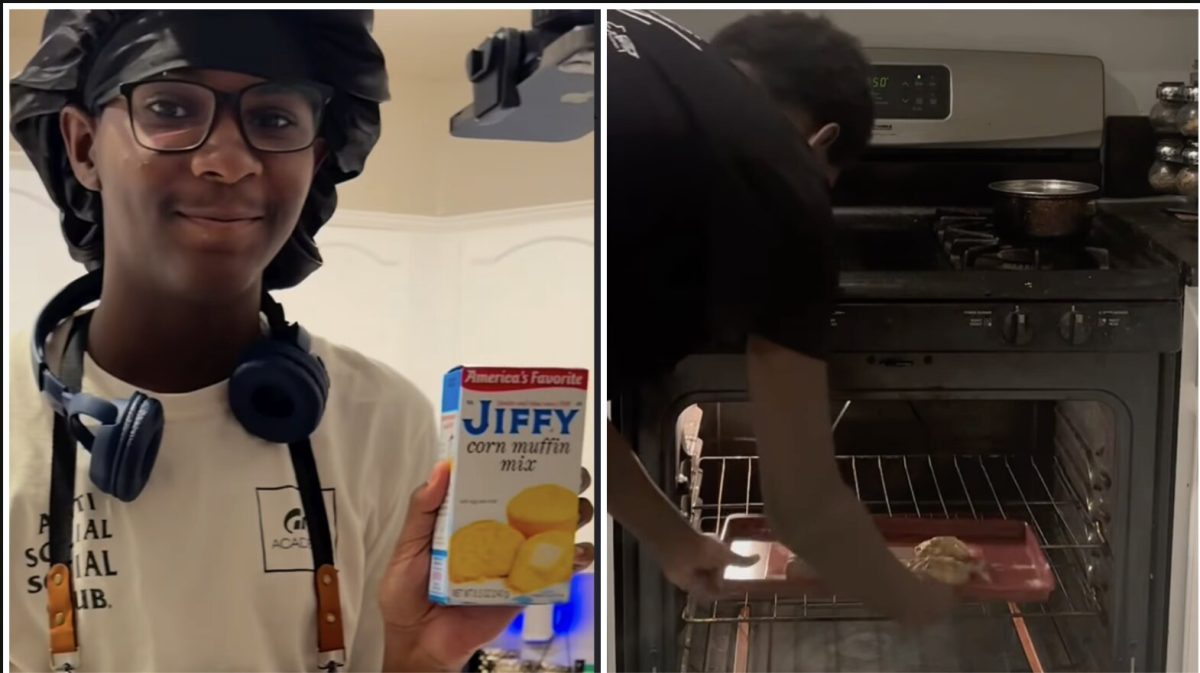
    One night in Apple Valley, California, Morgan Graham rose in the middle of the night. A smell had woken her up. It was pleasant, but at 11:28 p.m. she wasn’t expecting to smell delicious cooking. She went down into the kitchen to see her 15-year-old nephew, Amir Jackson, baking cookies.

    This was the first of several viral videos of Graham’s nephew cooking up a storm late at night. Jackson, who has been staying with his aunt during the summer, is taking advantage of her kitchen to whip up some sumptuous snacks.

    Birth of a Midnight Chef

    Nearly every night, Graham wakes up around midnight to the smell of cookies, cornbread, tacos, or whatever her nephew wants to prepare.

    “I don’t care,” said Graham in the initial video. “He’s very responsible. He’s not gonna burn the house down, so therefore, cook whatever you want.”

    Graham further explained in the video that Jackson looks at recipes daily. He also rummages through her pantry during the day to search for ingredients for his nightly cooking fest. 

    “In his world, he’s having the time of his life. In my world, I just want to stop waking up close to midnight to the smell of food,” Graham joked.

    Graham’s videos featuring her nephew have racked up millions of views on TikTok and Instagram. The commenters soon bestowed the nickname “Midnight Chef” upon Jackson, to general delight. In another video, Jackson explained he liked the peace and quiet of the night while preparing his dishes.

    “I was like, ‘Man, I could go for some cookies right now.’ I saw they had cookie dough, so I started just making them, just randomly,” Jackson told TODAY. “I was trying to make sure nobody was up. My thought process was just like, ‘Man, why not?’”

    Graham is encouraging her nephew to keep cooking even though it wakes her. In fact, Graham set up Jackson’s own Midnight Chef Instagram page for him to post his latest recipes.

    “I just want to experiment while I still got the chance to experiment. I’ll maybe like branch into different fields,” said Jackson. “Explore what I can do while I still got time to.”

    Why do we indulge in late night snacking?

    Jackson’s popularity has brought up a commonly asked question: Why do we crave food randomly in the middle of the night?

    Well, there’s actually a bit of science behind it. Turns out that late night snacking is a result of our circadian rhythm system. As part of our now-defunct survival mechanism, our ancestors would eat large meals at night to store energy in times of famine. This is also why most midnight snackers crave foods higher in fat, salt, and sugar compared to what they’d usually eat during the day. While there’s nothing inherently wrong with late night snacking, it could curb certain health goals if a person is trying to trim down.

    If you find yourself getting up in the middle of the night with a hankering for a snack, it may be worth taking a peek at Jackson’s videos. Who knows what kind of late night cooking it can inspire? Perhaps you’ll become a Midnight Chef yourself.

Explore More Culture Stories

Media

Boomers think these 7 habits make them polite but younger generations are begging them to stop

Technology

Only 17% of people can pass this 3-question IQ test on the first try. Can you?

Internet

Woman documents her nephew’s late night culinary quests as the viral ‘Midnight Chef’

Fashion

European Union enforces ban on destroying unsold fast-fashion clothing by major companies