
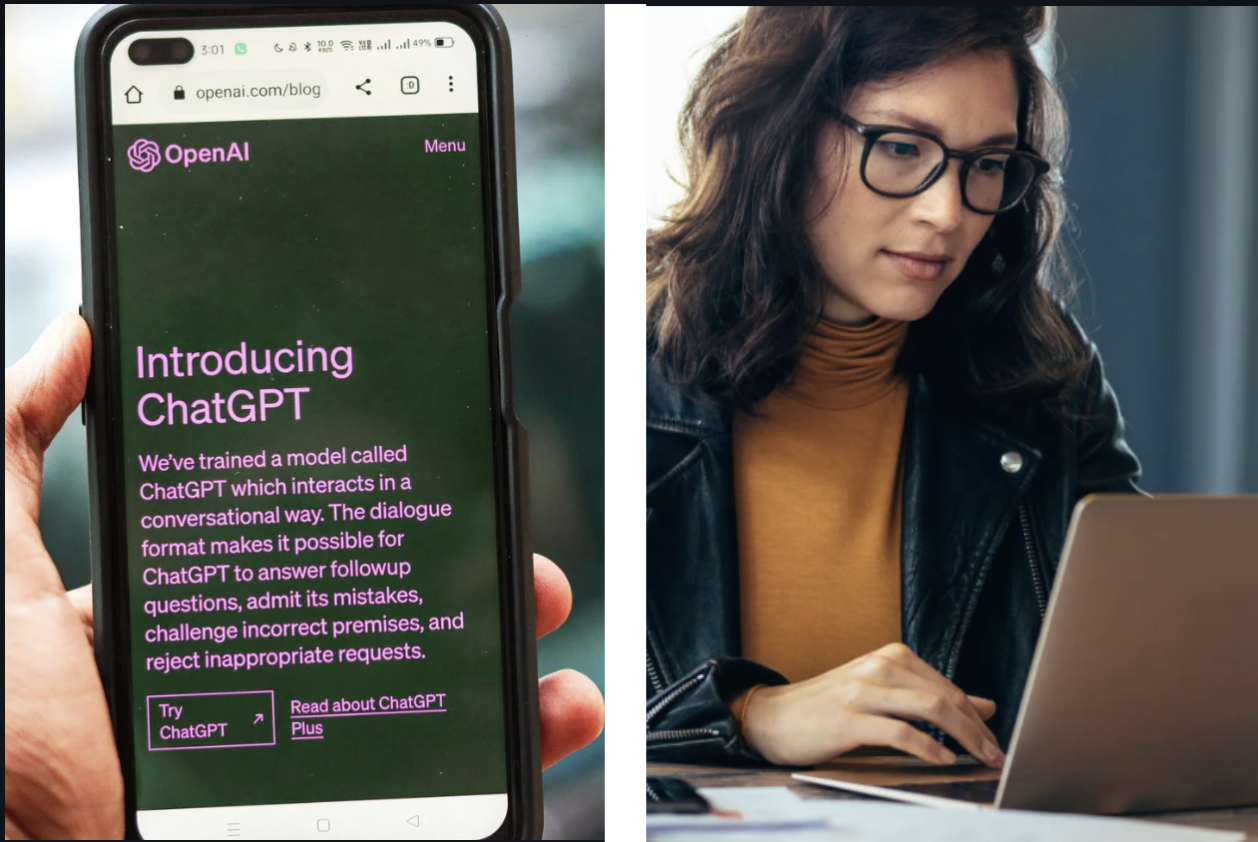
The current use of artificial intelligence has become a controversial topic in recent years. For every article claiming that A.I. is the future, there is another pointing out its flaws, troubles, and potential dangers. It’s hard to separate the hype from the noise and know whether A.I. is useful for you. Fortunately, an A.I. strategist who acknowledges both the benefits and limitations of A.I. can help.
A.I. expert Dr. Denise Turley has consulted with several large businesses regarding A.I. usage and where A.I. can be beneficial versus unnecessary or even harmful. Before using artificial intelligence, she asks herself five questions and encourages her clients to ask these questions before using any A.I. tool for a task.
Here are those questions, accompanied by thoughts provided by A.I. experts who reached out to GOOD:
1. If this goes wrong, how big are the consequences?
If you use A.I. to complete this task, whatever it may be, and it has any incorrect information, is of poor quality, commits plagiarism, etc., it won’t be the A.I. held responsible for the consequences. If the risks or stakes are too high, it’s probably not worth relying on A.I. for answers. If something goes wrong, bosses cannot fire an L.L.M., but they can fire you.
2. Does this require judgment or values only I can provide?
If the task needs a judgement call, you’re still the best person to make it even when using A.I. as a consultant or advisor.
“When it comes to using A.I., much of the quality of your outputs is actually about how much context and guidance you provide models,” said former Goldman Sachs investment banker turned A.I. research strategy lead Rosemary Wei. “Much like asking a friend versus a stranger for advice, it is generally more helpful when they have more context on you, your goals, and how you think.”
“When using A.I., you should also consider if you have biased the answer,” added Wei. “Especially on models that store memory, you will find that answers are tailored toward you and how you already think. You should think: ‘Is AI telling me this because this is what it thinks I will like or is A.I. telling me this because it thinks this is right?’”
So even as an advisor, A.I. could just be a yes-man. It’s best to field ideas from others outside of your influence if you wish, and then rely on your own judgment.
“A.I. should handle the mechanical work so you can focus on the human work,” said writer Russel Taris, who covers A.I. tools for managers for Productivity Radar and holds over 20 years of engineering management experience.
3. Would relying on A.I. here weaken a skill I need to develop?
“Over-indexing on A.I. early means that you might miss out on the pattern recognition and the cognitive thinking/decision making needed for your job,” Rosemary Wei continues. “You essentially allow the model to learn in place of you.”
Wei shared how heavy reliance on A.I. would have made her lose out on proper job experience and skill-building that made her a better banking analyst in her prior position at Goldman Sachs.
“As an analyst in banking, you make most of your errors in your first three to six months on the job, and those patterns allow you to be sharper for the rest of your career. Without those errors, you do not know what to look for when reviewing the work of your junior or other assignments.”
Taris tells GOOD that A.I. reliance might not only prevent new job skills from forming, but cause some skills to be lost.
“I see managers outsource the entire process of performance review writing, for example, to A.I. and then lose the skill for giving direct feedback,” he said. “The process is sped up, but they actually become worse at their job.”
4. Is A.I. helping me think more clearly, or just move faster?
“A.I. largely lets you move faster, but there is a blind trust in the work already,” said Wei. “We must let models prove their capabilities more clearly before we offload work and tasks to them.”
So a decision to use A.I. might be good for speed, but would still require human thought, analysis, and critical thinking depending on the purpose and point of the task.
5. Could I stand behind this decision without blaming the tool?
Much like with the first question, you will ultimately be responsible for your decisions and the consequences afterward, not the A.I. If you’re unsure about the end result after using A.I. for the task, it may have been better to not have used A.I. at all.
If the answers to these questions pass muster then A.I. could be a good tool for you. However, it seems that these A.I. experts stress that even if you choose to implement an A.I. tool that it should work with you, not in place of you.
“I’d add the question, ‘Will relying on A.I. for this task disconnect me from something I need to stay close to?’” said Taris. “A.I. will draft your team update, but if you stop paying attention to what your team actually accomplished, you can lose context that matters.”
Putting aside hype, valid criticism, unfair critiques, and everything in between regarding A.I., experts recommend asking these questions just to make sure A.I. is right for you personally and professionally before implementing it into a situation.














,_%D0%91%D1%83%D0%B1%D1%80%D0%B5%D0%B6%D0%BD%D0%B8_%D0%BA%D0%B0%D0%BC%D0%B5%D1%9A%D0%B0_2.jpg)


