By age 18, my knees hurt. I didn’t know why, and they didn’t hurt a lot, but they did hurt a bit most of the time. As someone who took a lot of dance classes and played my share of netball, it was annoying, but not something I thought much about. After all, I reckoned, bad knees run in my family. But by age 20, the pain had gone from a bit annoying to definitely annoying. I decided, for the first time, to see a doctor about it.


She was a brisk woman with close-cropped grey hair, who glanced at me and told me my knee pain was due to early-onset arthritis as a result of my being overweight. My blood tests were negative for rheumatoid arthritis — but that didn’t matter, she told me. The only way to stop my pain from getting worse was by losing weight. So with the resigned sigh of anyone who has grown up fat, I accepted my fate. I was arthritic, at 20.

By 22, things were worse. My knees had gone from hurting a bit most of the time to spontaneously collapsing in blinding pain while I was doing innocuous activities like walking down the street. I went back to the doctor — a different one, because I just saw whoever was available at the student clinic. He asked me about my pre-existing medical conditions. I explained that my arthritis was a result of being overweight. He looked at me incredulously. “That’s not a thing.” No one gets non-rheumatoid arthritis in their twenties as a result of being overweight, he explained.

Instead, he decided we should figure out exactly why my knees were spontaneously collapsing. He sent me for an MRI, and I had a consultation with a specialist surgeon. “Patellae chondromalacia,” the surgeon declared. He showed me the shadows on my scan, which indicated rough patches on my knee caps. It was probably hereditary, exacerbated by my weight.

“Ok,” I said. “So what can I do about it?”

“You’re just going to have to manage the pain,” he explained. “And once it gets to be too much, you’re going to need your knees replaced. And that will probably be before you’re 30.”

[quote position=”full” is_quote=”true”]I had eight years before I turned 30. It felt a bit like a death sentence.[/quote]

Resigned, I accepted my diagnosis. I said goodbye to yoga and dance, which aggravated the condition, and started wondering about how much two new knees might cost, and how I’d get around on crutches. I had eight years before I turned 30. It felt a bit like a death sentence.

At 24, my new housemate decided she was joining our local gym, and in a moment of optimism, I decided to go with her. This gym offered a free short session with one of their personal trainers to help newbies learn the ropes. “I’ll put you with Hao,” the receptionist said. “He’s got a physio background; he’s good with injuries.”

Hao was intimidating — really tall, super buff, thick Chinese accent that was hard to understand at first. “It says here you’ve got an injury,” he told me. “What is it?”

“I’ve got patellae chondromalacia in both knees,” I replied. “It’s-“

“Oh that,” he said, interrupting me. “I can fix that.”

What?

Hao explained to me that what I had was a pretty standard sporting injury that is usually treated successfully using exercise — a fact that none of my doctors had mentioned. I’d probably injured myself as a result of all that dance and netball I did as a teenager, and it might have been exacerbated by my family history of dodgy knees. It’s normally caught early and treated early — it’s very rare for it to get to the point of causing knees to collapse, but that can happen in serious cases with no treatment. “Work with me for 10 sessions,” said Hao. “If you don’t notice a difference, I’ll give you your money back.”

Well, after 10 sessions I noticed a pretty significant difference. After six months, the pain that had plagued me for six years was entirely gone.

[quote position=”full” is_quote=”true”]When doctors looked at me, they didn’t see a girl who danced, cycled, and played team sports. They saw a fat girl .[/quote]

I can’t help but think that there’s a whole lot of physical pain I could have avoided if any of the medical professionals I saw had considered the fact that I might have a sporting injury. And I can’t help but wonder if the reason they didn’t has to do with my weight.

When doctors looked at me, they didn’t see a girl who danced, cycled, and played team sports. They saw a fat girl — and they based their diagnosis on stereotypes about what that meant. I’m 29 now, and my knees no longer hurt. I don’t need to have them replaced — but if I’d listened to the weight-prejudiced opinions of my doctors, I might have.

This story is hardly unique.

Research shows that doctors have less respect for patients with higher body-mass indexes, which can lower the quality of care those patients receive. As one study put it:

“Many health care providers hold strong negative attitudes and stereotypes about people with obesity. There is considerable evidence that such attitudes influence person-perceptions, judgment, interpersonal behavior, and decision-making. These attitudes may impact the care they provide.”

Troublingly, many of the ideas that doctors have about fat patients aren’t even grounded in medical fact. Indeed, too often it’s forgotten that the science around weight loss and health isn’t all that settled. Does excess weight cause you to live a shorter life? Maybe, maybe not. Countless studies by BMI category have found that overweight people actually have lower rates of all-cause mortality than normal weight people.

Some researchers think that if you adjust for the increased risks caused by weight cycling (aka. yo-yo dieting) and dangerous weight-loss drugs, you’d find the same mortality rates for normal, overweight, and obese people — yes, even very obese people. And even without the adjustments, the increased risk for very obese people is only small — not the “you’ll be dead before you’re 30” nonsense often pedaled by purveyors of weight-loss surgeries.

What about serious disease? There’s certainly a correlation between being overweight and some diseases, but multiple studies suggest that the weight might actually be a symptom rather than a cause.

Then there’s the idea that excess tissue “strains” the body. Eminent obesity researcher Dr. Paul Ernsberger has been quoted as saying, “The idea that fat strains the heart has no scientific basis. As far as I can tell, the idea comes from diet books, not scientific books . . . Unfortunately, some doctors read diet books.”

[quote position=”full” is_quote=”true”]So why, then, do doctors insist on prescribing diets and weight loss as a treatment for anything and everything?[/quote]

What about dieting? Well, there actually is some scientific consensus there :  Diets don’t lead to lasting weight loss—not even if you call them lifestyle changes. After an extensive metastudy of diet and weight loss studies, Dr Traci Mann concluded, “The benefits of dieting are simply too small and the potential harms of dieting are too large for it to be recommended as a safe and effective treatment for obesity.”

So why, then, do doctors insist on prescribing diets and weight loss as a treatment for anything and everything?

Sarah, 29 from Newcastle, Australia, had the misfortune of breaking both legs as a teenager, the result of a freak accident involving her legs falling asleep and then getting twisted to the point of breaking. Not long after learning how to walk again, she was involved in a serious car accident that left her with further damage to her legs. “I’m accident-prone,” she laughs. The multiple injuries have left Sarah with a build up of scar tissue that can make walking painful. But when she went to the doctor, her pain was blamed on her weight.

“My weight is a factor in the healing process,” she says, “But it wasn’t the cause of my injuries — and I’ve got police reports, x-rays, and specialist reports to prove it.”

Sarah changed doctors recently, and her new doctor decided to do a full medical history, checking the notes from all the physicians Sarah has seen. What she found shocked her. “She said there’s no record of my injuries with most of my previous doctors,” Sarah said. “They all had written that my leg pain was caused solely by my weight, and that meant I wasn’t getting any useful treatment for the pain. They just told me to diet.” Sarah’s new doctor promptly started her on a physical treatment plan designed for someone with compound injuries and severe internal scarring.

The difference has been immediate.

“Within two weeks I could walk nearly five kilometers. Before I started the treatment, I could only manage one kilometer or less before my knees were so swollen and painful that I couldn’t keep going,” said Sarah. “Getting actual treatment for my injuries, rather than just being told to lose weight and see what happens, has changed everything.”

Just to be clear, I’m not saying that eating healthily and exercising aren’t good for you. The problem is when doctors prescribe diets and weight loss to patients without fully considering their symptoms and other treatment options.

Stigmatization may also, problematically, stop fat people from seeking out medical care in the first place.

“I just don’t go to the doctor,” says Anita, a 28-year-old advertising executive. The last time Anita saw a doctor, it was a routine visit to discuss vaccinations and antimalarial medication for an upcoming overseas trip. The doctor prescribed the vaccines and asked a nurse to administer the jabs. It was the nurse who decided Anita had diabetes — without having spoken to her, or seeing anything pertaining to her medical history.

“He kept saying I would get a discount on the vaccines if I registered my diabetes,” Anita explained. “I haven’t got diabetes, but he wouldn’t listen. His whole attitude was like, ‘You know you’re fat, right?’ Um, yeah, I’ve noticed that, actually. Just give me the jabs.” The experience was pretty upsetting, and left Anita firmer in her resolve to avoid doctors wherever possible.

Still, Anita, Sarah, and I are relatively lucky; our experiences have caused us pain and humiliation, but no permanent damage. This is not true for everyone.

First Do No Harm is a website that chronicles the experiences of fat people with medical professionals — and it’s filled with harrowing stories.

One woman lost a lot of weight suddenly and was praised for it — with doctors missing the fact that it was a sign of the cancer that shortly killed her.

A man vomited constantly due to multiple sclerosis, but instead of viewing that as a medical red flag, doctors simply celebrated the 120-pound weight loss it caused. The vomiting led to permanent nerve damage, back pain, and tooth decay.

A woman had an emergency doctor declare that she didn’t need treatment for abdominal swelling after a serious car accident because she was just fat. She nearly died.

A woman went years just being told to lose weight to address her ongoing, multiple health problems. It turns out she has a rare neurological disorder; the diagnosis delay has led to permanent brain damage.

There’s another trove of awful stories on fat prejudice here. And of course Google’s got plenty more.

[quote position=”full” is_quote=”true”]Hormonal problems? Lose weight. Broken finger? Lose weight. Migraines? Lose weight.[/quote]

A consistent narrative runs throughout these stories. Hormonal problems? Lose weight. Broken finger? Lose weight. Migraines? Lose weight. Losing weight is the consistent — sometimes only — treatment offered for every ailment imaginable.

For many, changing the narrative around weight is literally a matter of life or death. So what can be done to address the problem?

The good news is that there’s some recognition within the medical profession that this is a serious issue which must be addressed. It’s been noted that medical students don’t receive nearly enough training on obesity, and efforts are beginning to try to change that. Researchers are also working on empathy programs and raising awareness about the impact of implicit bias against patients. All of this is a promising start.

At the same time, we can all become our own health advocates. If you’re a fat person, or someone you care about is a fat person, you can develop your critical thinking skills and challenge the classic “just lose weight” prescription if it doesn’t seem to fit the symptoms.

This isn’t easy. There’s an implicit power imbalance between patient and doctor that makes challenging their statements very difficult. By working to become experts on our own health and our own situation, we stand a better chance of being able to call out something that doesn’t feel right.

Doctors are highly educated people, but they’re subject to the same biases as the rest of us, and many of them don’t stay up to date with the latest research. That’s not good enough. If obesity really is a major health concern, it’s essential that doctors stay educated on recent studies and metastudies that look at how to get the best outcomes for fat patients. If doctors really do care about their patients, they need to start looking at the overall picture of a person’s health, not simply the size of their body.

Most of all, doctors need to stop prescribing a treatment that’s proven not to work for conditions that don’t warrant that treatment in the first place.

The medical profession needs to step up. It needs to accept that diets aren’t the universal treatment option for fat people. It needs to accept that fatness isn’t the universal cause of ill health in fat people. It needs to engage with the very real damage caused by its attitudes toward fat people, and with the substandard care delivered to many people as a result of their size.

It’s not exaggerating to say that lives depend on it.

This piece is published in partnership with The Establishment.
  • Doctors couldn’t explain the pain in her daughter’s foot. Then a nurse looked closer and spotted something that led to a devastating diagnosis.
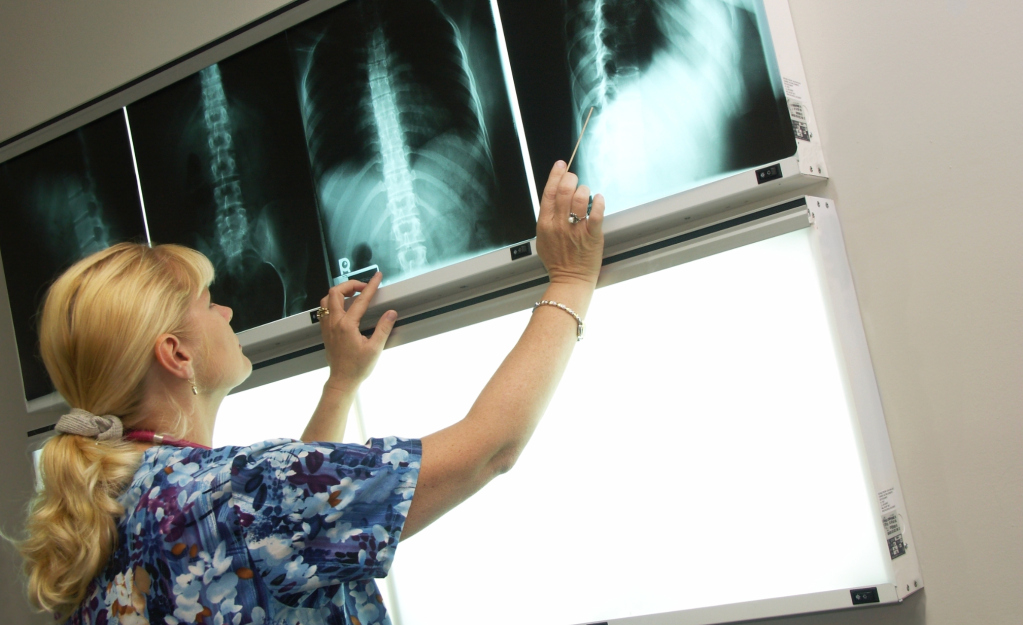
    A nurse checks out an x-rayPhoto credit: Canva

    Elle Rugari is a nurse. So when her 4-year-old daughter Alice started complaining about foot pain one evening in late September of last year, Elle did what most parents do first: she gave her some children’s paracetamol, a wheat bag for warmth, and put her to bed. Alice had just had a normal day at childcare. There was no obvious injury.

    But Alice woke up screaming that night, and the pain kept coming back over the following days. She started limping. She cried more often than usual. “She doesn’t like taking medicine or seeing doctors,” Elle, who is from South Australia, told Newsweek. “So I knew it was something serious” when Alice started asking for both.

    At the emergency department, doctors X-rayed Alice’s foot. It showed nothing. But as they continued their assessment, a nurse noticed something else: tiny pinprick bruises scattered along Alice’s legs. Blood tests were ordered. While they waited for results, Elle pointed out something she’d spotted too: swollen lumps along her daughter’s neck.

    @elle94x

    Battling Leukaemia with all her might! ‼️VIDEO EXPLAINING IS ON MY PAGE‼️ Instagram & GoFundMe linked in bio 💛🎗️ #cancer #medical #hospital #help #cancersucks

    ♬ original sound – certainlybee

    The blood results, in the doctor’s words, came back “a bit spicy.” When Elle asked him directly whether he was thinking leukemia, he said yes. She and her partner Cody were transferred to the women’s and children’s hospital, and the diagnosis was confirmed the following day by an oncologist.

    For parents who aren’t medical professionals, those tiny bruises might easily have been overlooked. They’re called petechiae, and they’re caused by small capillaries bleeding under the skin when platelet counts drop. According to the American Cancer Society, bruising and petechiae appear in more than half of children diagnosed with leukemia, often alongside bone or joint pain and swollen lymph nodes. The limping, the foot pain, the bruises, the lumps on the neck: in retrospect, they were telling a clear story. In the moment, without blood work, they’re easy to miss.

    Nurse, patient, medicine, hospital
    A nurse embraces a young cancer patient. Photo credit: Canva

    As Newsweek reported, Alice is now three months into a three-year treatment plan on a high-risk protocol, meaning her course of therapy is more intensive than standard. She is losing her hair. She has hard days. And she sings Taylor Swift songs every single day.

    “She lets everyone around her know that she has leukemia and that she’s going to get rid of it,” Elle said. “She’s honestly the most amazing child.”

    Under the handle @elle94x, Elle shared Alice’s story on TikTok in December 2025, and the response has been overwhelming, with the video drawing over 1.3 million views. Many of the comments came from parents who recognized the pattern from their own experience. “My daughter was changing color and having fevers and complaining of leg pain and arm pain, and hospitals all kept saying it was her making it up,” wrote one user. “I didn’t give up, and it was leukemia.” Another wrote: “I thought my son had strep throat because he is nonverbal with autism. We got admitted that night for leukemia.”

    @elle94x

    … This song is 100% about superstitions and trees 👀 Do not tell my 4 year old who’s battling leukaemia otherwise. @Taylor Swift @Taylor Nation @New Heights @Travis Kelce #taylorswift #swifties #swiftie #fyp #taylornation

    ♬ original sound – elle94x

    Medical experts recommend that parents seek urgent evaluation for any child with unexplained bruising that appears in unusual places, doesn’t heal normally, or comes alongside other symptoms like fatigue, bone pain, or swollen lymph nodes. Norton Children’s Hospital pediatric oncologist Dr. Mustafa Barbour advises that if symptoms don’t improve or don’t have a clear explanation, it’s always worth making an appointment.

    Elle said there are still days when the weight of it hits hard. But Alice’s attitude keeps pulling her forward. “There are still days where it feels so, so overwhelming,” she said. “But she’s such a little champion.”

    This article originally appeared earlier this year.

  • Licensed therapist says these 3 steps stop rude people from hijacking your mind
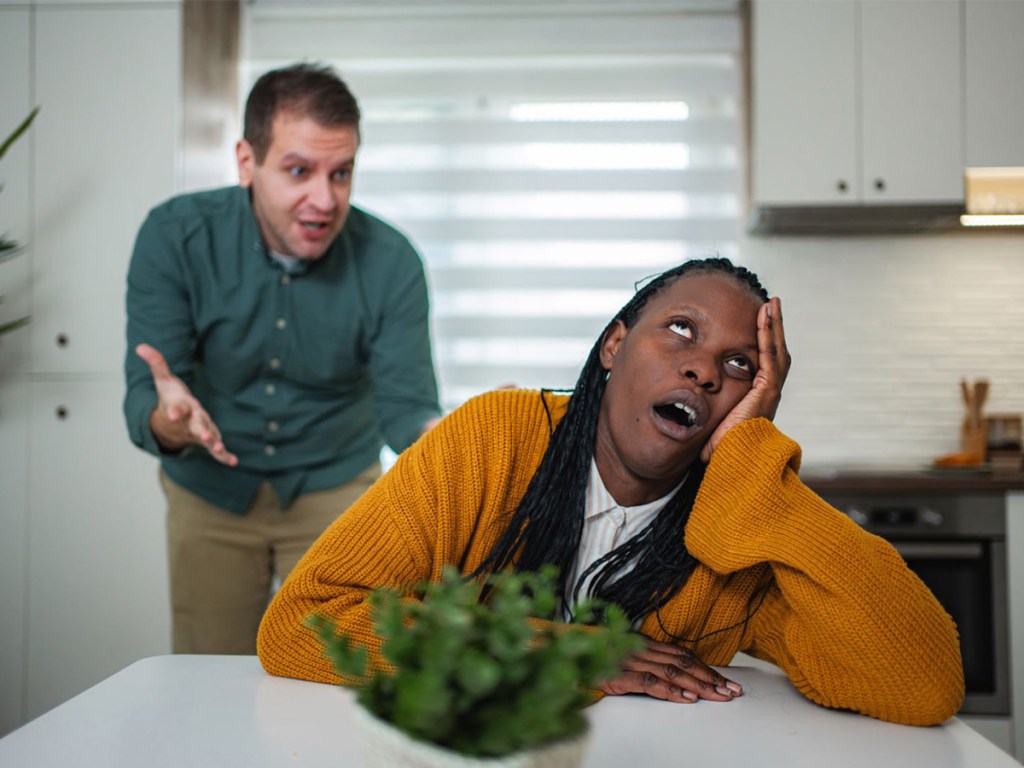
    Woman exhausted by man's poor behavior.Photo credit: Canva

    Licensed therapist Jeffrey Meltzer offers three steps for dealing with rude people. In his helpful TikTok post under the name therapytothepoint, he suggests helpful tactics that go far beyond setting simple boundaries.

    Rude people are almost impossible to avoid, and the instinct to snap back or make a passive-aggressive remark can be strong. Meltzer shares some practical mental health advice that can lead to a calmer resolution.

    It Begins With Emotional Regulation

    Some individuals might believe that other people are responsible for how they make us feel. Meltzer suggests that self-regulation is an important first step to dealing with disrespectful people. Despite instincts to retaliate or escalate the situation, staying calm is more effective.

    Meltzer proposes that reciprocating aggression will only embolden a rude person and even justify their poor behavior. Instead, calmness and controlling our emotions will disrupt the pattern. Meltzer explains, “You might feel angry, embarrassed, disrespected, but calmness is about your behavior, despite the internal chaos you may be having. At the end of the day, emotional regulation is your strength, and reactivity gives your power away.”

    A 2024 study in the National Library of Medicine found that people’s ability to reappraise a stressful event in a more balanced way was strongly linked to greater resilience and better recovery from stress. The strategy helps people stay calmer by changing how the brain interprets the event.

    life hacks, behavior, Jeffrey Meltzer, sarcasm, emotional regulation
    A woman is rudely interrupted on the phone.
    Photo credit Canva

    Passive Aggression Is NOT a Solution

    An easy response might be the simple eye roll, sarcasm, or a retaliatory personal dig. Meltzer points out that these are only ego attempts to win an unwinnable situation. “Instead, be straightforward. I’m open to talking about this, but not like that. It’s hard for me to connect when you speak to me that way.” Meltzer explains that these tactics bring clarity and remove the defensive guard of said rude individuals.

    A 2026 study in Psychology Today reported that passive-aggressive behaviors worsen relationship dynamics and fail to resolve disagreements. Criticism, ostracism (ignoring others), and sabotage all undermine cooperation and relational success.

    frustrating, passive aggressive, solutions, mental health
    A man blows a dandelion in a woman’s face.
    Photo credit Canva

    Role play works

    Practice makes perfect has value in dealing with rude people. “You don’t magically become composed under pressure; you train for it.” Meltzer continues, “Practice with a friend. Practice with your therapist. Have them be rude. Respond calmly. Respond assertively. Respond clearly. Because in real life, you don’t rise to the moment, you fall to your level of preparation.”

    A 2024 study in the National Library of Medicine revealed that an individual’s level of assertiveness can be trained. The strategy of preparation reduced feelings of stress, anxiety, and depression.

    meditation, annoying people, strategies, peace of mind
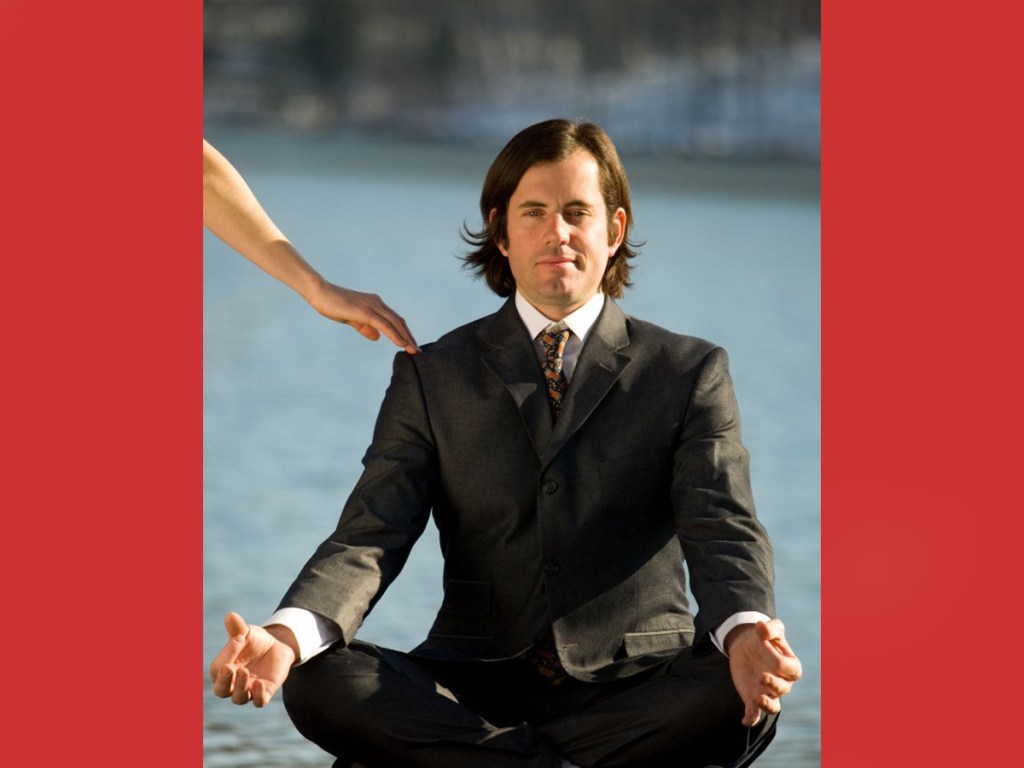
    Interrupting a meditation.
    Photo credit Canva

    Stay Calm, Be Assertive, and Practice

    The solutions offered by Meltzer seem to resonate. Several people reveal their own struggles when facing similar predicaments. These are some of their comments:

    “Practice with a therapist? Why didn’t I think of that”

    “You don’t rise to the moment you fall to the level of your preparation. I’m gonna memorize that.”

    “I’m waiting for you to write a book about all your amazing insights”

    “I can handle them but i internalize later n let it ruin my day”

    “The real skill is knowing when to ignore and when to address it. Not everything deserves your energy.”

    “Rudeness is a weak man’s imitation of strength. Just say that to them and if they continue, walk away with a smile.”

    Meltzer advises that the best way to handle rudeness begins with how we respond. Diffusing a situation helps maintain peace of mind. Remaining composed helps control our own reactions. In the end, rehearsing for success allows us to stay confident when difficult situations arise.

  • Love educator shares how awkward flirting can be turned into a romantic superpower
    A couple flirts on the dance floor.Photo credit: Canva

    In a recent TED Talk, love coach Francesca Hogi shared how even your awkward flirting can be a superpower. Sometimes mistaken as off-putting, flirting actually offers a powerful gateway to real human connection.

    By reframing flirting as an act of curiosity, she explains how anyone can kickstart attraction and open the door to lasting love. In an impassioned presentation, Hogi demystifies flirting and explains why building attraction matters.

    Flirting can be a superpower

    Hogi explains that for 12 years she’s been helping people fall in love as both a matchmaker and a coach. “As a love professional, I can assure you that many dating problems can be solved with flirting,” Hogi says. “If you’re single, it helps you to connect and fall in love. If you’re partnered, it helps you to reignite or maintain the spark of chemistry that brought you together in the first place.”

    Many might have concerns about their ability to flirt. Will they be received well, or are they even doing it right? Hogi explains, “I’ve got good news for the introverts out there. You don’t have to be extroverted to be a magnet for connection. In fact, I believe that introverts have a secret advantage when it comes to flirting because your efforts at being more open feel more genuinely inspired by another person and therefore special.”

    She shares that flirting can give you confidence and courage. She also acknowledges that feeling awkward is normal. “Confidence with flirting comes from knowing yourself, your intentions, reading the room, discerning other people’s reactions, and adapting accordingly,” she says. “Sometimes it’s going to be awkward, sometimes it’s going to be embarrassing, and that’s okay.”

    flirtation, connection, mental health, good vibes, sexuality
    A couple enjoys flirting.
    Photo credit: Canva

    Healthy flirting

    “Flirting gives you more agency over human connection,” says Hogi.

    She then describes the two foundational principles of healthy flirting. The first is presence: being in the moment and avoiding distractions like a phone or the surrounding environment. The second is enthusiasm. Getting the right vibe while being enthusiastic goes a long way toward mastering the art of flirting. These principles have a strong effect on other people.

    Hogi explains that expressing positive intentions has a large impact on outcomes:

    “You have the ability to leave other people feeling good for having interacted with you…Even your unspoken appreciation for a shared moment of connection, no matter how brief, can often be felt. Lean into being the version of you who leaves other people with a smile on their face and notice how much more magnetic you become.”

    community, expression, humor, self-confidence, self-esteem
    A flirtatious interaction.
    Photo credit: Canva

    Hogi inspires the crowd

    People seem quite taken with Hogi’s energy and charisma. Some of the comments expressed admiration for her vibe and flirtatious delivery on stage. Hogi was sharing her own version of flirting as a superpower:

    “Even this presentation feels like shes flirting…especially her laughs”

    “She is such a good public speaker, ten minutes of speech with no filler words whatsoever”

    “Flirting is a way making one feel seen and acknowledged.”

    “Where were you, Francesca, when I needed these words? Like, 40 years ago? Never too late, right?”

    “Had me clapping in the end! She’z good”

    “I feel better about my flirting abilities after watching this now.”

    “She’s good , reading her body language generally teaches me more about flirting than learning it itself”

    gender, attraction, laws of attraction, social skills, personality traits
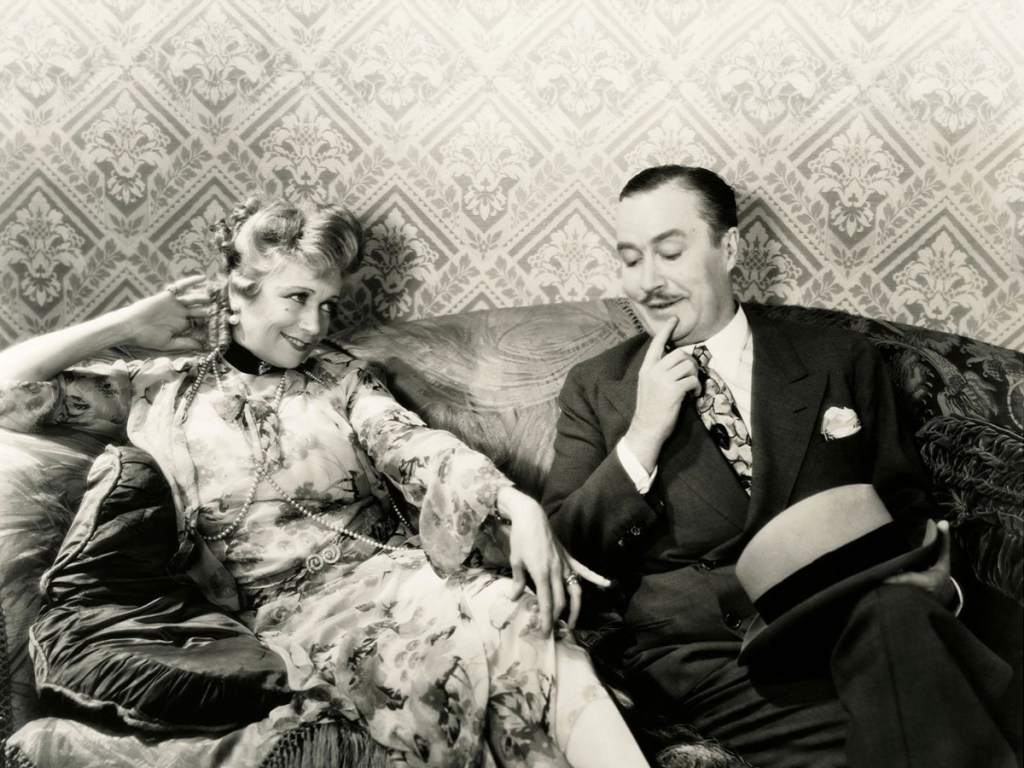
    A vintage photo of a couple flirting.
    Photo credit: Canva

    The power behind a flirtatious connection

    Flirting can have a powerful effect on both the initiator and the person on the receiving end. It isn’t necessarily about romance or sex. It helps build and strengthen relationships in everyday life.

    A 2025 study on ResearchGate analyzed where and how people flirt. The results suggested that people who flirt can improve with practice. The best flirting involved humor, confidence, and social skills. A 2026 study on ScienceDirect found that flirting can be an effective way for people to express their personality and individual differences. While personality traits and sex were linked to how often and how skillfully people flirted, these influences had only modest effects on overall outcomes.

    Hogi suggests flirting requires nuance and a little bit of courage. Practice prepares you for any occasion. “Attentiveness, compliments, playfulness—there’s nothing complicated about these actions, yet they have the potential to spark and sustain connection over time,” she says. “That’s a true superpower we can all tap into.”

    Hogi and the research suggest flirting isn’t just a trivial social game. It’s a meaningful way to express personality, build connections, and boost self-confidence. Flirting isn’t shallow. It doesn’t need to involve manipulation or outcome-obsessed action. These small everyday acts of courage embolden human connection and reveal individual superpowers in all of us.

Explore More Health Stories

Health

Doctors couldn’t explain the pain in her daughter’s foot. Then a nurse looked closer and spotted something that led to a devastating diagnosis.

Well-being

Licensed therapist says these 3 steps stop rude people from hijacking your mind

Well-being

Love educator shares how awkward flirting can be turned into a romantic superpower

Well-being

Retired U.S. Navy chief explains how to end discipline anxiety with wholesome ‘butler’ trick