

For Leslie Harris, most of his daughter’s milestones have passed without him. Serving a decades-long sentence for armed robbery in Louisiana, Harris knows he will likely miss her prom, graduation, and possibly even her wedding. But for one night this month, inside Louisiana’s largest maximum-security prison, he was able to create a moment of his own.

Harris reunited with his 17-year-old daughter at the prison’s first-ever father-daughter dance, an event that has since circulated widely on social media, according to reporting by The Associated Press. Wearing a custom tuxedo and holding a bouquet of roses, Harris embraced his daughter as Stevie Wonder’s “Isn’t She Lovely” played in a room decorated with pink drapery and flower petals.

“Seeing her in a dress, crying and running to me just broke me down,” said Harris, who has nine years remaining on his sentence, in a phone interview from the Louisiana State Penitentiary. “It made me think of all the years I missed out on in her life.”

The event took place at the rural prison complex in Angola, which houses more than 6,300 incarcerated people, including dozens on death row. It joins a small but growing number of similar programs across the country, including one in Washington, D.C., featured in the 2024 Netflix documentary “Daughters,” according to the Associated Press.

Assistant Warden Anne-Marie Easley told the Associated Press she hopes the dance can offer something rare in a place where many men are serving life or decades-long sentences: hope. For some fathers, it was their first time seeing their daughters in months or even years. For others, it was a chance to be seen not as inmates, but simply as dads.

Nearly 30 incarcerated men were selected to participate based on good behavior and other factors. Videos from the event show fathers in tuxedos with pink boutonnieres breaking down as their daughters ran toward them in sparkly dresses. The reunions took place on a pink carpet laid inside the prison’s Bible college, transformed for the evening into a dance floor.

The event was organized by God Behind Bars, a nonprofit that hosts religious services and reunification programs in prisons nationwide. In videos shared ahead of the dance, some men spoke about wanting to apologize for missed years, while others described the night as the most meaningful visit they had experienced while incarcerated.

For Harris, the most powerful moment came during a slow dance to “Butterfly Kisses,” a song about a father’s unconditional love. He said it brought back memories from before his incarceration, when his daughter was still a toddler. Before the night ended, he gave her a Bible with passages he had highlighted.

“That’s really the heart of it at the end of the day,” said Jake Bodine, founder of God Behind Bars. “Show these individuals who is counting on them and once they realize the weight of that, they will hold themselves accountable for change.”
  • A bonobo’s make-believe tea party has scientists rethinking whether imagination belongs only to humans
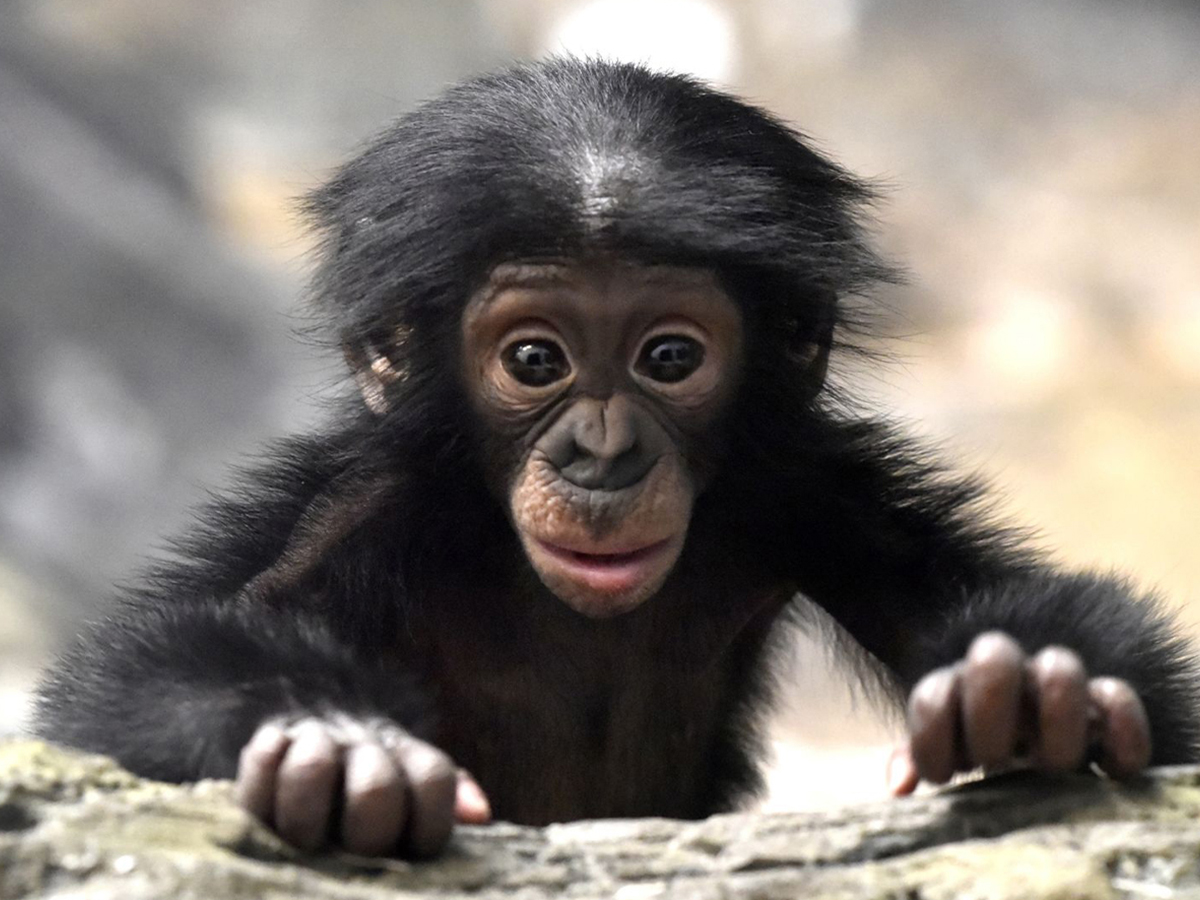
    Photo credit: CanvaAn adorable baby bonobo.

    Childhood activities like playing house, superheroes and villains, the floor is lava, and the classic tea party all involve imagination. We create stories and worlds with rules and roles to play.

    Humans want to believe that our creativity and art make us unique. But a bonobo named Kanzi was part of research that has scientists wondering how different we really are. In three evolving experiments, Kanzi correctly identified pretend objects, demonstrating that he could understand and engage in make-believe situations.

    primate research, behavior, bonobo study
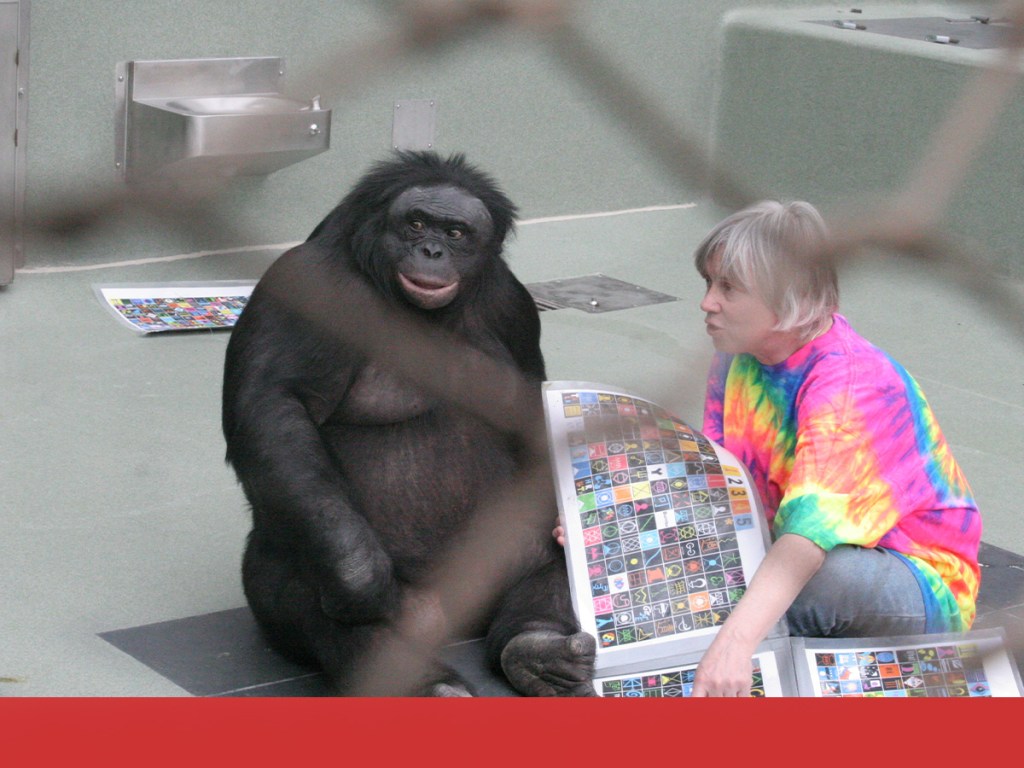
    Kanzi associates words and symbols with Sue Savage-Rumbaugh.
    Photo by William H. Calvin, Phd/ Wikimedia Commons (Cropped)

    Kanzi has a make-believe tea party

    Researchers developed a simple setup using cups, a pitcher, and actions that began as real pouring and gradually shifted into pretend play. The first experiment used real liquids. The second had a combination of real and pretend liquids. The final scenario had no real liquids and relied entirely on imagination.

    The scientists used gestures and make-believe to see if Kanzi would react differently depending on what he was being shown. He didn’t react the same way in each setup. His responses showed he was paying attention to more than just the objects, but also to the way the situation was presented.

    bonobo play, animal imagination, Kanzi bonobo, apes
    Kanzi participates in an indoor test.
    Photo by William H. Calvin, Phd/ Wikimedia Commons (Cropped)

    Animals engaging in fantasy

    The experiment revealed that non-human animals can understand and follow along with imaginary situations.

    “[It] shows that animals are capable of understanding pretence in a controlled experimental setting, which hadn’t been done before,” Dr. Amalia Bastos, first author of the research from the University of St Andrews, told The Guardian.

    Scientists involved in the research are careful about how they describe it. They don’t treat it as proof that bonobos imagine things the same way humans do. Instead, they suggest that animals are capable of responding to situations where meaning is implied rather than directly shown.

    Why scientists care about pretend play

    Albert Einstein, one of the greatest scientific minds in history, is often credited with the idea that logic gets you from A to B, but imagination can take you everywhere. This study suggests that the more we learn about animals, the more it seems the difference between us may not be as great as we once thought.

    Developmental research credits early social and cognitive growth in human children to imagining situations that aren’t physically present. A 2024 meta-analysis found that make-believe is not just entertainment but also directly linked to social understanding and real-world interpretation.

    Researchers now describe animal play as more flexible than once believed. A 2025 study of ravens revealed that play included the manipulation of sticks, stones, and other items, suggesting social awareness and responsiveness to context rather than simple instinctive behavior.

    Play and imagination may be versatile behaviors no longer seen as uniquely human traits. A broader cognitive toolkit shared across multiple species suggests the gap between humans and animals may be smaller than it once seemed. Things we’ve long believed to be uniquely human may instead exist along a spectrum of abilities expressed in different ways.

  • This  hand-written Walmart note about employee hours is a real head-scratcher
    Photo credit: u/Grizzlypupper / RedditA note from a Walmart manager to the employtees

    A handwritten notice posted at a Walmart store has gone viral, and the more people read it, the more complicated the conversation got.

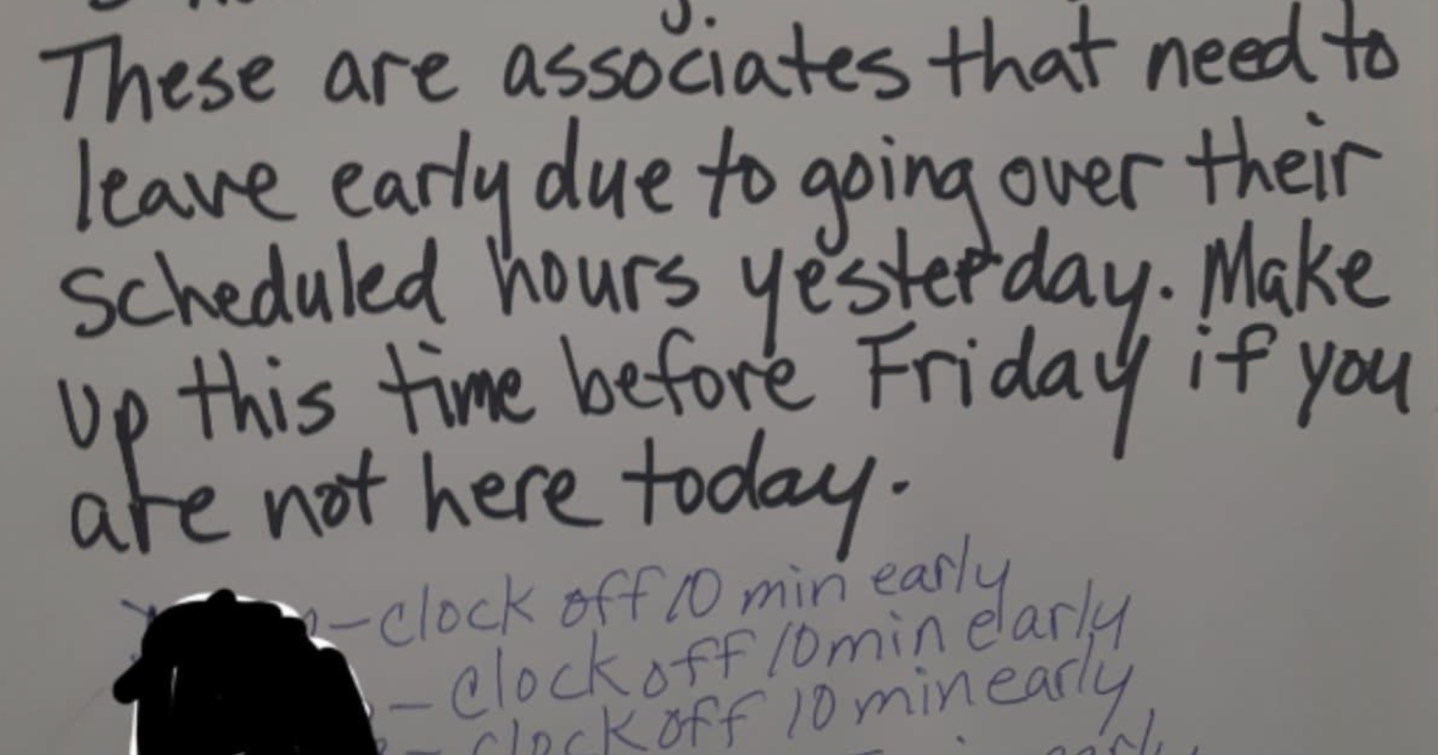
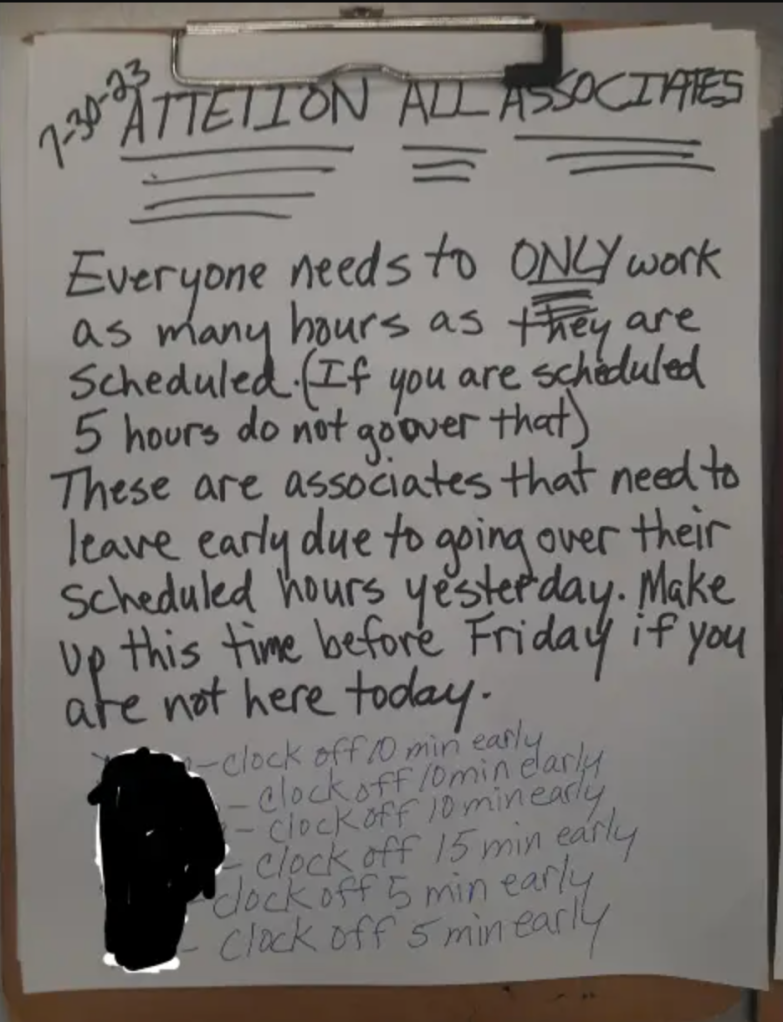
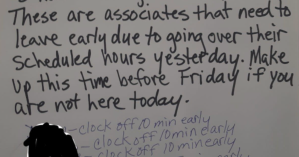
    The sign, photographed and shared to r/walmart by user u/grizzlypupper in April 2024, begins plainly enough: “Attention all associates. Everyone needs to only work as many hours as they are scheduled. (If you are scheduled 5 hours do not go over that.)” So far, standard retail stuff. But the notice then lists six employees by name and tells each of them to leave early to compensate for a few minutes they’d already worked over their scheduled shifts the day before. One worker was told to clock out ten minutes early. Several others were directed to shave off five minutes.

    The response on social media was immediate. Some workers defended the practice as straightforward scheduling management, arguing that staying over even a few minutes without authorization creates payroll headaches. Others found the optics jarring, given that most of the workers named had gone over by less than fifteen minutes, seemingly out of dedication rather than negligence.

    Walmart, workers rights, overtime, labor laws, workplace
    A note from the manager to the employees. Photo Credit: @Grizzlyupper/Reddit

    But the comment that drew the most attention came from someone who identified themselves as a current Walmart employee, as reported by Distractify in their coverage of the post. According to that commenter, the notice may actually violate Walmart’s own corporate policy. “Associates can report it to the wage and hour hotline,” they wrote, “and I’m pretty sure they will have to pay out the OT. I know for such a petty amount like this it won’t make a difference on your paycheck, but it’s about the principle.”

    Walmart’s own ethics page states explicitly that the company is “committed to complying fully with all applicable laws and regulations dealing with wage and hour issues, including off-the-clock work” and overtime pay. Whether a store-level manager directing employees to offset previously worked minutes crosses that line is a question workers would need to raise through official channels.

    It’s not the first time Walmart has faced scrutiny over hour management. As Market Realist noted in covering the story, the Pechman Law Group has documented at least two separate lawsuits from former Walmart employees alleging the company skimped on overtime pay, in one case by allegedly adjusting time clock records manually to avoid paying the time-and-a-half rate that kicks in over 40 hours.

    Walmart, workers rights, overtime, labor laws, workplace
    A cashier takes payment from a customer. Photo credit: Canva

    Walmart has not commented publicly on the specific notice. The store location was not identified in the Reddit post.

    For many workers in the comments, the frustration wasn’t about the policy itself but the execution. “When they cut our hours, it’s like one or a half an hour each day,” wrote u/Wooden_Tomato919. “Just give me a whole half day off. But that would benefit me, not them.” Another user, u/JediFed, offered a manager’s perspective: “If I need another 10 minutes to clean everything up, I should take that 10 minutes and clean everything up.”

    A notice meant to manage labor costs ended up raising a question that goes a bit further than scheduling: if an employee works the time, are they owed the pay? Under the Fair Labor Standards Act, for most hourly workers, the answer is yes.

    This article originally appeared last year.

  • Love educator shares how awkward flirting can be turned into a romantic superpower
    Photo credit: CanvaA couple flirts on the dance floor.

    In a recent TED Talk, love coach Francesca Hogi shared how even your awkward flirting can be a superpower. Sometimes mistaken as off-putting, flirting actually offers a powerful gateway to real human connection.

    By reframing flirting as an act of curiosity, she explains how anyone can kickstart attraction and open the door to lasting love. In an impassioned presentation, Hogi demystifies flirting and explains why building attraction matters.

    Flirting can be a superpower

    Hogi explains that for 12 years she’s been helping people fall in love as both a matchmaker and a coach. “As a love professional, I can assure you that many dating problems can be solved with flirting,” Hogi says. “If you’re single, it helps you to connect and fall in love. If you’re partnered, it helps you to reignite or maintain the spark of chemistry that brought you together in the first place.”

    Many might have concerns about their ability to flirt. Will they be received well, or are they even doing it right? Hogi explains, “I’ve got good news for the introverts out there. You don’t have to be extroverted to be a magnet for connection. In fact, I believe that introverts have a secret advantage when it comes to flirting because your efforts at being more open feel more genuinely inspired by another person and therefore special.”

    She shares that flirting can give you confidence and courage. She also acknowledges that feeling awkward is normal. “Confidence with flirting comes from knowing yourself, your intentions, reading the room, discerning other people’s reactions, and adapting accordingly,” she says. “Sometimes it’s going to be awkward, sometimes it’s going to be embarrassing, and that’s okay.”

    flirtation, connection, mental health, good vibes, sexuality
    A couple enjoys flirting.
    Photo credit: Canva

    Healthy flirting

    “Flirting gives you more agency over human connection,” says Hogi.

    She then describes the two foundational principles of healthy flirting. The first is presence: being in the moment and avoiding distractions like a phone or the surrounding environment. The second is enthusiasm. Getting the right vibe while being enthusiastic goes a long way toward mastering the art of flirting. These principles have a strong effect on other people.

    Hogi explains that expressing positive intentions has a large impact on outcomes:

    “You have the ability to leave other people feeling good for having interacted with you…Even your unspoken appreciation for a shared moment of connection, no matter how brief, can often be felt. Lean into being the version of you who leaves other people with a smile on their face and notice how much more magnetic you become.”

    community, expression, humor, self-confidence, self-esteem
    A flirtatious interaction.
    Photo credit: Canva

    Hogi inspires the crowd

    People seem quite taken with Hogi’s energy and charisma. Some of the comments expressed admiration for her vibe and flirtatious delivery on stage. Hogi was sharing her own version of flirting as a superpower:

    “Even this presentation feels like shes flirting…especially her laughs”

    “She is such a good public speaker, ten minutes of speech with no filler words whatsoever”

    “Flirting is a way making one feel seen and acknowledged.”

    “Where were you, Francesca, when I needed these words? Like, 40 years ago? Never too late, right?”

    “Had me clapping in the end! She’z good”

    “I feel better about my flirting abilities after watching this now.”

    “She’s good , reading her body language generally teaches me more about flirting than learning it itself”

    gender, attraction, laws of attraction, social skills, personality traits
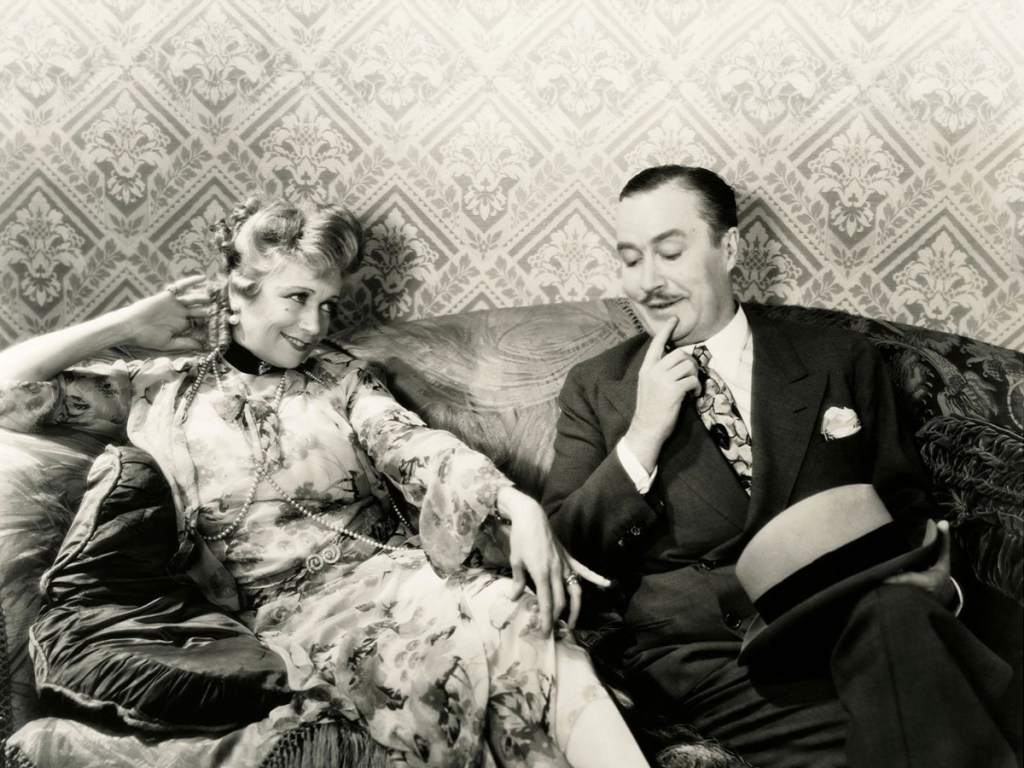
    A vintage photo of a couple flirting.
    Photo credit: Canva

    The power behind a flirtatious connection

    Flirting can have a powerful effect on both the initiator and the person on the receiving end. It isn’t necessarily about romance or sex. It helps build and strengthen relationships in everyday life.

    A 2025 study on ResearchGate analyzed where and how people flirt. The results suggested that people who flirt can improve with practice. The best flirting involved humor, confidence, and social skills. A 2026 study on ScienceDirect found that flirting can be an effective way for people to express their personality and individual differences. While personality traits and sex were linked to how often and how skillfully people flirted, these influences had only modest effects on overall outcomes.

    Hogi suggests flirting requires nuance and a little bit of courage. Practice prepares you for any occasion. “Attentiveness, compliments, playfulness—there’s nothing complicated about these actions, yet they have the potential to spark and sustain connection over time,” she says. “That’s a true superpower we can all tap into.”

    Hogi and the research suggest flirting isn’t just a trivial social game. It’s a meaningful way to express personality, build connections, and boost self-confidence. Flirting isn’t shallow. It doesn’t need to involve manipulation or outcome-obsessed action. These small everyday acts of courage embolden human connection and reveal individual superpowers in all of us.

Explore More Uncategorized Stories

Science

A bonobo’s make-believe tea party has scientists rethinking whether imagination belongs only to humans

Society

This hand-written Walmart note about employee hours is a real head-scratcher

Well-being

Love educator shares how awkward flirting can be turned into a romantic superpower

Ideas

A 6-year-old girl thought skateboarding was just for boys. One stranger at the skate park spent an hour proving her wrong.