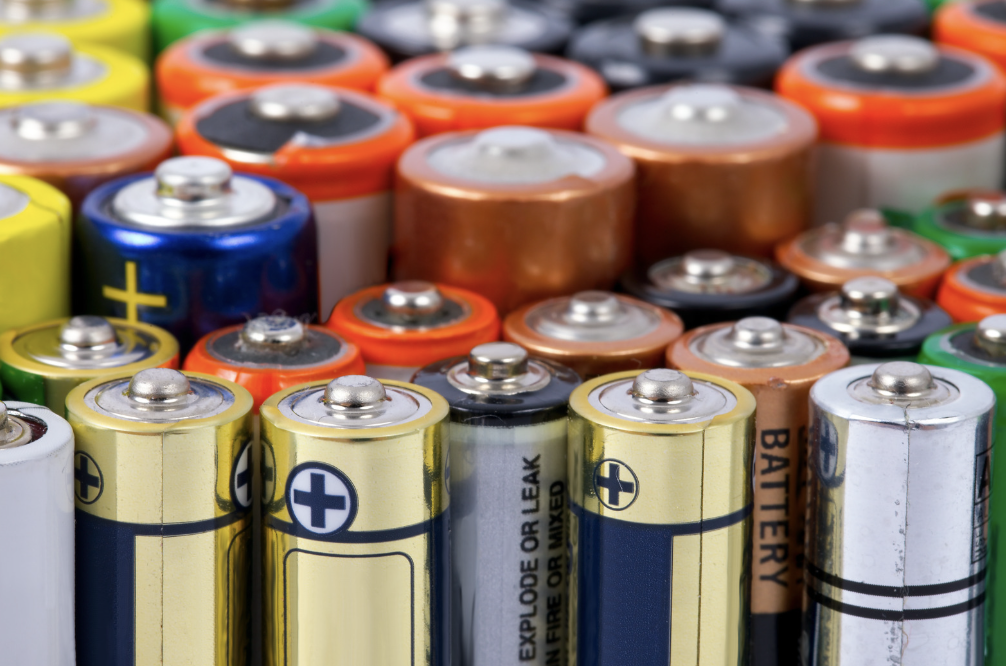
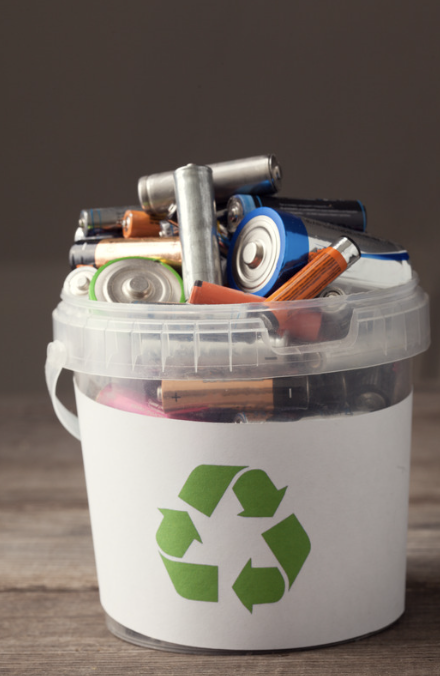
Through molecular engineering, researchers at Northwestern University have found a way to turn organic industrial waste and chemical byproducts into batteries that can be used to supply energy to power grids. The scientists have found a method to contain a waste molecule, triphenylphosphine oxide (TPPO), and use it to form a redox flow battery. Unlike lithium and other solid-state batteries, redox flow batteries don’t store energy in electrodes. Instead, they store energy by having a chemical reaction occur between electrolytes.
Typically, the batteries that power our electronic devices are primarily made from solid metals such as lithium and cobalt. Dependence on these metals has dramatically increased over the last decade-plus, increasing the mining of these metals and encroaching on more and more land. This has led to fear of scarcity along with concerns for the environment as technology increases the demand for battery power.
With this discovery, the hope is that this could lead to not just an organic green alternative power source but one that is even greener due to the fact that it is reusing a previously useless waste product. TPPO is a common waste molecule during a variety of different chemical reactions, including during the mass production of vitamins. Thousands of tonnes of TPPO are produced each year and it needs to be carefully disposed of so it doesn’t impact our water supply. Putting it to use as the primary substance for batteries would make it a win-win.
Reduced phosphine oxides are typically too unstable to be used and applied in such a way. However, through the researchers’ method of molecular engineering, they found a way to address the instability of the substance and tap into its energy storage potential.
After multiple tests and reworking, the scientists created a solvent mix that shows promise. Using static electrochemical charge and discharge studies, they were able to test how effective it was to retain a charge, emit power, and charge up again. The test battery remained healthy and lost very little power capacity after 350 cycles of charging/discharging power.
“Not only can an organic molecule be used, but it can also achieve high-energy density, getting closer to its metal-based competitors along with high stability,” said Emily Mahoney, a Ph.D. candidate and one of the first authors in the study. “These two parameters are traditionally challenging to optimize together, so being able to show this for a molecule that is waste-derived is particularly exciting.”
The old adage “waste not, want not” seems applicable here. A literal waste product could be the solution to a growing battery problem and a pollution issue at the same time. It goes to show how we all should see the potential uses in whatever we discard.
It doesn’t even have to turn into a groundbreaking power source, whatever junk you have can still be of use. An old shirt that doesn’t fit anymore can be a great rag for dusting. Banana peels, apple cores, and vegetables that have started to turn in the fridge can be used as compost in the back yard. At worst, the pieces of a broken toy, shattered plate, clock, or other items can be turned into sculptures or other art projects to entertain yourself and your kids for an afternoon. If you look hard enough and experiment enough, you can find some use in the useless.
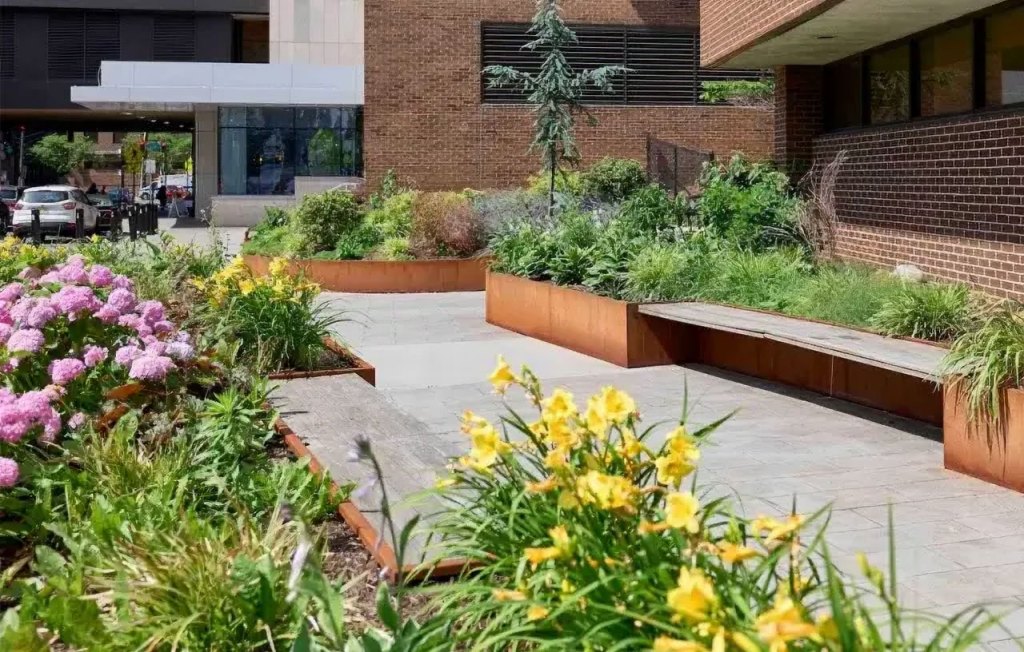
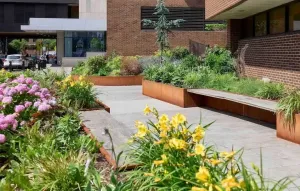
When these plots are planned — as opposed to letting vacant lots grow wild, which is valuable in its own right — they become extra powerful. You may have even enjoyed one without knowing it: the “pocket garden.” Tucked into spaces accessible to pedestrians, like sidewalks, hospital grounds, and campuses, they can be engineered to turn heat-absorbing concrete into air-cooling oases packed with vegetation and seating for people to escape the metropolitan bustle.
“This increasing prioritization of creating green spaces in unexpected spots and underutilized spaces in communities is not only going to be making our communities more resilient, it’s going to be making people healthier,” said Dan Lambe, chief executive of the nonprofit Arbor Day Foundation, which promotes urban forestry. “A little bit of green goes a long way.”
Pocket gardens aren’t gardens in the agriculturally productive sense, but ornamental grounds, Grist reports. (Though there’s nothing stopping a designer from adding a fruit tree or two.) Ideally, they’re host to native plant species, which bring several benefits. For one, they attract native pollinators like insects and birds, which get a source of food that powers them to go on and fertilize plants elsewhere, like crops in urban farms. And two, if the vegetation is adapted to a particular region or condition, it’s already used to the local climate — drought-tolerant varieties, for instance, won’t require as much water to survive. Furthermore, choosing native grasses that don’t need mowing can cut down on maintenance costs. And picking trees with big canopies will increase the amount of shade for people to use as refuge from the heat. (Sorry, palm trees, that means you’re disqualified.)
Biodiversity — mixing tree species as opposed to planting 10 of the same kind — is key here. That attracts a broader range of pollinating animals, and builds resiliency into the system: If you only plant one variety of tree and a disease shows up, it can spread rapidly.
And speaking of disease, trees have an additional superpower in their ability to scrub urban air of the pollutants that contribute to respiratory problems. In addition, the vegetation of a pocket park releases water vapor, bringing down air temperatures. This mitigates what’s called the urban heat island effect, in which cities absorb the sun’s energy all day and slowly release it into the night. Combined, reduced air pollution and temperatures improve public health.
There’s also the harder-to-quantify bonus of people getting out of their cars and gathering in public spaces, no matter how diminutive. “It’s actually a transition toward the pedestrian — toward the person — and away from the vehicle,” said Eric Galipo, director of campus planning and urban design at the architecture firm FCA, which has integrated pocket gardens in its projects. “We may not spend as much time together as a society as we used to, and so these are great opportunities for that sort of connection to happen.”
When the rains come, these verdant plots take on another role as an infrastructural asset. As the planet heats up, rainfall increases because a warmer atmosphere can hold more moisture. In response, cities like Los Angeles and Pittsburgh are getting rid of concrete to open up more green spaces, which absorb rainfall, allowing it to seep underground. This reduces pressure on sewer systems that are struggling to handle increasingly heavy deluges. These systems, after all, were designed long ago for a different climate than we’re dealing with today.
When a city prioritizes green spaces, you can actually hear the difference. Barcelona, for instance, has been developing superblocks, which aim to improve city life by transforming car infrastructure into walkable spaces. That includes the development of “green axes” (the plural of “axis,” not the tool for chopping), full of vegetation and paths for strolling. A recent study found that after these spaces were pedestrianized and vehicles disappeared, average noise levels fell by 3.1 decibels. (For context, hearing a car traveling at 65 mph from 25 feet away would be 77 decibels.)
While 3.1 may not seem like much, each increase of 10 decibels means a tenfold rise in loudness. And we have to consider not just the decibels but how the kind of noise changed as Barcelona developed green axes: Revving engines, honking horns, and even the occasional cacophony of a car accident were replaced with voices. As the built environment dramatically changed, so too did the way that folks on foot experienced their surroundings. “If people see green in general, the noise perception tends to change,” said Samuel Nello-Deakin, a postdoctoral researcher at the Autonomous University of Barcelona and lead author of the study. “You think that things are not as noisy as they actually are. So there’s also this interesting interaction, right, between sort of what you hear and what you see.” In addition, green spaces absorb city racket, keeping it from bouncing off of and between buildings and pavement, insulating residents from the din.
With less commotion comes still more gains to public health. Noise pollution is an invisible crisis worldwide, as studies link the stress it causes not just to struggles with mental health, but physical problems like hypertension and heart disease. By contrast, pocket parks and other green spaces encourage people to ditch their cars and move their bodies. “There are also physical health benefits from walking, biking, and being outside that over a lifetime tend to have a cumulative positive effect on what our society spends in health care,” Galipo said.
So as cities increasingly realize and utilize the power of greenery, the environmental, auditory, and social fabric of the urban landscape transforms. “There’s a gravity to this green space that brings people out,” Lambe said. “And all of a sudden, neighbors are connecting, generations are connecting, cultures are connecting. Trees are about the one thing that everybody can agree on.”
Your goofy but lovable cousin just told you that you should stop eating eggs because he read somewhere that a study showed they are bad for you.
How much should you trust your relative on such matters? More importantly, how much should you rely on one newly published bit of research when deciding what to make for breakfast?
To be clear, this is not an article about the health-promoting or health-torpedoing properties of eggs. It’s about how scientific knowledge is built piece by piece from many studies. What scientists know is refined over time as new results either do or don’t point to the same conclusion.
I’m a geographer who’s been doing and teaching science for many decades, with a sideline of teaching and writing about how science is done. Many people, quite understandably, take a single experiment or study as the be-all and end-all of knowledge because that’s how research often is presented by the press or on social media. But the better way to approach new research is to find how it weaves together with other work on the topic to create big-picture understanding.
Most research studies are undertaken either to fill a gap in our knowledge or to test an existing theory to see whether it deserves the confidence people have in it. After identifying the topic, scientists design a study to achieve those ends. They may run an experiment to learn more about how a chemical affects certain cells, for instance, or collect data in the field to track a natural phenomenon, such as how water temperatures affect hurricanes.
Then the researchers submit their findings to a peer-reviewed journal, where other experts – the scientists’ peers – decide whether it’s quality research deserving of publication.
Not all journals have rigorous peer review. Papers are highly unreliable if published by “paper mills” – journals that appear scholarly but will publish anything if the authors pay a fee.
Peer review doesn’t guarantee that the conclusions are valid, but it increases the chances that they are. Individual papers might be wrong because of honest mistakes, such as unforeseen limitations in the experimental design or, rarely, from outright fraud.
No scientific paper solves a problem once and for all. Neither does it negate all previous research. Well-done research contributes a bit to the scientific community’s understanding of a topic. The next, and crucial, step is putting individual studies in context with other research on the topic.
Even if there is current consensus, a new study may reveal a weakness, and that could lead to more research to figure out what is more likely to be correct. Scientific knowledge is constantly being refined as new information comes to light.
Adding more evidence bit by bit
One question to ask as you consider a particular finding is whether it has been directly replicated, meaning other researchers repeated the experiment to see whether they got the same results. Unfortunately, replication is relatively rare in science; more common are similar studies using comparable data, different methods, or both.
Your confidence can grow when scientists have performed a bunch of related research that’s gone through peer review, been published in scholarly journals and mostly points in the same direction. Of course, if they don’t agree, then your confidence should be weaker.
Sometimes researchers may compile these comparisons in what’s called a systematic review. They may use statistical techniques to perform meta-analysis on data from many different studies at once. Generally speaking, the more good data used to test an idea, the better.
An additional issue is how many studies have been done on a topic. There are thousands of studies on the causes of lung cancer, but there may be only one or two on how a couple of particular genes affect hair loss. Scientists’ confidence in what is known about lung cancer, then, is far greater than what is known about how those genes may have contributed to my baldness.
Appreciating the strength of the evidence is as important as understanding the evidence itself.
Get a helping hand
The idea of expertise has fallen out of favor in some quarters. But experts are vital when it comes to understanding scientific issues. An expert in this sense is someone who has been immersed in the topic for years, knows how to evaluate the relevant studies, and, ideally, has done research on it.
With such a background, an expert is a good judge of how likely any one study is to be wrong. Equally important, they also must try to control the all-too-human impulse to accept what they like and reject what they don’t.
Unfortunately, most people rarely have direct access to experts. The next best thing is someone educated in the general topic – verifiably educated, not someone who browses the internet for a few hours.
Healthcare professionals keep up with the scientific literature in their field so they can provide evidence-based, up-to-date care to patients. Hispanolistic/E+ via Getty Images
Healthcare professionals who have years of training, clinical experience and requirements to keep up with the literature in their field can help you make good decisions based on new medical research. But be careful. You want to rely on someone who updates their recommendations as the state of scientific knowledge evolves, but not someone who latches onto every new outlandish discovery.
In practice, some healthcare practitioners – hopefully a small minority – are not trustworthy on such matters. If someone is selling you something that sounds too good to be true, assume that it is. They may even have a financial or personal stake in their recommendation.
Consider the source
You should retain some skepticism about what you read in the popular press and even more about what you see on social media.
A good journalist who knows how to assess new studies can act as a guide and help you understand scientific issues. You’re looking for journalists who can accurately and objectively report on new research and help put it in context with what else is known. Unfortunately, there is no list of good versus bad journalists, but general guidance is available, such as that from nonprofit journalism organization The Trust Project.
Journalists who are well versed in how science works can also help you spot whether there are any conflicts of interest at play. Was that study that encourages staying energetic by eating a pound of candy a day sponsored by a snack food company? That would be a major red flag.
I’m not saying that everyone needs to do a thorough literature review before speaking about a scientific issue or deciding whether to eat eggs a couple of times a week. But I do encourage you to adopt a little humility about what you know and understand, along with a realistic appreciation for the limits of both your own knowledge and what the scientific community understands.
And definitely don’t make life-altering decisions based on an article describing one scientific study, even if your cousin tells you to.
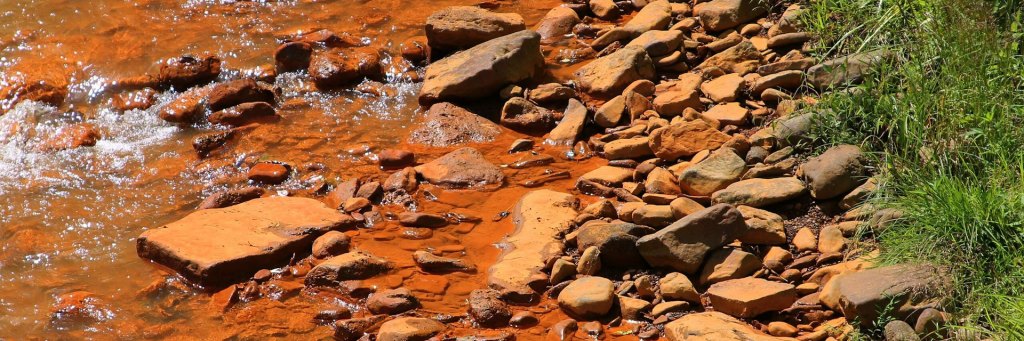
Across Appalachia, rust-colored water seeps from abandoned coal mines, staining rocks orange and coating stream beds with metals. These acidic discharges, known as acid mine drainage, are among the region’s most persistent environmental problems. They disrupt aquatic life, corrode pipes and can contaminate drinking water for decades.
However, hidden in that orange drainage are valuable metals known as rare earth elements that are vital for many technologies the U.S. relies on, including smartphones, wind turbines and military jets. In fact, studies have found that the concentrations of rare earths in acid mine waste can be comparable to the amount in ores mined to extract rare earths.
Scientists estimate that more than 13,700 miles (22,000 kilometers) of U.S. streams, predominantly in Pennsylvania and West Virginia, are contaminated with acid mine discharge.
We and our colleagues at West Virginia University have been working on ways to turn the acid waste in those bright orange creeks into a reliable domestic source for rare earths while also cleaning the water.
Experiments show extraction can work. If states can also sort out who owns that mine waste, the environmental cost of mining might help power a clean energy future.
Rare earths face a supply chain risk
Rare earth elements are a group of 17 metals, also classified as critical minerals, that are considered vital to the nation’s economy or security.
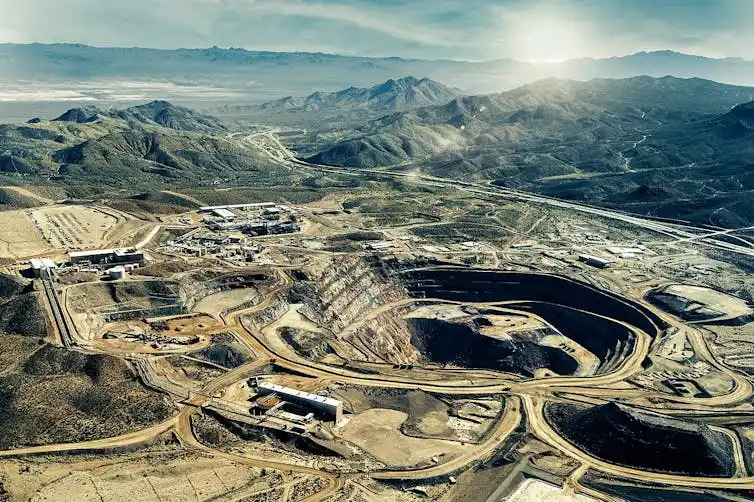
MP Materials’ Mountain Pass Rare Earth Mine and Processing Facility, in California near the Nevada border, is one of the few rare earth mines in the U.S. Tmy350/Wikimedia Commons, CC BY-SA
China controls about 70% of global rare earth production and nearly all refining capacity. This near monopoly gives the Chinese government the power to influence prices, export policies and access to rare earth elements. China has used that power in trade disputes as recently as 2025.
The United States, which currently imports about 80% of the rare earth elements it uses, sees China’s control over these critical minerals as a risk and has made locating domestic sources a national priority.
The U.S. Geological Survey has been mapping locations for potential rare earth mining, shown in pink. But it takes years to explore a locations and then get a mine up and running. USGS
Although the U.S. Geological Survey has been mapping potential locations for extracting rare earth elements, getting from exploration to production takes years. That’s why unconventional sources, like extracting rare earth elements from acid mine waste, are drawing interest.
Turning a mine waste problem into a solution
Acid mine drainage forms when sulfide minerals, such as pyrite, are exposed to air during mining. This creates sulfuric acid, which then dissolves heavy metals such as copper, lead and mercury from surrounding rock. The metals end up in groundwater and creeks, where iron in the mix gives the water an orange color.
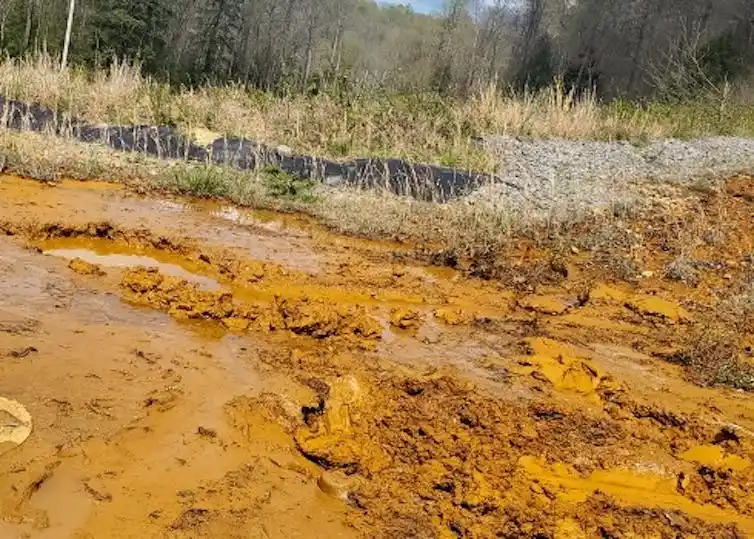
Expensive treatment systems can neutralize the acid, with the dissolved metals settling into an orange sludge in treatment ponds.
For decades, that sludge was treated as hazardous waste and hauled to landfills. But scientists at West Virginia University and the National Energy Technology Laboratory have found that it contains concentrations of rare earth elements comparable to those found in mined ores. These elements are also easier to extract from acid mine waste because the acidic water has already released them from the surrounding rock.
Acid mine drainage flowing into Decker’s Creek in Morgantown, West Virginia, in 2024. Helene Nguemgaing
Experiments have shown how the metals can be extracted: Researchers collected sludge, separated out rare earth elements using water-safe chemistry, and then returned the cleaner water to nearby streams.
It is like mining without digging, turning something harmful into a useful resource. If scaled up, this process could lower cleanup costs, create local jobs and strengthen America’s supply of materials needed for renewable energy and high-tech manufacturing.
But there’s a problem: Who owns the recovered minerals?
The ownership question
Traditional mining law covers minerals underground, not those extracted from water naturally running off abandoned mine sites.
Nonprofit watershed groups that treat mine waste to clean up the water often receive public funding meant solely for environmental cleanup. If these groups start selling recovered rare earth elements, they could generate revenue for more stream cleanup projects, but they might also risk violating grant terms or nonprofit rules.
To better understand the policy challenges, we surveyed mine water treatment operators across Pennsylvania and West Virginia. The majority of treatment systems were under landowner agreements in which the operators had no permanent property rights. Most operators said “ownership uncertainty” was one of the biggest barriers to investment in the recovery of rare earth elements, projects that can cost millions of dollars.
Not surprisingly, water treatment operators who owned the land where treatment was taking place were much more likely to be interested in rare earth element extraction.
Map of acid mine drainage sites in West Virginia. Created by Helene Nguemgaing, based on data from West Virginia Department of Environmental Protection, West Virginia Office of GIS Coordination, and U.S. Geological Survey
West Virginia took steps in 2022 to boost rare earth recovery, innovation and cleanup of acid mine drainage. A new law gives ownership of recovered rare earth elements to whoever extracts them. So far, the law has not been applied to large-scale projects.
Across the border, Pennsylvania’s Environmental Good Samaritan Act protects volunteers who treat mine water from liability but says nothing about ownership.
Map of acid mine drainage sites in Pennsylvania. Created by Helene Nguemgaing, based on data from Pennsylvania Spatial Data Access
This difference matters. Clear rules like West Virginia’s provide greater certainty, while the lack of guidance in Pennsylvania can leave companies and nonprofits hesitant about undertaking expensive recovery projects. Among the treatment operators we surveyed, interest in rare earth element extraction was twice as high in West Virginia than in Pennsylvania.
The economics of waste to value
Recovering rare earth elements from mine water won’t replace conventional mining. The quantities available at drainage sites are far smaller than those produced by large mines, even though the concentration can be just as high, and the technology to extract them from mine waste is still developing.
Still, the use of mine waste offers a promising way to supplement the supply of rare earth elements with a domestic source and help offset environmental costs while cleaning up polluted streams.
Early studies suggest that recovering rare earth elements using technologies being developed today could be profitable, particularly when the projects also recover additional critical materials, such as cobalt and manganese, which are used in industrial processes and batteries. Extraction methods are improving, too, making the process safer, cleaner and cheaper.
Treating acid mine drainage and extracting its valuable rare earth elements offers a way to transform pollution into prosperity. Creating policies that clarify ownership, investing in research and supporting responsible recovery could ensure that Appalachian communities benefit from this new chapter, one in which cleanup and clean energy advance together.