“Do you know what the word ‘taboo’ means in its root context?” I don’t, but I have a feeling Miki Agrawal is about to tell me.

“‘Taboo’ stems from the Polynesian root word ‘tapua,’ and do you know what ‘tapua’ means?” she asks, not waiting for an answer this time. “Menstruation.”


Agrawal pulls this piece of trivia out of her pocket triumphantly, attempting to drive home the unease in patriarchal societies when it comes to talking about, and dealing with, periods. As the inventor of Thinx, the “period panties”—which absorb menstrual blood and preclude the necessity of tampons or pads—Agrawal experiences no such discomfort.

The 37-year-old entrepreneur and her sister, Radha, came up with the idea for Thinx at a family reunion. “It took us three and a half years to develop the product, working with textile technologists, working with anyone who would listen,” she says.

“A lot of these technologies exist, but they’ve never been used for the most intimate part of a woman’s body. I got a lot of hang-ups in my face.”

When Thinx launched in 2014, it attracted press attention that skewed largely adulatory. The underwear—made of a special fabric blend that is antimicrobial, stain-resistant, and leak-proof—didn’t just provide a solution to a problem many women face monthly. The product also latched onto a wider conversation about menstruation that was starting to pick up steam internationally.

In 2015, we couldn’t stop talking about periods. Whether it was period art—both cringe-worthy and profound—or the “tampon tax” protests that were taking place outside the hallowed parliamentary halls of Australia and the U.K., the subject of menses was in the spotlight. Early in the year, Canadian poet and artist Rupi Kaur lodged a protest against Instagram after the social media site removed photos from a series she created depicting the menstruation process, blood stains and all. Instagram eventually bowed to pressure and reinstated her post.

[quote position=”full” is_quote=”false”]For as long as women have been bleeding, there has been a man standing somewhere nearby, primitively grunting to signal his disgust.[/quote]

Later in the year, Kiran Gandhi, a drummer and music industry consultant, made headlines when she “free-bled” while running the London Marathon in April to challenge the stigma of menstrual blood and to raise awareness of those who lack access to sanitary products. When the Daily Mail published photos of her mid-race, they censored the dark stain between her legs, underscoring Gandhi’s point.

Now activists are even bringing menstruation to the forefront of economic policy discussions, staging campaigns around the world to eliminate consumer taxes on feminine hygiene products. They succeeded in Canada, where the government responded to pressure by repealing the tampon tax. In the U.K. and Australia, however, tampons continue to be taxed as “luxury goods” or “nonessential items.”

Agrawal, too, found herself at the center of a period-related controversy in 2015, when the Metropolitan Transportation Authority’s (MTA) advertising contractor, Outfront Media, rejected a series of Thinx ads slated to run in New York subways. The posters featured a halved grapefruit and read: “Underwear for Women With Periods.” Outfront Media told Agrawal that she had to make changes to the copy before they could approve the ads. Agrawal refused, and went to the press instead.

“It was really wild that even the word ‘period’ was not acceptable in the subways because the advertising industry, or at least the signage industry, is run by old white guys,” she says. “The only way we got them to approve the ads was because it got enough press and angry tweets. You can use grapefruits to show augmented breasts, but you can’t use grapefruits to show something that occurred naturally?”

The stigma of menstruation is one that has survived thousands of years of human history and progress. For as long as women have been bleeding, there has been a man standing somewhere nearby, primitively grunting to signal his disgust. In ancient Rome, women were believed to acquire the magical ability to stop hailstorms or halt lightning during their monthly periods. Menses could render crops “barren” and drive dogs “mad,” the Roman author Pliny the Elder wrote in his 1st-century encyclopedia, Natural History. The Victorians viewed menstruation as an illness, and women were confined to private quarters during their periods. Victorian etiquette, in fact, prohibited any discussion or mention of the fact that women bled at all. Even today, representations of menstruating women in popular Western culture frequently trade in stereotypes that depict them as mercurial or volatile.

[quote position=”full” is_quote=”true”]It was really wild that even the word ‘period’ was not acceptable in the subways because the advertising industry, or at least the signage industry, is run by old white guys.[/quote]

These persistent ideas about periods—what they are, how they affect women—aren’t just offensive. They’re damaging to women. In the United States, homeless women often go without hygiene products because aid agencies forget altogether that the need exists. Elsewhere around the world, young girls are prevented from going to school while on their periods, because they don’t have access to pads, or because they’re considered unclean. A few years ago, Agrawal was visiting South Africa, and spoke to a young girl who told her that her “week of shame” prevented her from attending school. “I realized that feminine hygiene or menstruation management is a root cause of cyclical poverty,” says Agrawal. “So I came back super angry and pissed off.” Now, for every pair of Thinx someone buys, the company sends money to AFRIpads, a Ugandan organization that trains women in developing countries to manufacture and sell reusable sanitary pads to local women.

It’s a philanthropic model she uses for all her businesses. She also has launched Icon Undies—underwear for women who experience leakage when they sneeze or laugh, sales from which benefit the Fistula Foundation. And this year she’s working on Tushy, an easy-to-install device that turns toilets into bidets, which will send funds to the nonprofit group charity: water. If it appears that Agrawal has a fixation on all the things that happen below the waist, it’s because she does. “All I’m going to be focusing on for the next several years of my life is peeing, pooping, and bleeding,” she says.

  • Overpackers love this simple ‘5-4-3-2-1’ packing rule that makes travel way easier
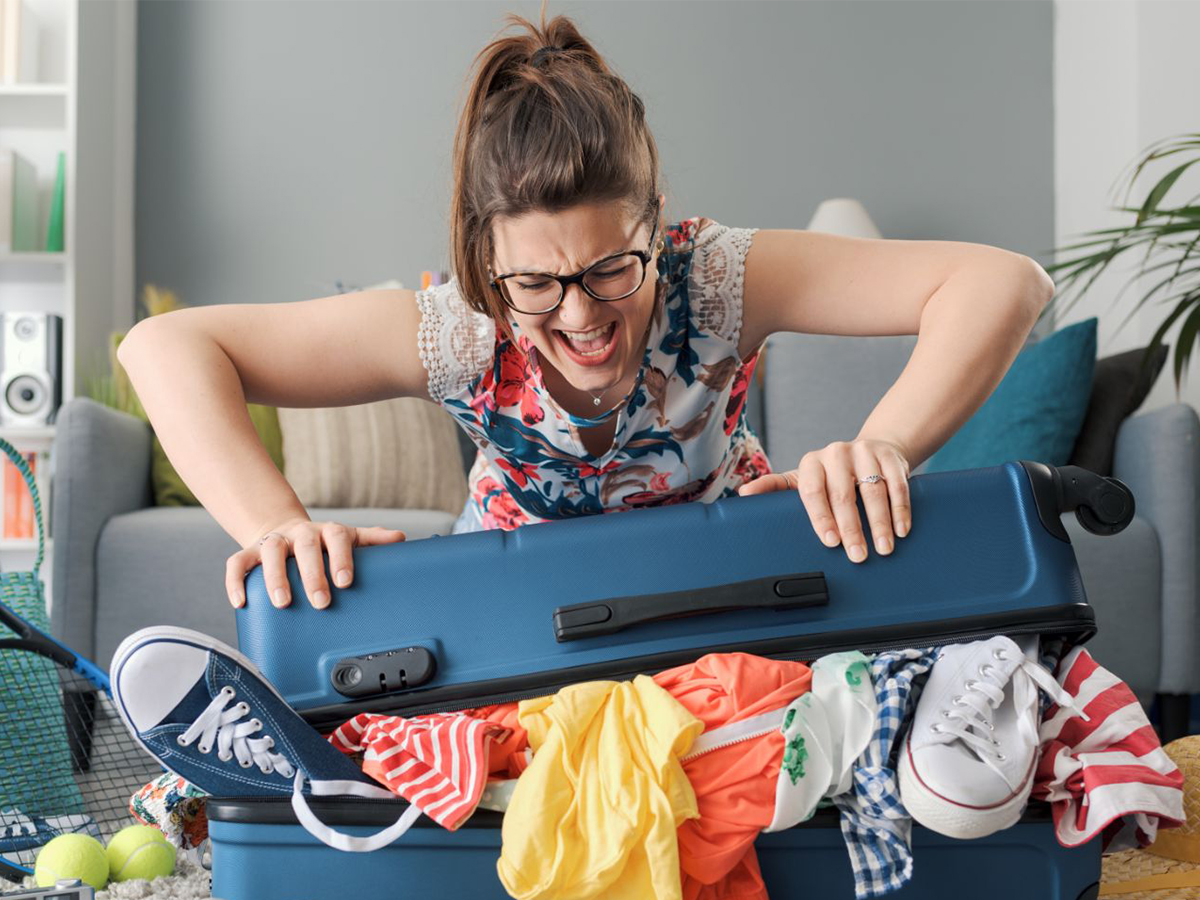
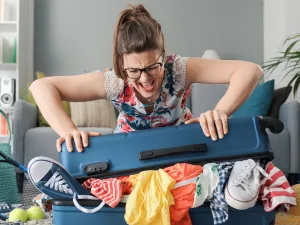
    An obvious overpack for travel.Photo credit: Canva
    ,

    Overpackers love this simple ‘5-4-3-2-1’ packing rule that makes travel way easier

    When it comes to travel, packing efficiently is a skill acquired through experience. Lifestyle and content creator Alison Lumbatis shares a helpful 5-4-3-2-1 method designed to take the stress out of packing for both seasoned travelers and first-timers. Trying to pack light while still remembering everything you need can feel a little daunting. A simple…

    When it comes to travel, packing efficiently is a skill acquired through experience. Lifestyle and content creator Alison Lumbatis shares a helpful 5-4-3-2-1 method designed to take the stress out of packing for both seasoned travelers and first-timers.

    Trying to pack light while still remembering everything you need can feel a little daunting. A simple trick is knowing exactly what’s necessary, making your bag lighter and more practical.

    @alisonlumbatis

    Calling all overpackers—this one’s for you! ✈️🧳 The 5-4-3-2-1 packing method is one of my favorites because it’s totally customizable. Prefer dresses? Swap a top and bottom for a dress. Love skirts? Sub them in for pants! These pieces should last you 1-2 weeks, depending on your access to laundry. 🔗’s to everything in bio! #outfitformulas #packinglight #styleconfidence #wardrobemadeeasy #travelcapsule #dailyoutfits #closetconfidence #vacationstyle #fashionover40 #smartstyle

    ♬ original sound – Alison Lumbatis

    Putting The ‘5-4-3-2-1 Packing Method’ Into Action

    In her trending TikTok post, Lumbatis shares a packing system she claims to be “as easy as it sounds.” Here are the basics of the 5-4-3-2-1 packing method:

    • 5 TOPS
    • 4 BOTTOMS
    • 3 SHOES
    • 2 LAYERS
    • 1 MISCELLANEOUS

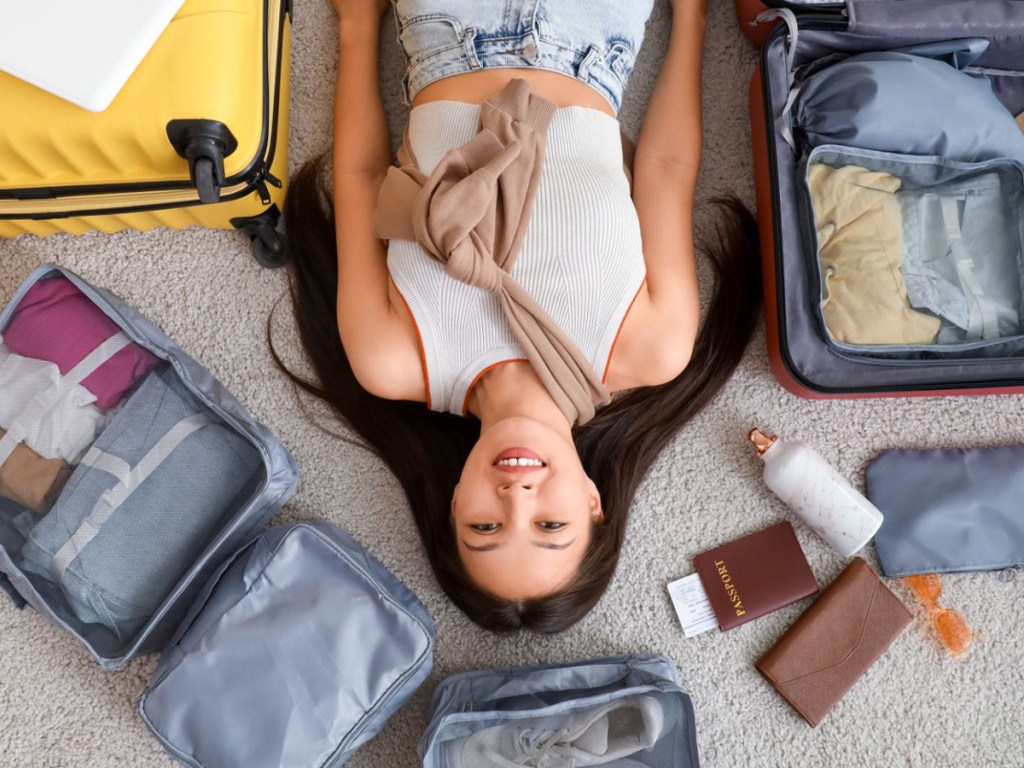
    Lumbatis explains, “So all you got to do is pick out 5 tops, 4 coordinating bottoms, 3 pairs of shoes, 2 layering pieces, and 1 of anything else. Like a dress, pajamas, a hat, a belt, or any other accessories that you might need. And then of course pack as many undergarments and toiletries as you need.”

    The strategy isn’t just about simplifying and maximizing the number of items you bring on a trip. It’s also about function. “The key is to pick versatile pieces that can mix and match so you can pair them up for whatever activities you have planned for your trip.”

    minimalism, versatile pieces, functionality, packing
    Packing the necessary items
    Photo credit Canva

    Taking Pictures Can Help Plan Ahead

    Another helpful step is taking photos of your outfits to remember how everything fits together. Lumbatis offers, “You can even take pictures of the outfits with you wearing them or flat lays of the pieces and keep them on your phone or in your Notes App — So you can refer back to it on your trip.”

    Is the 5-4-3-2-1 packing method effective? These were some of the thoughts in the comments from readers hopeful to put the plan into action:

    “Great tip for me. Hate packing and never wear all the clothes I bring.”

    “Heading to Japan and I was just going to my closet to put it together. I overpack so this is sooo helpful.”

    “I’m dreading how to not over pack for such a variety of occasions, heat, and limited washing facilities. Ugh.”

    “I struggle with under packing so this is super helpful!”

    travel, adventure, alleviate stress, preparation
    Soaking up the adventure.
    Photo credit Canva

    The Science Behind Good Preparation

    Traveling is a great way to alleviate the stress and burdens of our daily lives. A 2025 study in Springer Nature Link showed travel helped people improve their long-term resilience by creating positive emotions while ecouraging self reflection. National Geographic found the benefits of travel begin even before the trip begins.

    However, preparation can have a powerful effect on the simple stresses a person might acquire during traveling. A 2025 study revealed that planning reduced anxiety and helped people prepare for delays or unexpected changes. Research in 2025 reported by AP News found that even making a simple checklist reduced anxiety and helped make for smoother trips.

    Lumbatis claims, “If you struggle with overpacking and want to create a great capsule wardrobe packing list, you’ve got to try this method.”

    People hope that traveling will relieve stress more than generate it. The 5-4-3-2-1 packing method offers a clear and simple way to pack just what you need. Careful preparation helps prevent last-minute chaos and produces a more enjoyable trip. Hopefully, this method can help you spend less time worrying and more time soaking in the adventure.

    Watch this YouTube video on incredible vacation destinations to inspire your next trip:

  • People are cheering woman’s refusal to accept the latest trend in hotel bathrooms
    Sadie has declared war on non-private hotel bathrooms.Photo credit: @bring_back_doors

    People are cheering woman’s refusal to accept the latest trend in hotel bathrooms

    “I HATE how hotels started thinking going to the bathroom is a shared experience.”

    It can be frustrating seeing change for change’s sake in the world. To be more specific, changes that are said to be done in the name of innovation and design, but are in truth ways for companies to save a buck.

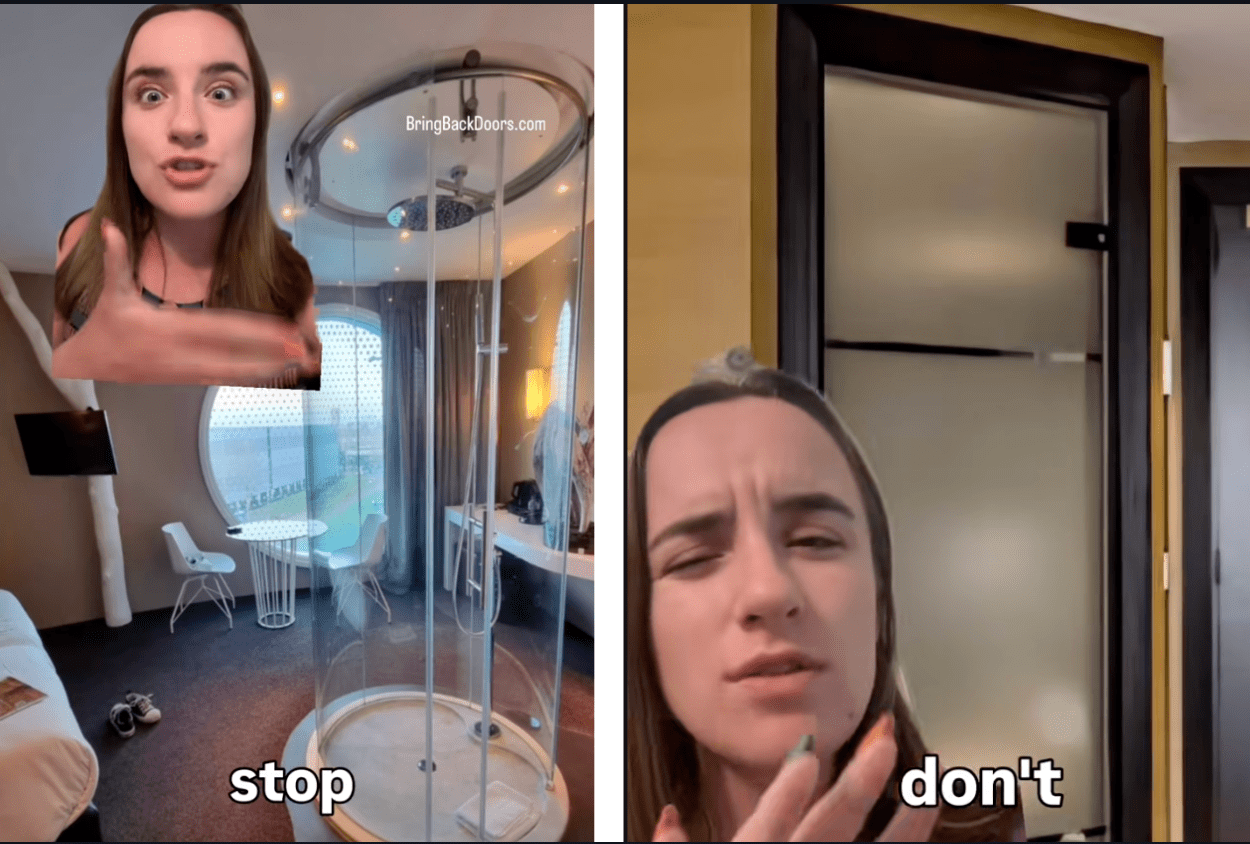
    One example that is getting attention is the bathroom doors in hotels… or the lack thereof, actually. One TikToker has had enough and has taken it upon herself to save regular bathroom doors in hotels and to point out why open-space bathrooms and glass doors just don’t cut it.

    On her @bring_back_doors TikTok account, Sadie has a collection of videos highlighting the flaws in hotel bathroom designs, with the most prominent being the lack of a regular door to the bathroom. In one viral TikTok, Sadie discussed a hotel that reached out to her, explaining that they have “foggy” glass doors to their bathroom to provide privacy. She was quick to point out that it still doesn’t provide adequate privacy. “Yes you can see through these,” Sadie said, adding that “glass doors do not close properly.”


    @bring_back_doors

    Hotel name: Alexander Hotel, Noordwijk aan Zee, Netherlands I need to be clear. Glass doors are not private. And making them foggy does not make them private. I am once again sitting here saying screw you to all bathroom doors that are not solid and close fully. And I am providing alternative hotels with guaranteed doors at bringbackdoors.com Check your hotels door situation before you book or risk your privacy. Door submitted by @mmargaridahb, DM me to submit your own bad doors. #bathroomdoors #hotel #travel #fyp Bathroom doors | bathroom design | hotel design | bad hotel design | travel fail | travel memories | travel inspo | door design | hotels with privacy

    ♬ original sound – Bring Back Bathroom Doors

    The comments rallied behind Sadie’s bathroom-door crusade

    The commenters joined in with Sadie, demanding the return of solid, closing, and lockable doors to bathrooms in hotels:

    “I HATE how hotels started thinking going to the bathroom is a shared experience.”

    “I hate how you can’t turn the bathroom light on without disturbing the other person in the room.”

    “The foggy ones are almost worse, you just get a hazy fleshy silhouette hunched over on the crapper like some kind of sack of ham.”

    “I just don’t get it, NOBODY wants this, even couples. I won’t be more likely to book two separate rooms for me and my friend/sibling/parent, I’ll just book another hotel.”

    “Love this campaign, I do not want a romantic weekend listening to the other person poo.”


    @bring_back_doors

    Hotel Names⬇️⬇️ Citizen M South Hotel (first pics) and Fletcher Hotel (third pic) both in Amsterdam. As part of this project, I’ve been emailing hotels around the world to put together an easy to reference list for people to find hotels with guaranteed doors at BringBackDoors.com And I did notice that in Amsterdam a lot of hotels were saying they don’t have doors. It wasn’t the worst city (that honor goes to Barcelona, so far I’ve only found TWO that have said yes to all doors), but it was still bad. Then I went into the comments. And kept getting people mentioning these hotels in Amsterdam. And I realized that clearly the city has a designer or architect on the loose who has a thing for test tubes. It’s horrible. Luckily, I was able to find 6 hotels in Amsterdam that all have bathroom doors in every room and have them all listed on BringBackDoors.com These hotels were submitted by so many people I couldn’t name them all. But to submit your own bad hotel bathroom send me a DM with hotel photo, name, and location! #hotel #bathroom #hoteldesignfail Bathroom doors | hotel bathrooms | hotel privacy | no privacy | travel problems | hotel issues | travel | hotel design | hotel design fail | hotel designers | design fail | hotel concept | bathrooms | Citizen M | Hotel Fletcher | Hotels in Amsterdam | Visit Amsterdam | Amsterdam

    ♬ original sound – Bring Back Bathroom Doors

    A great way to save a buck—er, I mean, ‘create a modern look’

    As many commenters asked, why do hotels have glass doors — or, worse, no doors at all—in their bathrooms? Well, this has been a growing trend in modern hotels over the past decade as a means to create a sleek aesthetic and to allow glass partitions to bring more daylight into otherwise darker sections of the room.

    At least that’s what’s being promoted to the customer. In reality, skimping on solid doors for glass ones or none at all gives the illusion that the room is bigger than it is while requiring fewer building materials. It does bring in more daylight, but mostly with the hope that you’ll cut down on electricity use for lights in an otherwise enclosed space. These reasons are also why some hotels don’t have solid walls around their bathroom areas at all.

    TikTok · Bring Back Doors

    TikTok u00b7 Bring Back Doors www.tiktok.com


    Tired of the lack of privacy? Check out the database

    To combat this trend, Sadie has developed a database at bringbackdoors.com for her and her followers to report which hotels have true, solid, private bathrooms in their accommodations and which ones do not, so people can properly plan where to stay and have true privacy during their most vulnerable moments.

    “I get it, you can save on material costs and make the room feel bigger, but what about my dignity?,” Sadie wrote on her website. “I can’t save that, when you don’t include a bathroom door.”

    Over time, the hope is that sanity and dignity can be restored as hotels realize that their glass “features” don’t have any real benefit when they don’t allow basic privacy.

  • MIT’s super-fast camera can capture light as it travels
    ArrayPhoto credit: assets.rebelmouse.io

    MIT’s super-fast camera can capture light as it travels

    It has a resolution rate of one frame per trillionth of a second.

    A camera developed at MIT can photograph a trillion frames per second. Compare that with a traditional movie camera which takes a mere 24. This new advancement in photographic technology has given scientists the ability to photograph the movement of the fastest thing in the Universe, light. In the video below, you’ll see experimental footage of light photons traveling 600-million-miles-per-hour through water.

    The actual event occurred in a nano second, but the camera has the ability to slow it down to twenty seconds. For some perspective, according to New York Times writer, John Markoff, “If a bullet were tracked in the same fashion moving through the same fluid, the resulting movie would last three years.”


    It’s impossible to directly record light so the camera takes millions of scans to recreate each image. The process has been called femto-photography and according to Andrea Velten, a researcher involved with the project, “There’s nothing in the universe that looks fast to this camera.”


    This article originally appeared seven years ago.

Explore More Design Stories

Design

People are cheering woman’s refusal to accept the latest trend in hotel bathrooms

Design

MIT’s super-fast camera can capture light as it travels

Articles

Kelsey Wells’ Side-By-Side Photos Prove That Weight Doesn’t Equal Health

Articles

No one noticed what this woman was staring at when they chose her for their label