
Led Zeppelin were never afraid of a little twang—bassist John Paul Jones occasionally switched over to mandolin, and the band’s third album is full of folky moments. But of all their songs begging for the country-music treatment, the lengthy 1971 progressive rock epic “Stairway to Heaven” probably wouldn’t be the obvious choice. Then again, the legendary Dolly Parton has earned the right to take bold risks, and when she covered the song back in 2002, she managed to make that on-paper culture clash feel totally natural.

According to Setlist.fm, Parton first covered the song live during her Halos & Horns Tour—two shows of which were filmed for her 2004 concert film and album, Live and Well. And it’s a stunning reinterpretation. The singer keeps the core structure almost identical but adds a bluegrass vibe through the instrumentation: acoustic guitar, violin, banjo, mandolin, upright bass, and brushed drums.

The piece builds dynamically across seven minutes, ending in a dramatic double-time crescendo, and Parton’s expressive, melismatic vocals are the glue. Toward the end, she even weaves in a gospel feel by adding some new lyrics, singing, “Oh, the great almighty dollar / Leaves you lonely, lost and hollow / You can’t fool yourself forever / You got to work to get to heaven.”

This was no one-off either—Parton recorded a similar studio version for the Halos & Horns album, and then again for her rock-centric 2023 LP, Rockstar. (She really aimed high on that project, also reinterpreting songs by The Police, Heart, Journey, Elton John, and Queen, among others.) “Stairway to Heaven” is obviously a special tune for Parton, whose late husband, Carl Dean, was a devoted Led Zeppelin fan. In fact, as the singer told Classic Rock in 2023, he was “concerned” about her tackling this canonical anthem. “He said: ‘I don’t know if you need to mess with that, because I think you’ll get a lot of criticism,” she recalled. “People don’t want other people messing around with that song.’ But I did it anyhow. And he made a joke about it at first: ‘I think that was more like ‘Stairwell To Hell’ than ‘Stairway To Heaven!’”

Parton is clearly a rock fan herself—you don’t record an album like Rockstar without the chops to live in that world. But part of the impetus for that project was trying to prove herself after being inducted into the Rock & Roll Hall of Fame in 2022. “I have to honestly say, I’m very grateful and honored, but I’m also the kind of person—I had to do a rock album, because if I’m going to be in the Rock & Roll Hall of Fame, I’m going to by God earn it!” she told Pollstar with a laugh. “That’s my attitude toward it. There’s no way I’m not going to do an album, so people can see that I could and can do it.”

The songwriter also spoke about her revamped studio take on “Stairway to Heaven,” comparing the bluegrass-y original with a later arrangement “more true to the regular record.” (That said, she couldn’t help bring another fascinating flavor to the track, recruiting a jazz-flute cameo from Lizzo.) She even hoped to reunite Led Zeppelin guitarist Jimmy Page and singer Robert Plant for the session—an ambitious plan that didn’t bear fruit. But as she proved with both of her brilliant versions, she had more than enough star power to carry this classic on her own.

  • Today’s obsession with authenticity isn’t new – being true to yourself has troubled philosophers for centuries
    Photo credit: Qi Yang/Moment via Getty ImagesStressing over authenticity isn’t unique to the social media age.

    Today’s youth cherish “authenticity,” but is it a virtue? According to a report from Ernst & Young, more than 9 in 10 Gen Z respondents indicated that being authentic and true to yourself is extremely or very important. In fact, most of them claimed authenticity is more important than any other personal value.

    This finding is not all that surprising: All of us live in an age where we’re bombarded by social media and artificial intelligence – when striving to be your authentic self becomes an increasingly difficult task.

    Yet, even if it has somehow become a common goal, it is unclear how many of us can truly define the “authenticity” that we say we are pursuing. I think it’s also worth asking whether sincerity and authenticity are perennial human virtues or just obsessions of this technological age.

    As a scholar in the history of political thought and American political development, I think two philosophers can help us understand this problem and how to deal with it: Jean-Jacques Rousseau and Martin Heidegger.

    Sincerity: A counter to modernity

    Rousseau, the 18th-century philosopher from Geneva, arrived in the wake of earlier Enlightenment philosophers, such as HobbesLocke and Montesquieu.

    These thinkers laid many of the foundations for how people understand liberal democracy today, especially the emphasis on individual natural rights – to paraphrase Thomas Jefferson’s later formulation, all human beings are “endowed” with these rights at birth or by nature. In particular, Hobbes popularized the idea of generating a commonwealth in order to escape the uncertainty in a state of nature where self-preservation is fundamental. Locke also emphasized the right to property, while Montesquieu saw the importance of international commerce, among other aspects, including the separation of powers.

    But Rousseau became famous for his criticisms of the individualistic civil society born out of their thought. In the modern commercial republic, the fixation turned to luxury rather than duty. “Ancient politicians spoke incessantly about morals and virtue,” he wrote; “those of our time talk only of business and money.”

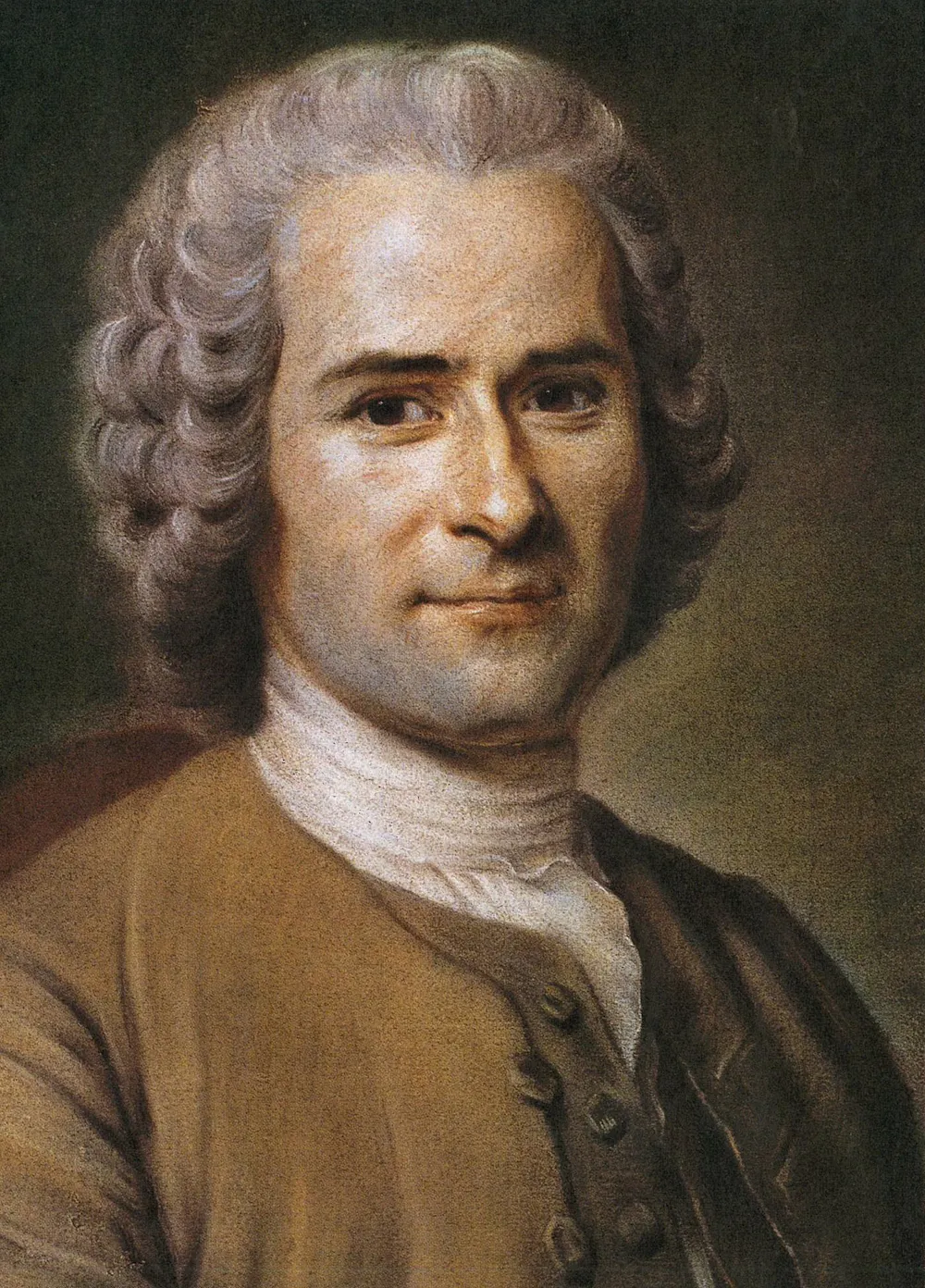
    A man with dark eyebrows poses while wearing a gray wig and brown-yellow coat.
    A portrait of Rousseau by Maurice Quentin de La Tour. Musée Antoine-Lécuyer/Wikimedia Commons

    For Rousseau, modern society was a conformist “herd” where everyone hides behind a “veil” of politeness. People wear masks to hide their selfishness, deceiving others in order to satisfy their own desires.

    In this way, he argued, human beings are actually enslaved to each other: While each person pursues self-interest, success requires getting others to see some “profit” in helping each other. The rich need the “services” of the poor just as the poor need the “help” of the rich. Anyone who refuses to yield to this entire enterprise “will die in poverty and oblivion.”

    Sincerity is the path to self-realization in Rousseau’s political philosophy, according to political science professor Arthur MelzerAs Melzer states, “We want, as fully as possible, to become what we are, to realize ourselves, to become as alive and actualized as possible, to really live.” For him, Rousseau considered sincerity to be what puts us on “the path” to true human excellence. It’s the “countercultural virtue” needed to oppose the hypocrisy found in modern society.

    Authenticity: Uncovering the self

    While Rousseau extolled sincerity, 20th-century German philosopher Martin Heidegger significantly influenced today’s understanding of a related idea: authenticity.

    In his magnum opus, “Being and Time,” Heidegger considered how the self gets lost in the public world. In everyday life, individuals think and exist in terms of the other people they encounter – a way of being he called the “they-self.” He stated, “Everyone is the other, and no one is himself.”

    Heidegger believed that people are inauthentic when they’re driven into “uninhibited hustle” within the world, tranquilizing themselves from anxiety about the true meaning of human life and its eventual end.

    In his later work, Heidegger argued that everything and everyone in contemporary life had become technological, treated as raw material for “exploitation.” For example, in the technological age, the Rhine River is not a “river” but merely “something at our command,” a supplier of “water power.”

    A stone relief etching of the face of a man with a mustache.
    A memorial to Heidegger at the Heidegger House in Messkirch, Germany. Andreas Praefcke/Wikimedia CommonsCC BY

    “Everywhere everything is ordered to stand by, to be immediately at hand,” he claimed, “indeed to stand there just so that it may be on call for a further ordering.” This extends even to human beings themselves, now referred to as “human resources.”

    By contrast, the authentic human being is called to choose and be the self, rather than being for the sake of others. They don’t flee death, and in discovering the world in this way, it feels like clearing away “concealments and obscurities.”

    Still, Heidegger did not explicitly say that authenticity is human excellence or the “highest good.” As political philosophy professor Mark Blitz articulates, Heidegger’s authenticity is the “true understanding of what human beings actually are.” From this perspective, authentic human beings are able to confront and grasp the responsibility they have for their own existence.

    Bound by justice

    Despite the current obsession with sincerity and authenticity, I believe it’s important to put these concepts in perspective: They might be added to a list of classical virtues, including courage, moderation, justice and prudence, rather than completely replacing them.

    There may be nothing intrinsically dangerous about pursuing authenticity. In many cases, it’s clear that people ought to be left to be who they want to be. But there are still a few obvious limits.

    At the very least, authenticity must be bound by justice. What if someone being their “authentic self” harms the environment or others? Some people are “sincere” or “authentic” while committing all kinds of harmful actions.

    While each of us may pursue authenticity, we should also remember that just and peaceful relations require the celebration of both difference and mutual respect.

    This article originally appeared on The Conversation. You can read it here.

  • Teacher shares 5 specific examples of how chaotic an average middle school day really is
    Photo credit: CanvaAn exasperated teacher (left) and happy middle school students (right).
    ,

    Teacher shares 5 specific examples of how chaotic an average middle school day really is

    “Just a normal day in the life of a middle school teacher.”

    Middle school seems to operate on its own strange laws of physics. One minute, two kids are arguing over who stole someone’s seat. The next, a student reports every detail of lunch gossip like breaking news.

    Navigating that restless energy is middle school teacher Mr. Lindsay. In his TikTok video, he shares some of the chaotic moments that have viewers laughing while perfectly capturing the goofiness of teaching adolescents.

    Mischievous moments from his day

    Lindsay offers a small peek behind the curtain at a day in the life of a middle school teacher. It’s even funnier because he captures the experience in such a visceral way. Here are some highlights from his day teaching middle schoolers:

    • “It started off bright and early with brain-rot attendance. So I called out their names, and they were one-upping each other about, like, using brain rot to say that they’re here.” (Brain rot is a slang term describing a shortened attention span caused by overconsumption of online content.)
    • “And then we’re doing some review for state testing. So we’re talking about fractions, and one kid’s like, ‘How do I get, uh, how do I turn a whole number into a fraction again? I’m trying to turn two into a fraction—do I put the one on top?’” Lindsay explains that you place the one underneath, because it’s two divided by one. “Two wholes divided by one.” The kid starts laughing: “Two holes.” Lindsay says the student couldn’t contain himself, so he had to address it with a conversation.
    elementary school, lockers, school hallways, learning
    Lockers in the hallway.
    Photo credit: Canva
    • One kid stands up and asks, “Mr. Lindsay, would you slap me for a million dollars?” Lindsay responds, “And I was like, ‘Dude, give me $10.’” Even though the whole class erupted in laughter, he acknowledges that he probably shouldn’t have said that.
    • “Another kid’s like, ‘This class smells like farts.’ And another kid across the room is like, ‘It’s probably ’cause of your breath.’”
    • He describes two kids walking quickly around the room. Lindsay says, “What are you doing? You should be working. Why are you not, like, sitting somewhere?” One of the students responds, “Well, he keeps telling me to sit down. Good boy. So I’m not going to sit down anymore.”

    What makes the scenarios even more entertaining is the energy and performance Lindsay brings to describing the events. He sums up the experience, sounding a little tired yet exhilarated: “And so that is a little bit of what teaching middle school is like.”

    Teaching interactions, ecosystem, typical school day, comment section
    A teacher gestures as students raise their hands.
    Photo credit: Canva

    People flood the comment section with appreciation

    Sometimes, a teacher’s perspective might sound more like a comedy than the reality of a typical day. In this case, people filled the comment section with appreciation and validation. Middle school has its own ecosystem, and many people can relate:

    “Middle school teachers are champions of patience and masters of chaos!”

    “Highly accurate. I had most of these today. Except as an art teacher, I also have to deal with people making butts and other body parts out out of clay as well.”

    “He is not exaggerating”

    “Love this. makes me feel so much better. “

    “‘Is Santa Clause a religion?’ – a question one of my students asked me today”

    “Just a normal day in the life of a middle school teacher”

    “Herding cats would be easier!”

    “My college students LIVE for your updates. Keep doing the good work”

    science, learning, school structure, identity-building
    Students and a teacher in science class.
    Photo credit: Canva

    The video offers more than just humor

    Lindsay accurately captures what many of us remember about middle school. It’s a time when kids feel things deeply. Every tiny inconvenience can feel like a major catastrophe. Relationships can swing wildly from “friends for life” to “don’t even talk to me.” It’s simply one of the most awkward times in our lives.

    A 2025 study found that middle school is often a mismatch between developmental needs and rigid school structures. This age group craves independence, identity-building, and peer recognition.

    Another 2025 study found that almost every small social or academic moment feels monumental. Each day, classroom experiences directly impact how students feel emotionally.

    teacher impact, labor of love, stressful classroom, motivation
    A student raises his hand in class.
    Photo credit: Canva

    How teachers interact with students matters

    Among the many moments to reflect on and laugh about from the video, it’s important to remember that middle school teachers have a significant impact on their students’ lives. Teachers are constantly diffusing tension, redirecting chaos, and keeping lessons on track. More often than not, educating young people is a labor of love.

    A 2025 systematic review covering 165 studies found that teachers capable of course-correcting a stressful classroom moment have remarkable value. They foster stronger student engagement while creating a better classroom atmosphere.

    A 2026 study on middle school motivation found that students want classrooms with not only emotional breathing room, but also space to ask questions and make mistakes. Blurting out random thoughts, oversharing, and derailing a lesson with unrelated questions are all normal parts of development.

    After all the interruptions, mini-dramas, and systematically weird moments in the classroom, Lindsay’s enthusiastic recap of the day is simply fun. The video captures what we all remember but may have forgotten over time. Middle school is full of friendship, emotions, growth, chaos, and lessons that begin to shape us into young adults. We can all laugh at these moments, but it’s the patience and guidance of teachers like Lindsay that give them depth and meaning.

  • During one of Peter Gabriel’s final Genesis shows, a roadie got naked for one amazing prank
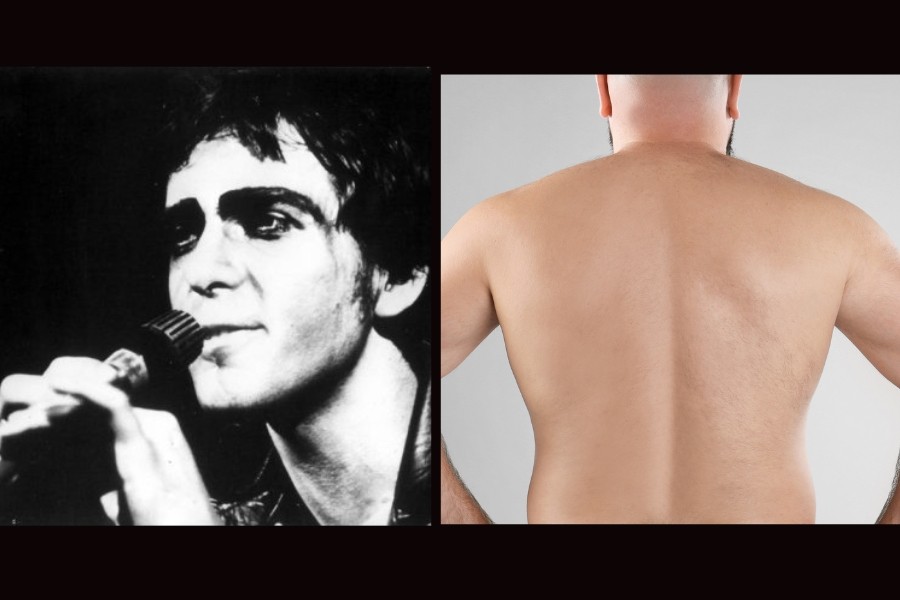
    Photo credit: Unknown photographer via Wikimedia Commons, Creative Commons Zero, Public Domain Dedication, cropped (left) / Canva (Africa images), cropped (right)A roadie got naked for a hilarious prank during one of Peter Gabriel's final shows with Genesis.

    The 1974 Genesis double-LP, The Lamb Lies Down on Broadway, is one of the most ambitious (and, to some, inscrutable) concept albums in rock history, following a character named Rael along a cosmic journey through the shadowy New York City streets, elaborate chambers of 32 doors, surreal cages filled with stalactites and stalagmites, underground rivers, and caves with spooky creatures. It was like a proggy Pilgrim’s Progress as envisioned by Alejandro Jodorowsky.

    When it came time to translate that vision to the concert stage, Genesis made a risky choice: debuting the entire 94-minute saga, front to back, with large chunks of the audience likely unfamiliar with the songs. (The first date of the tour, November 20, 1974 in Chicago, occurred two days before The Lamb hit stores.) The visual side of the project was as trippy as the lyrics, including scene-setting projections and a number of bizarre costumes for front man Peter Gabriel—like one particularly grotesque monstrosity, The Slipperman, that drummer Phil Collins later called an “inflatable dick.” (“It was all very Spinal Tap,” he said in an interview for the album’s 2007 reissue.) 

    If you ever wanted to appear naked onstage, this was probably the perfect time to do it—and one of the band’s roadies pulled off that hilarious prank as the tour neared its end. The silliness was especially notable, given the brooding atmosphere within Genesis—Gabriel, feeling constrained by the band’s schedule and eager to stretch his wings, had already informed his bandmates that he planned to leave following the Lamb tour. Perhaps the roadie, whom the band recalls being Geoff Banks, was attempting to add some levity. What we do know is that he made his nude cameo during one of the final shows, building on the suspense from a visual trick.

    “There was a point in The Lamb where Rael sort of splits, and we did that on stage,” Gabriel told filmmaker John Edginton in a full-band documentary interview. “I would be in the Rael outfit, and there was a dummy on the other side in exactly the same outfit. There wasn’t a lot of lighting, so it would explode, and you wouldn’t know [which was which]…Of course, for the crew, as we approached for the end of things—first of all, [Rael’s] jeans would have their flies undone with a banana hanging out. Gradually, they’d have more and more fun…”

    Keyboardist Tony Banks also talked about this infamous moment in a passage from the 2007 book Genesis: Chapter and Verse. “No one apart from the group, and the immediate circle of the group, knew that Pete was leaving and that this could well be our last tour ever,” he said. “And the roadies always had to have some fun. There was this moment in the show where Pete would be on one side of the stage with a dummy on the other side, and the strobe lights would flash on them so you couldn’t tell which was which. And, of course, for one of the last shows, one of the roadies got up there naked on the other side and took up the pose in place of the dummy…There were people watching this, my wife, for instance, practically in tears because they thought that it might be all over for Genesis, and we had a naked roadie on stage[—]was this how it was all going to end?”

    But all’s well that ends well, and Genesis managed to carry on after Gabriel’s departure by upgrading Collins to the dual role of drummer-singer. In a testament to their continued friendship, Genesis even reunited with their old singer in 1982 to help him escape mounting debts. 

    This article originally appeared last year. It has been updated.

Explore More Culture Stories

Culture

During one of Peter Gabriel’s final Genesis shows, a roadie got naked for one amazing prank

Music

41 years ago Bono’s Live Aid stage antics ended up saving a female fan from being crushed

Culture

Catherine O’Hara’s tear-jerking eulogy for John Candy was a master class in memorializing a true friend

Culture

Second-grade teacher asks her students for marriage advice. Here’s their 7 best responses.