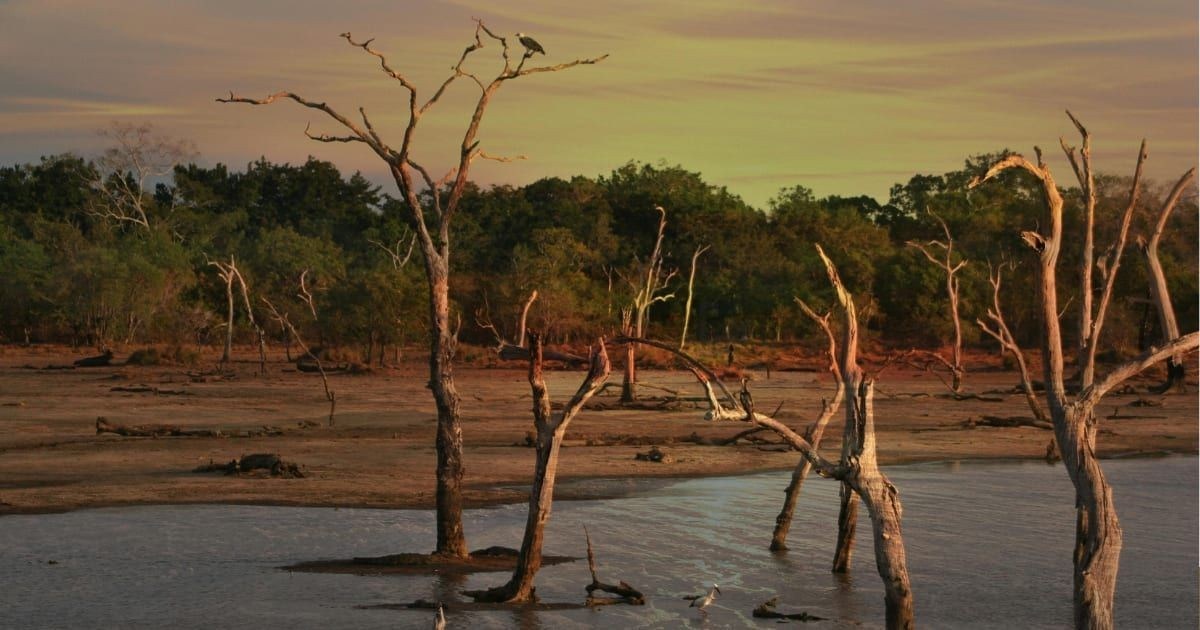
The ecosystems that supply humanity with fresh water are disappearing at an alarming rate, leading to water shortages worldwide. With the future of groundwater looking uncertain, three Indian engineers – Govinda Balaji, Swapnil Shrivastav, and Venkatesh Raja – have taken inspiration from “Star Wars” and devised a system that turns air into water using atmospheric water generators, reported Good News Network.
Every hardship presents an opportunity. For Swapnil Shrivastav and Venkatesh Raju, students at NIT Calicut, the drought in Kozhikode in 2016 posed a significant challenge that inspired them to act. Swapnil Shrivastav told The CSR Universe that they were often limited to one bucket of water per day. To solve the problem, they developed the ‘water-from-air’ idea. Shrivastav revealed that this concept was inspired by the ‘moisture vaporator‘ from the “Star Wars” movies. He said, “One element of inspiration was from “Star Wars” where there’s an air-to-water device. I thought, why don’t we give it a try? It was more of a curiosity project,” as per BBC.
As their idea began gaining traction and winning grants and awards, they became motivated to find 100% sustainable water solutions. They were then joined by Govinda Balaji, who provided his mechanical expertise to the team. Thus began their journey to create water out of thin air. Fast forward to 2019, the trio founded a watertech startup named Uravu Labs. Their vision saw the light of day with their main product — a machine that uses liquid desiccant to convert air to water. Desiccants are materials that absorb the humidity and moisture in the air to maintain a moisture-free environment, per Edco Supply.
Their groundbreaking technology absorbs moisture from the air, which is then released into a chamber with the help of a desiccant that is heated to around 100°F using sunlight or renewable energy. The moisture captured in the chamber is then condensed into drinking water. The process takes 12 hours but can produce a mammoth figure of 2,000 liters, or about 500 gallons of drinking-quality water daily.
As of now, the company’s offering has not reached civilians due to the cost of manufacturing and running the machines. For now, they have restricted access to this technology to only 40 clients in the hospitality industry, who utilize it to provide drinking water for customers.
Besides that, the startup has also built plans to work with corporations on CSR efforts and with Indian government agencies like Jal Shakti, Ministry of New and Renewable Energy, etc., to deliver clean drinking water to remote and rural areas. The company is dedicated to attaining sustainability and has taken measures to ensure the safety of the water produced by its atmospheric water generators, particularly in areas with high levels of air pollution. Talking about the quality of the water, Shrivastav said, “Uravu’s water quality was tested from a certified NABL laboratory as per ISO 9001-2015 named, Civil Lab and Geotech Consultants.” He added, “Uravu has also received an FSSAI certification for the retail of water bottles.”