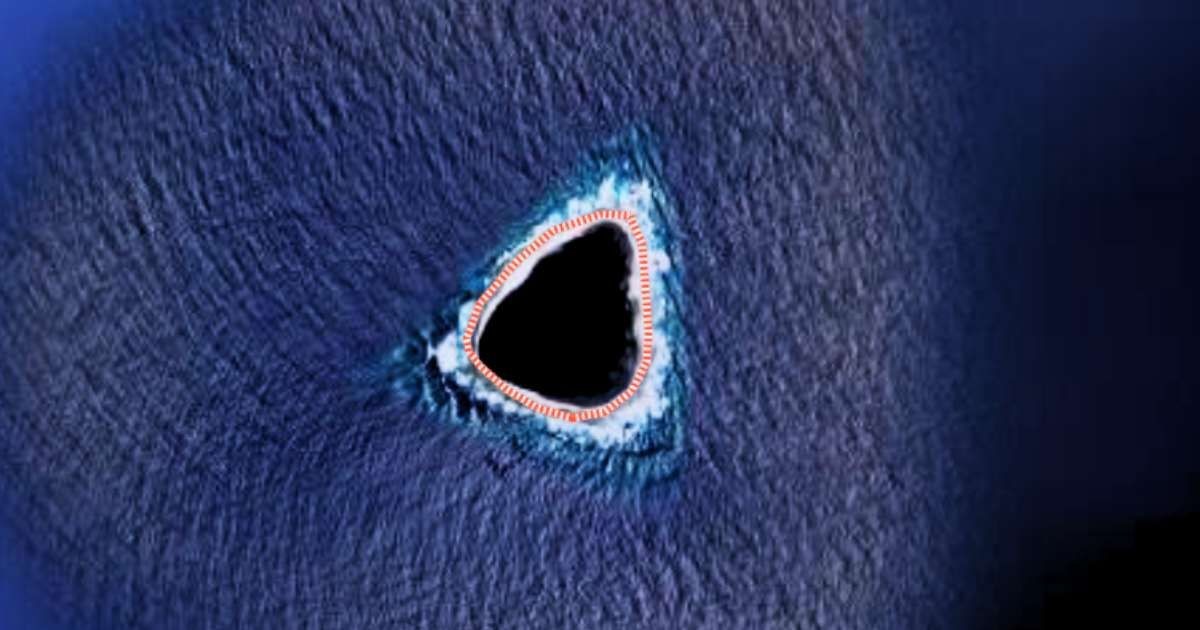
People often use Google Maps to track locations, create itineraries, and view pictures of properties. Nearly two years ago, social media users noticed a bizarre ‘black hole’ in the middle of the Pacific Ocean on Google Maps. After much speculation and research, they discovered it was an uninhabited coral island called Vostok Island. Fifteen years ago, a diver visited the island and documented his experience for National Geographic.


[iframe https://www.google.com/maps/embed?pb=!1m14!1m8!1m3!1d9575.574228988316!2d-152.3179413!3d-10.0629285!3m2!1i1024!2i768!4f13.1!3m3!1m2!1s0x76dee1bf7125f8f1%3A0x342f8bfa21276cc9!2sVostok%20Island!5e1!3m2!1sen!2sin!4v1722495639359!5m2!1sen!2sin allowfullscreen=”allowfullscreen” height=”450″ style=”border-width: 0px; border-style: initial;” width=”600″]

Located nearly 4,000 miles east of Australia, Vostok Island looks like a “giant guitar’s pick,” a triangle with nothing visible on it in the aerial view on Google Maps, as per UNILAD. Belonging to the Republic of Kiribati, the secluded island has attracted people’s curiosity for decades. For years, people have been cooking up conspiracy and wild theories speculating about the nature of this island with densely forested terrain.


via GIPHY


Some people on Reddit claimed it was a “censored” destination that only selected authorities knew about, while others thought it was a secret military base. According to Live Science, Google often blurs out sensitive sites such as military bases or prison yards, to avoid disclosing information about their location and structure.
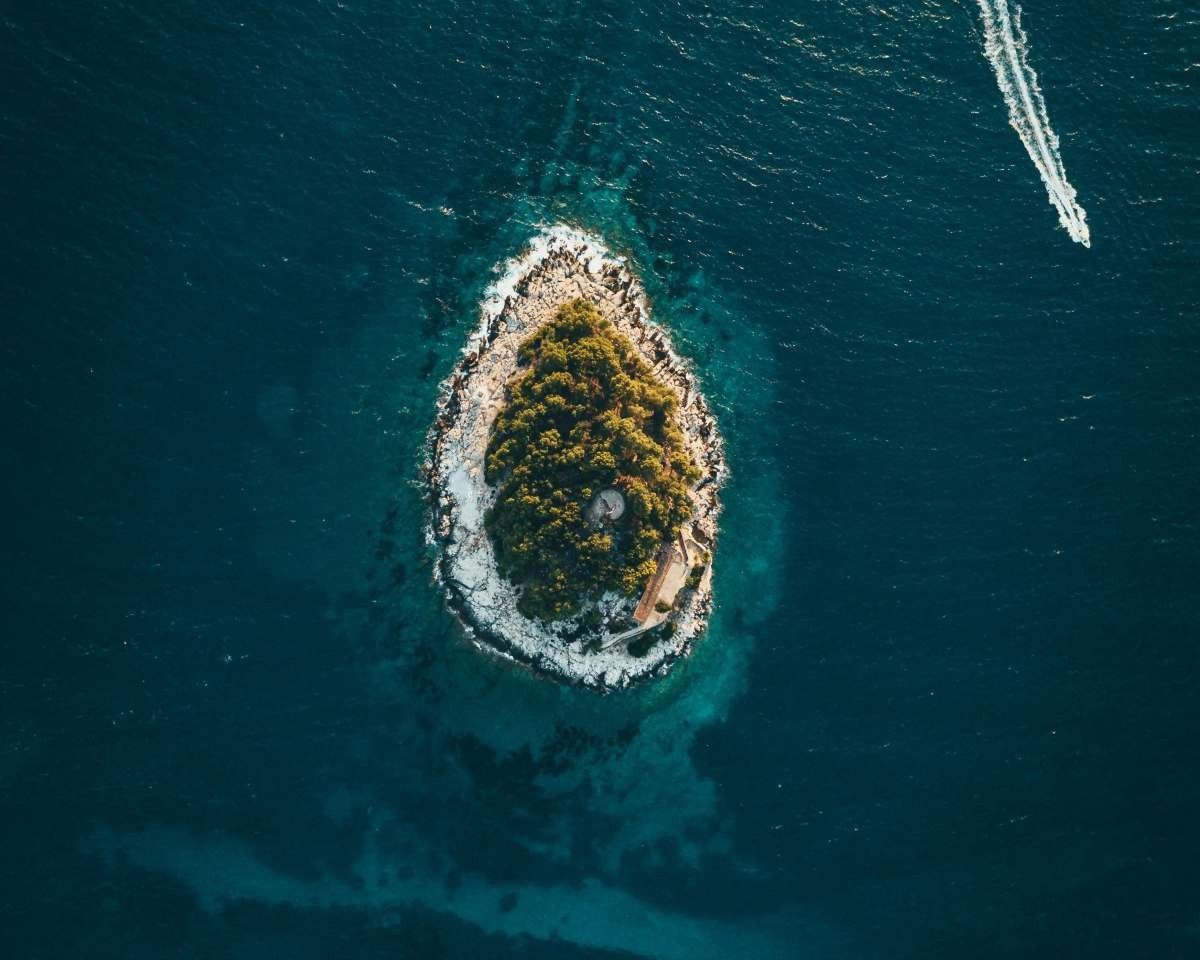
Representative Image Source: Pexels | Ollivves

In Reddit’s group r/GoogleMaps, u/the_professor64 pondered that this ‘hollow’ space could be an underground volcano. “Could maybe be an underground volcano that causes the blackness, assuming it isn’t a hole. Most likely igneous rock,” the individual wrote. u/Eternal_memory called it a “portal to Atlantis (a submerged city).” u/newportsnbeerxboxone wondered that “it’s probably part of the Russian land bridge that was destroyed long ago.” u/64G1gabyte commented, “Giant lost a guitar pick in the middle of the ocean? Relatable?” Several commented on Google Maps that it looked like a “black hole.”


Image Courtesy: Reddit |
Image Courtesy: Reddit | u/Eternal_Memory

Image Source: Reddit |
Image Source: Reddit | u/SnooGrapes8094

However, when diver Enric Sala visited the mysterious island in 2009, he reported that “he loved swimming around the beautiful corals there.” Despite the odd location, Sala described his dive in the waters around Vostok island as “the very best dive of his life.” The cryptic island is also known to be a well-protected site where schools of sharks prowl around, as well as shoals of barracudas glide in the untouched blue waters. “There were sharks around us, schools of jags, barracuda and surgeon fish, everything,” Sala exclaimed in the footage.


via GIPHY


The island remains mostly untouched by human presence, except for occasional divers exploring its waters, due to its remote location, according to The Sun. Covering just 1.3km in length, the island is densely jacketed with thickets of towering Pisonia trees that can grow up to 98 feet. These trees block out the Sun, and cause the island to remain dark. Apart from this, the island hosts a variety of wildlife, including seabirds, skunks, crabs, and turtles. It is appreciated for its “diverse and productive” reef as pointed out by a community ecologist, @StuartSandin, on X.


“Incredible! Really unbelievable. This is the most pristine place we have dived so far. We have found it, this is it. Vostok Island. I cannot wait to get back in the water,” Sala exclaimed with delight, concluding the dive footage. After this 2009 dive, he once again visited the island in 2021, as per an Instagram post.


Despite all this information, people remain curious why the island appears as a hole on Google Maps. According to BBC, the black appearance is probably an optical illusion, caused by Vostok’s dense forest when photographed from low orbit. The trees are dark green, but give off the appearance of black from the top, and that’s why on Google Maps, it looks like a “black hole.”


https://youtube.com/watch?v=ufCpWk1WRoc%3Fsi%3DsuDdZUyymnOEnnOa

  • Kenyan teens create award-winning, affordable car exhaust filters made with corn cobs and algae
    Photo credit: @theearthprize on Instagram/CanvaTwo 17-year-olds made a device that is helping reduce air pollution in Kenya.

    When Fredrick Njoroge Kariuki of Kenya turned 12 in 2021, he experienced incredible difficulty breathing. Doctors diagnosed him with bronchitis, explaining that his coughing and breathing issues were connected to the thick layers of exhaust fumes emitted by vehicles in the area. Five years later, the teenager teamed up with his classmate Miron Onsarigo to create an award-winning, inexpensive filter made with agricultural waste.

    While air pollution is a global concern, it is particularly an issue in Kenya. A 2024 study found that Nairobi, Kenya’s capital, had 3.7 times higher levels of particulate air pollution than the World Health Organization’s guidelines. This doesn’t just contribute to illness like Kariuki’s bronchitis. Experts estimate that the country’s air pollution is responsible for 400 to 1,400 premature deaths in Nairobi each year.

    The global environment issue was personal

    Both teens were hardened in their resolve to tackle this air pollution problem largely caused by the matatus (shared minibuses) and boda bodas (motorcycle taxis) common in urban areas.

    “The problem of air pollution was very personal to us, and that is why we started thinking about coming up with a solution,” Kariuki told Mongabay. “It was a passion before it became a project.”

    “I did not choose this problem. It chose me,” Kariuki said to Daily Nation. “Growing up in Naivasha, my bronchitis got so bad that I stopped thinking of air pollution as an environmental issue and saw it as something being committed against us.”

    “Seeing people get sick as a result of fumes from vehicles has become normal back home in Kisumu County. The ‘normal’ did not feel right to me. I wanted to do something about it,” added Onsarigo.

    Using waste products to clean the air

    With time, intelligence, and hard work, Kariuki and Onsarigo created the HewaSafi vehicle exhaust filter. The HewaSafi, which means “clean air” in Swahili, was made using locally sourced agricultural waste. The entire mechanism is made from steel mesh, copper, corn cobs, coconut shells, recycled batteries, and algae. All of these components help further filter out particles in the air straight from the exhaust pipe.

    The results of the HewaSafi were impressive. The device reduced particulate matter in the air by 93.3%. The HewaSafi also reduced carbon monoxide by 42% and absorbed 21.4% of CO2 that would otherwise be released into the atmosphere.

    Since the device was made using waste products, the HewaSafi manufacturing cost is around $126. By comparison, conventional filters of this sort typically cost around $390. So, not only is this filter effective, it’s cheap enough for more people to use.

    @urbanbetternairobi

    You breathe it every day. But how often do you think about it? Air pollution affects where we live, how we move, and who gets left behind. This Air Quality Awareness Week, swipe to see how Nairobi communities are taking action!#AirQualityAwarenessWeek #Cityzens #Cityzens4CleanAir #CleanAirNairobi #nairobi

    ♬ LET ME BE – The Second Voice

    A prize that leads to further opportunity

    The ingenuity of these two 17-year-olds won them the 2026 Earth Prize for Africa. They received $12,500 for their regional win and global attention to the HewaSafi.

    The teens hope to use the prize money and attention to further develop the HewaSafi. Using connections made through the Earth Prize, they aim to start a full line of emission control products. While they want to work with people with different budgets, their main target is to specifically cater HewaSafi filters toward public transportation vehicles.

  • The drawer problem: Why so many of us can’t let go of our old electronics, and what we can do about it
    Photo credit: Peter Dazeley/Photodisc via Getty ImagesThis look familiar?

    Think about the last smartphone, tablet or smartwatch you stopped using. Odds are it is not in a recycling bin or a new owner’s hands; it is sitting in a drawer.

    From our survey of 4,000 American consumers, we found the single most common thing people did with a device they were finished with was nothing at all: 39% simply stored it. Recycling and reselling, outcomes better for the environment, each accounted for only about 1 in 10 devices. Throwing devices in the trash claimed another 9%.

    What people do with old electronics

    Funded by the National Science Foundation, our multidisciplinary team blended our expertise in causal inferencesustainability and cybersecurity, to work on the tangled question of what people do with their consumer electronics when they’re done using them. We used statistical models to connect what people say – that is, their stated knowledge and attitudes – to what they actually did.

    Why the drawer wins

    Two main forces keep devices in the drawer. The first is anxiety about data. People who worried that recycling or reselling a device would compromise their data were 14% and 9% more likely to store it instead.

    The second force is simply not knowing how to. People who did not know where to recycle were 10% more likely to hold onto a device, and many also kept old gadgets as a perceived data backup.

    Recycling and reselling electronics are a lot easier than a lot of people think. In the U.S., the national chain Best Buy accepts devices for recycling; reselling online is convenient with vendors such as Back Market and Gazelle.

    Just be sure to wipe data before parting with a phone or computer. Also, remove the device from your account, for instance with Apple or Android. Unless you do, the device stays locked to you, and no one else can use it.

    We also compared what people intended to do with what they had actually done. This led to a telling detail: Data security worries led to people storing devices at a greater rate than they said they intended to.

    In other words, the fear of leaking personal data kicks in only when someone is facing the real decision of whether to hand off their device to a recycler or secondhand buyer.

    Getting at why people don’t recycle

    Researchers have long studied why people do or don’t recycle electronics: Convenience, awareness and incentives showed up as affecting the decision. But prior work examined recycling as the only option.

    Instead of considering the issue as a yes-or-no vote on recycling, we treat it as a comparison between different options: Storing, reselling, donating, trading in, recycling and throwing away the device in the trash. When modeling this way, trade-offs became visible.

    Knowing where to recycle, for instance, made recycling 47% more likely, but it also pulled people away from reselling, which is often the more environmentally friendly choice. You can explore the survey results in our interactive dashboards.

    Getting people to let go

    Storage is the worst of both worlds: A device sitting unused for years loses its resale value, and erasing its data only gets harder over time. The good news is that the main barriers – data concerns and not knowing where to turn – can be addressed with better information.

    We are experimenting with information interventions that walk people through their options, including how to securely wipe their data. We are testing nudges with randomized, controlled trials to test what leads people to give their old electronics a second life.

    It might be a good time to remember what old devices you’re holding onto and revisit your reasons for not letting go of them.

    This article originally appeared on The Conversation. You can read it here.

  • Solar-powered boat feasts on trash and could solve the ocean’s plastic waste problem
    Photo credit: Ocean Cleanup on YouTubeThe Interceptor boat-barge could significantly clean our waters.

    Our oceans have a plastic problem. While it’s difficult to put a 100% accurate number on it, scientists estimated about 4.8 to 12.7 million metric tons of plastic waste entered the ocean in 2010 alone according to the journal Science. This issue has caused scientists and engineers to create a boat-barge in Los Angeles that skims the oceans to gobble up the plastic we leave behind.

    Devised by the non-profit Ocean Cleanup organization, the garbage-gulping Interceptor boat-barge is actually a smaller platform nestled within a larger boat. A floating barrier moves collected trash into the device onto a conveyor belt. An automatic shuttle then collects the trash from the conveyor to send it to a separate barge where there are six dumpsters to hold it. The solar-powered system can hold up to 20,000 lbs. of garbage. The trash is then separated into different categories (plastics, metal, etc.) so they can be disposed of responsibly.

    Catching ocean trash from the source

    Ocean Cleanup hopes to make a dent cleaning the Great Pacific Garbage Patch in the Pacific Ocean. However, they decided to first attack the plastic ocean problem at its source: rivers. When it rains, a lot of trash from the hills and valleys washes down into the nearest river. While there is significant ocean trash taken from beaches, they have found that the lion’s share of garbage that floats into our oceans actually comes from rivers and tributaries that lead into it. Essentially, the plan is to get ocean trash before it even enters the ocean.

    “We have to turn the faucet off before we can scoop the ocean, or else all we’re doing is taking out legacy trash to replace it with new trash,” James Patterson, the operations manager of Ocean Cleanup said to The Guardian. “Before you can clean out the Great Pacific Garbage Patch, you really need to turn off the source.”

    How the Interceptor is helping Los Angeles and beyond

    There is an Interceptor already doing its work at the mouth of Ballona Creek in Culver City, California. Since 2025, the Interceptor has prevented 143,710 lbs. of trash from entering the ocean via the creek. As a bonus, the Interceptor’s trash sweeping has lowered government budgets for beach grooming. Since there is less trash, the beach doesn’t need to be cleaned as often.

    There are two more Interceptors planned to be at the mouths of the San Gabriel River and the Los Angeles River. This can help clean up the rivers for the upcoming 2028 Summer Olympics for aquatic events.

    There are currently 21 Interceptor systems throughout the globe. Countries using them include Indonesia, Vietnam, Jamaica, Guatemala, the Dominican Republic, and Malaysia.

    If this is an issue that speaks to you, you can help even if you don’t live near an ocean. There may be a nearby river or creek that could benefit from volunteer cleanups. Do some research to find an organization near you to volunteer. If you can’t locate one, groups like River Cleanup can help you organize your own group. Much like how a small drop contributes to a large ocean, a small pick-up can make a big difference.

Explore More Environment Stories

Environment

Kenyan teens create award-winning, affordable car exhaust filters made with corn cobs and algae

Science

The drawer problem: Why so many of us can’t let go of our old electronics, and what we can do about it

Environment

Solar-powered boat feasts on trash and could solve the ocean’s plastic waste problem

Environment

As climate change causes flooding in London, experts found an effective, low-cost solution: beavers