
Earth’s abundance of water is what makes it a “blue planet.” Scientists have long speculated about how all this water ended up here. Some studies suggested that water arrived on Earth through collisions with icy comets or asteroids. However, the question persisted: Did Earth’s water come from outer space or from within? A 2014 study provided insight into this mystery when scientists discovered a massive reservoir of water trapped within hot mantle rocks. The findings were published in the journal Science.
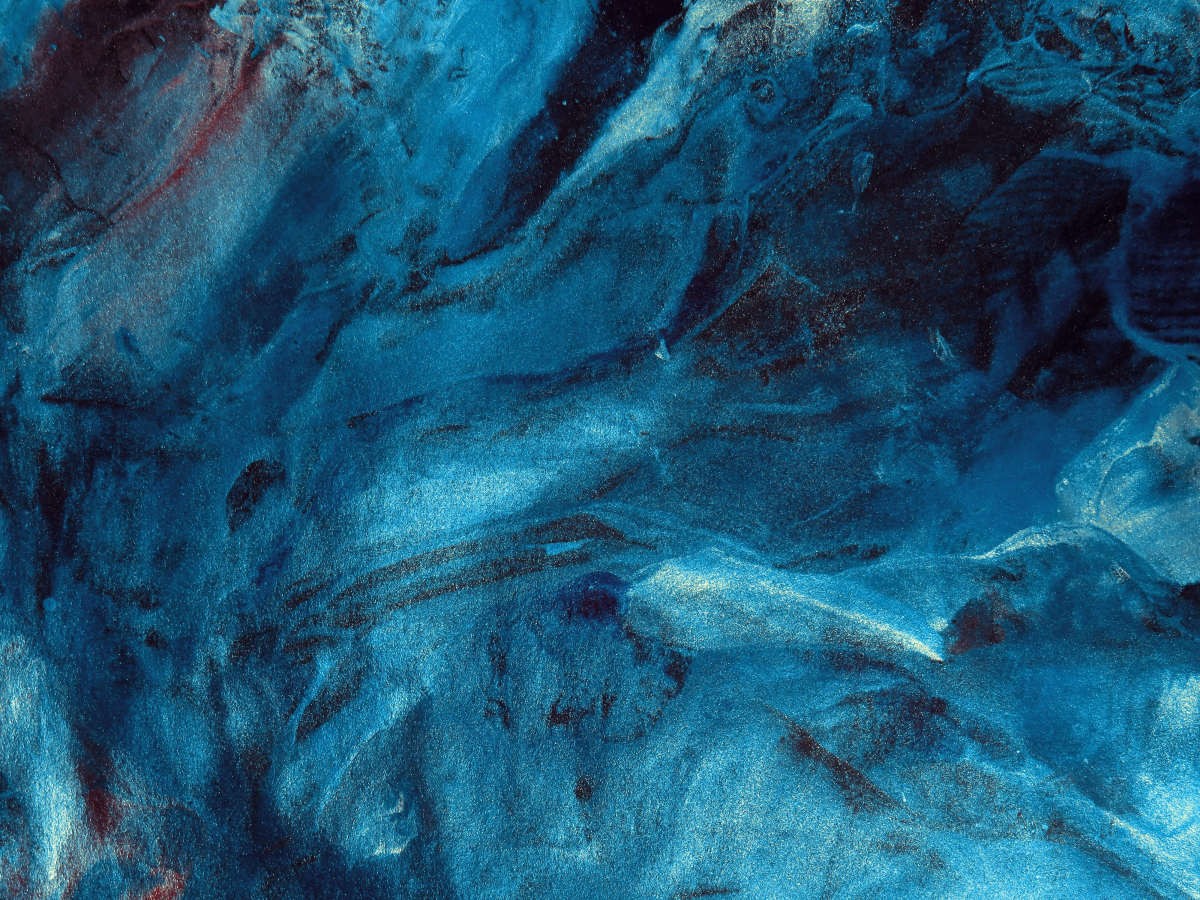
Representative Image Source: Pexels | Anni Roenkae
The discovered reservoir contains three times the volume of all Earth’s oceans combined. It was surprising, because usually, the Earth’s mantle, 254 to 410 miles deep, is an efflux of scorching hot rocks covered with magma. According to New Scientist, scientists have long believed that the mantle’s “transition zone,” the boundary between the upper and the lower mantle, could contain water trapped in rare minerals.
During this study, they finally discovered a colossal body of water trapped inside a blue rock called ringwoodite. Ringwoodite is a deep blue mineral, chemically similar to peridot, a green mineral often used in jewelry. “The ringwoodite is like a sponge, soaking up water,” Steven Jacobsen of Northwestern University in Evanston, Illinois, said, per a university press release. “There is something very special about the crystal structure of ringwoodite that allows it to attract hydrogen and trap water. This mineral can contain a lot of water under conditions of the deep mantle.”

Representative Image Source: Pexels | Its MSVR
The team discovered this ringwoodite around 430 miles underground in the mantle. This gave a clue that the water on Earth could have simply seeped from within its core, rather than coming from a comet or asteroid collision. “It’s good evidence the Earth’s water came from within,” Jacobsen told New Scientist.
To conduct the research, scientists employed 2,000 seismometers that helped them study the seismic waves generated by more than 500 earthquakes. As these waves quiver through the Earth’s core, scientists can examine them from the surface. “They make the Earth ring like a bell for days afterward,” said Jacobsen. Since the waves take longer to travel through wet rocks than dry rocks, the speed of the waves told scientists which rocks could contain water. 434 miles deep, the temperatures and other conditions were just perfect to squeeze the water out of the ringwoodite. “It’s a rock with water along the boundaries between the grains, almost as if they’re sweating,” explained Jacobsen.

The discovery of this huge ocean could provide some fascinating insights about Earth’s water cycle, and how seas and oceans were initially formed on the planet. “We should be grateful for this deep reservoir,” said Jacobsen. “If it wasn’t there, it would be on the surface of the Earth, and mountaintops would be the only land poking out.”
“Geological processes on the Earth’s surface, such as earthquakes or erupting volcanoes, are an expression of what is going on inside the Earth, out of our sight,” added Jacobsen. “I think we are finally seeing evidence for a whole-Earth water cycle, which may help explain the vast amount of liquid water on the surface of our habitable planet. Scientists have been looking for this missing deep water for decades.”
Since 2015, the Comedy Wildlife Photography Awards, created by photographers and conservationists Paul Joynson-Hicks and Tom Sullam, have been delivering laugh-out-loud moments through the lens of nature. With a mission to entertain while raising awareness about wildlife conservation, the competition celebrates the charming and comical side of the animal kingdom.
Let’s take a joyful stroll down memory lane with some of the most funniest entries from the 2019 contest (and if you’re feeling inspired, you’ll also learn how to submit your own wild and witty shots for future competitions).
OVERALL WINNER, CREATURES OF THE LAND WINNER: “Grab Life By the…”
You don’t think about how hard it would be to be the parent of a small, curious creature with massive, sharp claws. Let’s all take a moment to be grateful that even though it’s very hard to have a human baby, they don’t have super sharp claws. That would make things ten times worse.
CREATURES IN THE AIR WINNER: “Family Disagreement”
I think if I were an otter, I too would constantly clutch my face in disbelief. “I can’t possibly be this cute, can I? Cute nose, fuzzy head, tiny little eyes? That can’t be! Oh, but it is! I really am this adorable! I am! I am!”
Have you seen those videos of foxes diving headfirst into the snow to catch prey? It’s hilarious and fascinating, and I think this fox forgot that there was no snow. His friend is really trying to help him not hurt himself, but his buddy insists on being dumb. Oh, foxes!
“And then Carol was like, ‘You otter come over for dinner sometime!’ Get it? Get it? Man, Carol’s hilarious. So I went over for dinner and she had like, this whole seafood spread. Crabs, clams, mussels…the whole shebang. Anyway, I think I’m going to marry her.”
Just think about how much poise it took for this photographer to take this photo. Not only is the shark sneaking up on this poor fish, but there’s a person behind that camera! Presumably, the photographer escaped unscathed, since he was able to enter this photo in the contest.
It’s clearly not just human women who have to put up with the incessant nagging conversation from dudes we have no interest in talking to. See the look on that bird’s face? Staring straight out just willing him to go away? Tell me you haven’t made that face. Yeah, that’s what I thought.
“O Romeo, Romeo, wherefore art thou, Romeo?” No one really knows this, but squirrels are generally huge Shakespeare fans. They saw him put up a play in Europe centuries ago and have just carried that love for his words through generations and generations of squirrels.
I relate to this bear hard. Anyone who has had to get up and go to work after a long weekend knows this feeling. Sometimes, you just don’t want to deal with anything. Sometimes, you just want to lie on the ground, cover your face with your hands, and nap for a little while longer.
I love this photo so much. Because not only is it a picture of a penguin farting, but it’s a picture of a penguin who is clearly trying to hide the fact that he’s farting and play it off like he’s doing absolutely nothing. He’s just standing there twiddling his wings. He has no idea what that big bubble under his butt is.
There seems to be a whole genre of “Small rodents holding flowers” photos, and I am a sucker for every single one of them. I’m pretty sure this comes up when you look up “cute” in the dictionary. It’s just so pure.
“Hi there! Welcome to my flower. So glad you could make it! It’s a little cold and wet right now, but once the sun comes up we’ll be in business. Help yourself to a dewdrop. They’re especially fresh this morning.”
“And then my friend Steve, the otter, told me that Carol said to him, ‘You otter come over for dinner!’ Get it? Get it? Because they’re otters! So it’s funny. Hey, where’d you go?”
These poor monkeys were just trying to get it on. Their kids were finally out of the tree, they had some peace and quiet, and then they were so rudely interrupted by a photographer. Although mom looks like she was kinda zoning out anyway.
This little chimp is living the life! He’s got it all figured out, and from the looks of him, he’s still a tiny baby. He’s just looking out at the jungle, thinking about all that milk he’s going to drink later.
I bet that when you’re a Snowy Owl and it finally snows, you are just so ecstatically happy. I mean, it’s right there in your name. Look at her face! It’s full of such pure joy.
Like this little monkey, I, too, usually save my existential crises for bath time. There’s something about the weightlessness of floating in the water that makes you question everything you know to be true about yourself and the world.
Who’s calling this snapping turtle slow? He’s just “taking his time.” On another note, I think turtles are probably the most prehistoric-looking creatures that still exist. If you really take the time to look at them, they’re so crazy.
Imagine playing hide and seek on a block of ice as a polar bear. On one hand, there aren’t too many places to hide. On the other hand, you’re looking for white on white, and that’s not easy.
I don’t know if you knew this, but rodents love ABBA. Here is one getting down to “Dancing Queen.” Because they’re so small, they really feel the music down to their bones. Raise your hand if you would watch an all-rodent adaptation of Mamma Mia! Yeah, me too.
If you want to enter next year’s competition, follow the link here to sign up for mailing list updates!
This article originally appeared six years ago. It has been updated.
Photo credit: Brookfield Zoo Chicago’s Sarasota Dolphin Research Program, taken under NMFS MMPA Scientific Research Permit – Bottlenose dolphins are social creatures that use whistles and clicks to communicate with each other.
But it wasn’t until the 1960s that methodical research into dolphin communication began. Scientists like John Lilly and the husband-and-wife team of Melba and David Caldwell tried various experiments to decipher the sounds dolphins can make.
The Caldwells figured out a way to record isolated animals in human care. They discovered that each individual dolphin communicated mostly with one unique whistle, which they called the “signature whistle.” Researchers now know that these whistles convey identities much like human names do. Dolphins use them to stay in touch with each other in their murky habitat, where vision is limited. It’s like announcing “I’m over here!” when someone can’t see you.
This collaborative study, led by Randall Wells of Brookfield Zoo Chicago’s Sarasota Dolphin Research Program, involves numerous researchers from a variety of institutions, who study different aspects of dolphin biology, health, ecology and behavior. Begun in 1970, this is the longest-running research project on a population of wild cetaceans – whales, dolphins and porpoises – in the world.
Photo credit: Photo by Brookfield Zoo Chicago’s Sarasota Dolphin Research Program, taken under NMFS MMPA Scientific Research Permit – Each dolphin has distinctive markings on its dorsal fin. Experienced researchers can sometimes identify them by sight in the field, and they photograph them to confirm their identity in the lab.
Recording and observing
Researchers know the age, sex and maternal relatedness of almost all of the approximately 170 dolphins in the Sarasota community. This depth of knowledge provides an unprecedented opportunity to study communication in a wild cetacean species.
The dolphins in the Sarasota project are periodically subject to brief catch-and-release health assessments, during which researchers, including me, briefly handle individual dolphins.
Our team attaches suction-cup hydrophones directly onto each dolphin’s melon – that is, its forehead. We then record the dolphins continuously throughout the health assessments, taking notes on who is being recorded when, and what is happening at the time.
This is how my colleagues and I were able to confirm that wild dolphins, like captive animals, produced large numbers of individually distinctive signature whistles when briefly isolated from other dolphins. Through observations and recordings of known free-swimming dolphins, we were further able to confirm that they produced these same signature whistles in undisturbed contexts.
We have organized these recordings into the Sarasota Dolphin Whistle Database, which now contains nearly 1,000 recording sessions of 324 individual dolphins. More than half of the dolphins in the database have been recorded more than once.
We identify each dolphin’s signature whistle based on its prevalence: In the catch-and-release context, about 85% of the whistles that dolphins produced are signature whistles. We can identify these visually, by viewing plots of frequency vs. time called spectrograms.
Spectrograms of signature whistles of 269 individual bottlenose dolphins recorded in Sarasota. Figure created by Frants Jensen, with sound files from Laela Sayigh
Signature whistles and ‘motherese’
The Sarasota Dolphin Whistle Database has proved to be a rich resource for understanding dolphin communication. For instance, we have discovered that some calves develop signature whistles similar to those of their mothers, but many do not, raising questions about what factors influence signature whistle development.
Dolphin mothers modify their signature whistles when communicating with their calves by increasing the maximum frequency, or pitch. This is similar to human caregivers using a higher-pitched voice when communicating with young children – a phenomenon known as “motherese.”
Also similar to humans is how dolphins will initiate contact with another dolphin by imitating their signature whistle – what we call a signature whistle copy. This is similar to how you would use someone’s name to call out to them.
Our team is interested in finding out if dolphins also copy whistles of others who aren’t present, potentially talking about them. We have seen evidence of this in our recordings of dolphins during health assessments, which provide a rare context to document this phenomenon convincingly. But we still have more work to do to confirm that these are more than chance similarities in whistles.
Shared whistle types
Another exciting development has been our recent discovery of shared whistle types — ones that are used by multiple animals and that are not signature whistles. We call these non-signature whistles.
I could hardly believe my ears when I first discovered a repeated, shared non-signature whistle type being produced by multiple dolphins in response to sounds we play back to them through an underwater speaker. We had previously believed that these non-signature whistles were somewhat random, but now I was hearing many different dolphins making a similar whistle type.
Our team originally had been using the playbacks to try to determine whether dolphins use “voice cues” to recognize each other – similar to how you can recognize the voice of someone you know. Although we found that dolphins did not use voice cues, our discovery of shared non-signature whistle types has led to an entirely new research direction.
The author listens to dolphin whistles on a boat in Sarasota. Jonathan Bird from the film ‘Call of the Dolphins’/Oceanic Research Group, Inc.
So far, I’ve identified at least 20 different shared non-signature whistle types, and I am continuing to build our catalog. We are hoping that artificial intelligence methods may help us categorize these whistle types in the future.
To understand how these shared non-signature whistle types function, we are carrying out more playback experiments, filming the dolphins’ responses with drones. We’ve found that one such whistle often leads the dolphins to swim away, suggesting a possible alarm-type function. We have also found that another type might be an expression of surprise, as we have seen animals produce it when they hear unexpected stimuli.
More difficult, more interesting
So far, the main takeaway from our experiments has been that dolphin communication is complex and that there are not going to be one-size-fits-all responses to any non-signature whistle type. This isn’t surprising, given that, like us, these animals have complicated social relationships that could affect how they respond to different sound types.
For instance, when you hear someone call your name, you may respond differently if you are with a group of people or alone, or if you recently had an argument with someone, or if you’re hungry and on your way to eat.
Our team has a lot more work ahead to sample as many dolphins in as many contexts as possible, such as different ages, sexes, group compositions and activities.
This makes my job more difficult – and far more interesting. I feel lucky every day I am able to spend working on the seemingly infinite number of fascinating research questions about dolphin communication that await answers.
Gavin, with help from aquarium staff, had secretly planned to propose right in front of the beluga whale tank. As he got down on one knee, a whale named Qinu swam into view.
The 16-year-old marine mammal paused right at the glass and appeared to drop her jaw in shock.
I’ve been interning with the beluga training team for the last 3 months so this was the most thoughtful way he could’ve done it 🥺 #georgiaaquarium#belugawhale#proposal
The moment was caught on video, and when Olivia shared it on TikTok, the comment section exploded. It looked exactly like the whale was gasping at the size of the ring.
“The most perfect proposal I could’ve asked for,” Olivia wrote.
Viewers immediately anthropomorphized the whale’s hilarious expression.
“The beluga NEEDS to officiate the wedding now,” one user joked.
Another simply commented: “The beluga: :O”
Even the official Play-Doh account chimed in to insist that the whale deserved a wedding invite.
According to People, Qinu’s involvement wasn’t a planned stunt. Katie Lorenz, the associate curator of mammals and birds at the Georgia Aquarium, confirmed that the reaction was entirely natural.
“Qinu’s behavior at the window was her own,” Lorenz said. “She was not intentionally trained to have any type of reaction.”
Unlike many other whales, belugas have unique physical characteristics that allow for this kind of “human” expression. They have a flexible neck and unfused cervical vertebrae, which allows them to nod and turn their heads.
Furthermore, their “melon” (the rounded forehead) is flexible and capable of changing shape, which often makes them appear to be smiling or making faces.
The moment was even more poignant because Olivia wasn’t just a random visitor. She had actually been a beluga whale training intern at the aquarium for the past three months.
“My fiancé is the most thoughtful person,” she wrote in a reply. “He knows how much I’ve loved working with the whales and truly made it the most special moment.”
The Conversation
Of course, viral videos involving captive animals often spark debate. Some commenters questioned the ethics of keeping an animal like Qinu in a tank.
“Nothing cute or adorable about these sentient creatures being kept confined in glass houses for human amusement,” one user wrote.
A beluga whale pops up from the water. Photo credit: Canva
However, for the vast majority of viewers, the video was a moment of pure joy. The clip has racked up over 7 million views on TikTok alone, and Qinu has officially become the internet’s favorite wedding crasher.
For those who want to see more of the star, the Georgia Aquarium maintains a live beluga cam where fans can check in on Qinu. As for the happy couple, they now have a proposal story that is going to be very hard to top.
This article originally appeared last year. It has been updated.