





One would correctly assume, with all other things being equal (a large and impractical caveat), that technology and medical advancements are allowing Americans to live longer and longer. From just 1980 to today, the average American is living almost 5.5 years longer (73.8 years to 79.1 years in 2014’s study).
However, in certain stricken areas, there exist factors that not only slow the growth of the population, but also actually reverse the trend, showing falling life expectancies in the face of nationwide growth. Unsurprisingly, these pockets are largely low-income, low-infrastructure areas that suffer from drug and obesity epidemics.
While those descriptors could be used to describe many areas in the United States, the hardest hit locales are clearly concentrated in one area: rural Kentucky.
Of the 10 counties that have shown the biggest drop in life expectancy since 1980, the eight lowest are all adjacently situated in Kentucky:
- Owsley County, Kentucky (-3 percent)
- Lee County, Kentucky (-2 percent)
- Leslie County, Kentucky (-1.9 percent)
- Breathitt County, Kentucky (-1.4 percent)
- Clay County, Kentucky (-1.3 percent)
- Powell County, Kentucky (-1.1 percent)
- Estill County, Kentucky (-1 percent)
- Perry County, Kentucky (-0.8 percent)
The two other counties in the top 10 were Kiowa County in Oklahoma (0.7 percent) and Perry County, Alabama (0.6 percent).
A worsening opioid epidemic, dwindling educational resources, and falling populations in these counties are all factors in their reversal of fortune. In many such areas, more people are dying of heart disease today than they were in 1980, due to financial strain and dwindling medical resources.
Sadly, the trends in the counties show no sign of reversing without extraordinary intervention. Says Christopher Murray, the director of the Institute for Health Metrics and Evaluation, “Every American, regardless of where they live or their background, deserves to live a long and healthy life. If we allow trends to continue as they are, the gap will only widen between counties.”
The study also identified the areas in the United States with the longest life expectancies, all of which are affluent areas in Colorado: Summit County, Eagle County, and Pitkin County all boast life expectancies hovering around 86 years, thanks to medical resources, clean air, nutritious diets, and copious exercise via time spent outdoors.











 Revenge can feel easier than forgiveness, which often brings sadness or anxiety.
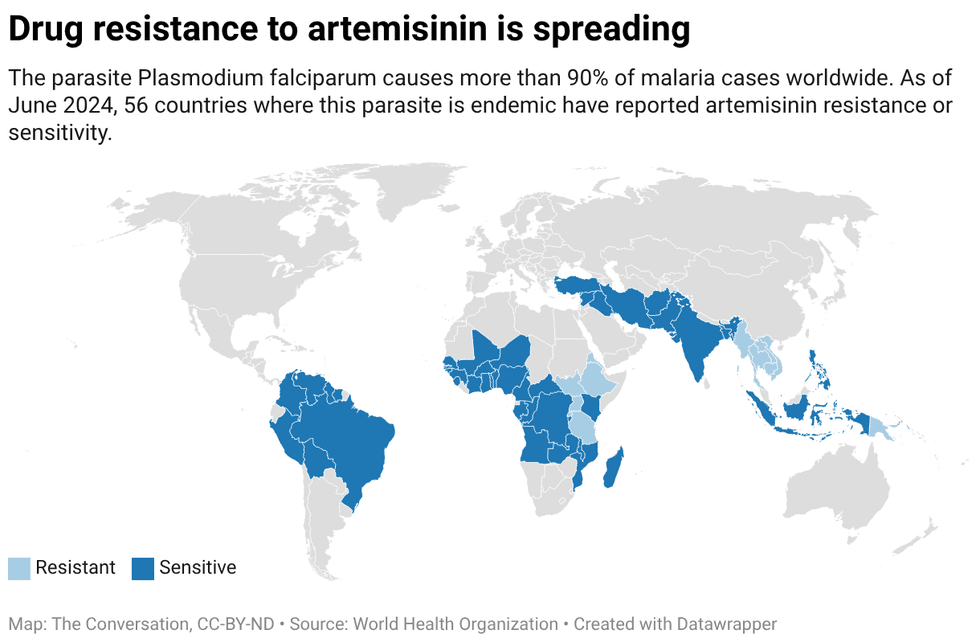
 In the past two years, two malaria vaccines have become available for babies starting at 5 months of age.
 By exploiting vulnerabilities in the malaria parasite’s defense system, researchers hope to develop a treatment that blocks the parasite from entering cells.
 Created with

 Volunteers who drive homeless people to shelters talk with a person from Ukraine in Berlin on Jan. 7, 2026.
 Tasks that stretch your brain just beyond its comfort zone, such as knitting and crocheting, can improve cognitive abilities over your lifespan – and doing them in a group setting brings an additional bonus for overall health.
 Overdoing any task, whether it be weight training or sitting at the computer for too long, can overtax the muscles as well as the brain.

 Amoxicillin is a commonly prescribed broad-spectrum antibiotic.
 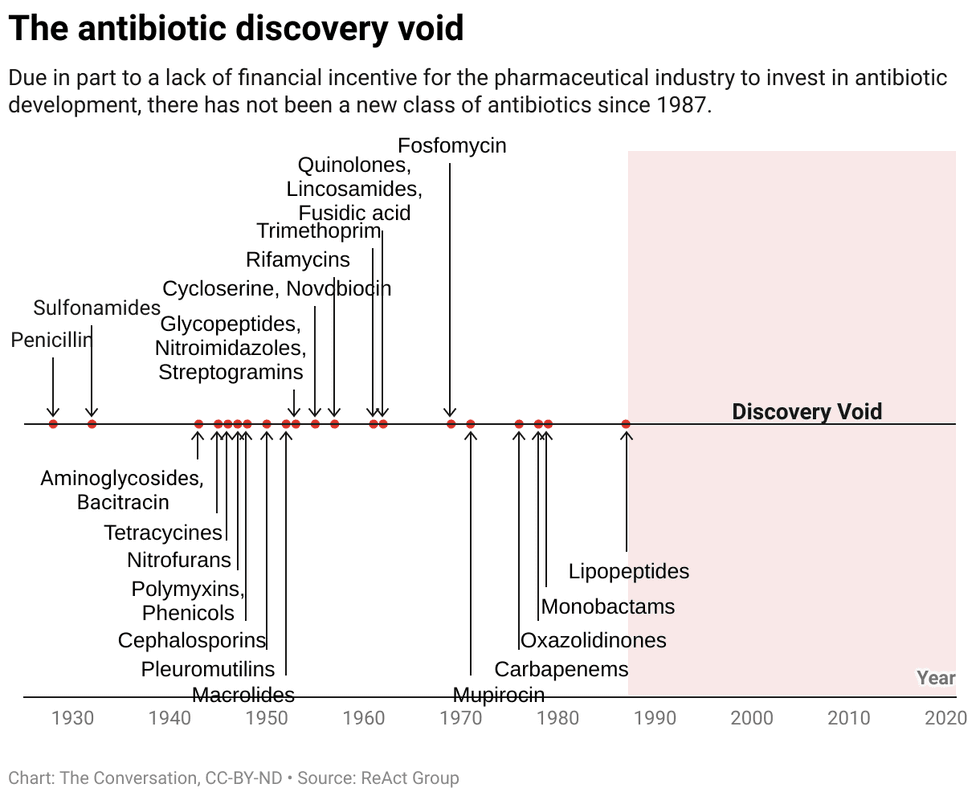 Chart: The Conversation, CC-BY-ND
 Counterintuitively, social media can make you feel more bored and lonely.
 Talking about what you’ve read can add a social dimension to what can be a solitary activity.