Today, Saroo Brierley writes memoirs and delivers keynote presentations, promising that those who hear him speak “will be left inspired.” This confidence likely stems from his own profound journey of love, loss, and reunion. In 1986, at just 5 years old, a tragic accident separated him from his family in India. He didn’t reunite with them until he discovered Google Earth. After 25 long years, he finally found what he’d been searching for—home.

“When I was five years old, I wandered onto an empty train somewhere in India and fell asleep waiting for my brother,” Saroo told Google in an interview, and continued, “When I woke up, I stepped off the train with no idea of how to get back.” He had stepped onto a freight train with his brother Guddu to steal coal and trade it for milk and food so that his family could have something to eat. Now lost, he jumped out of the train, and found himself hundreds of miles away from his home, amid the crowded streets of Kolkata, then Calcutta.
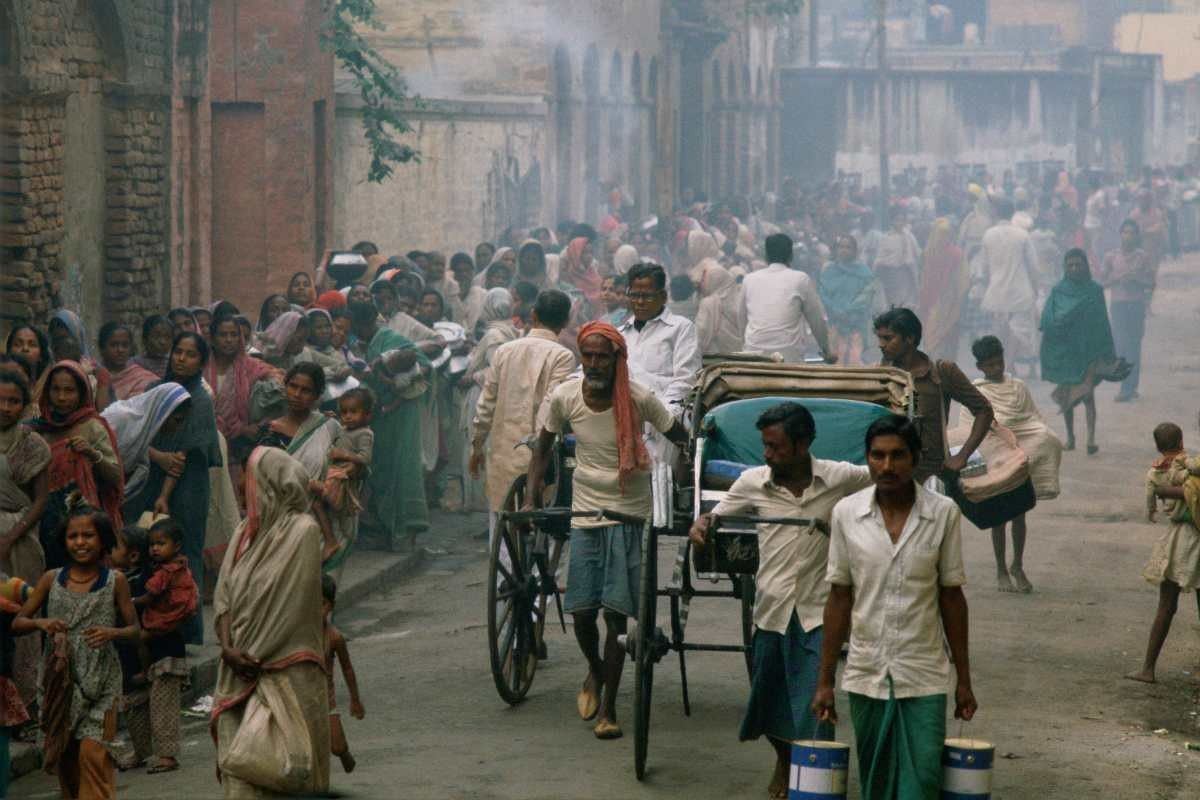
“The panic set in,” Saroo told People. To wake up and find himself hungry, moving towards the unknown, made tears roll down his cheeks, both tears of fear and tears of plight, “I was crying for my mom and my brother and my sister.”
Two years later, he was eventually placed in an orphanage where an Australian couple named Brierleys adopted him. “I described a map of my hometown to my Australian parents who eventually adopted me,” he told Google. His new parents, Sue and John Brierley were more than happy to receive him in their family.

“Saroo’s arrival was a kind of birth into our family,” Sue told People, “It was just a fantastic moment, filled with love and joy.” They gave him some chocolates, a book, and a stuffed koala toy, which Saroo named “Koala Dundee.” All was perfect, except that his past didn’t stop haunting him.
“But it wasn’t until 25 years later, that I heard about a tool that might help.” He was referring to Google Earth, a geo-mapping and tagging program that uses composite imagery to form a comprehensive, interactive map of the Earth.
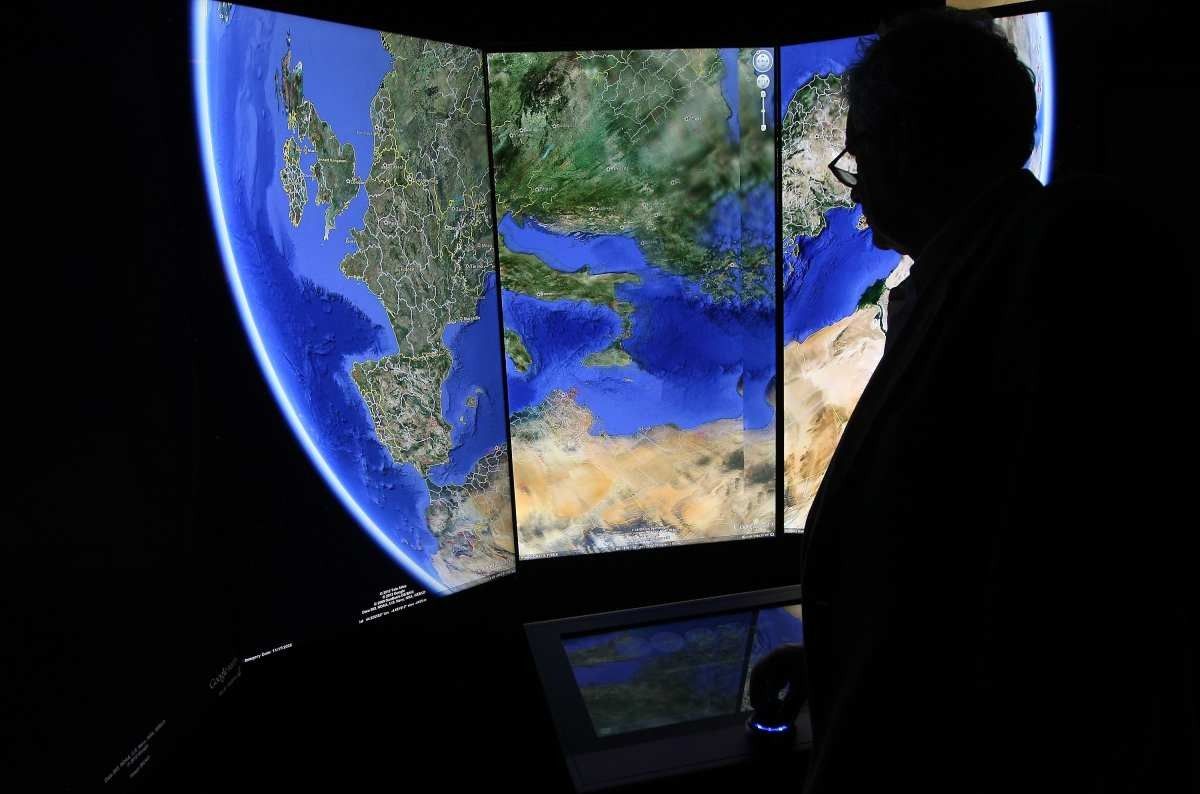
“I began the search for the family I’d lost undeterred by the reality of what I was trying to do,” he said, adding that he needed to scour through a whopping country of more than a billion to find a family of four. Plus, he needed to scan nearly 41,000 miles of track and 10,000 stations, which was akin to looking for a needle in a haystack.
“Starting with the first thing I knew I got off the train at Howrah station, Kolkata. I thought about how long I was on board and worked out my search radius,” he did some math work. He had to examine a vast area. From this area, he kept deducting tinier chunks of areas based on his memories of his hometown. Firstly, he crossed out Bangladesh as he didn’t speak Bangla. Then, he deduced that he wasn’t from a city because he remembered looking at the stars. He also ruled out the possibility of colder regions as he recollected living in warm climates during his childhood nights. “From there my only option was to follow the tracks that still remained,” he said.
Night after night, he obsessively pored through the maps, each day from 5 pm to 2 am for 3 years, totaling 9,855 hours, until the night he found something – a symbol of hope. A station. A water tower. An overpass. And a ring road. “It was the station where I fell asleep 25 years earlier,” he exclaimed. From 6213 miles away, he began to follow the path of his first home. “It was a surreal moment,” he told People, “Inside, I was jumping with joy.”
In February 2012, Saroo traveled to the central Indian city of Khandwa, with the support of his adoptive parents. As he wandered through the town, watching ragamuffins play with sticks, he soon came to a familiar place, where he could sense his childhood dusty smell, sounds of screeching brakes, people shouting, and the pitter-patter of feet. He had arrived in his hometown.
On February 12, 2012, after years of searching, Saroo finally reunited with his family. He stood in his little house hugging his birth mother, Fatima, whose eyes were welling with tears, “It was the most pivotal moment of my life,” he recalled.
After the heart-wrenching reunion, he penned a book titled “A Long Way Home,” describing his long journey from parting to reunion. He also co-authored the screenplay of the movie “Lion,” starring Dev Patel as “Saroo.” “He’s so lovely,” Dev Patel was quoted as saying by People, “We met in Australia, and he is so generous. Saroo’s the epitome of just a fiercely driven young man. And he has an incredible memory, down to the eggs I ordered at that meal, the clothes I was wearing, everything. He remembers crystal-clear.”
Other characters of the cast include Nicole Kidman, Priyanka Bose, Nawazuddin Siddiqui, David Wenham, Siddiqui, Tannishtha Chatterjee, and more stars from India. At the 70th BAFTA, the film won Best Adapted Screenplay and fetched Dev Patel the Best Supporting Actor award.