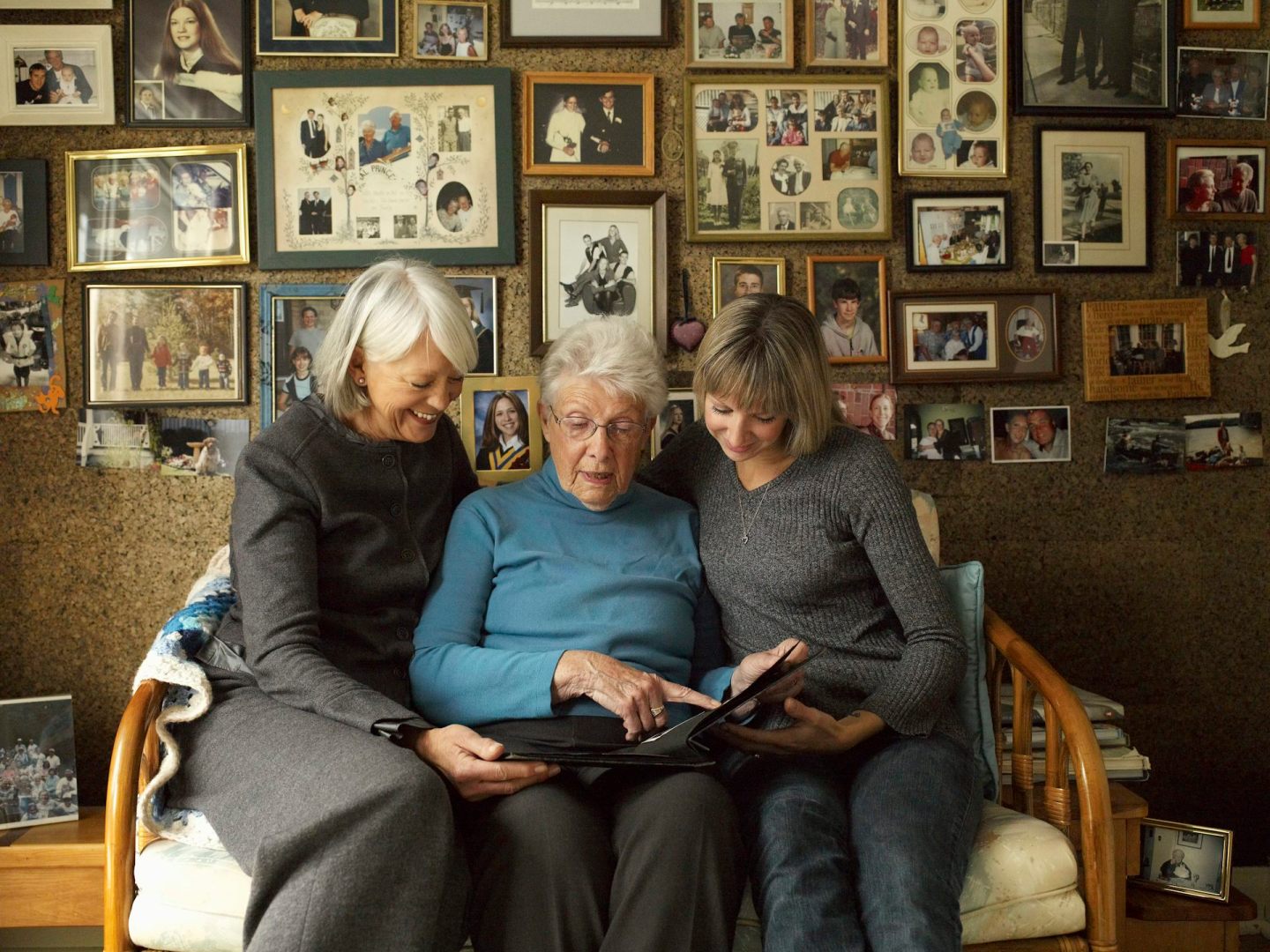
Fate might have parted these lovebirds, but the 73rd version of their school reunion ended up reuniting them, and this time for good. Based in Michigan, these two high school sweethearts named Bill Hassinger and Joanne Blakkan were once caught kissing on the bus by their school principal. They started dating in 1947 when they were both students at North Muskegon High School in West Michigan. She was in her junior year and he was a freshman. And now, more than seven decades later, they are at the edge of rekindling their long-lost relationship. They had first met in their common school bus, “She would always save a seat for me,” Hassinger recalled according to The Washington Post. They parted ways after Blakkan started her college, “It was just too pretty to get rid of.” said Blakkan. After they parted ways, Hassinger went on to marry another woman and Blakkan married another man. She had three children with him, out of whom one is named as Linda. Following this life turn, Hassinger spent his days in the US Army in Salzburg, Austria. Meanwhile, Blakkan worked as an office manager for a surgeon, and later an allergist in Ann Arbor.
Fast forward to a few years, the respective partners of both had passed away. While Hassinger’s wife died in 2021, Blakkan’s husband had died in 1989. During this time, although Blakkan had heard through mutual friends that Hassinger was living in nearby Manistee and had retired as a Lieutenant Colonel from the Michigan State Police, she never attempted to reach out to him, thinking that he was happily married. But one thing that still reminded her of Hassinger was a sparkling jeweled bracelet that Hassinger had gifted to her during the high school period. It is a gorgeous silver bracelet studded with glittering green gems. Hassinger had gifted her this bracelet on the occasion of their school’s senior prom. But she never threw it away. She always cherished the little ornament given to her by the boy she dated. But she wasn’t looking to reunite with her beloved anyway, neither was she looking for a new date, “We went our separate ways. I had lived alone all this time, and I certainly wasn’t looking for love or a man. I was content. But he was always in the back of my mind. I loved that young boy.” she told PEOPLE.com.
However, in the year 2022, destiny made them come together once again. Joanne and her daughter Linda were looking up a list of old classmates for the 73rd school reunion when Joanne wondered if she would be able to meet her old flame in this celebration. And they did meet too. At last, after a long exile lasting over seven decades, they met for lunch. Describing the experience of this date, the 90-year-old Hassinger hilariously says, “She didn’t look anything like I remembered her 73 years ago. I guess life will do that to you.” Their initial flame of love was rekindled, speaking about which Blakkan says, “Believe it or not, we’re in love at our age. I want his hugs and kisses and he feels the same way. It’s just like when we were teenagers.” Their saccharine love story was first published by Good Morning America in a YouTube video showcasing the carousel of some of their photographs.
The distance between Hassinger’s and Blakkan’s residences might be over 80 miles in the present day, but the distance between their hearts has finally dissolved. “We play a lot of cards like cribbage, gin, and we work puzzles,” Hassinger says. “But most of the time we just enjoy each other’s company.“ Blakkan offers her insight by saying that they want to spend the little time left of their lives, with each other, more than anything else. “No one knows how much time you have. Both of us are in reasonably good health for our age and mentally alert. So we want to enjoy our time here.”
Using an in-home HEPA purifier for one month spurs a small but significant improvement in brain function in adults age 40 and older. That’s the result of a new study we co-authored in the journal Scientific Reports.
We analyzed data from a study of 119 people ages 30 to 74 living in Somerville, Massachusetts. Somerville sits along Interstate 93 and Route 28, two major highways, resulting in relatively high levels of traffic-related air pollution. This makes it an especially good location for testing the health effects of air purifiers.
We randomly assigned participants to one of two groups. One used a HEPA air purifier for one month and then a sham air purifier – which looked and acted like the real thing but did not contain the air-cleaning filter – for one month, with a month-long break in between. The second group used the real and sham purifiers in reverse order.
After each month, participants took a test that measured different aspects of their mental capacity. The test probed people’s visual memory and motor speed skills by measuring how quickly they could draw lines between sequential numbers, and it tested executive function and mental flexibility by asking them to draw lines between alternating sequential numbers and letters.
We found that participants 40 years and older – about 42% of our sample – on average completed the section testing for mental flexibility and executive function 12% faster after using the HEPA purifier than after using the sham purifier. That was true even when we accounted for factors like differences in the amount of time participants spent indoors, with either filter, as well as how stressful they found the test.
This improvement may seem small, but it is similar to the cognitive benefits that people experience from increasing their daily exercise. While you may not experience a sudden increase in clarity from a 12% boost, preventing cognitive decline is vital for long-term well-being. Even small decreases in cognitive functioning may be associated with a higher risk of death.
Why it matters
Air pollution can negatively affect mental function after just a few hours of exposure. Studies show that air purifiers are effective at reducing particulates, but it’s unclear whether these reductions can prevent cognitive harm from ongoing pollution sources like traffic. Research has been especially lacking in people living near major sources of air pollution, such as highways.
Our study shows that HEPA air purifiers may offer meaningful health benefits under these circumstances.
What still isn’t known
Research shows that air pollution begins to affect cognitive function especially strongly around age 40. These effects may become increasingly prominent as people age.
HEPA air purifiers may therefore be especially beneficial for older adults. Our study did not explore this possibility, as fewer than 10 of our 119 participants were over the age of 60.
Also, our participants only used a HEPA air purifier for one month. It’s possible that longer durations of air purification may sustain or even increase the improvement in cognitive function we observed in our study.
We plan to study whether reducing particulate matter by using air purifiers is indeed protecting the brain’s white matter, and whether it could reverse some cognitive decline. We will explore that possibility by studying how levels of molecules called metabolites, which cells produce as they do their jobs, change in response to breathing polluted air and air cleaned by a HEPA filter.
The first time the placebo effect really got under my skin was when I read that roughly one-third of people with irritable bowel syndrome improve on placebo treatments alone. Usually this statistic is presented as a fascinating quirk of medicine. My reaction was anger.
Humanity possesses an extremely effective treatment, with essentially zero side effects – and patients need someone else’s permission to use it.
The placebo effect refers to the improvements in symptoms that patients experience after they’re given an inert treatment like a sugar pill. Driven by expectation, context and social cues rather than pharmacology, the placebo effect is often dismissed as all in the mind. But decades of research have shown it is anything but imaginary.
Placebo treatments can trigger measurable changes in the brain, immune system and hormone function. In studies on pain, placebos cause the brain to release endorphins, the body’s natural opioids. In Parkinson’s disease, placebo injections increase dopamine activity in the brain. The placebo effect isn’t magic. It’s biology.
Having spent nearly a quarter-century teachingevolutionary medicine, I’ve come to see placebos not as curiosities of clinical trials but as windows into how human biology responds to social signals. And it’s that relationship that is exactly what makes the placebo effect unsettling.
When testing a new drug, scientists compare its effects to what patients experience on a placebo treatment like sugar pills, saline injections or sham surgery. If the drug doesn’t outperform the placebo, it rarely reaches the public. Placebo responses are common and powerful enough to rival active treatments.
Even surgery isn’t immune to the placebo effect. In several well-documented studies of knee procedures, patients who received sham operations – incisions without the full surgical repair – improved almost as much as those who received the real procedure.
Clearly something real is happening inside the body. But the strangest part of the placebo effect is not that it works. It’s what makes it work.
The prescription of belief
Placebo treatments tend to be more effective when delivered by credible authorities. Pills work better when prescribed by doctors wearing white coats. Expensive pills outperform cheap ones. Injections produce stronger responses than tablets.
Some researchers have even removed the deception from placebo experiments entirely. In open-label placebo studies, patients are directly told they are receiving a placebo; and yet many still report significant improvement.
But look more closely at how these studies are run. Patients are not simply handed a sugar pill and sent home. They receive an explanation from a clinician, in a medical setting, within a structured ritual of care: a context that may be doing much of the biological work.
Even when the deception disappears, the social scaffolding remains. The permission to heal is still being granted by someone else.
The placebo effect extends beyond the patient
The placebo effect is often framed as something happening inside an individual. But it does not operate in isolation.
Consider what happens in veterinary medicine. Dogs and cats cannot believe a treatment they’re given will work; they have no concept of receiving medication. Yet when owners and vets believe an animal is being treated, they consistently report improvements in pain and mobility that medical tests do not confirm.
In one study of dogs with osteoarthritis, owners reported improvement roughly 57% of the time for animals receiving only a placebo.
The animals themselves may not have improved. But the humans caring for them perceived they had. The healing signal, it turns out, travels through the humans in the room.
When healing makes things worse
There have been times when going to the doctor made you less likely to survive. In the 19th century, mainstream medicine was built on bloodletting, purging and doses of mercury and arsenic – treatments that killed as often as they cured.
Homeopathy emerged in the late 18th century precisely in this context. Its founder, Samuel Hahnemann, was a physician horrified by the harm the conventional medicine of his time was causing. His highly diluted versions of contemporary remedies did nothing pharmacologically. But they also did not kill people, which put them decisively ahead of the competition.
Homeopathic patients not only survived but also reported dramatic recoveries from chronic ailments and acute infections alike. During the cholera epidemics of the mid-1800s, patients at homeopathic hospitals had lower death rates than those receiving standard care. Why was that?
The standard cholera treatment of the era was aggressive and exhausting; for a disease that already caused massive fluid loss, doctors often prescribed further bloodletting, along with toxic purgatives such as calomel – a form of mercury – to “flush” the system. In contrast, homeopathic care involved extreme dilutions of substances in water or alcohol, effectively providing hydration and a calm, structured environment without the physiological assault.
Death rates were lower not because homeopathy worked but because the placebo effect – combined with not poisoning patients – was more effective than the medicine of the day.
Healing is not free
The body needs resources to heal from injury and disease. Activating systems such as immune responses, tissue repair and inflammation at the wrong time can be dangerous.
Some researchers have proposed that placebo responses reflect a kind of biological health governor: a system that regulates when the body invests heavily in recovery. Cues from trusted individuals may be exactly the signal the body waits for before committing resources to recovery. A caregiver’s reassurance, a physician’s authority and the rituals of medicine may tell the body that conditions are finally stable enough to devote energy to healing.
If that interpretation is correct, the placebo effect is not a trick of the mind. It is an ancient biological system responding to social information.
Body under stress
The placebo effect resembles another system people struggle with today: the stress response.
Stress evolved to keep you alive in the face of acute danger – predators, famine, immediate physical threat. These days, this useful piece of biological engineering might fire when someone hasn’t replied to your email. The system that once saved people’s lives now makes many miserable over things that would have been unimaginable to their ancestors.
You can talk back to the stress response, consciously reappraising the threat – in other words, reframing a looming deadline not as a catastrophe but as a manageable challenge – to help quiet it. But notice what you cannot do: You cannot simply decide to activate your placebo response. You cannot will yourself to release pain-relieving endorphins by believing hard enough in a sugar pill. For that, you still need the ritual, the white coat, the authority figure. You need someone else.
The stress response, misfiring as it is, remains yours. The placebo response has been outsourced: not because it wasn’t always social, but because even now, people still can’t seem to access it on their own.
The uncomfortable implication
The placebo effect is not a trick of the mind. It is a feature of human biology that people have largely surrendered to whoever performs authority most convincingly.
If belief can activate biological healing pathways, belief can also be manipulated. Charismatic figures, elaborate medical rituals and expensive treatments may produce real improvement in symptoms even when the underlying treatment is physiologically inert. That is how wellness culture works. It leverages the same social scaffolding of care to trigger the body’s internal pharmacy, regardless of whether the treatment itself does anything.
The placebo effect is often celebrated as proof that the mind can heal the body. But I believe that may not be its most interesting lesson. It also reveals that human physiology evolved to take its cues from other people. Your brain, immune system and pain response are not isolated machines. They are deeply intertwined with social signals, expectations and trust.
In a world filled with doctors, advertisements, wellness influencers and elaborate medical rituals, that insight is both fascinating and profoundly maddening. People are walking around with one of the most powerful healing systems ever documented locked inside them, and they can reliably access it only when someone in a position of authority gives them permission.
She was right to be touched. He had actually thought about what she would like. She’s health-conscious, so he tailored the meal to her preferences. As they sat down he proudly explained what he’d made and why.
It was designed, he told her, for her prostate health.
A visibly confused woman tries to think. Photo credit: Canva
Sedlak asked him if he meant his prostate health.
He confidently said no. He meant hers.
Sedlak, an actress and filmmaker with 145K Instagram followers, shared the moment in a video posted on November 22, 2025 under her handle @alexandrasedlak. She described the progression from delight to confusion with great precision. “I am dating a dummy,” she concluded in the video. “But he is my little dummy, and no one can take that away from me ever.”
For reference: the prostate is a gland in the male reproductive system, located below the bladder. Women do not have one. A study published in PMC found that men’s knowledge of gynecologic anatomy tends to be significantly lower than women’s, which at least provides some scientific context for this particular gap running in the other direction.
The comments were predictably delighted. One person suggested she invite him over and cook a meal focused on his ovulation health, then casually ask what part of his cycle he’s in. Another compared him to a golden retriever who should be given head scratches and told he’s a good boy.
He is very caring. He cooked her a whole meal. The organ was wrong but the intention was right.
For more relationship-based content, follow @alexandrasedlak on Instagram.