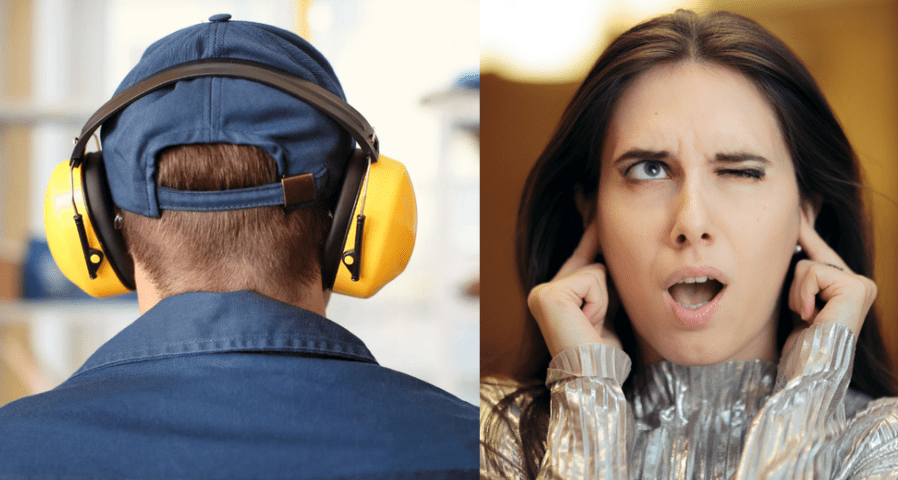
If you have ever worked in retail, a restaurant, or in an office, there may be some music that remind you of those workplaces—many times for the worst. It’s not just that the songs are annoying, either. You’d probably swear that the annoying (or outright bad) music actually made you worse at your job. It may seem like just a feeling, but science is saying that it’s actually a fact: bad music can ruin job performance.

A study at Ohio State University found that if background music at the workplace doesn’t fit well with what workers need to do their jobs, it doesn’t just impact their moods or energy, but their job performance overall. Bad songs may have killed the mood in the room, made it hard for workers to concentrate, or just didn’t feel “in sync” with the work being done. “Music misfit,” as the researchers called it, didn’t just make work less pleasurable for the workers, but was shown to cause fatigue and make it more difficult to concentrate. This is a big deal since 13.5 million people work in occupations in which background music is common—and for the most part, the music is chosen with customers in mind rather than the workers.

“Music that doesn’t fit what an employee needs to feel energized, manage emotions, and focus on a task can have a real negative impact,” said Kathleen Keeler, co-lead author of the study and assistant professor of management and human resources at The Ohio State University’s Fisher College of Business.

“It is a mistake for managers to assume that music doesn’t affect employees,” she added. “We found that a music misfit can lead employees to feel more fatigued, have trouble focusing, and not really enjoy being at work. And that in turn prompts them to engage in behaviors that can harm the organization.”

The study was two-fold. First was a collection of data from 166 full-time workers. Online, each participant rated how much they needed four features of music: speed, volume, complexity, and emotional intensity. Then they each listened to one of two playlists while they did a creative task. One playlist was upbeat, poppy music with moderate complexity while the other was slower, more morose with a lower volume. After completing their task, the participants rated how much the music they listened to fit their needs for the four listed features.

@fnaffoxylove123

I hate Walmart radio so much…….?. And I’m not even joking here, they literally play these songs almost EVERY SINGLE DAY. There’s other ones they keep fucking playing too, but these are the ones I hear the most and they’re so annoying. #walmart #fyp ♬ Road Rage – Your Favorite Martian

The results showed the participants that didn’t get the music fitting the characteristics they were looking for not only had a worse time but felt mentally exhausted. This was especially seen in people who had difficulty “blocking out” and ignoring the music to focus on their task.

The second part of the study was a real world sampling from 68 workers from doctor’s offices, restaurants, retail stores, and other businesses in which background music was commonplace. Each participant completed three email surveys daily for three weeks that asked about their musical needs, what music they heard, their moods, their mental fatigue, and various other questions related to their work in conjunction with the music. The results confirmed the findings in the previous data: bad music created bad work.

Poorer concentration on tasks is just one negative performance aspect bad music can have on an employee. The surveys found that participants that were out of sync with the music were more likely to walk more slowly, gossip about other employees, and steal office supplies.

“Employers should try to strike a balance between making sure their music appeals to both customers and employees, because this is not a trivial matter,” explains Keeler. “If their employees aren’t happy, that is not going to be good for the business. I know some managers are reluctant to allow employees to listen to their own music, but our research suggests that there are a lot of benefits, including productivity, engagement, and well-being.”

If you’re an employer or an employee, there are some possible solutions to make music experiences better for the workplace. One suggestion would be for employees to make musical choices and the manager creates an approved playlist featuring songs chosen by everyone so that there is a good mix. Maybe include music as part of customer comment cards to see if the vibe works with everyone, including them. Or, as Keeler suggested, allow employees to listen to their own music via headphones and earbuds as long as it isn’t a workplace safety concern. Because if everything is out of tune, the employees’ work will be more flat than sharp.
  • Scientists create environmentally friendly plastic replacement from shrimp shells
    Shrimp shells could become our new plastic.Photo credit: Canva

    Plastic waste has been a growing global issue for years. The United Nations Environment Programme says that 19 to 23 million metric tonnes of plastic waste leaks into lakes, rivers, and oceans each year. Given the threat microplastics pose to animal and human health, efforts to find green replacements have intensified—and they’re working. Scientists from Singapore and Spain have found a strong, potentially viable replacement for plastic made from shrimp shells.

    A research team based at the Singapore University of Technology and Design and the Institute for Bioengineering of Catalonia in Barcelona has made a biodegradable plastic alternative out of chitosan. Chitosan is a compound created by combining shrimp shells with trace amounts of nickel. It contains a structural molecule found in the shells of crustaceans and insect exoskeletons. Usually discarded as a waste byproduct of shrimp and crab processing, chitosan is commonly produced during seafood preparation and commercial fishing.

    The issue with chitosan, though, was that it weakens and dissolves in water. That is, until recently.

    How chitosan got stronger

    Dissolving chitosan flakes into a weak acetic solution and mixing them with dissolved nickel chloride and water produced surprising results. Scientists then poured the mixture into molds to dry. The process yields a thin, green-tinted film with the strength of commonly used plastics like polypropylene. Even better, when submerged in water, the film grows 50% stronger. This increased durability matches the characteristics of polycarbonate and PETG, plastics commonly used in commercial single-use water bottles.

    Researchers then stress-tested the chitosan material by molding it into cups and containers. They were able to confirm it could hold water without leaks. In terms of biodegradability, the chitosan material reached its half-life in four months in a standard soil burial test. By contrast, most commercial plastics can take centuries to decompose under similar conditions.

    Researchers found that this is not only a better biodegradable plastic alternative, but also one that produces zero waste during creation. When the chitosan/nickel film is submerged, about 87% of the nickel washes out. That wash water can then be reused again and again from one batch of chitosan to the next. According to the researchers, the nickel content of a single AAA battery would provide enough nickel to manufacture more than a dozen chitosan drinking cups.

    The potential future

    Rigorous testing to assess the material’s limits for medical use and consumption still needs to be done. That said, the Food and Drug Administration has already approved products containing chitosan and nickel individually in the past. Barring any troubling research about their combined safety, the outlook is quite positive for future use.

    Hopefully, seafood and battery waste can be reduced, helping lower plastic waste in a three-way win for the environment.

  • Scientists invent ‘smart’ underwear that tracks gut bacteria health through your farts
    Analyzing the times you pass gas helps scientists study gut bacteria.Photo credit: Canva

    In the United States, gut health is a big deal. According to a 2022 survey by the American Gastroenterological Association, 40% of Americans deal with digestive problems that disrupt their day-to-day lives. Many try different diets and supplements to assuage these issues, as well as use probiotics to improve overall digestion—but there might be a better way. Scientists may have found a way to analyze and pinpoint potential digestive problems; all you need to do is put on some special underwear and fart.

    Researchers at the University of Maryland wanted to find a better way to monitor and measure human gut bacteria in the name of microbiome research. While past methods allowed them to see what gut bacteria species are living in the human body, there was no accurate way to see what the gut bacteria was doing hour by hour. Well, they seem to have found a way: a pair of underwear with a tiny sensor clipped near the rear can now record data from a person’s flatulence.

    @wkoafm

    “Smart Undewear” as a Valentine’s gift? Don’t poo poo the idea! #lafayette #fart

    ♬ original sound – K-105

    This “Smart Underwear” measures the amount of hydrogen gas emitted each time a person passes gas, monitoring the gut bacteria’s activity within a person. Hydrogen gas is typically produced when certain gut bacteria breaks down undigested food. The whole thing may sound silly (and smelly), but early tests of this device have been able to detect dietary changes in people with 94.7% accuracy. This device and method of analyzing gut bacteria is better than most current tools that analyze stool samples, blood, or breath for such data. The Smart Underwear also has a battery that can last for a week without compromising comfort for the wearer.

    “The Smart Underwear comfortably attaches to the exterior of the user’s underwear near the perineal region via a snap system, in which a small plastic snap on the inside of the underwear fabric fits into a corresponding hole on the Smart Underwear on the opposite side of the underwear,” wrote Santiago Botasini and their colleagues in the study. “This sandwiches the fabric in place through friction, ensuring a stable but comfortable attachment of the Smart Underwear. Once attached, the Smart Underwear passively captures hydrogen concentration in flatus, as well as temporal dynamics including the frequency and duration of flatus events enabling longitudinal measurements of gut microbial metabolism.”

    While additional studies are needed, this current study of 38 participants seems to suggest this device could help doctors. The Smart Underwear could pinpoint specific food sensitivities and intolerances within their patients, which proves to be a much better and more accurate practice than relying on patients self-reporting via “food journals” to capture patterns.

    The study shows that self-reporting isn’t always accurate. For example, the device revealed that the participants farted 32 times per day on average, which is more than double the typically cited daily average of 14 incidents.

    It will be a while before gastrointestinal doctors start prescribing Smart Underwear to figure out what’s causing their digestive discomfort, but the research is promising. At any rate, whether the Smart Underwear will be used just for studies or becomes a widespread method to identify food intolerances, getting more information will ultimately lead to a sweeter smell of success over time.

  • 3D scanning and shape analysis help archaeologists connect objects across space and time to recover their lost histories
    The 3D scan of a mask fragment matches up with the scan of a different well-preserved mask. Photo credit: Array

    Today the world of Egyptology faces a silent crisis – not of looting, although that plays a part, but of disconnection. Walk into any major museum, from Copenhagen to California, and you see glass cases filled with what could be called orphaned artifacts: remarkable objects, often acquired in the 19th and early 20th century, that have been completely stripped of their histories. You can see what they are – a mummy’s painted foot case, a golden mask – but we have no idea where they came from. They are beautiful, but historically they are mute.

    Many objects entered museum collections at times when excavation and collecting practices were very different from today. In the past, excavated objects were often divided between institutions around the world, and display was prioritized over documentation. Over time, connections between pieces were lost. As a result, museums around the world hold remarkable artifacts whose backstories are thin, fragmentary or missing altogether.

    Archaeologists like me working in the field today regularly uncover fragments: broken pieces of objects that once formed part of something larger. In some cases, those fragments may share the same underlying geometry with objects already held in museums. For example, a mummy’s foot case and a newly found shard may have been produced using the same mold, so they share a consistent three-dimensional form even if they are now separated by time, distance and absence of documentation.

    Traditionally, evaluating whether a fragment matches up with a specific museum object has relied on visual judgment and incomplete records, rather than a quantitative comparison of shape.

    This gap between excavation archaeology and museum collections is one of the most persistent challenges in the field. My research asks a simple question: Can we use digital tools to test whether fragments and museum objects might be related and, in doing so, recover parts of their histories that were previously inaccessible?

    Reuse over time and looting shifted and damaged the contents of an ancient Egyptian tomb. This displaced mummy mask could have a relationship to other artifacts already in museums around the world. Carlo Rindi Nuzzolo

    A long-standing problem in archaeology

    Archaeology is, by nature, fragmentary. Objects break, decay or are disturbed over centuries. Traditionally, archaeologists have relied on visual inspection, stylistic comparison and written records to propose connections between fragments and objects. These approaches are still essential, but they also have limits. Visual judgments can be subjective, and archival documentation is often incomplete or inconsistent.

    As a result, many potential links between excavated material and museum artifacts have remained speculative or have never been proposed at all. An object in a museum may appear complete yet still have a fragmented history. Without a way to test relationships systematically, fragments often remain sidelined as secondary or uninformative.

    More than a century ago, the archaeologist Flinders Petrie argued that an object’s value lies not in its beauty but in the information it carries. An unremarkable fragment with a known history, he believed, could be more important than a finely made object without one. Today, digital tools are giving archaeologists new ways to put that idea into practice.

    Archaeologists can use handheld 3D scanners to noninvasively map objects in very fine detail. Carlo Rindi Nuzzolo

    Turning objects into data that can be compared

    One of those tools is 3D scanning. Using portable scanners, it is now possible to capture the full surface geometry of an object with high precision, without touching or damaging it. Every curve, contour and variation in thickness can be recorded digitally.

    Once scanned, an artifact becomes more than an image. It becomes data: a detailed digital model that can be rotated, measured, compared and analyzed. Importantly, this process is noninvasive. Fragile objects do not need to be moved, dismantled or physically tested.

    For archaeologists and museum curators, this process opens up new possibilities. Objects held in different institutions, or fragments stored in excavation archives, can be compared digitally, even if the originals never leave their locations.

    Scanning is only the first step. The real challenge lies in comparison. Rather than asking whether two pieces look similar, computational shape analysis allows researchers to ask a more precise question: How similar are their shapes?

    In simple terms, the computer compares the geometry of two surfaces. It looks at curvature, thickness and spatial relationships, measuring how closely one surface matches another. It’s like comparing a kind of geometric fingerprint.

    This approach doesn’t replace expert judgment. Instead, it supports it by providing measurable evidence that can confirm, refine or challenge visual impressions. It allows archaeologists to move from intuition to testing.

    When a fragment meets a museum object

    In a recent study published in the journal Heritage Science, I applied these methods to Graeco-Roman Egyptian funerary artifacts made of cartonnage, a composite material of linen, plaster and paint.

    I created high-resolution 3D scans of excavated cartonnage fragments and compared them with an intact funerary mask held in a museum collection. The goal was not to reconstruct the object physically but to test whether their shapes were compatible in meaningful ways.

    The comparison focused on three-dimensional geometry rather than decoration. This matters because cartonnage masks were often shaped in molds: If two objects were formed in the same mold, they can share highly consistent curvature and thickness patterns even when their painted surfaces differ.

    The mask reference surface is shown in gray, while the aligned fragment is colored based on the surface-to-surface distance at each point. Green indicates a good match with almost no distance. Cooler colors show areas where the fragment lies below the reference mask, and warmer colors show where it lies above. Carlo Rindi Nuzzolo

    I used a distance-mapping approach called deviation mapping. After aligning the 3D model of an excavated fragment to the corresponding region of the intact museum object, the algorithm calculates the distances between the two surfaces at thousands of points. Areas where the distances were consistently small are geometrically very similar. Areas with consistently larger distances indicate that the fragment’s shape diverges from the reference surface.

    In this case, the surfaces corresponded closely, with differences generally of less than a millimeter – a level of agreement consistent with production in the same mold rather than a coincidental visual resemblance.

    What mattered most was not a single “match” but the ability to evaluate relationships transparently and reproducibly, using shared digital evidence.

    One of the most powerful aspects of this approach is that it works across distance. Researchers can easily share digital models, allowing them to compare fragments and objects held in different institutions, without transporting fragile artifacts. Excavation archives, museum collections and research institutions can begin to speak the same digital language, reconnecting evidence that has long been separated by geography and history.

    The mask fragment was a very close match to a complete mask, suggesting they were made in the same mold. Carlo Rindi NuzzoloDigital tools are reshaping collections researchThe work I describe here, part of my recent CRAFT Project, does not use artificial intelligence or machine learning. It relies on computer-based shape comparison and careful interpretation of metrological results. But it sits within a broader movement in heritage research.Across the world, researchers and institutions are beginning to combine 3D scanning with machine learning to explore collections in different ways. For example, the EU-funded RePAIR project uses AI and robotics to help reassemble fragmented archaeological artifacts, while major institutions such as the Smithsonian are experimenting with AI-driven analysis of large 3D collections.Together, these projects point to a future in which digital tools play an increasingly active role in how museums and archaeologists understand the past.Digital archaeology is sometimes associated with flashy reconstructions or virtual displays. But its deeper value lies elsewhere. By giving fragments a new analytical role, digital methods allow archaeologists to recover relationships that were long thought irretrievably lost.New digital methodologies are breathing new life into a long-standing archaeological principle: Modest fragments can carry outsized significance when they clarify an objectu2019s origins and its lost context, finally allowing it to find its way back home.

    Digital tools are reshaping collections research

    The work I describe here, part of my recent CRAFT Project, does not use artificial intelligence or machine learning. It relies on computer-based shape comparison and careful interpretation of metrological results. But it sits within a broader movement in heritage research.

    Across the world, researchers and institutions are beginning to combine 3D scanning with machine learning to explore collections in different ways. For example, the EU-funded RePAIR project uses AI and robotics to help reassemble fragmented archaeological artifacts, while major institutions such as the Smithsonian are experimenting with AI-driven analysis of large 3D collections.

    Together, these projects point to a future in which digital tools play an increasingly active role in how museums and archaeologists understand the past.

    Digital archaeology is sometimes associated with flashy reconstructions or virtual displays. But its deeper value lies elsewhere. By giving fragments a new analytical role, digital methods allow archaeologists to recover relationships that were long thought irretrievably lost.

    New digital methodologies are breathing new life into a long-standing archaeological principle: Modest fragments can carry outsized significance when they clarify an object’s origins and its lost context, finally allowing it to find its way back home.

    This article originally appeared on The Conversation. You can read it here.

Explore More Science Stories

History

3D scanning and shape analysis help archaeologists connect objects across space and time to recover their lost histories

Science

New Arctic fossils could be the ancestor of all creatures that have jaws

Science

New species of chicken-sized dinosaur in Spain is changing the history of evolution

Editorial

Canadian scientists create magnetic robots that can dissolve kidney stones in days