
I have a pretty terrible memory for important things—for example, even though I tried to savor every second of proposing to my wife, most of that nuance has faded into the ether. (What was she wearing? No clue.) But music is some kind of portal into the minutiae of my past—the kind of charming, everyday details I probably could have accessed through journaling.

For whatever reason, I can vividly recall listening to specific albums on particular road trips or walks around town: One Saturday afternoon during college, I strolled from my childhood home over to a nearby neighborhood while playing Gentle Giant’s Medieval-tinged 1972 prog masterpiece, Octopus, for the first time. New sights, strange new sounds. Around that same time, I ambled around a local park while cranking The New Pornographers’ 2007 indie-rock classic Challengers—it was late August, and I felt that particularly bittersweet “back to school in the fall” feeling. When I listen to those songs today, I still feel it.

But none of it would have been possible without my trusted portable CD player, which rarely left my side from middle school through late undergrad. Though I grew up around my parents’ vinyl collection and found many a cassette floating around the floorboards of the family minivan, I’m truly a child of the CD age—I started collecting in elementary school, raking in tons of alt-rock discs through the BMG and Columbia House clubs. (Even then those business models seemed…suspicious. But it felt like Christmas morning when the packages arrived.)

Even as an adult, as I’ve amassed an equally giant collection of LPs, I can’t shake my CD addiction. If I want to truly experience (and feel connected to) an album, it needs to be on physical media, preferably through a pair of large headphones—much like the ones that accompanied my Discman back in the day.

Quality over convenience

I lugged that thing everywhere, even when it wasn’t convenient: on school-bus rides to varsity basketball away games, sharing a pair of headphones with my buddy as we listened to Beastie Boys or Taking Back Sunday; in the backseat of every family road trip, soaking in Smashing Pumpkins or The Mars Volta; on my occasional runs around my small town with classic-rock best-of sets, hoping the “skip protection” feature would save me as I awkwardly clutched the thing to my hip. (It usually did.)

It wasn’t anything particular about Sony’s Discman—the brand, launched in 1984, went through a number of models over the decades, and I just picked whatever was cheap enough to buy with birthday money. (Later on, I transitioned over to a Philips/Nike player, which I loved because of its orange buttons. Based on some of the prices I see on eBay, it looks like I should have hung onto this audio relic.)

But I kept my CD player around for way longer than socially acceptable—through the age of Napster and Limewire and even the first iPods. And the reasons were simple and still applicable. First off, low-quality MP3s sound terrible, and CDs sound impeccable. Beyond that, I love the feeling of buying a work of art and putting in the effort to appreciate it. Streaming music, though inescapable today due to convenience, feels disposable in a way that’s hard to articulate. If I can’t touch it, look through the liner notes, and feel that sense of transaction with the artist, I’m more likely to skip tracks or zone out entirely.

Simple nostalgia or something deeper?

During our peak years together, my CD player felt like a physical extension of my body—as essential to life as my lungs or liver. And as everything becomes more and more detached and digital, people are clearly feeling that same emotional tug to this outdated form of listening: The Discman recently made a quasi-comeback with the Discdream player, and CD sales have been growing in recent years.

Am I just nostalgic for the technology of my youth? Maybe. (I don’t feel the same warmth toward a PS5 as I do a Sega Genesis or Super Nintendo.) But I think there’s something deeper at play here, that there’s a direct connection between the permanence of the object and the staying power of the memory. For me, it even lingers to this day: In the early pandemic, stir-crazy and stressed to the max, my wife and I took a beautiful country drive soundtracked by the autumnal indie-pop of The Shins’ 2001 staple, Oh, Inverted World. At least for now, that memory is something I can still touch.
  • Second-grade teacher asks her students for marriage advice. Here’s their 7 best responses.
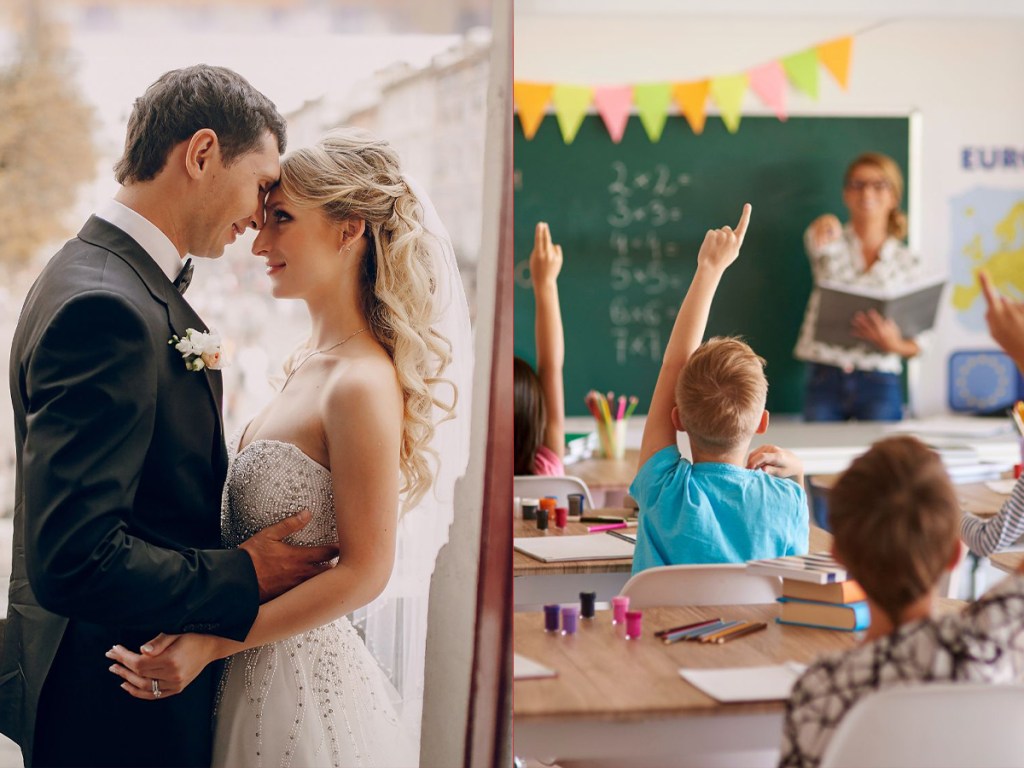
    A married couple (left) and students raise their hands (right). Photo credit: Canva

    Children form strong worldview opinions at a very young age. Naturally curious, their thinking and insights can lead to blunt but brilliant relationship advice.

    Klarissa Trevino, a second-grade teacher, had a fun idea: to ask her students for advice ahead of her marriage. In a TikTok post, she shared some of their favorite responses, which they were genuinely thrilled to share.

    @itsklarissat

    This was so cute to do with them before I came back as a “MRS” after spring break 🥹🤍 *TEMPLATE is NOT mine its from TPT #teachersoftiktok #weddingadvice #lifeofateacher

    ♬ original sound – ✶𝓵𝓸𝓾𝓲𝓼𝓮✶

    Teacher hands out worksheets

    Trevino wanted to find a way to involve her second-grade students in her wedding, so she printed out worksheets with the prompt, “The marriage advice I give my teacher is…”

    Sharing some of her favorite responses in a TikTok post, Trevino quickly went viral. She told People, “Being able to get a glimpse of their version of marriage and love was very sweet. It made me so happy that they have homes that have shown them the true meaning of it.”

    One of her favorite responses was, “do not eat each other’s snacks.”

    prompt, professional opinions, snacks, five-star, middle school
    Students write.
    Photo credit: Canva

    Marriage advice from second graders

    This is the best marriage advice these second graders had to offer—some might argue it’s as helpful and supportive as any professional’s opinion. Here are some of their responses to the prompt, “The marriage advice I give my teacher is…”:

    “to be kind and love each other.”

    “care and care for each other! Happy marriage!”

    “do not eat each others snacks.”

    “is to give her flowers.”

    “get her Starbucks evrey day.”

    “to take her on a date/ and go to a five star restraunt.”

    “care for [each other] And Love her. do not hurt her!”

    classroom, teaching, advice,
marriage, students
    Students raise their hands in class.
    Photo credit: Canva

    People are delighted by insightful second graders

    Viewers in the comments were delighted by the second graders’ advice, and some of their own responses were just as insightful as the kids’.

    “Kids are so smart.”

    “The best advice ever..”

    “Imagine how many marriages could’ve been saved if ppl just left eachother’s snacks alone”

    “This is legitimately better marriage advice than you see on TikTok.”

    “You should publish this, because people could really learn a thing or two from your students”

    “I’m teaching the wrong grade!!”

    “These are signs that these kids have wonderful parents and figures in there life’s …. and a wonderful teacher who loves and cares for them”

    elementary school, kids, friendship, meaningful insight, family
    Students pose for a picture.
    Photo credit: Canva

    Studies show that kids have meaningful insights

    These second graders shared straightforward, thoughtful insights. Yet research shows that children offering meaningful perspectives is nothing new. A 2025 study found that kids begin to understand other people’s feelings, beliefs, and even motivations at a very young age. They aren’t boxed in by adult expectations, which helps keep their thinking fresh and profound.

    A 2025 study found that even children as young as four understand far more than we might think. They’re capable of problem-solving and experience “aha!” moments that can make others grin.

    Kids often cut straight to the truth because they’re naturally curious. A 2025 study found that adults underestimate how organized children’s ideas can be. Like adults, kids’ beliefs shape how they act and feel, forming a worldview that is surprisingly detailed, consistent, and stable.

    These young students’ advice may seem simple, but that’s exactly what makes it so powerful. They remind us that kindness and honesty don’t require much effort to make a lasting impact on any relationship. Sometimes the truth comes from the smallest voices, and Trevino understood the value of listening.

  • Teacher spots suspicious bare feet under a school bench, but the ‘lockdown’ scare has a surprising explanation
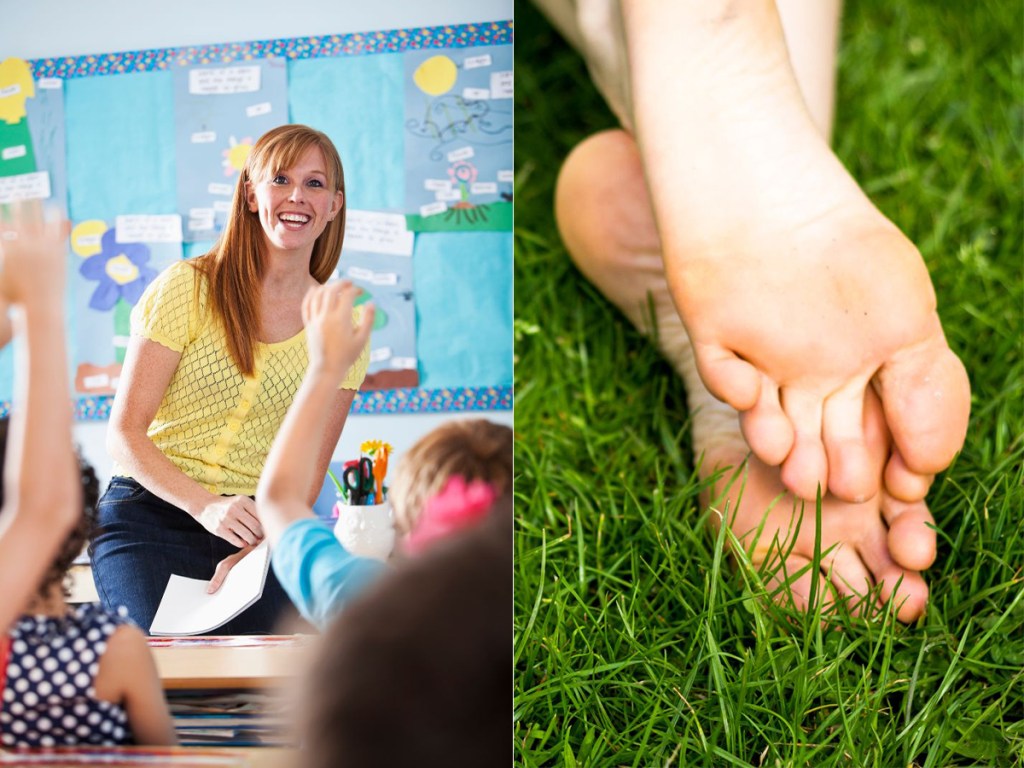
    A teacher (left) and bare feet (right). Photo credit: Canva

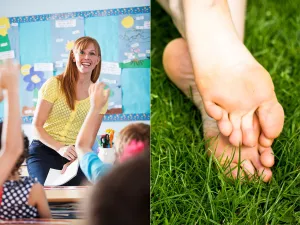
    Teachers are trained to expect the unexpected. One day, Alissa, a history teacher who posts on TikTok under the name @teachinginstyle, looked out the window of her high school classroom and noticed a pair of bare feet hanging from a school bench.

    She knew something wasn’t right. In a split-second decision most teachers hope they’ll never have to make, she locked her classroom door. Then Alissa called the school’s safety number, which nearly triggered a lockdown.

    “One: stranger danger,” she explained in a video. “And two, I have a room full of sixteen-year-olds that I need to keep safe.”

    @teachinginstyle

    STORY TIME ✨ how I almost caused a lock-down at my old school 🔒 HAPPY FRIDAY & SKI WEEK ❤️ #teachersoftiktok #teachertok #teacherlife #teacher

    ♬ Piano famous song Chopin Deep deep clear beauty – RYOpianoforte

    Nearly causing a school lockdown

    A pair of unfamiliar, bare adult feet resting on a school bench is enough to warrant further investigation by any responsible teacher.

    “Outside my classroom, there were these wooden benches. And kids would sit there during break,” she continued. “My class was quietly working, and I glance outside, and I see a pair of bare feet. Like just feet, sticking out from the bench.”

    Wondering whether it was a student and if they were okay, she headed outside to investigate, only to find an unfamiliar adult asleep on the bench. Immediately frightened, she recalled, “Three things come to mind. One: Are they alive? Two: Why is there a random adult on campus? And three: Oh my God, are we going to have to go on lockdown?”

    Alissa locked her classroom door and called the safety number, describing the situation over the phone. It turns out the feet belonged to a substitute teacher. She concluded, “It was a sub—a substitute teacher—taking a nap on the bench, like wanting to get some sun on the dogs (their bare feet). Oops. How was I supposed to know that?”

    education, teachers, school safety, campus awareness
    Teachers pose in the hallway.
    Photo credit: Canva

    A story that’s both chaotic and funny

    Viewers had mixed opinions about Alissa’s story. Some thought she did the right thing, while others were more concerned about the substitute teacher’s behavior. Here are some of the comments:

    “I would do the same…”

    “OK, but as a sub, I could never imagine taking a nap.”

    “not just any nap, a nap on a bench with your shoes off”

    “You are 100”

    “What on EARTH????”

    “there is NOT enough diet coke to handle this..”

    “I think anybody would’ve done the same thing in that situation”

    Training programs, campus safety, crisis, drills, preparedness
    A school building on a sunny day.
    Photo credit: Canva

    Prepared for school safety

    To prepare for the unexpected, teachers must go through training. A 2025 study analyzed a training program designed to help teachers and staff prepare for emergencies. The results showed that participants felt more psychologically prepared and ready to handle a crisis.

    It’s important for students to feel safe and prepared, too. But do the drills help, or do they cause more problems for kids? A 2023 study found that 27% of children said the drills made them anxious. Overall, caregivers still supported the preparation, even though some kids felt uncomfortable.

    bare feet, substitute teachers, school preparedness, lighthearted
    A teacher talks with students.
    Photo credit: Canva

    The substitute teacher’s bare-feet fiasco turned out to be far less dangerous than it first appeared, but it highlights a real challenge teachers face every day. Alissa’s story is a lighthearted reminder of the serious nature of school preparedness, though sometimes there can be a surprisingly simple explanation.

    Anyone with concerns about handling different kinds of disasters can visit the FEMA website, where many free preparedness videos are available.

  • Teacher chaperones a kindergarten field trip and shares 3 moments that perfectly capture how little kids think
    (LEFT) Curious kindergartener and (RIGHT) teacher caught off-guard.Photo credit: Canva
    ,

    Teacher chaperones a kindergarten field trip and shares 3 moments that perfectly capture how little kids think

    A middle school teacher, Mr. Lindsay, chaperoned his son’s kindergarten field trip to the zoo. He explains in his TikTok video 3 funny moments that perfectly capture how little kids think. If you ever need proof that young kids see the world a little differently, just listen to what they have to say on this…

    A middle school teacher, Mr. Lindsay, chaperoned his son’s kindergarten field trip to the zoo. He explains in his TikTok video 3 funny moments that perfectly capture how little kids think.

    If you ever need proof that young kids see the world a little differently, just listen to what they have to say on this field trip. From a silly animal mix-up to a candid family comment, this recap by Lindsay captures why kindergarteners are some of the funniest storytellers on earth.

    Excited To See The Leprechauns

    Lindsay describes the first experience, “A kid walks up to me, and he goes, ‘Mr. Lindsay, I can’t wait to see the leprechauns.’” Lindsay responds that the zoo doesn’t have leprechauns, to which the kindergartener says, “No, I’m serious, the leprechauns. The ones with the spots.” The child was talking about the leopards.

    A pretty cute mistake that commonly occurs with younger children. They often reshape unfamiliar words to fit sound patterns they already know. A 2023 study of speech-sound substitution in the National Library of Medicine explained that the near matches of words can be termed “markedness.” The simple mistakes gradually end after they gain better control of their mouth.

    kindergarteners, funny conversations, childhood, cute mistakes
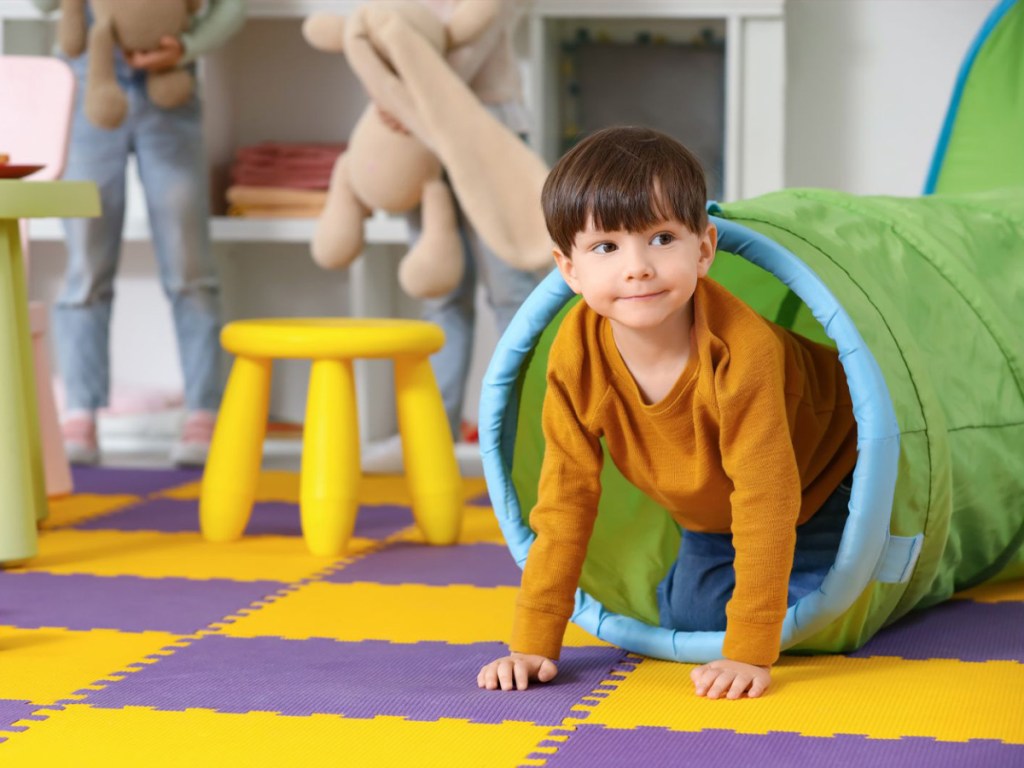
    Boy plays in a kindergarten playground tunnel.
    Photo credit Canva

    My Stepdad Is Much Younger

    In the second story, a kindergartner walks up saying that he is thirsty. Lindsay suggests getting some water when the kid suddenly stops, stares, and says, “My one dad is 53, but my other dad, who’s my stepdad, is 21.” Lindsay offers a surprised look to the camera after recounting the unexpected honest exchange.

    A 2024 study in Nature Human Behaviour reported that researchers studied kindergarten students to see whether trust would encourage honesty. They found that kids who were shown trust cheated less often. The research suggests that when adults instill trust in young people, they can encourage greater honesty.

    field trip, hygiene, healthy habits, education
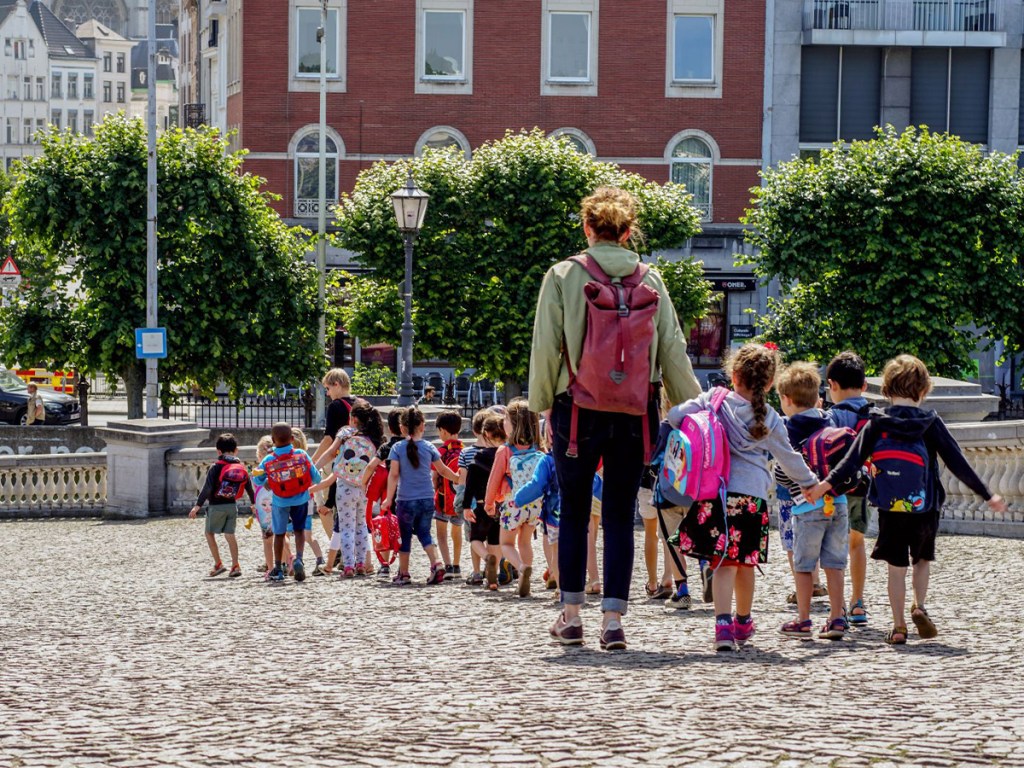
    Kids on a field trip walk in a straight line.
    Photo credit Canva

    Gross And Unfortunately Familiar

    In the third story, when he catches one of the kindergartners picking his nose, Lindsay tells the child not to do that. The kid then wipes the booger on the ground and exclaims, “Well, I wiped it on the ground. It’s natural.” Yikes. Lindsay wraps the video saying, “So, not much different than teaching middle schoolers, but some good moments.”

    Kindergarten-aged kids are still learning basic hygiene habits. A 2024 review in the National Library of Medicine found kids were especially vulnerable to infections because of poor hygiene. Teaching healthy practices like hand washing, body hygiene, and oral care in school helped children stay healthier.

    kids, honest communication, trust, stories, school
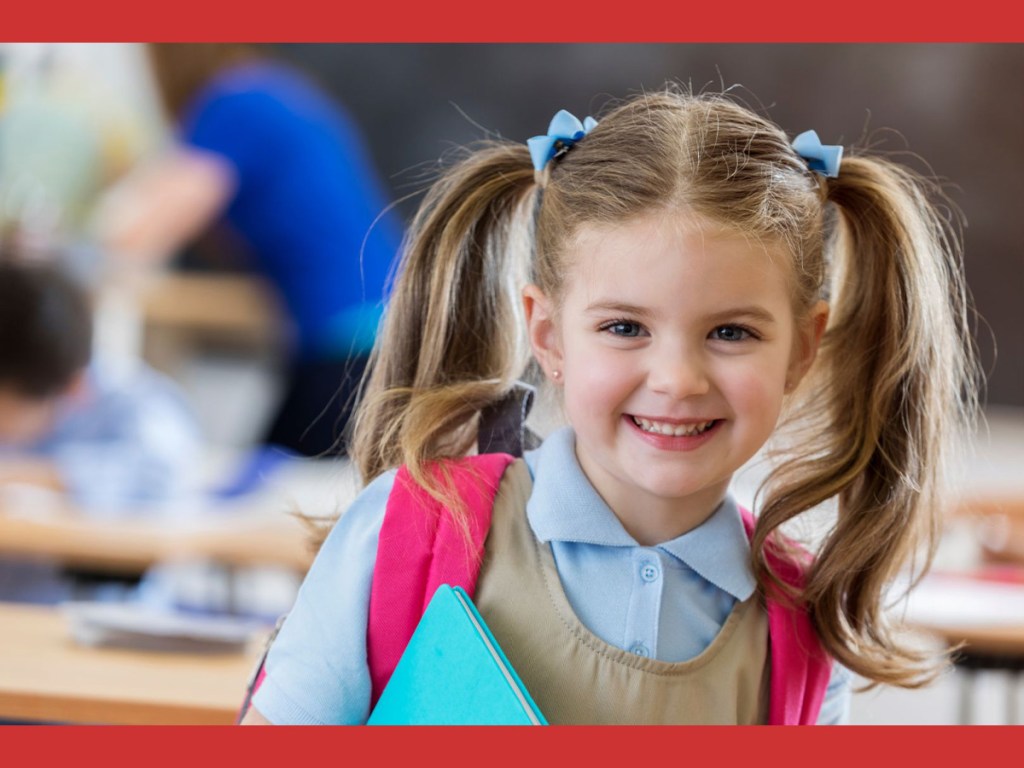
    Cute little girl smiles.
    Photo credit Canva

    Kids Speak Their Truth

    There were some cute comments from fellow TikTokers who appreciated the stories and added a few of their own:

    “My son started kindergarten in the fall of 2020 so it was it all virtual on google meets. There was a kid in his class that would occasionally pop on camera in a Batman costume and say ‘I’m Batman.’ It was hilarious.”

    “Bless Kindergartner teachers- hardest job of them all!”

    “And this is why I teach kindergarten.”

    “One of my pre-k students came over to me during indoor recess, I thought the kid need help or someone hit him, he was making a face, when I asked ‘What’s wrong’ he gave a serious look and proceeds to tell me ‘I just needed to fart’ it was a nasty one”

    “Yup, sounds like kindergarteners! “

    Kindergarteners may not always know the right thing to say, but they certainly can say the honest thing. It’s a good reminder that teaching young kids means being ready for absolutely anything. Lindsay’s video offers a fun way to remind us.

Explore More Culture Stories

Culture

Second-grade teacher asks her students for marriage advice. Here’s their 7 best responses.

Internet

Teacher spots suspicious bare feet under a school bench, but the ‘lockdown’ scare has a surprising explanation

Culture

Teacher chaperones a kindergarten field trip and shares 3 moments that perfectly capture how little kids think

Internet

13 heartbreaking and hilarious voicemails people refuse to delete