Reddit user u/Pixel__Detox, a 28-year-old woman living in a high-rise, shared how she overheard a French family openly judging her looks in an elevator—thinking she wouldn’t understand. Instead of reacting immediately, she waited for the perfect mic-drop moment.
A ride she won’t forget
A group of people share an elevator Canva
Returning home from an evening run, she entered the building lobby at the same time as a French-speaking family—a couple with their three sons, around 8 to 10 years old.
One of them held the door for her, and she thanked them in English before stepping into the same elevator.
“They were chatting in French, and since it’s my mother tongue, I could understand everything they were saying,” she explained.
Woman on elevator holds her hands over her ears. Canva
The group had a long ride ahead—more than 30 floors—when the father decided to ask his sons an unexpected question.
“He asked them in French if the woman in the elevator was pretty or not.”
An unexpected insult
At first, she thought she misheard—but then one of the boys gave his answer.
“I stopped breathing for a second, realizing fully that it was truly me they were blatantly judging.”
Freezing in disbelief, she debated her next move. With just a few floors left before she could escape the awkwardness, she had two choices: ignore it or seize the opportunity.
The ultimate elevator exit
A woman leaves an elevator Canva
As the doors opened at her floor, she made her choice.
Instead of confronting them, she turned around and—in flawless French—cheerfully wished them a nice evening before stepping out.
The family’s reaction? Pure shock.
“The look on their faces was priceless.”
A moment she’ll never forget
While she left quickly, she later wished she had held eye contact until the doors closed, just to let it sink in.
“I’ve dealt with rude comments before, but this moment was a chef’s kiss moment.”
For years, she had dreamed of a situation like this, where she could use her language skills to surprise someone who assumed she couldn’t understand them.
“I’m just saying, keep your language skills to yourself. You never know when it can come in handy!”
The internet celebrates her perfect response
Gif of Leonardo DiCaprio clapping
Reddit users loved the story, sharing their own experiences of calling out rude people in their own language.
“I’m a New Zealander and have never been formally taught French. I just lived in London for 16 years and worked with all nationalities. I would have understood that mean-spirited question instantly. I couldn’t have responded in anything but the most pidgin French, though!”
People tend to assume they can speak freely in their native language without being understood, but this story is a perfect example of why that’s a risky move.
For this French-speaking woman, what started as an awkward moment quickly turned into the perfect bilingual comeback.
And if that family learned anything that day, it’s probably to be a little more careful about what they say in elevators.
This article originally appeared earlier this year.
If you’re reading this, then your media feed, like mine, is probably full of cats.
That’s hardly surprising. The internet has always belonged to cats, which suits me just fine: I love cats and live with four of them.
But in one of the classes I’ve taught, Cats: Why We Love Them, I explain how our affection for the house cat, Felis silvestris catus, is a relatively recent phenomenon in the scope of human history. In many parts of the world, cats were viewed with suspicionand subjected to terrible mistreatment.
Of course, the ancient Egyptians loved cats – this can be seen in sculptures, paintings and even mummified cat remains. Meanwhile, premodern poets, writers and artists were among the first to wonder about the inner lives of cats – and to explore how caring for them might expand our capacity for empathy.
One of the earliest literary accounts of a cat is the ninth-century poem “Pangur Bán,” written by an unnamed Irish monk. In the poem, he describes the parallels between his devotion to hunting for meaning in the texts he is studying and the cat’s devotion to hunting mice.
What’s interesting about the poem is how the anonymous poet sees the cat as possessing qualities that resemble human qualities – and, in doing so, implicitly suggests that cats have dignity much like human dignity.
The monk does not set himself above the cat in some great hierarchy of life, but instead places himself alongside the cat as peers in their dedicated practices.
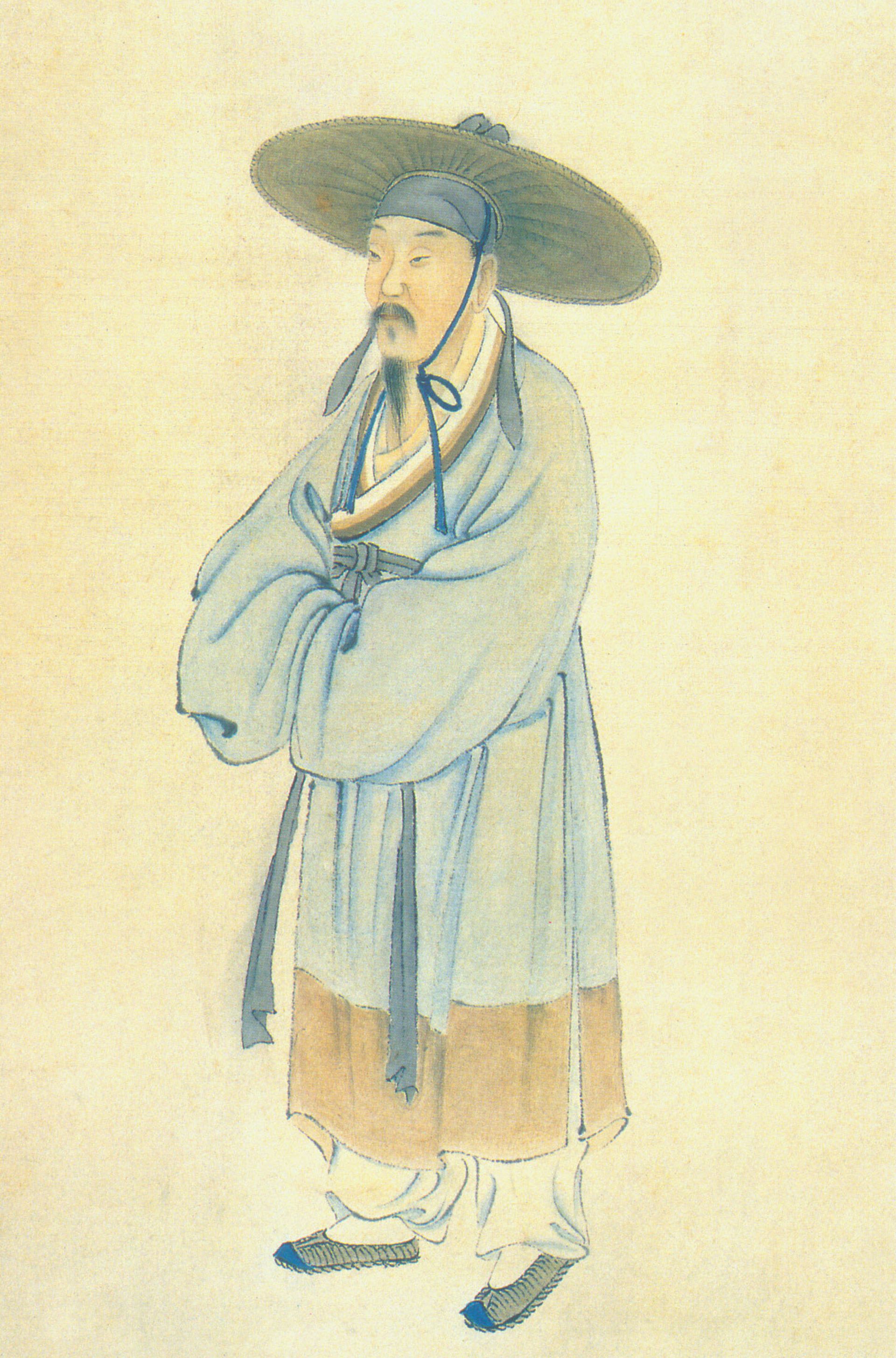
In the 12th century, the Chinese poet Lu You composed over 9,000 poems. A handful were about his cats, and of these, three are entitled “Zeng mao,” or “Presented to My Cat.” It’s not clear if the poems are all about the same cat, as Lu had more than one cat over his lifetime.
In Chinese literature, poems that include the term “zeng” – “to present” – are often sent to acquaintances as a form of literary exchange. Prior to Lu, there’s no literary evidence that anyone had addressed a poem to a cat.
In the first poem, Lu begins by explaining that he acquired a cat to protect his library from vermin. Looking around his home, he feels embarrassed by his lack of success in life:
I’m ashamed that I’m poor and my achievements few,
When you’re cold there’s no rug, when I feed you there’s no fish.
In the second of these poems, a longer eight-line poem, the poet accuses his cat of poor feline behavior familiar even today:
You frequently get drunk from catnip,
You commandeer the blanket every night.
But he follows with praise for the cat’s achievements:
Deeds of the mousehole – just now recounted,
Rewards of fish morsels – how could these be omitted?
He ends by naming the cat:
Still, I should give you a name,
I’ll call you “Little Tiger.”
Lu chooses a name that probably was given to countless cats in premodern China. But by ending the poem with the act of naming, he is emphasizing how this cat is an individual to him, known to him by this name and none other.
Poet and cat, late in life
The relationship that Lu depicts between cat and human will be familiar to anyone who has fought with their cat over who gets the blanket or wondered what their cat might be thinking.
The third poem, translated here in full, finds the cat late in its life, with its days chasing mice long behind it. Its poignancy is amplified by the fact that Lu composed it in the last year of his own life:
As for catching mice you lack merit, but I never complain,
A ladle of fish and rice will come at the usual time.
Throughout the day I see you sleeping peacefully,
So why am I always coming and going?
Lu sees himself through the bemused eyes of the cat, who’s perhaps wondering why this foolish old man is rushing to and fro, fulfilling goals and seeking praise, when he might just be satisfied with what he already has.
And despite his cat’s indolence, Lu continues to cherish his feline, making sure to regularly serve its dinner. This is significant, given that other premodern Chinese writers viewed cats primarily as vermin-catchers that should be replaced once they outlive their usefulness.
Imagining oneself as a pampered cat will be familiar to those of us who live with cats – a thought-experiment that is tinged with more than a little envy for the capacity to live in the moment, without anxiety over the future.
Lu’s care for his cat affords him the possibility of imagining a nonhuman animal mind. The poet learns something from his cat in the end, as he imagines the world through the cat’s eyes and, in doing so, perhaps finds a measure of solace.
Lu does not speak in the language of what philosophers call moral personhood. He is not reflecting on the broader ethical question of which creatures deserve to be treated with care and respect.
But I argue that his actions nonetheless demonstrate how he treats his cat as somewhat of an equal. This can be seen, not least of all, by how he addresses poems to his cat, an act of social exchange that was heretofore reserved for literary interactions with other human beings.
Personhood – the recognition of an individual as deserving of dignity – is often assumed the sole province of human beings. But philosopher María Puig de la Bellacasa has promoted a worldview that she calls “more than human thinking,” which urges people to broaden their scope of moral concern, and in this way, enlarge human capacities for care and love. The philosopher Lori Gruen similarly conceives of an “entangled empathy,” calling attention to the complex relational intimacies that bind human and nonhuman animals together. They insist that human lives are better when the sphere of care and concern is extended to those creatures with whom human lives are entangled.
Born in the 12th century, Lu You could not be expected to argue for animal rights. But he clearly understands that his cat has claims to happiness, pleasure, comfort and companionship, and that while the cat might see the world differently than he does, that doesn’t diminish its claim to empathy and love.
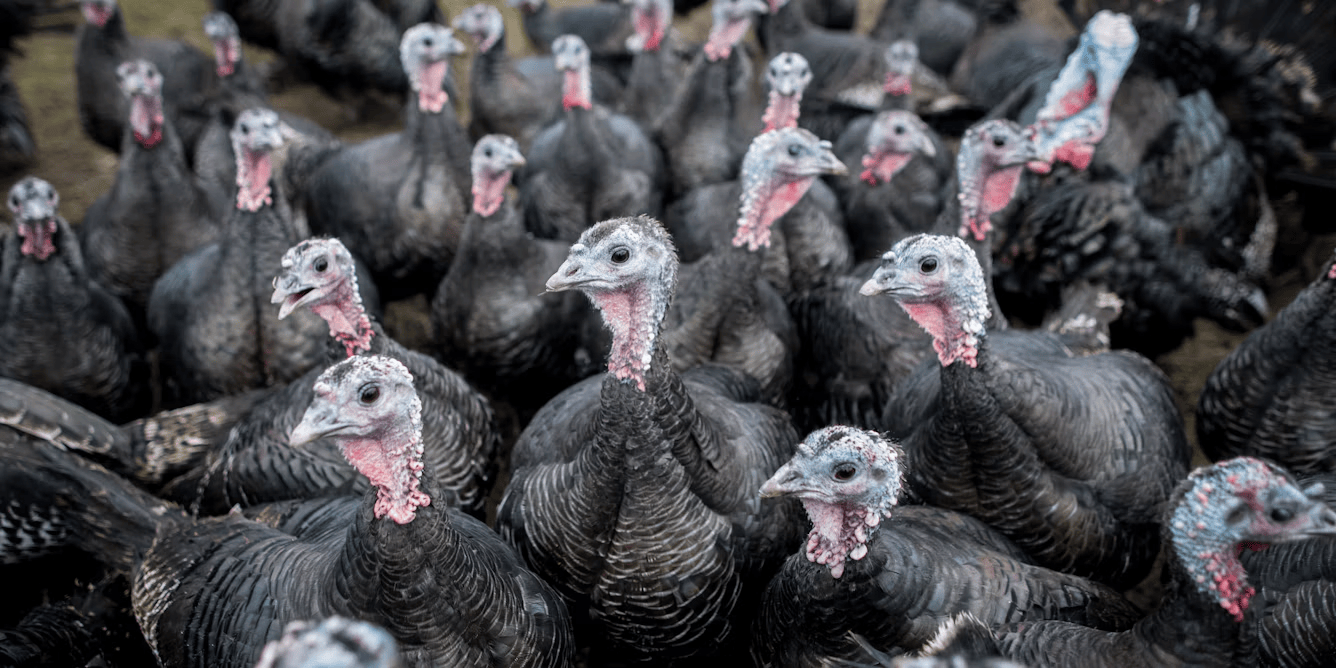
“Meleagris Gallopavo Day” is a bit of a mouthful. Which may be why this Thanksgiving, most people will opt for the less ornithologically precise “Turkey Day.”
And just as turkey is a versatile meat – think of those leftover options! – so too is the word “turkey,” which can refer to everything from the bird itself to a populous Eurasian country to movie flops.
As a scholar who studies word origins, I love “talking turkey” – not only how the bird came to be named, but also how the word has evolved over time. But let’s start with what has become the centerpiece of most Thanksgiving Day dinners.
Europeans glimpsed their first turkeys around 1500, when Spanish explorers arrived in the Americas and brought them back to the mother country. By the 1520s, turkeys were being bred in Spain, and soon the delicacy was appearing on rich people’s tables across Europe.
Oh, dinde!
But what to call the new import? Europeans in the New World were overwhelmed by the new plants and animals they saw, and often used familiar names for unfamiliar species. The Spanish, for instance, thought turkeys looked like peacocks, so they used the Spanish word “pavos.” The French called them “poules d’Indes,” or Indian chickens, later shortened to “dinde.”
To the English, the newly discovered American birds looked like the guineafowl – a bird native to Africa but which was introduced into Europe by Arab and Turkish traders in the 14th and 15th centuries.
And it is this point in the story that the modern-day turkey gets its name.
The Ottoman Empire was then at its height. Ethnic Turks, based in Constantinople (now Istanbul), ran the empire that spanned the Near East, Middle East and North Africa. As a result, to many Europeans, anyone from “the East” was a “Turk.”
Because Ottomans dominated trade in the eastern Mediterranean, a lot of produce coming to Europe was seen as “Turkish.” So a precious stone from Persia was named “Turkey stone,” and the French version of that name, “pierre turquoise,” gave us the word “turquoise.”
In the same way, African guineafowl, introduced by Turkish traders, became a “turkey-cock” or “turkey-hen.” Over time, this was shortened to just “turkey.”
Now that’s a feast!
For as long as the New World turkeys have been in Europe, they’ve been featured in celebratory meals. The English word first appears in print in an account of a banquet hosted by politician John Prideaux in 1555: The menu included 38 red deer, 43 pheasants, 50 quince pies, 63 swans, 114 pigeons, 120 rabbits, 840 larks, 325 gallons of Bordeaux wine and “Turkies 2. rated at 4s. a piece.”
History’s most famous turkey dinner, though, was served in Plymouth Plantation in 1621, as 50 Pilgrims who survived a year of brutal hardship joined 90 Native Americans for a three-day feast. Turkey wasn’t the only dish being served. Writing in his History of Plymouth Plantation, Governor William Bradford noted that Native Americans brought “codd, & bass, & other fish,” and others brought “water foule” and venison. But he was especially impressed with the “great store of wild Turkies.”
The bird has become so associated with harvest-time celebratory dinners that we’ve been calling Thanksgiving “Turkey Day” since at least 1870.
Meanwhile, the word has continued to find new uses, showing up with dozens of meanings. In 1839, the Southern Literary Messenger – a magazine edited by Edgar Allen Poe – reported on a new kind of dance, called the “turkey-trot” from its jerking motions.
In 1920, New York’s Department of Health reported that “Some addicts voluntarily stop taking opiates and ‘suffer it out’ … which in their slang is called taking ‘cold turkey.‘”
The turkey’s reputation for stupidity prompted other meanings. The legendary gossip columnist Walter Winchell told readers of Vanity Fair in 1927 about some new showbiz slang: “‘A turkey,’” he reported, “is a third rate production.”
Since then, movies that flop with the critics or at the box office have been called turkeys.
Another disparaging sense arrived in the 1950s, when turkey became a name for “a stupid, slow, inept, or otherwise worthless person.” That, in turn, probably led to the rise of the “jive turkey,” which first showed up in African American speech in the early 1970s, defined by slang lexicographer Jonathon Green as “an insincere, deceitful, dishonest person.”
Jive or straight talking?
And what about “talk turkey”? Well, that can mean quite contradictory things.
One dictionary from 1859 defines it as “To talk in a silly manner, talk nonsense.” A similar meaning is attached to another turkey-related word, “gobbledygook.”
Another definition found in the 1889 “Americanisms, Old & New” had “talking turkey” meaning “To use high-sounding words, when plain English would do equally well or better.”
The most familiar meaning of “talking turkey,” in which it is a stand-in for “straight talk,” is often said to come from a once popular joke. A white man and an American Indian, the story goes, spend a day hunting together and manage to bag a turkey and a somewhat less bountiful buzzard. The devious white man proposes a “heads-I-win-tails-you-lose” division of the spoils. “I’ll take the turkey, and you the buzzard,” he says, “or, if you prefer, you take the buzzard, and I’ll take the turkey.” The frustrated American Indian replies – usually in some version of would-be comic pidgin English – “You talk all buzzard to me, and don’t talk turkey.”
Those who study word histories are skeptical of stories like this, since most are invented after the fact. More likely, “talk turkey” came from pleasant conversation at Thanksgiving dinner, or maybe negotiations between Native Americans and European colonists over the cost of poultry. Whatever the origin, though, when we “talk turkey,” we’re engaging in the kind of straightforward, honest speech the scheming hunter denied his hunting partner.
Lecturer of Art, Rochester Institute of Technology
Glass as a material is full of contradictions. Depending on the form and use, glass can be fragile or strong, opaque or transparent, rough or smooth. The studios my colleagues and I teach and learn in, as glass instructors, echo this abundance of physical opposites. These environments are simultaneously immersive, complex, seductive and demanding.
When the studio is in action, you might hear glass breaking, hot metal being quenched in water, glassblowing pipes rolling on the workbench rails, and some good tunes on the stereo. You might smell hot beeswax and burning newspaper. You might feel a bit of waste glass under your shoe or the intense heat from the furnaces and a breeze from a well-placed fan. Glassblowers learn to listen, to feel and to find some focus within and among the kinetic.
The constant stimuli of the glass studio may not seem anything like a sterile science lab, and yet glass artists need to accrue knowledge of physics and chemistry to achieve any kind of control with this dynamic material. They must choose a material with the desired properties and during the process judge factors such as heat and malleability.
Glass as a material
At Rochester Institute of Technology, where I help run the glass program, we primarily use two types of glasses. In our hot glass studio we melt “soft” glass. This glass is specifically formulated to be melted in a furnace and used by the glassblower. It’s a combination of fine mesh silica sand, soda ash and lime, with small amounts of a few additional ingredients that keep the glass beautiful when it’s at its top temperature of 2,200 degrees Fahrenheit (1,204 degrees Celsius).
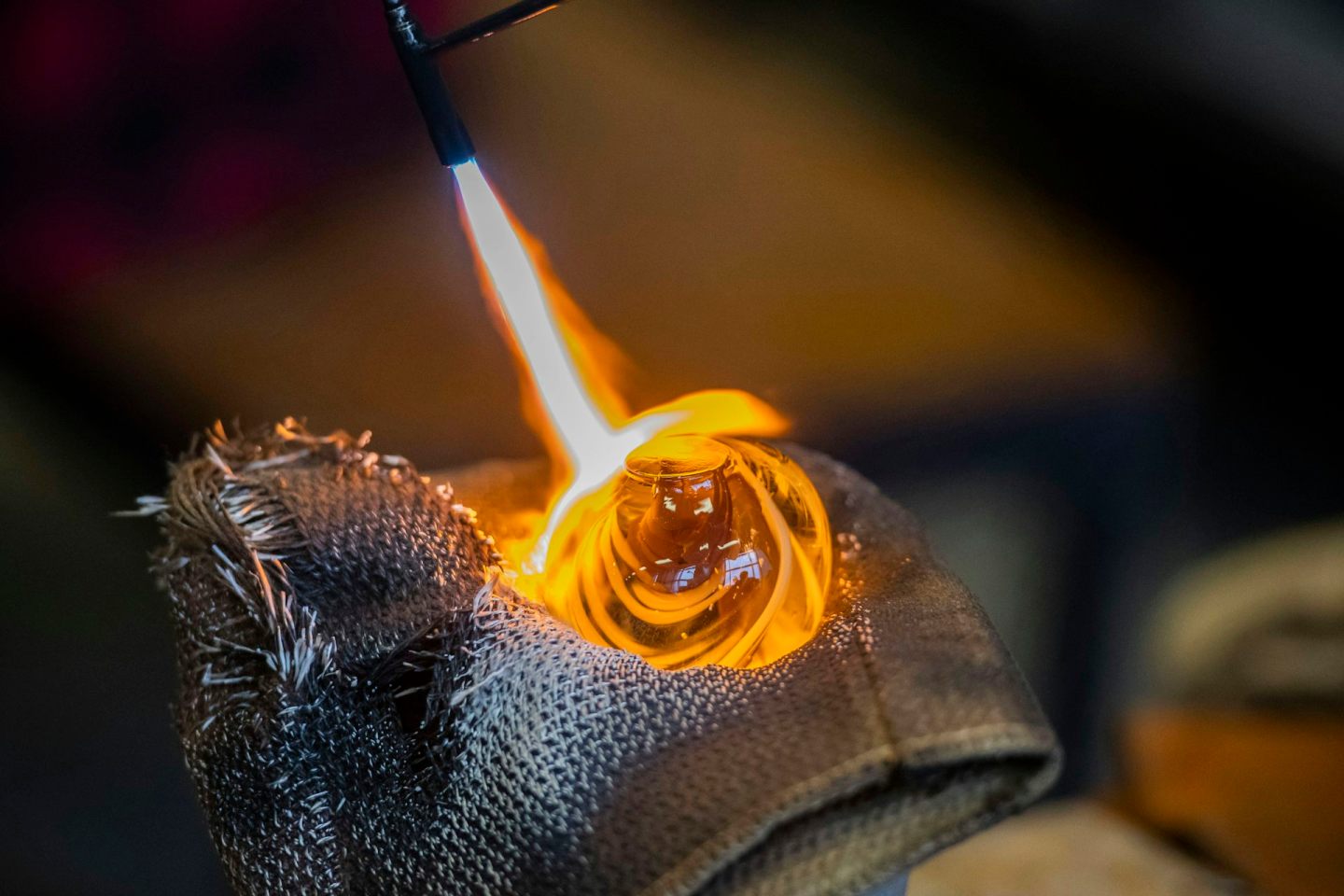
In our flameworking studio, we use a borosilicate glass. You might recognize this glass as the brand Pyrex made in Corning, New York. This is a super heat-resistant glass. It melts at a higher temperature than soft glass and arrives to our students in preformed rods that they can melt and shape by torch in our flameworking studio. The differences in chemistry really change how these glasses look and behave.
Pyrex cookware is made out of a specially formulated, heat-resistant type of glass called borosilicate.Picofluidicist/Wikimedia Commons
Glass, from a material science perspective, is categorized as an amorphous solid, meaning that glass’s molecules are arranged in a near-random pattern and there is no sharp melting point. Rather, glass gradually softens over a wide temperature range.
Gathering glass
Once you’ve adjusted to the chaos of the studio, it’s time to start working.
We have two furnaces in our hot glass studio, where we work with soft glass, so anytime during the school year there is between 700 to 1,200 pounds of glass. It’s kept in the furnace at its molten state (2,200 degrees F or 1,204 degrees C), ready to be gathered and transformed.
Glass artists heat up their glass in a furnace so that it’s molten and easy to mold.AP Photo/Keith Srakocic
When we work with the material, transforming it with tools and breath and heat, it needs to be kept in a workable heat zone – probably between 1,100 and 2,000 F (593 and 1,094 C). When the glass dips below that range, we perceive it as solid, though at the molecular level it is still dynamic and acting more like a liquid.
To make anything – a sculpture, a tumbler, a celestial magical orb or a pumpkin – you start by gathering glass out of the furnace on a metal rod. Once you’ve gathered your glass, you start making decisions.
An artist works in the Glass Hot Shop at RIT. When glass is in its molten state, the artist can shape it and blow into it.Elizabeth Lamark/RIT
You might ask yourself: What tools do I need to begin to shape and transform this glass into the object I have in mind? If you wait too long and the glass begins cooling down, you’ll need to reheat it to reintroduce malleability, allowing you to continue working it without breaking it.
A big part of glasswork is moving between the reheating chamber and the bench, where the artist uses tools to move and stretch the molten glass into the desired shape. You’ll need to alternate between these two stations many times.
Glassblowing is a team activity. I have physical and intellectual support from my colleagues: breath from their lungs, protection from the heat, additional bits of glass brought from the furnace to add to my object. We almost never work alone.
So, say I want to make a very basic clear tumbler. This is a simple conceptual object – utilitarian, domestic and intimate. It is also a tricky one to make well: too heavy and it feels bad in the hand, too thick at the lip and it dribbles when you drink, too thin at the bottom and it will break before it is complete.
Maybe I want to design it so it is slightly conical: wider at the bottom than the top, so it’s less likely to tip over. Maybe I want it to have a little indent for the user’s thumb as a gentle invitation to her hand. First I make my design: I draw it. I share it with my team so they can predict the process and the object’s needs. Then we begin.
Working with physics
I gather glass out of the furnace, let it cool a bit, then introduce a bubble in the glass by blowing into the pipe, the hollow rod that attaches to the object I’m making. I reheat, sit at the bench and begin to shape the glass using both gravity and the Jills, a cooling and shaping tool. The Jills is kind of like a large pair of tongs. It hasn’t changed much in design for 2,000 years.
I ask for some air from my teammate, and she blows into the pipe while I’m shaping the glass. The bubble transforms into a pill shape, slightly wider at the bottom. I constrict the area right in front of the pipe. I’m focusing on shape and heat, taking care to not let the glass get too cold. If the glass drops to about 1,000 F (538 C), it enters a danger zone. If it’s not yet finished, it needs to be warmed up in the reheating chamber; or if it is done, put away in a kiln to cool slowly.
If glass cools too quickly, the molecules freeze into a chaotic pattern, which causes stresses that result in fracture. To combat this volatility, when the glass object is done and ready to be cooled, we place the object in an annealer: a kiln set to a resting temperature of 930 F (500 C).
This temperature is like a Goldilocks zone for our glass: It’s not so hot that the glass will deform, but not so cool that the glass will stress and break. Once the kilns are full, a computer guide takes them down to room temperature over about 10 hours.
As I continue to work on my cup, I get more heat, focusing on the very end of the bubble – the part that will be the base of the cup. I then sit down and have another member of my team flatten the bottom with a wooden paddle while I tool the glass with the Jills to keep its shape. The cycle continues on and on.
The process is quick, but also there are so many little steps that it would take nearly a full-length book to describe them all. When asked how long it takes to make a tumbler, I’ll often answer, “About 10 years or 10 minutes, depending on how you think about time and material knowledge.” This is both glib and true. Glass demands attention, dedication and a willingness to make connections between physics and chemistry and your observable experiences. It is a highly challenging and equally rewarding material to work with and alongside. I count myself very lucky.