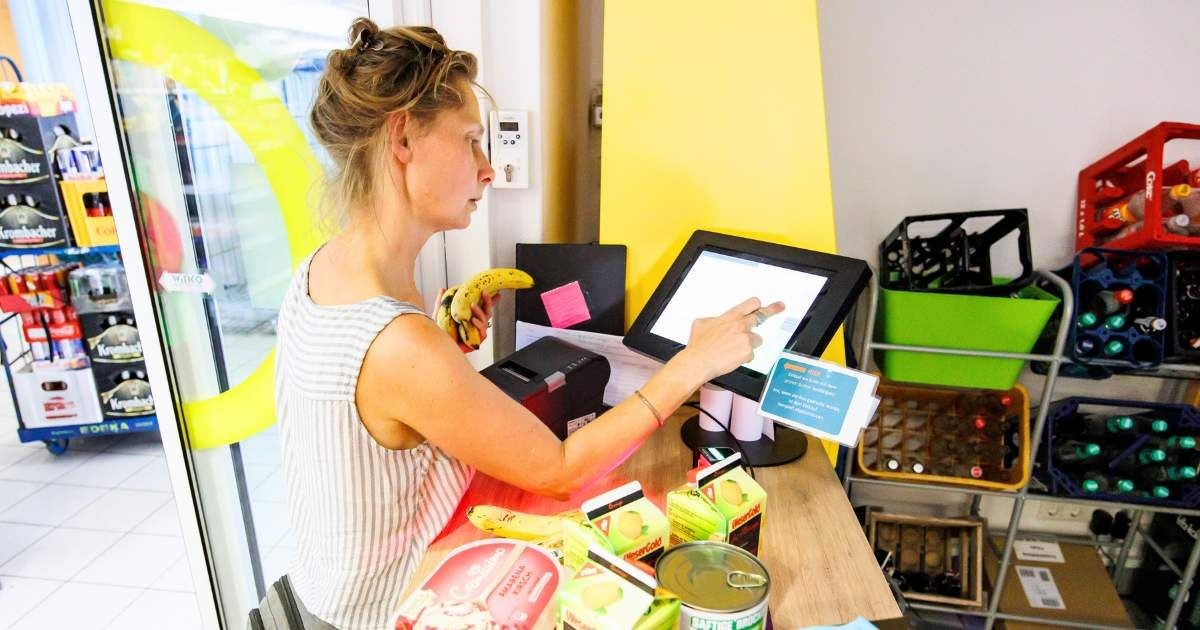
Ever since a supermarket rolled out its self-checkout machines in the 80s, the technology has revolutionized the consumer experience. In 2023 alone, more than 217,000 self-service terminals were delivered globally, with the highest demand coming from the United States, as per a report by Grocery Dive. Global installation of self-checkout machines is estimated to reach 2 million by 2029. However, despite the convenience that it brings to the counter, the technology seems to have certain loopholes that leave room for shoplifting, among other things. In a video uploaded on TikTok, a legal expert and criminal defense lawyer, Carrie Jernigan (@carriejernigan), advises people to avoid self-checkout registers in stores.

Representative Image Source: Young Asian woman with a reusable shopping bag, using contactless payment via smartphone to pay for her shopping at self-checkout kiosk in a store (Getty Images)

The idea for this video originated from one of her previous TikTok videos in which she described three things that she would never do as a lawyer. Of all the things she mentioned, people seemed most interested in learning about “self-checkout,” prompting her to post a follow-up video. “As a criminal defense attorney, I advise most people to steer clear of self-checkout,” she says in the video and goes on to describe three kinds of people who are charged with shoplifting using self-checkouts at a store. The first are those who go to the store with the intent to steal. About them, Carrie says, ”Though sophisticated thieves still get away with this, weight sensors and cameras have made stealing more difficult.”
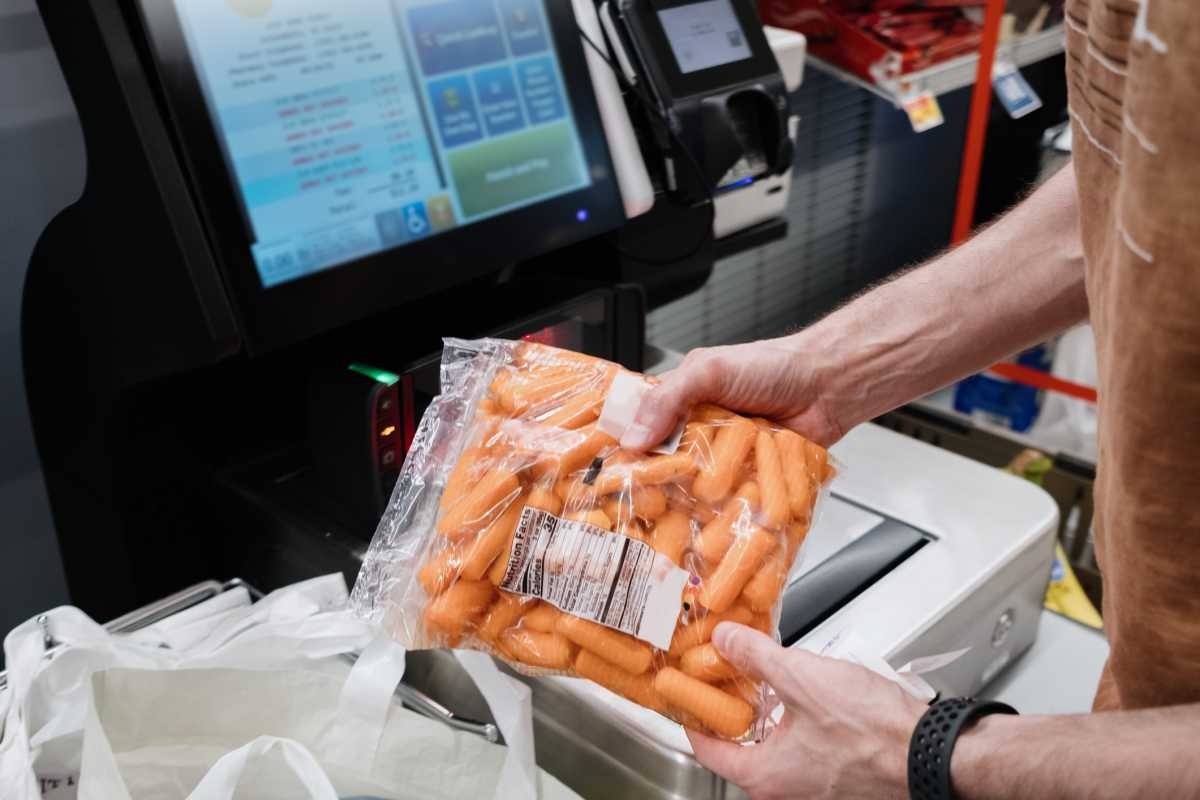
Representative Image Source: Close-up of unrecognizable white man purchasing groceries at self-checkout kiosk in supermarket (Getty Images)

About the second group described as the “theft-by-mistake” group, she says, “These are the people that I genuinely think just forgot to scan an item,” before listing an example of someone accidentally leaving something at the bottom of a shopping cart. Despite the potentially innocent mistake, these people do frequently face charges, “because the big-box stores aren’t going to spend their time and resources trying to figure out if you did it on purpose,” Carrie adds.
Representative Image Source: Self-checkout sign hanging from the ceiling of an unidentified suburban supermarket. (Getty Images)

The third are people she tags as the “truly innocent,” most of whom according to Carrie, “are not getting charged day off.” But the problem emerges when someone from the asset protection department of a store starts counting inventory, perhaps days, weeks, or months later, and comes up short. “So they will begin watching hours of video to see the last person who checked out with the Mario Lego set because there’s two short or an Xbox game. And, for some reason, they pinpoint that they think you did it,” she explains. She adds that megaretailers like Walmart usually have to present very little evidence to get an affidavit for warrants on the charges. “The charges that could land you up to a year in jail,” she warns her followers. “You have to spend thousands of dollars hiring a lawyer and we have to go through grainy video footage to try to determine what all you bought that day.”

Representative Image Source: Male lawyer working with contract papers and wooden gavel on tabel in courtroom. justice and law ,attorney, court judge, concept. (Getty Images)

Instead of using self-checkout, Carrie advises people to pay with a card for larger purchases and to always keep proof of purchase. Thousands of people found the video informative and said in comments that they’d avoid the self-checkout option after watching it. “Wow! I will never use self-checkout again. thank you for this,” commented @beads04.


via GIPHY


Others expressed confusion and uncertainty, saying that most Walmart stories provide only the self-checkout option. “Our local Walmarts are going to nearly all self-checkout. And often the few manned registers are closed,” said @witchymermaid1986. Recalling an experience with using self-checkout and getting charged with shoplifting, @beckoreily wrote, “My mom accidentally left a tiny $3 lemon oil in her cart after buying $300 in groceries. She was charged with theft and had to do community service.” Amid this Catch-22 scenario, @gamecockryan110 suggested, “Stores shouldn’t be so cheap to have self-checkout. I always refuse to use it and make them ring me up.”

Image Source: TikTok | @redheadheifer

Despite the many flaws in self-checkout, the tech is here to stay since companies like Walmart, Kroger, Dollar Store, and even Amazon have already embraced the concept, according to CNN. But there are also companies like Uniqlo, a Japanese clothing brand, that has upgraded its technology to make the self-service experience less frustrating for its customers. Using radio frequency identification chips (RFID), the company has made it possible for customers to skip the hassle of kiosks, handheld scanners, and smart carts. They just need to deposit all their clothes in a basket, where all the barcodes will automatically be scanned and billed by the machine.


@carriejernigan1

Reply to @afamily20202 I have no idea why it cut off ♬ original sound – LAWYER CARRIE


You can follow Carrie Jernigan (@carriejernigan) on TikTok for legal advice and tips about day-to-day things.


  • Woman at airport quietly pays for dad who couldn’t afford toddler’s $700 ticket
    A woman pays at the counterPhoto credit: Canva
    ,

    Woman at airport quietly pays for dad who couldn’t afford toddler’s $700 ticket

    Debbie Bolton didn’t introduce herself or ask for thanks, she just handed over her card.

    He had done the math when he booked the flight. His daughter was under two, which meant she could sit on his lap for free. By the time they got to the check-in counter at Omaha’s Eppley Airfield, she was two, which meant she couldn’t.

    The ticket agent broke it to him simply: his daughter needed her own seat, and that seat would cost $749. The man stepped away from the counter, hugged his daughter, and started making calls. He’d told the agent he couldn’t afford to rebook his own ticket, let alone buy a second one. A fellow traveler who witnessed the scene, Kevin Leslie, later described what happened next on Facebook: “He was hit with emotion. He mentioned he couldn’t afford to rebook this flight or get her the ticket with such short notice. He stepped aside and tried to make a few calls. Hugging his daughter and grabbing his head, you could tell he was heartbroken.”

    That’s when the woman standing behind him in line spoke up.

    airport, line, airplane tickets, luggage
    Travelers wait in line at the airport. Photo credit: Canva

    “I wanna buy her ticket,” she told the agent, pointing to the little girl. The agent, caught off guard, double-checked: “You know how much this ticket costs, right?” The woman said yes. She pulled out her credit card and told the agent to charge it.

    The man asked for her name so he could pay her back. She told him not to worry about it and walked away.

    Leslie posted about what he’d seen, and the photo he’d taken began circulating on Facebook, eventually racking up tens of thousands of shares. People wanted to know who the woman was. Within hours, she was identified: Debbie Bolton, co-founder and Global Chief Sales Officer of Norwex, a sustainable cleaning products company.

    The story resurfaced in a big way in November 2025, when TikTok creator Bo Grant (@marriedtoalunatic) shared a video about it that went viral all over again, introducing the moment to millions of people who’d never heard it.

    @marriedtoalunatic

    Woman Identified as Debbie Bolton after interaction with a stranger and his 2 year old child is caught on camera #karma #kindnessmatters #norwex #heartwarming #debbiebolton

    ♬ original sound – Bo Grant

    Bolton, who spoke with Newsweek about the incident, said she noticed the father growing increasingly distressed at the counter and felt she had to do something. “He seemed like he couldn’t afford it and was traveling to visit family,” she said. She described the decision as straightforward. “I always ask myself every day, ‘Whose miracle can I be today?’” she said. “That day I was given the opportunity to be a miracle for someone else and I took action.”

    She said she hadn’t expected the story to travel as far as it did. “I honestly didn’t expect the story to resonate with so many people,” she told Newsweek. “My only intention was to help someone in need.” When Norwex confirmed her identity to CBS News at the time, the company’s chief marketing officer Amy Cadora said they were “very proud” of her. “She’s kind, caring and generous,” Cadora said. “That’s why none of us was a bit surprised.”

    @norwex

    “In a world full of Karens, be a Debbie!” Today, our Co-Founder Debbie Bolton is sharing a special message straight from the heart. 💚 We want to thank you for the incredible outpouring of kindness, messages, and support after her airport story touched so many this past weekend. As we head into the busiest time of year, we challenge you to look for simple opportunities to show kindness. It’s woven into everything we do at Norwex, from our home office to our Consultant community that Debbie has helped nurture since 1994. One person alone can’t change the world…but together? Together we can create something extraordinary. 💚 #norwex #sustainability #cleanhome #cleanliving #thankyou

    ♬ original sound – Norwex

    This article originally appeared earlier this year.

  • A couple sat in an Olympian’s seat and asked her to swap. She has a name for exactly what they were doing.
    An airplane cabin filled with passengersPhoto credit: Canva

    Cynthia Appiah just got back from competing at the 2026 Winter Olympics in Milan. She finished 13th in the monobob and 14th in the two-woman event at the Cortina Sliding Centre, racing alongside brakewoman Dawn Richardson Wilson. A few years before that, she was on a flight from Toronto to Calgary when a couple decided her seat looked better than their own.

    Appiah is a national team athlete whose training means she flies between the two cities constantly. Over the years she’s accumulated enough airline points to occasionally upgrade, and on this particular flight she’d used some to book a premium economy aisle seat. She chose the aisle specifically so she could move around freely during the four-hour flight without climbing over anyone. She paid for the upgrade at the time of booking, as she always does, because she doesn’t want to be an inconvenience to other passengers.

    She boarded, found her row, and discovered a woman already sitting in her seat. The woman’s boyfriend was next to her in the adjacent window seat. Appiah triple-checked her ticket. The seat was hers.

    airplane, plane

    When she pointed this out, the woman acknowledged it without much embarrassment. She knew she was in the wrong seat, she said. She was just wondering if Appiah might not mind switching with her own seat, just one row back, so she could sit next to her boyfriend for the flight. Her seat was also premium economy, but it was a window seat.

    Appiah’s answer was no.

    “I told her, nope, I paid for this seat. I would rather stick with my seat,” she said in the TikTok video, as reported by Narcity Canada. “I was just like, I bought the aisle and I’m not moving.”

    The woman was upset, but as Appiah noted, she knew there wasn’t much of a fight to be had. She moved. The flight proceeded.

    Appiah posted the story to TikTok under the caption “Seat selection is your friend. I promise you,” and it spread rapidly, resonating with the sizable portion of the traveling public who have been in exactly her position. What made her framing stand out was a phrase she used for what the couple had attempted: “Nice bullying.” The strategy of occupying someone’s seat and then sweetly asking them to accommodate you, banking on social pressure to make refusal feel rude. As Appiah put it, people should not “kindly ask, but really bully, people into giving up their seats.”

    Her point wasn’t that couples shouldn’t want to sit together. It’s that the time to sort that out is before the flight, not after someone has already paid for the seat you’re sitting in. “If you don’t want to pay for seat selection, then that’s up to you and you deal with the consequences,” she said.

    The response in the comments was largely in agreement. A Delta flight attendant with 28 years of experience said that seat swaps are only really reasonable when they involve seats of equivalent value. A window seat for a window seat. An aisle for an aisle. Asking someone to trade a paid aisle upgrade for an unrequested window seat is a different thing entirely.

    Appiah grew up in Toronto public housing, the daughter of Ghanaian immigrants, and was introduced to sport through a Blue Jays community outreach initiative in her neighborhood. She made Canada’s national bobsleigh team through years of work, competed at the 2022 Beijing Winter Olympics, and has now completed her second Olympic Games in Milan.

    She also recently competed on Jeopardy, incorrectly answered a question about Tim Hortons, and says she may never fully recover. She is, by all available evidence, exactly the kind of person who is going to politely but firmly keep the seat she paid for.

    You can follow Cynthia Appiah (@cyndiesel) on TikTok to learn more about her daily life as a bobsleigh athlete. 

    This article originally appeared earlier this year.

  • History teacher is trying to break the ‘Gamification’ of education
    (LEFT)Teenager bored with a videogame and (RIGHT) a concerned teacher.Photo credit: Canva
    ,

    History teacher is trying to break the ‘Gamification’ of education

    “Say it louder for the people in the back, yes sir!”

    A complex and unflattering conversation is happening around education. Jonathan Buchwalter, a history teacher posting as jonstertruck on TikTok, argues that learning has been reduced to a simplified game. In trying to make learning more accessible, students have increasingly been guided toward a “gamification” of education.

    In his video, he describes students clamoring and begging counselors to gain access to his classroom. By stripping things back to a more traditional style where kids have to wrestle with challenging material and develop real critical thinking, Buchwalter suggests it may be more valuable than the educational system recognizes.

    The Gamification Of Education

    With a budget crunch, standardized testing to quantify outcomes, and progress created to deliver a dopamine response, Buchwalter describes the current situation:

    “There has been this odd shift away from the academic skills that make someone a critical thinker and toward short-form content in the classroom. Whether it’s smaller and smaller articles, more and more scaffolding, or supports for students whenever they do any kind of complex task… Layers and layers of apps that all make a game out of the learning.”

    A 2024 study in Frontiers revealed that the gamification of education was specifically used to increase attention and self-regulation. Facing a growing problem of student disengagement, schools hope this strategy will help motivate them.

    critical thinking, student motivation, classroom challenges, reform
    An inspired teacher in the classroom.
    Photo credit Canva

    Kids Want To Be Treated Like Adults

    Buchwalter argues that kids actually want to be educated in the old school way. They want to be challenged, and they desire to learn critical thinking skills even though it might be harder.

    “The reason that I’ve got a line of students every year that go to the counselors and beg them to be put in my history class isn’t because I’m the best teacher ever. It’s because I treat them like adults and they know that.”

    But wanting to learn differently doesn’t mean that it’s going to be easy. Many students have to overcome a learning curve to catch up.

    “Most of my kids are sixteen or seventeen. They’ve been sort of indoctrinated into the gamefication of learning. And so those first few weeks of my class are really tough for a lot of my students. Because they’re used to the short form [of] everything and games, and I’m not giving them that.”

    Even though the gamification of learning might improve engagement, are students actually winning the game of education? A 2025 study in Nature found understanding, critical thinking, and general knowledge transfer in decline. Students may, in fact, be focusing on “winning the game” rather than mastering the material.

    active learning, teacher spotlight, education trends, academic rigor
    A student struggling to learn.
    Photo credit Canva

    Kids No Longer Focus On The Harder Stuff

    Research reports mixed or contradictory effects on actual learning performance. Some studies hail student performance while others warn of shallow learning. Buchwalter doesn’t believe in the new system of education and claims his own experience in teaching shows why:

    “The mythos built around it is that the kids can’t focus on the harder stuff, the more challenging stuff. And so we have to gamify to meet them where they are. But what I found because we do so much old school paper and pencil, reading and writing in my class. They can do it. They can. And they tend to do pretty well on it after a few weeks of friction. That once they learn what my expectations are, and they learn how to meet them, and they learn that my standard doesn’t move, they can meet my high standard. These kids are smart. These kids are sharp.”

    A 2024 study in MDPI compared gamified learning to traditional education. Results showed that gamification improved engagement. However, traditional learning has established a solid baseline for academic performance. There are significant differences between participation and gaining depth, knowledge, and mastery.

    graduation, student success, teaching methods, learning strategies
    Students are ready to graduate.
    Photo credit Canva

    Receiving An Education Or Getting ‘A’ Grade

    With the current trend toward short content instruction, many wonder if the students are receiving an education or just a grade. People chimed in with their own thoughts:

    “My best teachers were the ones that pushed me. Made me think. Made it challenging. I’m certain you would have made my best teacher list!”

    “Community college English prof here. Most of my students have never read a book cover to cover before my class”

    “Productive struggle is so important for learning!”

    “Get textbooks and primary sources back in the classroom!”

    “I’m in shock reading some of these comments, are they intent on purposely failing the youth?”

    “We are in school to learn, not play games.”


    “Say it louder for the people in the back, yes sir!!!!!”

    “Me, a 12th grade literature teacher, BEGGING my district to let me keep teaching full novels and not just tiny pieces of them”

    With competing ideas for educating the leaders of tomorrow, more teachers must share their own experiences like Buchwalter. Finding students apathetic to the system is concerning. Getting students more engaged is great. Graduating people who lack critical thinking skills or meaningful understanding is not only devastating for them, but represents a fundamental failure of the educational system itself.

Explore More Ideas Stories

Ideas

A couple sat in an Olympian’s seat and asked her to swap. She has a name for exactly what they were doing.

Ideas

History teacher is trying to break the ‘Gamification’ of education

Ethics

A man asked how to be less scary to women and the Internet prescribed quality, empathetic tips

Ideas

A 6-year-old girl thought skateboarding was just for boys. One stranger at the skate park spent an hour proving her wrong.