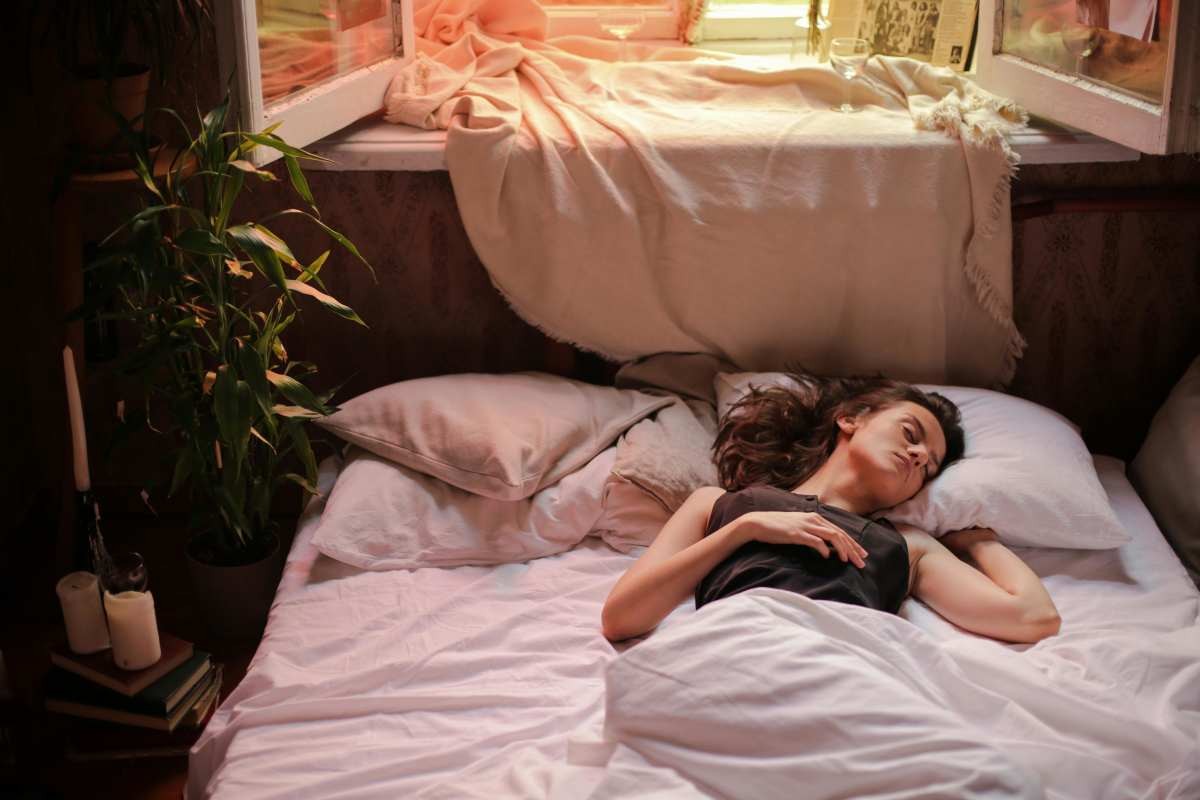
During a period of his life, the famous author Charles Dickens suffered from severe insomnia, leading him to wander the gas-lit streets of London at midnight. While he famously chronicled his “night walks,” Dickens wasn’t alone in experiencing such fragmented sleep patterns. Long before electric lights, many people followed a similar sleep routine. A 2015 paper in Current Biology revealed that three pre-industrial societies in Tanzania, Namibia, and Bolivia also practiced this “split-sleep” habit. A report by Inverse linked this medieval sleep pattern to what we now refer to as “polyphasic sleep.”
Representative Image Source: Pexels | Cottonbro

In this research, scientists who studied these three hunter-gatherer and hunter-horticultural societies found that these people stayed up for hours after sunset. These civilizations didn’t have access to electricity and their only source of light after dark was a campfire. They slept for 4 to 5 hours and then woke up to do certain activities like reading, walking, or eating small meals. This looks similar to what Spain’s people call their “afternoon siestas,” in which they close their shops during noontime to relax, nap, or have a cup of coffee.
Representative Image Source: Pexels | Olly

As it turns out, “polyphasic sleep” or “segmented sleep” is a well-renowned concept in sleep psychiatry. Polyphasic sleep is the practice of sleeping in multiple smaller segments during the day as opposed to sleeping once as is common in many countries. Apart from Dickens, some of the most eminent personalities in history used to have this habit, including Thomas Edison, Nikola Tesla, Napoleon Bonaparte, Salvador Dali, Benjamin Franklin, and even Albert Einstein.

via GIPHY

“These historical figures’ quirky sleep habits may seem eccentric, but they offer us a unique lens through which to explore the human experience of sleep. Whether it’s polyphasic slumber, midnight walks, or dream-infused artistry, these peculiar sleep patterns remind us that, throughout history, sleep has been as much an art as it is a science — a canvas where creativity, genius, and individuality converge in the world of dreams,” Alen Juginović, a doctor and researcher at Harvard Medical School who studies the effect of poor sleep quality on health, explained in an article.
Representative Image Source: Pexels | Cottonbro

Adding to the sleep habits of ancestors, the researchers of this 2015 study related the cause of modern-day insomnia with the advent of electric lighting and technological development. “The invention of the electric light, followed by the development of television, the Internet, and related technologies, along with increased caffeine usage, has greatly shortened sleep duration from ‘natural’ levels and disrupted its evolved timing,” they wrote in the paper, adding that the “reduction in sleep duration has been linked to obesity, mood disorders, and a host of other physical and mental illnesses thought to have increased recently.”

via GIPHY

One of the greatest advantages of polyphasic sleep is that it enables the person to directly plunge into deep sleep. “If you look at the standard sleep period, our sleep is typically deepest at the beginning of the night, and then it’s getting more and more shallow,” Mathias Basner, professor of sleep psychiatry at the University of Pennsylvania’s Perelman School for Medicine, told Inverse, and added, “You’re basically capitalizing on this deeper sleep at the beginning of the sleep period.”
Representative Image Source: Pexels | Olly

However, this kind of sleep pattern has its cons. Basner said that switching between the processes of falling asleep and waking up is not so simple. “The brain needs time to come online again to fire up all the systems,” he said. “It can take up to an hour or even longer, depending on which state you’re awake from, to be fully alert again.” This sleep inertia could possibly impact productivity, and hamper a person from using their daytime to the fullest.

via GIPHY

However, Roger Ekirch, who is probably the biggest expert on “segmented sleep,” believes that this kind of sleep is extremely beneficial for those who regularly suffer from insomnia. He explained to Harpers Magazine that segmented sleep can help insomniacs “fall back asleep by easing their anxiety.” But, for people who don’t have insomnia, probably the regular 7 to 8-hour sleep is the best thing to continue. Changing it could disturb their circadian rhythms, “There’s no going back because conditions have changed,” Ekirch told BBC.

This article originally appeared last year.

  • Doctor shares ‘realistic’ 3-step practice to beat seasonal depression
    Millions are impacted by seasonal depression.Photo credit: Canva
    , , ,

    Doctor shares ‘realistic’ 3-step practice to beat seasonal depression

    A lot of people feel down in the winter. Here’s how to perk up.

    Seasonal depression, or seasonal affective disorder (SAD), impacts millions of people during the winter. The dark, cold weather can easily lead to dark, cold moods from the “winter blahs” that leave people feeling lethargic and depressed. The sneaky thing about it is that you could be going through it without knowing it because it’s not as “dramatic” as regular depression while still being a significant emotional burden.

    Doctors tend to recommend going outside, exercising, planning activities, etc. to tackle seasonal affective disorder. But if you’re in a mindset that causes getting out of bed or making a phone call to feel like an exhausting struggle, it can feel impossible to hit the gym or arrange an activity with a friend. Luckily, one doctor gets it.

    @raquelmartinphd

    Seasonal depression is real. The pull to disappear is real. If you notice the change in someone you care about, lead with gentleness and clarity. Clarity is kindness.

    ♬ original sound – RaquelMartinPhD

    Psychologist Dr. Raquel Martin understands that the struggle with seasonal affective disorder is real. “It’s so crazy to me that this spells out ‘sad,’” she says in her video. Dr. Martin makes sure to point out that seasonal depression can appear in different forms (losing interest in things that usually bring joy, sleeping more, not sleeping, “feeling heavy,” etc.) to hammer home that seasonal depression can be different from one person to another, in varying degrees. The lack of daylight in late fall and winter can mess with a person’s serotonin and melatonin levels, influencing a person’s mood, sleep, and energy. So, depending on how a person’s body responds, seasonal depression could as benign as a person feeling sluggish or emotionally crippled like full-on depression.

    She also mentions that the common recommendations to combat seasonal depression are good, but emphasizes that there doesn’t need to be dramatic change to effectively fight against it. Martin stresses that it’s not the intensity of the treatment but the consistency—doing it every day rather than worrying about doing it “right.” “Don’t go big with this, go realistic,” she says.

    Most doctors like her recommend making it a point to expose yourself to daylight by going outside. But, she says, even as little as four minutes by the window with open blinds can help if you’re office-bound. Exercise is also a booster, but if you can’t or won’t go to the gym, going for a short walk, doing a quick dance to a song on your phone, or just shuffling your shoulders will do more than doing nothing at all.

    Planning activities and hobbies is also commonly recommended, but Martin says to just make one “anchor activity” for each day rather than a routine. It can be as simple as making yourself a cup of coffee or shooting one text to a single person.

    Martin’s peers reached out to GOOD to agree with this mindset, especially if an affected person has tasks or chores to do that add onto the stress and struggle.

    “When you’re dealing with seasonal depression, the goal is micro-movement and tiny habits,” said therapist Lisa Chen. “The smallest shift in your body or environment can start to lift your mood within seconds.”

    “Break down tasks into smaller parts,” suggests therapist Aaron Mostin. “Instead of ‘clean the kitchen,’ just put three things away, which is much less overwhelming.”

    @toluadepoju_

    Seasonal depression is so real… and here are some affordable things and wellness kit items to help you cope and soothe your nervous system without breaking the bank ?✨ #creatorsearchinsights #selfcare #winterblues #depressionhelp #seasonalaffectivedisorder

    ♬ original sound – Tolu | Therapist ?️??✨

    Martin also says that folks who notice their friends or family members getting impacted by seasonal depression can help without being overwhelming or overbearing.

    “Instead of asking, ‘What can I do to help,’ offer to bring dinner over or stop to pick them up for a change of scenery,” added Mostin. “Try being a gentle presence. Ask, ‘Do you just want me to listen, or would like me to give you advice?’”

    This allows you to not only help them with some tasks, but ensures that they’re taking care of themselves, too. If requested, you can do some other things to help like going on a walk with them or participating in other activities to get them out of the house if they feel comfortable.

    While something as simple as the weather can greatly impact a person’s mood and physiology, it’s encouraging to know that there are methods that are just as simple that can help counter its impact.

  • Experts agree that one simple 15-minute daily exercise kills anxiety, boosts self-worth
    A daily practice could help ease your anxiety.Photo credit: Canva

    Anxiety is hard, whether it’s a chronic issue or a reaction to a difficult spell in your life. People who suffer from it can feel negative about the future, further feeding into their anxiety which then makes them feel worse about what could be next. This creates a feedback loop of worry, but a recent study highlighted a daily technique that can reduce anxiety’s hold on a person.

    A study on anxiety from York St John University in the United Kingdom had participants visualize their futures and “possible selves” with researchers finding that those with higher anxiety tended to report and write about more intense, negative possibilities than those who did not. This hypothesized a link between anxiety and low self-esteem. However, after having some participants do a daily “Best Possible Self” technique, a technique often recommended by therapists, the researchers found that the study participants who did the technique significantly reduced their anxiety and got a boost in self-worth.

    @oldguymotivation

    Write down your Best Possible Self ? Visualize the life you want — and science says it actually works ? #Manifestation #BestPossibleSelf #PositivePsychology #Motivation #Mindset

    ♬ Uplifting Inspiring Background – SharpFourStudio

    What if everything went right?

    “From a psychiatrist’s standpoint, the ‘Best Possible Self’ exercise is a well researched way to lift mood and motivation by training the brain to focus on a realistic, hopeful future,” psychiatrist Dr. Simon Faynboym tells GOOD. “Studies in students and adults show that writing about your best possible life can increase positive emotions and reduce symptoms of stress, anxiety, frustration, and low mood. By imagining a future where things go right, you’re activating thinking about goals and minimizing the tendency to worry. It’s a useful tool that works best alongside therapy, social support, healthy habits, and medication.”

    The “Best Possible Self” technique sounds simple to do on paper and only takes about 15 minutes of your time:

    Sit down and imagine your best possible future, the one in which the goals you have are achieved, the worries you have are resolved, and the problems that constantly invade your mind are fixed. Write it all down and be as specific as possible. Doing this every day will create a combination of purging your worries by giving them focused attention, showing yourself that what you want is achievable, and centering your focus back onto achieving the goals you’ve set your mind on. As Dr. Faynboym said, there is research to back up this technique’s effectiveness.

    @vibe.plus

    The only person you should strive to beat every single day, is the person you were yesterday. #quotes #mindset #motivation #fyp

    ♬ original sound – thequotecircle

    Resolve anxiety to resolve your issues

    Will it solve your problems or achieve your goals? No, and that’s not its purpose. The “Best Possible Self” is meant to help clear anxiety and low self-worth out of your mind so it can focus on looking for methods to get you closer to the goals you desire. Is that more work? You bet. But the work will be easier without anxiety and a low sense of self-esteem getting in your way and trapping you in a negative feedback hamster wheel to nowhere. It’s also important to note that you may trip up the first time or the first 80 times. The only failure is whether you give up on yourself.

    @healingkatee

    You become your best self when you work on things that people cant take away from you – oneself, mindset, character and personality… thats the greatest upgrade ? #mindset #selflove #workonyourself #healingjourney #innerpeace #loveyourself #fyp #restart #reset #refocus

    ♬ original sound – Devante Warner

    If you are suffering from anxiety and depression, see if this technique helps in conjunction with your psychiatrist/therapist’s advice, prescriptions, and support. If you need to find a professional that can help you, the Anxiety & Depression Association of America can help you find a therapist in your area. Whether the “Best Possible Self” technique works for you or not, a better future is still possible.

  • A single data point taken at 7 could accurately predict an early death
    A seven-year-old boy.Photo credit: via Canva/Photos

    There’s been a new breakthrough in tracking blood pressure in children, as it correlates to later death from heart disease. Researchers have discovered that children with high blood pressure have a much higher risk of dying from heart disease when they get older.

    Scientists in the United States carried out tests on children with high blood pressure or hypertension in the 90th to 94th percentile and found that up to 50% of those kids met an early death because of cardiovascular disease. “We were surprised to find that high blood pressure in childhood was linked to serious health conditions many years later,” epidemiologist Alexa Freedman, from Northwestern University, said while presenting the study.

    The researchers pored over medical data from 37,081 children born in the U.S. between 1959 and 1965. Their blood pressure was taken at age seven, and then a follow-up was performed in their early 50s. Of those in the study, 500 died of cardiovascular disease.

    In childhood and adolescence, blood pressure normally increases with age and height, according to the Mayo Clinic. When a child is diagnosed with hypertension, it is because their blood pressure is above the 95th percentile. This average is measured over three visits to the doctor.

    little girl, blood pressure, cardiovascular health
    A young girl. u200bvia Canva/Photos

    A young girl.

    Findings of the study

    The increase in the mortality risk was significant enough to continue investigating the link between childhood high blood pressure and early death from hypertension. “High blood pressure in children can have serious consequences throughout their lives,” Freedman said. “It is crucial to be aware of your child’s blood pressure readings.”

    The study noted that 359 of the children in the study participated with siblings or cousins. The results from relatives in the study mirrored the overall data, suggesting that blood pressure, rather than diet, is key to living a long life. The data for this study were gathered in the 1950s and 1960s, and children today face different problems with the rise in obesity.

    high blood pressure in children
    A young girl. u200bvia Canva/Photos

    Treatment of high blood pressure in children

    Treating high blood pressure in children should focus on the underlying cause and on a heart-healthy lifestyle. The Mayo Clinic advises that children and their families should adopt a lifestyle that includes the following:

    • Weight loss if overweight
    • Daily aerobic exercise of 60 minutes or more of moderate to vigorous activity every day — choose an activity that gets your heart pumping, like running, soccer, tennis, or jumping jacks
    • Limit activities such as computer/video/tablet games and TV watching to less than two hours per day.
    • Regular daily intake of fresh vegetables, fruits, and low-fat dairy
    • Minimal to no sugar-sweetened drinks
    • Increase water intake.
    • Avoid foods high in salt
    • Choose low-cholesterol food options
    Some kids will need medication to treat their blood pressure in addition to the healthy lifestyle choices. It is important to get the causes of high blood pressure under control, as, in addition to early death from cardiovascular disease, hypertension has been linked to kidney disease, vision loss, and atherosclerosis, where potentially harmful plaque builds up in the arteries.

    “Our results highlight the importance of screening for blood pressure in childhood and focusing on strategies to promote optimal cardiovascular health beginning in childhood,” Freedman said.

    The full study has been published in the Journal of the American Medical Association.

Explore More Care Stories

Care

Doctor shares ‘realistic’ 3-step practice to beat seasonal depression

Care

Experts agree that one simple 15-minute daily exercise kills anxiety, boosts self-worth

Care

A single data point taken at 7 could accurately predict an early death

Care

Researchers are blowing people’s minds after sharing the ideal shower length