

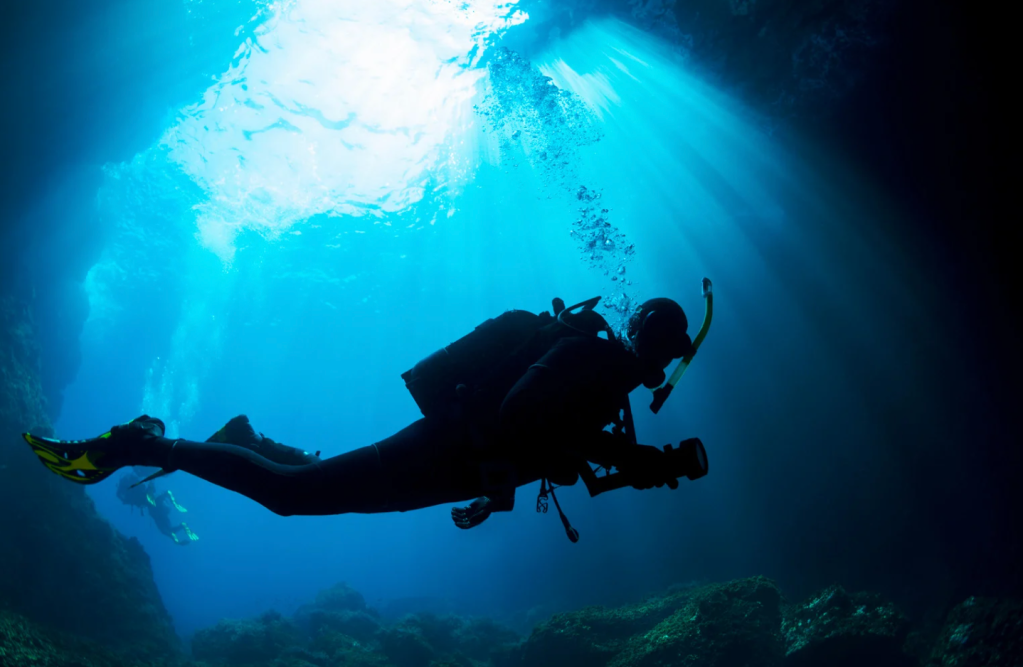
In the pristine waters off Japan’s westernmost island, Yonaguni, hammerhead sharks and barracudas patrol the deep. But at a depth of about 25 meters (82 feet), divers encounter something far more mysterious: a massive, terraced structure that looks suspiciously like a man-made pyramid.
Known as the “Yonaguni Monument,” this enigmatic formation of sandstone and mudstone has sparked a fierce scientific debate since its discovery by a local diver in 1986. Is it a natural geological quirk, or the 10,000-year-old ruins of a lost civilization?
For Masaaki Kimura, a marine geologist at the University of the Ryukyus, the answer lies in the details. “The largest structure looks like a complicated, monolithic, stepped pyramid that rises from a depth of 25 meters,” Kimura told National Geographic.
Kimura, who has dived the site extensively, claims to have identified specific, non-natural features: quarry marks etched into stone, carved faces, and rocks sculpted like animals. He theorizes that the site is the remnant of a “Japanese Atlantis,” an ancient city that sank during a massive earthquake around 2,000 years ago.
“The characters and animal monuments in the water… suggest the culture comes from the Asian continent,” Kimura said, noting that one feature resembles a sphinx or an ancient Okinawan king.
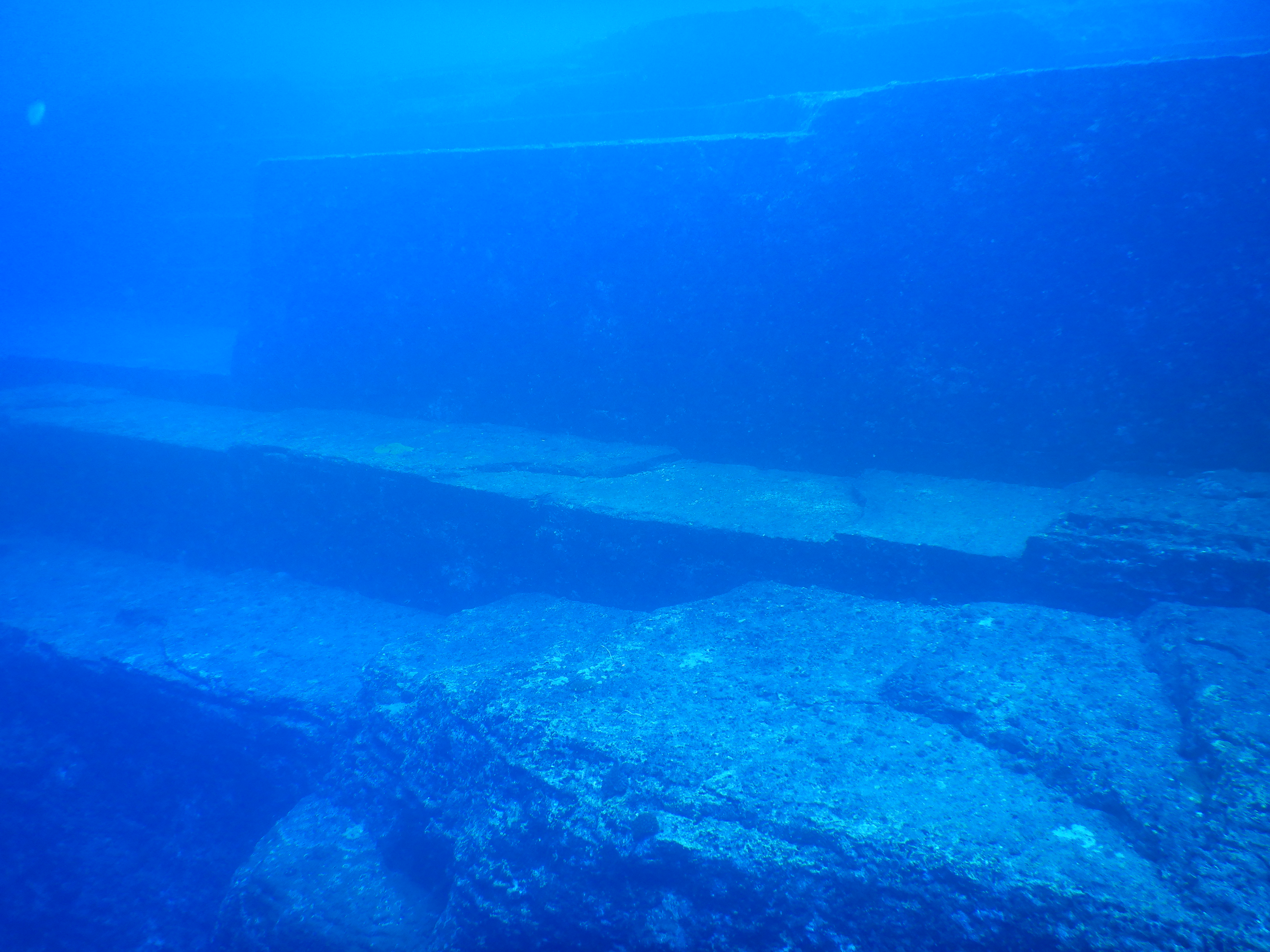
However, not everyone is convinced. Robert Schoch, a professor of science and mathematics at Boston University, offers a geological rebuttal.
“I’m not convinced that any of the major features or structures are manmade steps or terraces, but that they’re all-natural,” Schoch told National Geographic. “It’s basic geology and classic stratigraphy for sandstones, which tend to break along planes and give you these very straight edges.”
Schoch argues that the “carvings” are merely natural scratches and that the “post holes” were created by underwater eddies. He points out that the pyramid lacks symmetry, a hallmark of artificial construction. “I have to report that I do not believe it is an artificial, human-made structure,” Schoch wrote in a recent post.
Despite the skepticism, the allure of the Yonaguni Monument remains. Divers continue to explore the site, reporting sightings of what look like castle ruins, arches, and even a stadium, all connected by roads that have long since crumbled. Whether it’s a geological miracle or a tragic ruin, the monument remains one of the world’s most captivating underwater mysteries.
This article originally appeared last year.