




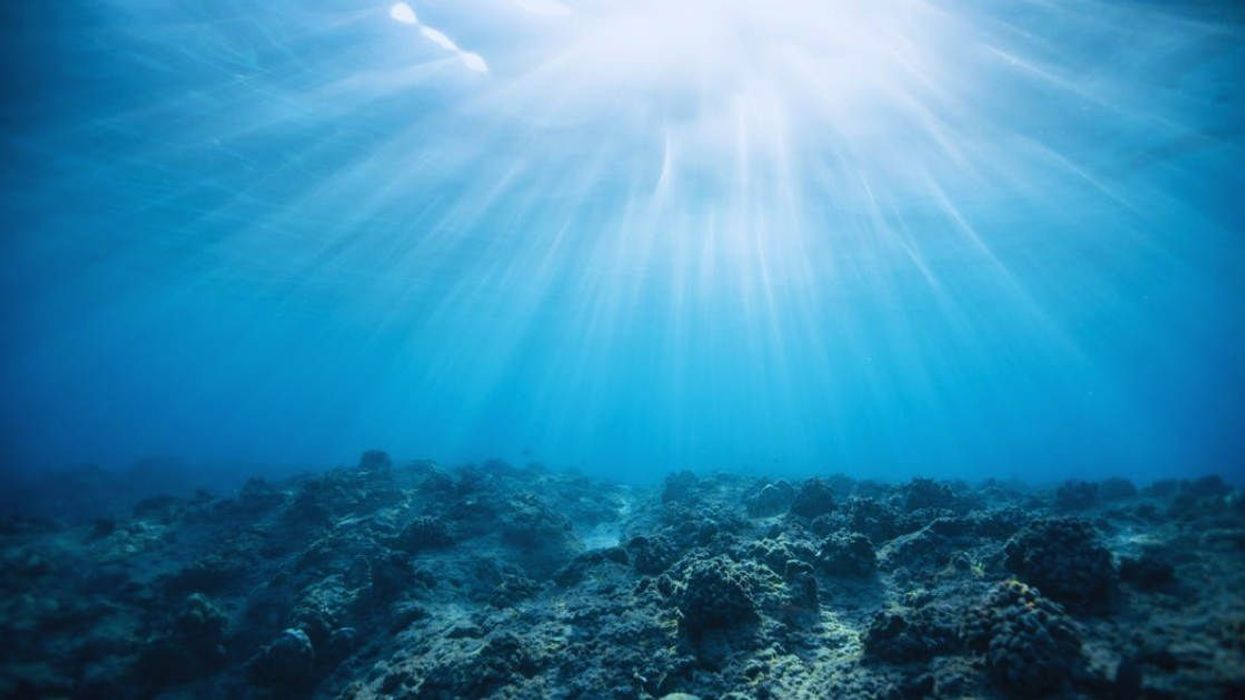

Earth's abundance of water is what makes it a "blue planet." Scientists have long speculated about how all this water ended up here. Some studies suggested that water arrived on Earth through collisions with icy comets or asteroids. However, the question persisted: Did Earth's water come from outer space or from within? A 2014 study provided insight into this mystery when scientists discovered a massive reservoir of water trapped within hot mantle rocks. The findings were published in the journal Science.
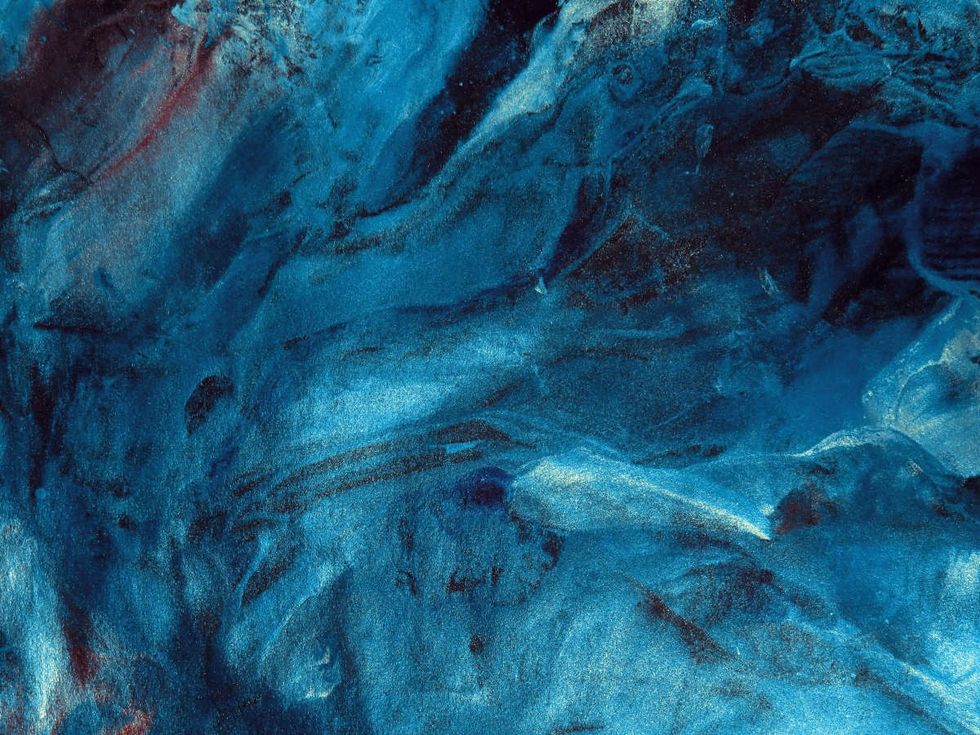 Representative Image Source: Pexels | Anni Roenkae
The discovered reservoir contains three times the volume of all Earth's oceans combined. It was surprising, because usually, the Earth’s mantle, 254 to 410 miles deep, is an efflux of scorching hot rocks covered with magma. According to New Scientist, scientists have long believed that the mantle’s “transition zone,” the boundary between the upper and the lower mantle, could contain water trapped in rare minerals.
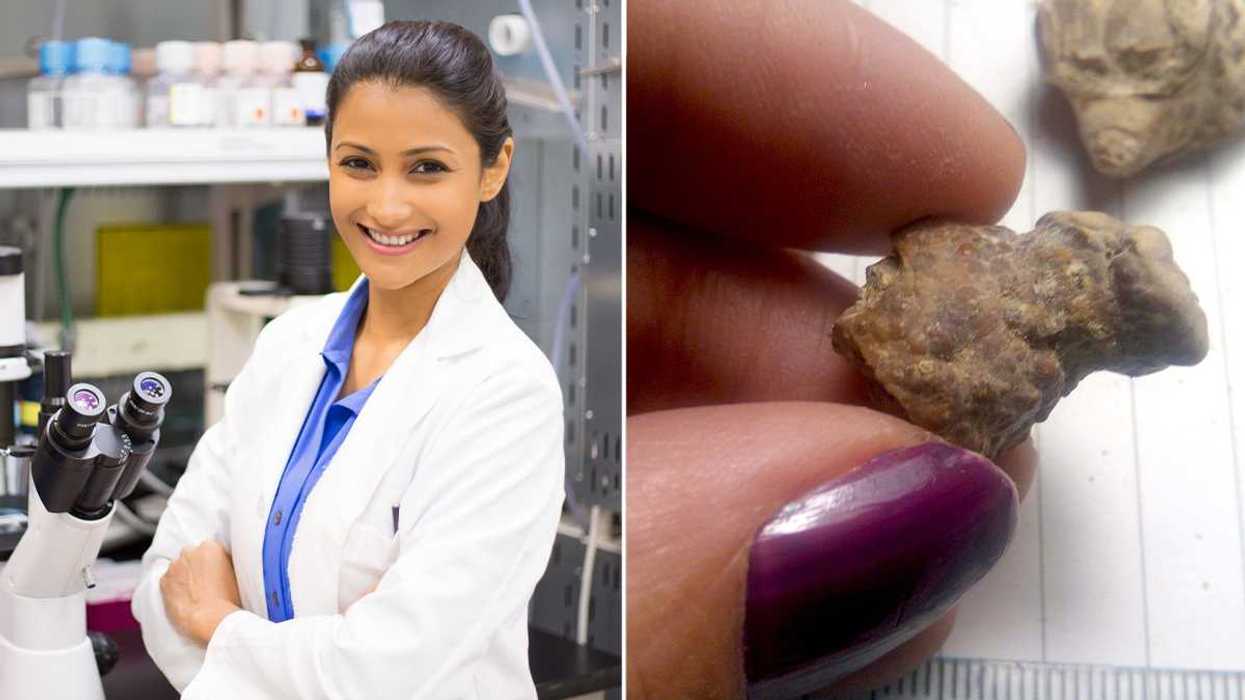
During this study, they finally discovered a colossal body of water trapped inside a blue rock called ringwoodite. Ringwoodite is a deep blue mineral, chemically similar to peridot, a green mineral often used in jewelry. “The ringwoodite is like a sponge, soaking up water,” Steven Jacobsen of Northwestern University in Evanston, Illinois, said, per a university press release. “There is something very special about the crystal structure of ringwoodite that allows it to attract hydrogen and trap water. This mineral can contain a lot of water under conditions of the deep mantle.”
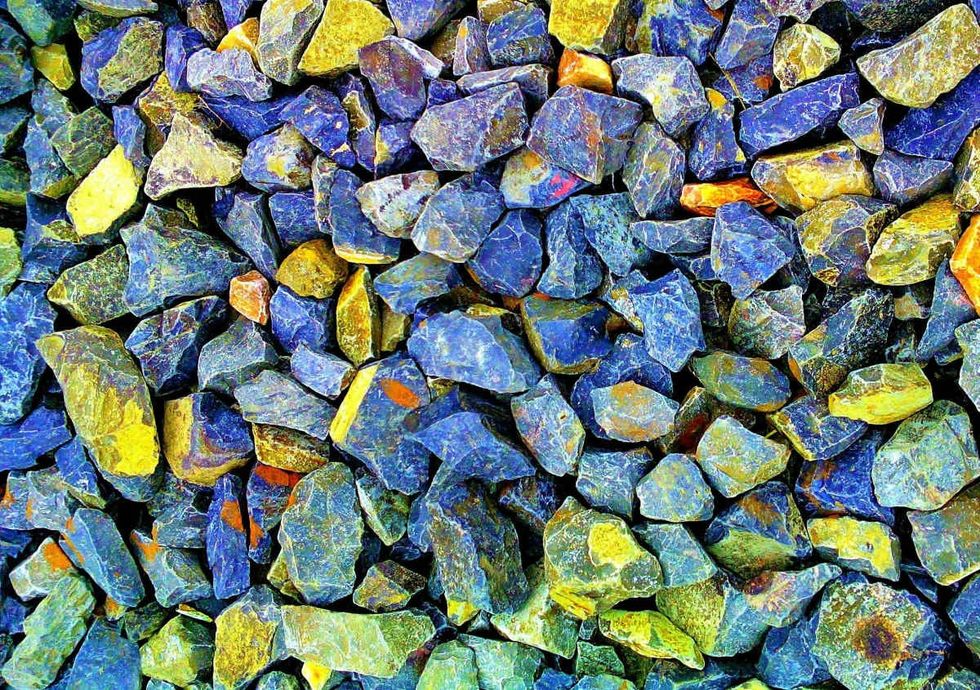 Representative Image Source: Pexels | Its MSVR
The team discovered this ringwoodite around 430 miles underground in the mantle. This gave a clue that the water on Earth could have simply seeped from within its core, rather than coming from a comet or asteroid collision. “It’s good evidence the Earth’s water came from within,” Jacobsen told New Scientist.
To conduct the research, scientists employed 2,000 seismometers that helped them study the seismic waves generated by more than 500 earthquakes. As these waves quiver through the Earth’s core, scientists can examine them from the surface. “They make the Earth ring like a bell for days afterward,” said Jacobsen. Since the waves take longer to travel through wet rocks than dry rocks, the speed of the waves told scientists which rocks could contain water. 434 miles deep, the temperatures and other conditions were just perfect to squeeze the water out of the ringwoodite. “It’s a rock with water along the boundaries between the grains, almost as if they’re sweating,” explained Jacobsen.
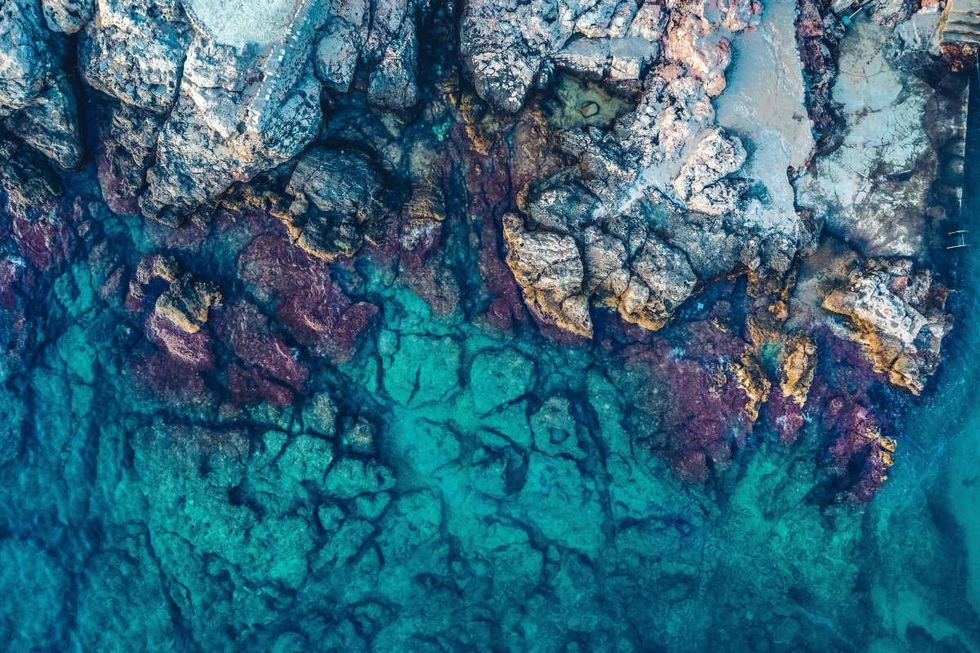 Representative Image Source: Pexels | Lucian Photography
The discovery of this huge ocean could provide some fascinating insights about Earth’s water cycle, and how seas and oceans were initially formed on the planet. “We should be grateful for this deep reservoir,” said Jacobsen. “If it wasn’t there, it would be on the surface of the Earth, and mountaintops would be the only land poking out.”
“Geological processes on the Earth’s surface, such as earthquakes or erupting volcanoes, are an expression of what is going on inside the Earth, out of our sight,” added Jacobsen. “I think we are finally seeing evidence for a whole-Earth water cycle, which may help explain the vast amount of liquid water on the surface of our habitable planet. Scientists have been looking for this missing deep water for decades.”
This article originally appeared last year.








 A parking lot for charging electric vehicles.Photo credit
  Oil production.Photo credit
  Sun shines over the Earth.Photo credit
 Peru stingless bee.USGS Bee Inventory and Monitoring Lab/
  Indigenous Peruvian people.Photo credit
 Representative Image: Accents reveal heritage and history.
  Representative Image: Even unseen you can learn a lot from an accent.
 Rice grain and white rice.Image via
  Person eats rice.Image via
  Washing and rinsing rice.
  Mother and daughter eating rice meal.Image via

 Bees feeding on food source.Image via
President Donald J. Trump and photo of a forest.
Public united and adamantly opposes Trump’s plan to roll back the Roadless Rule
There doesn't seem to be much agreement happening in the U.S. right now. Differing moral belief systems, economic disparity, and political divide have made a country with so many positives sometimes feel a little lost. Everyone desperately seeks a niche, a connection, or a strong sense of community to which they can feel a "part of," rather than just "apart."
But there seems to be one thing that the country strongly unites over, and that's the "Roadless Rule." With the Trump Administration attempting to roll back conservation policies that protect U.S. National Forests, Americans are saying in harmony an emphatic "No." A nonpartisan conservation and advocacy organization, the Center for Western Priorities, reviewed a comment analysis on the subject. After receiving 223,862 submissions, a staggering 99 percent are opposed to the president's plan of repeal.
What is the 'Roadless Rule' policy implemented in 2001?
The Roadless Rule has a direct impact on nearly 60 million acres of national forests and grasslands. According to the U.S. Department of Agriculture, the rule prohibits road construction and timber harvests. Enacted in 2001, it is a conservation rule that protects some of the least developed portions of our forests. It's considered to be one of the most important conservation wins in U.S. history.
America's national forests and grasslands are diverse ecosystems, timeless landscapes, and living treasures. They sustain the country with clean water and the wood products necessary to build our communities. The National Parks protected under their umbrella offer incredible recreational retreats and outdoor adventure.
Why does the administration want to roll it back?
U.S. Secretary of Agriculture Brooke L. Rollins told the Department of Agriculture in a 2025 press release, “We are one step closer to common sense management of our national forest lands. Today marks a critical step forward in President Trump’s commitment to restoring local decision-making to federal land managers to empower them to do what’s necessary to protect America’s forests and communities from devastating destruction from fires." Rollins continued, “This administration is dedicated to removing burdensome, outdated, one-size-fits-all regulations that not only put people and livelihoods at risk but also stifle economic growth in rural America. It is vital that we properly manage our federal lands to create healthy, resilient, and productive forests for generations to come. We look forward to hearing directly from the people and communities we serve as we work together to implement productive and commonsense policy for forest land management.”
Forest Service Chief Tom Schultz explained the Roadless Rule frustrated land management and acts as a challenging barrier to action. It prohibits road construction needed to navigate wildfire suppression and properly maintain the forest. Schultz said, “The forests we know today are not the same as the forests of 2001. They are dangerously overstocked and increasingly threatened by drought, mortality, insect-borne disease, and wildfire. It’s time to return land management decisions where they belong – with local Forest Service experts who best understand their forests and communities."
Why are people adamantly opposed to the proposed rollback?
A 2025 article in Earthjustice, a nonprofit environmental law organization, expressed its concern over the protection of national forests covering 36 states and Puerto Rico. A rescinded rule allows increased logging, extractive development, and oil and gas drilling in previously undisturbed backcountry. Here is what some community leaders had to say about it:
President Gloria Burns, Ketchikan Indian Community, said, "You cannot separate us from the land. We depend on Congress to update the outdated and predatory, antiquated laws that allow other countries and outside sources to extract our resource wealth. This is an attack on Tribes and our people who depend on the land to eat. The federal government must act and provide us the safeguards we need or leave our home roadless. We are not willing to risk the destruction of our homelands when no effort has been made to ensure our future is the one our ancestors envisioned for us. Without our lungs (the Tongass) we cannot breathe life into our future generations.”
Linda Behnken, executive director of the Alaska Longline Fishermen’s Association, stated, "Roadbuilding damaged salmon streams in the past — with 240 miles of salmon habitat still blocked by failed road culverts. The Roadless Rule protects our fishing economy and more than 10,000 jobs provided by commercial fishing in Southeast Alaska.”
The Sierra Club's Forest Campaign Manager Alex Craven seemed quite upset, saying, "The Forest Service followed sound science, economic common sense, and overwhelming public support when they adopted such an important and visionary policy more than 20 years ago. Donald Trump is making it crystal clear he is willing to pollute our clean air and drinking water, destroy prized habitat for species, and even increase the risk of devastating wildfires, if it means padding the bottom lines of timber and mining companies.”
The 2025 recession proposal would apply to nearly 45 million acres of the national forests. With so many people writing in opposition to the consensus, the public has determined they don't want it to happen.
Tongass National Forest is at the center of the Trump administration's intention to roll back the 2001 Roadless Rule. You can watch an Alaska Nature Documentary about the wild salmon of Tongass National Forrest here:
- YouTube www.youtube.com
The simple truth is we elect our public officials to make decisions. The hope is they do this for all of our well-being, although often it seems they do not. Even though we don't have much power to control what government officials do, voicing our opinions strongly enough often forces them to alter their present course of action. With a unanimous public voice saying, "No!" maybe this time they will course correct as the public wishes.