
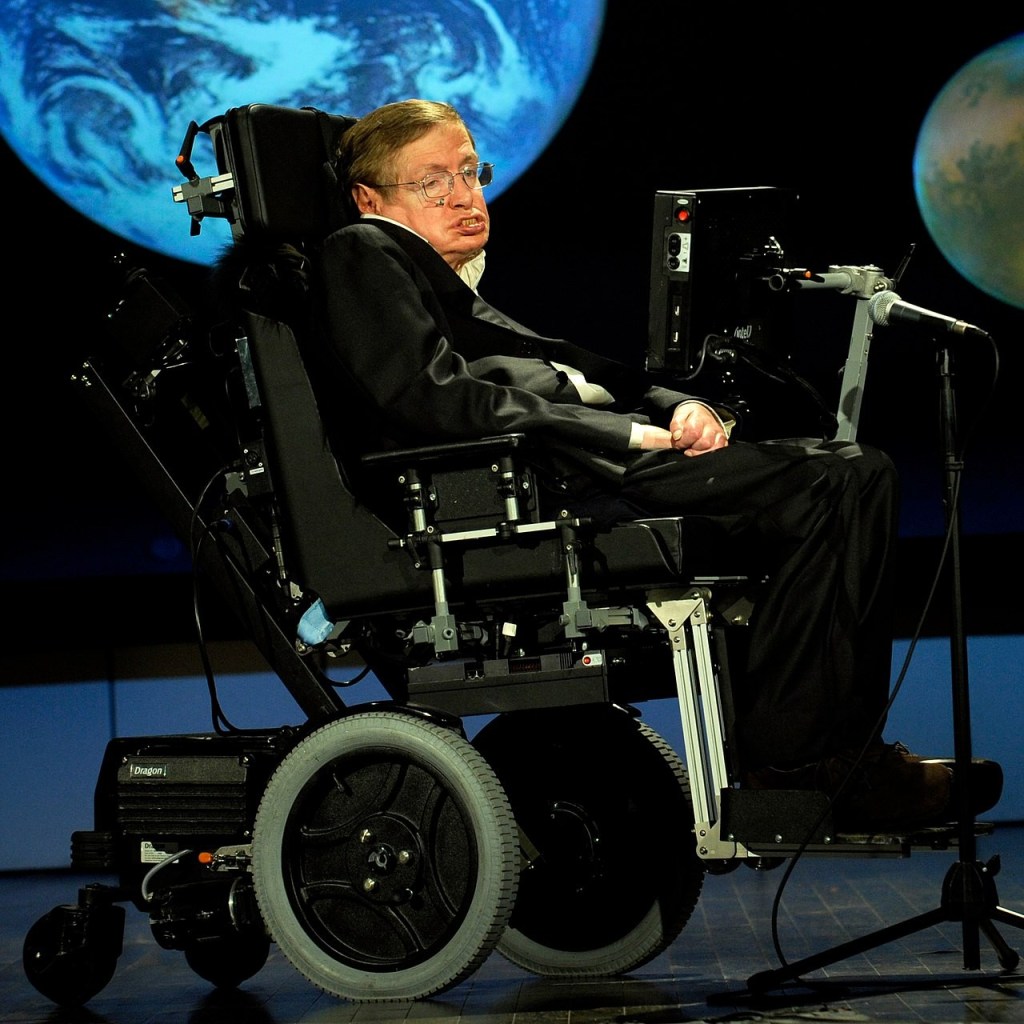
The existence of God has been a point of debate for centuries, examined through both religious beliefs and scientific inquiry. Theoretical physicist Stephen Hawking, known for his groundbreaking work in cosmology, addressed this question in his final book, Brief Answers to the Big Questions.
Although Hawking’s book was mostly completed before he passed, his family and academic colleagues helped finish it posthumously. In it, Hawking explored his thoughts on God’s existence, a topic he often faced as a scientist. Reflecting on his own disability, he remarked, “For centuries, it was believed that disabled people like me were living under a curse that was inflicted by God. Well, I suppose it’s possible that I’ve upset someone up there, but I prefer to think that everything can be explained another way, by the laws of nature.” His words reflect a belief in science as a way to understand the universe without needing to invoke divine forces.
He added that people like him, who believe in science, “believe that there are certain laws that are always obeyed. If you like, you can say the laws are the work of God, but that is more a definition of God than a proof of his existence.”
Hawking refused to acknowledge the existence of God with his most direct, personal answer as he outrightly said, “It’s my view that the simplest explanation is that there is no God. No one created the universe and no one directs our fate.”
The late astrophysicist had a prestigious career and made enormous contributions to science. He was commended for his work on the physics of black holes. Hawking proposed that black holes emit subatomic particles until they eventually explode. He also proposed the multiverse theory, which states that our universe is one of many parallel universes existing in a fractal-like multiverse, published in the Journal of High Energy Physics.
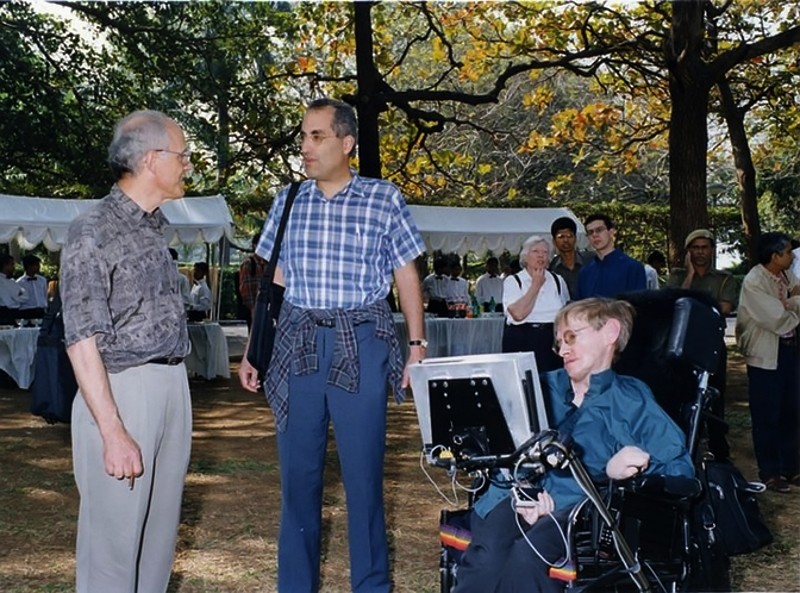
The genius scientist struggled with health complications throughout his adult life. At 21, he was diagnosed with Amyotrophic Lateral Sclerosis (ALS), which is a type of motor neuron disease. Despite the life-threatening disease, Hawking managed to live much of his life in a motorized wheelchair, communicating mostly with the assistance of a portable system mounted on its arms.
The renowned scientist passed away at the age of 76 on March 14, 2018, in his home. A year before that, he said he was thankful for his extended life. “I never expected to reach 75, so I feel very fortunate to be able to reflect on my legacy,” he said in an interview with BBC.
This article originally appeared last year.