
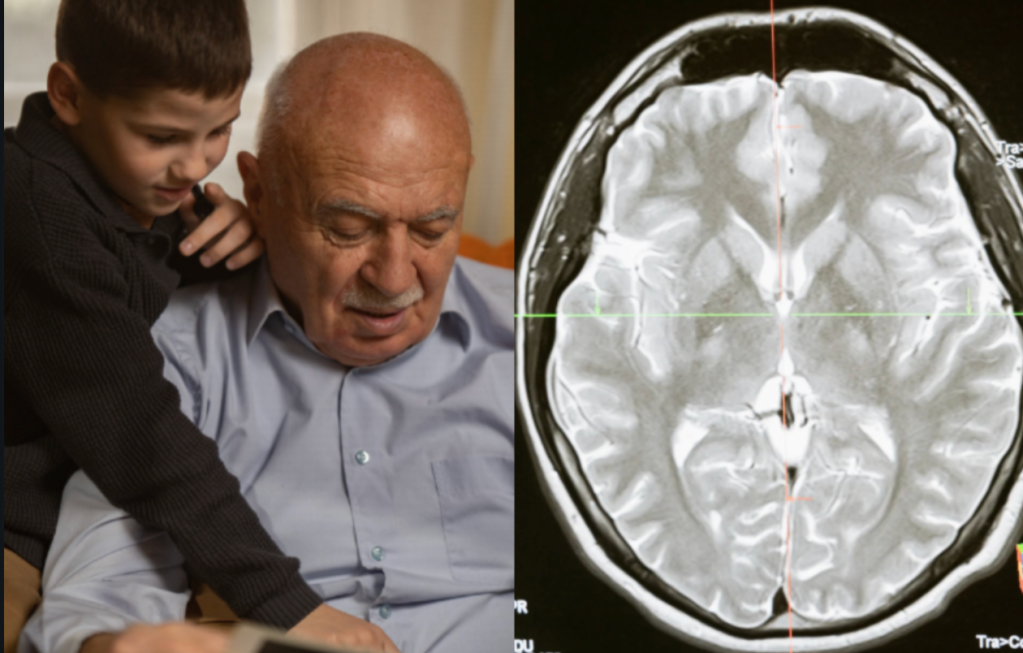
How old is your brain? Traditionally, you’d just state your age like you would for the rest of your body. However, the results of a new study suggest that your brain actually has five truly different ages and stages that change at four different points of the average human lifespan. In fact, your brain wasn’t much different between 4th grade and your 32nd birthday.
Scientists at the University of Cambridge led by Dr. Alexa Mousley, used MRI topography to track how the brain’s nerve fibers grow, shift, and die throughout a person’s lifespan. They conducted this research through studying the MRIs of 3,800 “neurotypical” brains ranging from the age of infants to folks in their 90s. During this study, Mousley and her team found four major turning points in how a human brain changes shape: how it grows, peaks, and eventually declines within a person’s life. Roughly, based on the data, the human brain’s functions shift at ages nine, 32, 66, and 83.
“We know the brain’s wiring is crucial to our development, but we lack a big picture of how it changes across our lives and why,” said Dr. Mousley in a press release. “This study is the first to identify major phases of brain wiring across a human lifespan.”
The study shows that there are five stages or “epochs” of a human brain. From infancy to age nine, the brain is in “growth mode” in which billions of brain connections are made, strengthened, and pruned. From age nine to 32, the brain’s communications become more refined and efficient. The “prime” epoch of the brain is from age 32 to 66, when the brain stabilizes and its efficiency is at its peak while a person’s intelligence and personality stabilize along with it. At 66, the brain subtly shrinks and the networks in it gradually reorganize as blood flow decreases and disease risk increases. By age 83, there is a steeper decline with deeper reliance on specific brain regions as other regions fade.
What does this mean?
Interventional psychiatrist Dr. Grant Hilary Brenner told GOOD that he finds this research could open up other possibilities on how to approach brain health in his field.
“For healthspan, regenerative and anti-aging medicine, while further research and replication are necessary, the Mousley and colleagues study is intriguing,” said Dr. Brenner. “On a straightforward level, it may lay the groundwork for assessing brain health with more precision, based on network analysis.”
“A ‘brain age’ metric could be developed compared with an average curve, as we do with children’s growth curves,” he explained. “Early signs of cognitive decline can be detected with this, and related, research – including AIML (artificial intelligence machine learning) based models, which may be able to detect dementia non-invasively, for earlier intervention.”
“Given these findings, these present to us an opportunity to preserve the stage from 32 to 66 years of age where the least changes occur and this period of time coincides with the supposed “prime of one’s life” where one is most productive and where health is most optimal,” neurologist Dr. Jon Stewart Hao Dy tells GOOD.
How can we keep our brains “fit” for now?
Dr. Dy mentioned to GOOD that much of ensuring and protecting peak brain performance requires regularly exercising, having a healthy diet, and being in an environment with clean air and water. He also recommends “intentional learning” through taking classes, reading, and social interactions that keep a person cognitively stimulated throughout their life and lowers the risk of developing dementia as they age.
It will be interesting to see further studies and testing over time in order to better understand our brains and ourselves. Perhaps we’ll get to a point in which we use our brains to make the next generation’s brains “younger” for longer.