
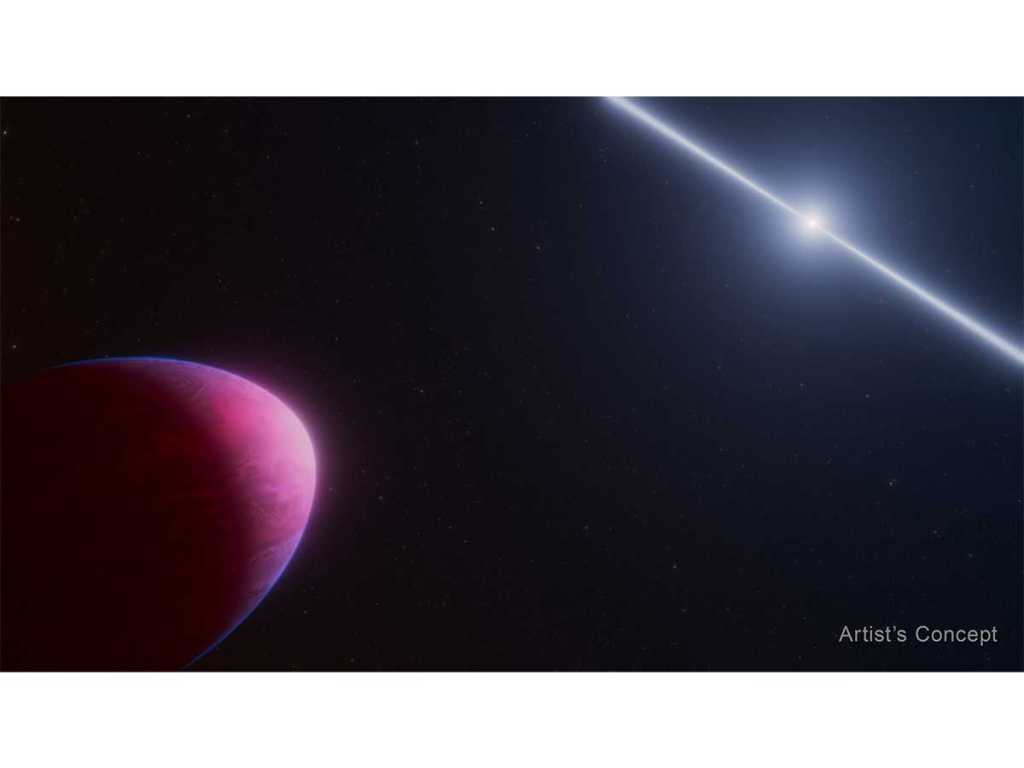
Anyone willing to invest some time in the bizarre field of space will find a lot is going on out there besides mathematical numbers. Using the James Webb Space Telescope, astronomers discovered an exotic planet with an atmosphere of mostly helium and carbon. This Jupiter-sized planet, containing a high ratio of carbon molecules, defies current planetary formation theories, and that’s not even the weird part.
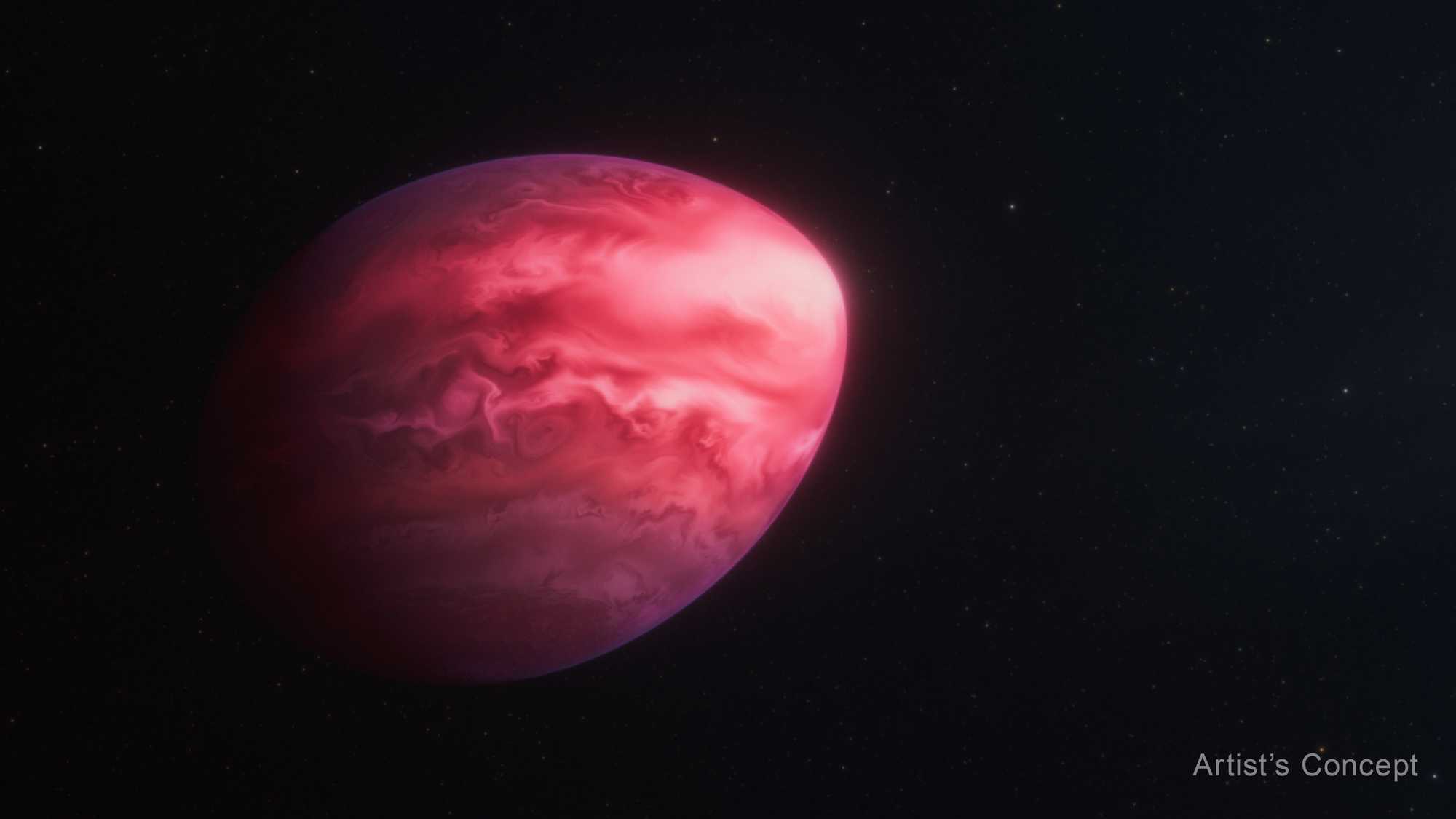
Blasted by gamma rays that heat the atmosphere to 3000 degrees Fahrenheit, this peculiar planet orbits a dead star every 7.8 hours. Astronomers believe this could be the strangest planet ever found. At only a million miles from a sun with a similar mass to ours, but at only the size of a city, the intense gravity smashes the planet PSR J2322-2650b into the shape of a lemon.
An entirely new exoplanet
Michael Zhang, at the University of Chicago, and his team discovered the peculiar planet that orbits over 2000 light-years from our own solar system. Measuring the spectrum of light emitted from the planet revealed a rich, molecular carbon atmosphere. Zhang reportedly told the UChicago News, “This is a new type of planet atmosphere that nobody has ever seen before.” Zhang continued, “In order to have molecular carbon in the atmosphere, you have to get rid of pretty much everything else—all of the oxygen, all of the nitrogen—and we just don’t know how to do that.”
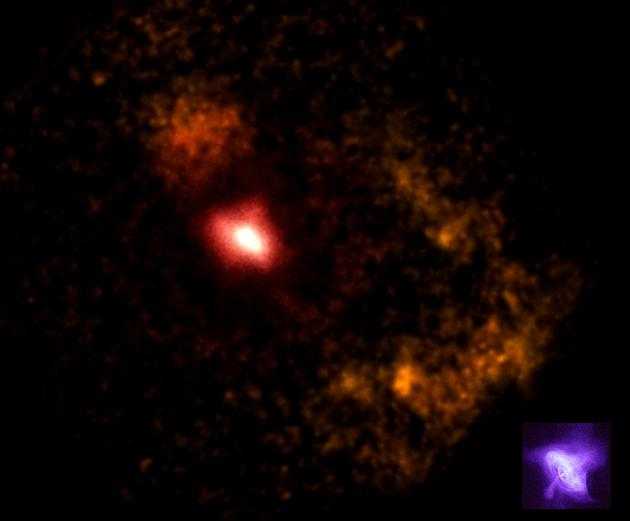
Pulsars are massive superstars that explode, leaving a neutron star
This oval planet orbits a pulsar, which is what astronomers call the collapsed core of a massive, superstar left behind after it explodes. Because the star emits beams of electromagnetic radiation that are mostly invisible to the Webb telescope’s infrared vision, scientists can study the planet’s more intricate details. They believe that due to the intense pressure on the planet, it’s likely that its carbon core could be squeezed into diamonds.
Co-author Peter Gao, Carnegie Earth and Planets Laboratory in Washington, D.C., said, “I remember after we got the data down, our collective reaction was ‘What the heck is this?’”
Why are scientists making such a big deal?
These are some of the things lighting up the minds of the scientists:
- Because the planet is extremely hot, the carbon molecules should be bonding with other varieties of atoms in the atmosphere. They are not.
- The hottest spot on the planet doesn’t line up and point to the pulsar star. This point is pushed by the Westward winds that blow in the opposite direction of the planet’s rotation.
- Diamond icebergs may float in a helium ocean on the surface.
“Did this thing form like a normal planet? No, because the composition is entirely different.” Zhang continues, “Did it form by stripping the outside of a star, like ‘normal’ black widow systems are formed? Probably not, because nuclear physics does not make pure carbon.”
For the more scientifically inclined, you can read the complete 2025 study published in The Astrophysical Journal Letters.
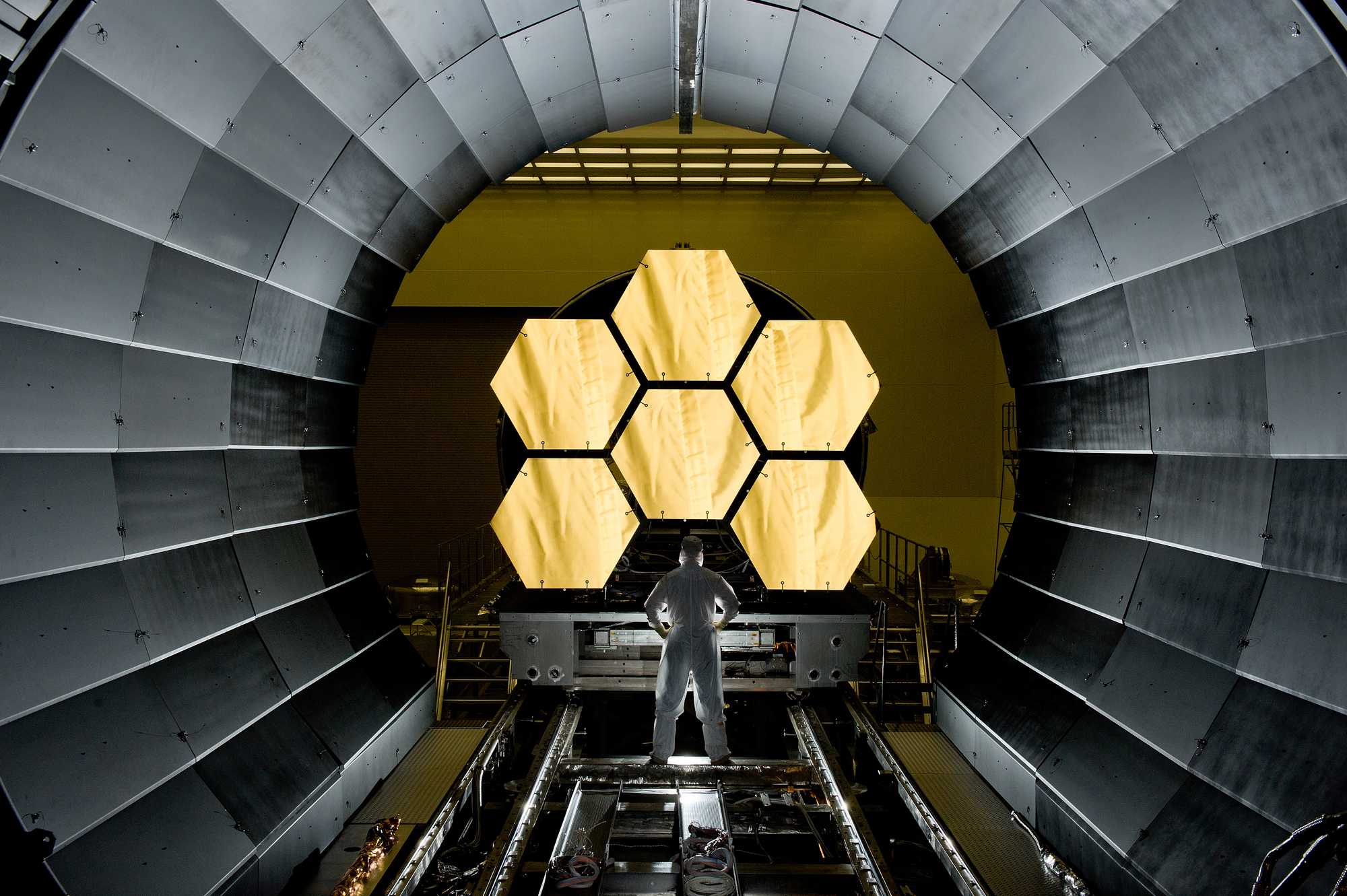
The James Webb Space Telescope
According to NASA, the James Webb Space Telescope was inspired even before the launch of the Hubble Space Telescope in 1990. On December 25, 2021, the Webb telescope was launched into space, and only 30 minutes later, the unique solar array unfolded and powered it to life. On July 11, 2022, the first images were presented to the public as President Joe Biden unveiled a galaxy cluster, SMACS 0723. The distant galaxy showed cosmic features in detail, never seen before from the deepest reaches of space.
The Webb’s initial findings demonstrate how the telescope can capture the universe’s intricate details across billions of years. As this incredible technology continues to observe planets orbiting stars and solar systems 1000s of light-years away, lemon-shaped PSR J2322-2650b is one of many discoveries yet to come.



















,_%D0%91%D1%83%D0%B1%D1%80%D0%B5%D0%B6%D0%BD%D0%B8_%D0%BA%D0%B0%D0%BC%D0%B5%D1%9A%D0%B0_2.jpg)


