
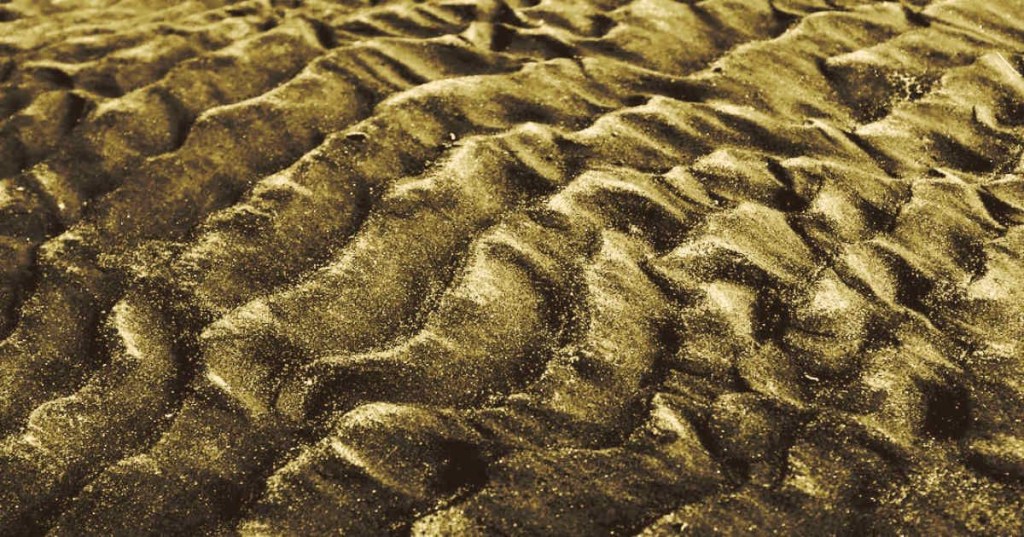
Although Earth might seem like a stable, flat surface where we live our lives, seismologists have discovered that it’s far from passive. In fact, Earth has a ‘heartbeat’ that pulses every 26 seconds, according to Discover Magazine. Known as “microseisms,” these faint seismic tremors resemble tiny earthquakes, though they aren’t exactly the same. For decades, scientists have been baffled by these mysterious tremors, and despite many theories, no definitive explanation has been found.
volcanic activity, undersea resonance
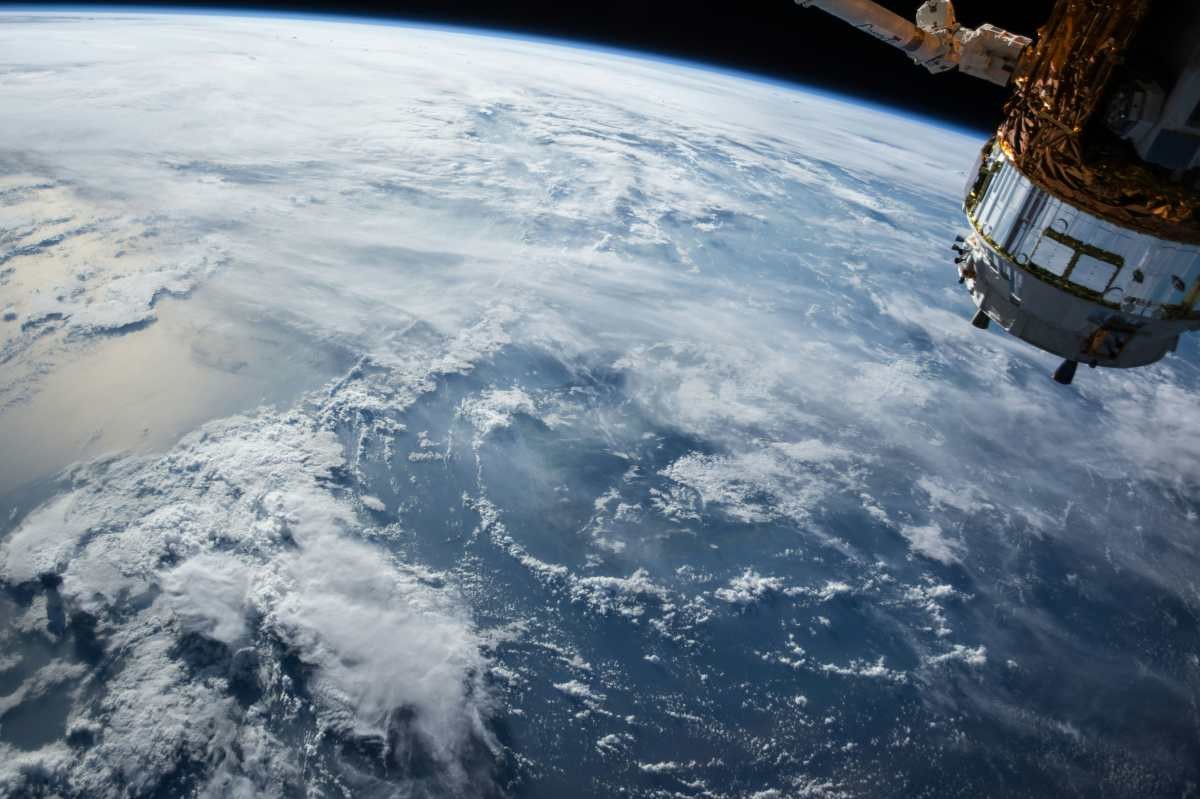
Representative Image Source: Unsplash | NASA

In humans, a heartbeat is produced by electrical signals that cause the heart muscles to contract and expand. But for Earth, the source of its mysterious ‘heartbeat’ remains unknown. This phenomenon was first documented in the early 1960s by geologist Jack Oliver, who suggested that the pulse might originate from somewhere in the southern or equatorial Atlantic Ocean. However, he lacked the sophisticated instruments needed to investigate further. “Jack didn’t have the resources in 1962 that we had in 2005 — he didn’t have digital seismometers, he was dealing with paper records,” Michael Ritzwoller, a seismologist at the University of Colorado, Boulder, told Discover Magazine. Since then scientists have spent a lot of time listening to this pulse and trying to solve the mystery.

via GIPHY

Lars Eivind Augland, associate professor in the Department of Geosciences at the University of Oslo, found the phenomenon of a 26-second pulse fascinating. “Yes, you may call it a kind of pulse. The Earth’s crust has regular tremors. They are so small that they do not pose a threat as real earthquakes can,” he told Yara International. Augland explained that every 26 seconds, the heartbeat of Earth is recorded by seismic station computers around the world. These blips are most noticeable in West Africa, North America, and Europe, he said. Geologists and seismologists have given varied explanations behind the occurrence of this phenomenon, including ocean waves, volcanoes, and fractures in sediments.

“Originally, the micro-quakes, or the pulse detected at intervals of 26 seconds, were explained by wave activity in the Gulf of Guinea in West Africa. Special depth conditions, the geometry of the ocean floor, and the coast have been pointed out as possible causes. Due to how the waves hit and create resonance on the seabed, they could, in turn, propagate as earthquake waves in the Earth’s crust,” explained Augland.

sao tome geology
Representative Image Source: Pexels | Earano

In 2013, during the Seismological Society of America conference, a student named Garrett Euler also said the same thing, furthering the source location of the pulse to the region called “Bight of Bonny” in the Gulf of Guinea. He elaborated his hypothesis by adding that waves hitting and crashing against the coast might be the probable reason for this pulse. But this explanation was soon ruled out by most experts.

Apart from ocean waves, a second explanation behind this pulsation was believed to be “volcanoes.” The same year, Yingjie Xia from the Institute of Geodesy and Geophysics in Wuhan, suggested the cause was actually volcanoes, not waves. He explained this by saying that the island of São Tomé in the Bight of Bonny was close to the volcano.

ocean wave resonance,earth science mysteries
Representative Image Source: Pexels | Mauro Ignacio Torres

After ruling out waves and volcanoes, Augland proposed a third explanation: sediment cracks. “A third explanation can be found in the latest study published in the renowned journal Earth and Planetary Science Letters, which states that fluid flowing through fractal fissure networks in sediments under the seafloor is the cause of the tremors,” Augland told Yara International, further specifying that none of the three explanations have any supporting evidence.

via GIPHY

Despite its puzzling nature, the 26-second pulse is not something unusual. According to BRIGHT SIDE’s YouTube video, Earth doesn’t only have a heartbeat but also a humming sound. Some people may notice it, and some may not, but this high-frequency buzzing sound called “The Hum” is prevalent throughout the planet. Like the mysterious ‘heartbeat,’ geologists have also tried to explain this “mysterious hum or buzz” but none has proved true to their satisfaction.

https://youtube.com/watch?v=ZBkOwyhq7Hg%3Fsi%3DKssLS49BY6VdPW8w

This article originally appeared last year.

  • Scottish children are helping penguins find mating partners with these tiny, painted stones
    Scottish kids are helping penguins get a date.Photo credit: Edinburgh Zoo on Instagram
    ,

    Scottish children are helping penguins find mating partners with these tiny, painted stones

    “I would cry if a penguin picked MY pebble 😭 It’s a life goal”

    During mating season, male gentoo penguins are tasked to find pretty and smooth rocks to present to prospective mates. This is meant as a gesture to woo them and to be used to build a nest with them, too. Well, this season, the penguins at the Edinburgh Zoo in Scotland got some help.

    Kids being supported by the Edinburgh Children’s Hospital Charity gathered together to paint pebbles with vibrant colors for the penguins. The hospitalized children do this every year with the first stone traditionally placed in the penguin enclosure. The children often watch a livestream of the gentoo penguin enclosure to see the penguin pick their favorite rocks that they’ve painted.

    Commenters sound off on the penguins’ pebbling

    The Edinburgh Zoo posted this year’s pebbling pickings on Instagram, delighting the commenters:

    “I would cry if a penguin picked MY pebble 😭 It’s a life goal lol.”

    “This is just brilliant! How wonderful to see a creative health initiative that actively connects the children with a purpose like this!”

    “This is heartwarming ❤️❤️❤️”

    “This is brilliant for the penguins and the children! Can’t wait to see the beautiful nests.”

    “My grandson painted a pebble he’s hoping it gets picked.🤞🤞🤞”

    “Penguin pebble pilfering season is upon us! So pleased it makes so many people (and penguins) happy.”

     “Oh no, now I’m questioning if penguins have favourite colours.”

    “Any that aren’t picked would make an awesome rock garden that kids visiting the zoo could pick from!!”

    “This is the cutest thing I have seen probably ever.”

    Pebbling practices for human relationships

    As mentioned, this mating ritual called “pebbling” is a gesture made by male penguins to their mate to not just build a nest. It’s their version of saying, “I saw this and I thought of you.” In fact, psychologists and couples therapists recommend adopting a version of pebbling for human relationships.

    Now to “pebble” in dating or married relationships doesn’t literally mean giving your partner rocks (unless they’re a geologist that would love that sort of thing). For humans, pebbling your partner means to share or give a small gift like a flower, toy, or object that has some meaning to one or both of you. It doesn’t always have to be a gift either, but it could be a photo, social media post, or a meme you can text them. It’s essentially anything that conveys “I saw this and thought of you” in order to showcase affection to them and initiate closer conversations.

    Pebbling isn’t just for romantic couples either. Many autistic people find it more difficult to navigate socially due to high anxiety, sensory sensitivities, or having trouble interpreting social cues. By texting a GIF to a friend, giving a small flower to their parent during a walk, or other such pebbling, it allows some autistic people the ability to communicate their affection and connection without the pressure of using words.

    Whether it’s a colorful rock or something else, pebbling can be a valid form of communication between friends, partners, or potential mates. It all depends on who you choose to build a nest with.

  • Scientists have created a leather clothing alternative made entirely from mushrooms that looks and feels like the real thing
    Left: Mushrooms. Right: A model dressed in a leather jacket.Photo credit: Canva

    Austria’s scientists have created a leather made from mycelium. Growing mushrooms in low-oxygen chambers allows researchers to craft an alternative material that feels and looks like traditional leather. The finished textile is strong, flexible, and even fire-resistant.

    Manufacturers grow the material instead of harvesting it from animals. After it reaches the desired thickness, they apply non-toxic enzymes to keep it fully biodegradable. The vegetative part of the fungus grows into a dense mat over a matter of days. Above all, it avoids the environmental impact of traditional leather production.

    Alternative leather made from mushrooms

    This is not science fiction; fungal fabric has grown from a curiosity into reality. A 2025 report listed the benefits of mushroom leather as having a lower carbon footprint. It begins with a substantial reduction in water use. Growing mushrooms, compared to raising cattle, requires a fraction of the water.

    Secondly, the product breaks down naturally without microplastic contamination. Using enzymes that cross-link the fibers results in a material free of blended toxic materials.

    Moreover, by creating the right environment—a low-oxygen chamber with a nutrient-rich substrate—the mushroom mat can be grown in a matter of days.

    Lastly, mushroom leather is naturally fire-resistant. There’s no need for harmful chemicals to treat the textile. In addition, clean up requires mild soap and lukewarm water.

    A 2026 study in ScienceDirect confirmed the fungal mycelium as an eco-friendly alternative to traditional and synthetic leathers. It demonstrates structural integrity and favorable thermal stability.

    fungus, clothing materials,  environment, biodegradable, non-flammable, dense mat
    Mushroom leather.
    Photo credit: ThamaraGroenleer/ Wikimedia Commons

    Is the public ready for vegan leather?

    People have conflicting thoughts, as seen in the comments on the Instagram post. Some individuals are excited and encouraged by the possibilities. Others, however, are less impressed:

    “I’m ready for it. How do we buy it?”

    “Make it affordable and common!”

    “As long as the final product keeps being painted and coated with chemicals, the purpose of the product is merely green washing.”

    “bio degradable? sorry your shoes were eaten by mold after the rain.”

    “Where we can buy this leather?”

    “Unless we’re talking about aprons/gloves for welders or blacksmiths (which is a fairly niche market), flammability isn’t something most people that wear leather are concerned about.”

    fashion, sustainable materials, clothing, vegan leather, eco-friendly
    Materials and scissors.
    Photo credit: Canva

    Fashion looks for sustainable, yet affordable materials

    Fashion leaders are looking to incorporate more sustainable fabrics into their creations. A 2025 post on Open Forem explored material choices for leading industry fashion designers in 2025. For example, more familiar textiles like polyester, organic cotton, and wool made their traditional rounds. But there was an effort to use plant-based leathers, too.

    Mushroom mycelium leather was a hot choice for its low environmental impact, its short creation time, and its customizable texture and thickness.

    Other exotic materials included banana fibers, seaweed-based fabrics, and Piñatex, a natural, low-impact textile made from pineapple leaf fibre. Designers fashion the plant-based material into vegan handbags, shoes, and wallets.

    A 2026 article in Vogue revealed that Gucci seeks more sustainable ways to produce leather products. The luxury brand began a campaign for vegan alternative leather back in 2021.

    Despite commercial adoption remaining somewhat limited, mushroom leather continues to attract attention for its eco-friendly production and versatility. Grown on agricultural waste while remaining fully biodegradable are cornerstones of this remarkable material.

    You can watch this TED Talk on fashion made from mushrooms:

  • Scientists create environmentally friendly plastic replacement from shrimp shells
    Shrimp shells could become our new plastic.Photo credit: Canva

    Plastic waste has been a growing global issue for years. The United Nations Environment Programme says that 19 to 23 million metric tonnes of plastic waste leaks into lakes, rivers, and oceans each year. Given the threat microplastics pose to animal and human health, efforts to find green replacements have intensified—and they’re working. Scientists from Singapore and Spain have found a strong, potentially viable replacement for plastic made from shrimp shells.

    A research team based at the Singapore University of Technology and Design and the Institute for Bioengineering of Catalonia in Barcelona has made a biodegradable plastic alternative out of chitosan. Chitosan is a compound created by combining shrimp shells with trace amounts of nickel. It contains a structural molecule found in the shells of crustaceans and insect exoskeletons. Usually discarded as a waste byproduct of shrimp and crab processing, chitosan is commonly produced during seafood preparation and commercial fishing.

    The issue with chitosan, though, was that it weakens and dissolves in water. That is, until recently.

    How chitosan got stronger

    Dissolving chitosan flakes into a weak acetic solution and mixing them with dissolved nickel chloride and water produced surprising results. Scientists then poured the mixture into molds to dry. The process yields a thin, green-tinted film with the strength of commonly used plastics like polypropylene. Even better, when submerged in water, the film grows 50% stronger. This increased durability matches the characteristics of polycarbonate and PETG, plastics commonly used in commercial single-use water bottles.

    Researchers then stress-tested the chitosan material by molding it into cups and containers. They were able to confirm it could hold water without leaks. In terms of biodegradability, the chitosan material reached its half-life in four months in a standard soil burial test. By contrast, most commercial plastics can take centuries to decompose under similar conditions.

    Researchers found that this is not only a better biodegradable plastic alternative, but also one that produces zero waste during creation. When the chitosan/nickel film is submerged, about 87% of the nickel washes out. That wash water can then be reused again and again from one batch of chitosan to the next. According to the researchers, the nickel content of a single AAA battery would provide enough nickel to manufacture more than a dozen chitosan drinking cups.

    The potential future

    Rigorous testing to assess the material’s limits for medical use and consumption still needs to be done. That said, the Food and Drug Administration has already approved products containing chitosan and nickel individually in the past. Barring any troubling research about their combined safety, the outlook is quite positive for future use.

    Hopefully, seafood and battery waste can be reduced, helping lower plastic waste in a three-way win for the environment.

Explore More Environment Stories

Science

Scottish children are helping penguins find mating partners with these tiny, painted stones

Science

Scientists have created a leather clothing alternative made entirely from mushrooms that looks and feels like the real thing

Environment

Scientists create environmentally friendly plastic replacement from shrimp shells

Environment

Plastic pollution is a global mess and bamboo could be our way to dig out of it