





Last week, the Economist Intelligence Unit released the list of the world's 10 most livable cities in its Global Livability Report. A city's rating "quantifies the challenges that might be presented to an individual's lifestyle" and is based on scores for more than 30 factors within five broad categories: stability, healthcare, culture and environment, education, and infrastructure. Scores for each of the factors are compiled and boiled down to one score between 1 (untolerable) and 100 (ideal). The list, led for the fifth year by 2010 Winter Olympics host Vancouver, is dominated by Canadian and Australian cities. Click through for the winners. (You can also contrast the 10 most livable with the 10 least livable cities here.)
1. Vancouver, British Columbia, Canada
2. Melbourne, Australia
3. Vienna, Austria
4. Toronto, Ontario, Canada
5. Calgary, Alberta, Canada
6. Helsinki, Finland
7. Sydney, Australia
8. Tie: Perth, Australia
8. Tie: Adelaide, Australia
10. Auckland, New Zealand
Sure, Auckland, Helsinki, and Vienna are there, but look at the rest: Why are Canada and Australia home to the most ideal cities? Do these less rebellious, former British colonial holdings just get it? These cities aren't free of "challenges" like crime or poverty. Even their residents, like National Post writer and Vancouverite Brian Hutchinson, are skeptical of the rankings. One explanation, editor of the report John Copestake notes, is that "mid-sized cities in developed countries with relatively low population densities tend to score well by having all the cultural and infrastructural benefits on offer with fewer problems related to crime or congestion." (Granted, you'll probably have to take his word for it, seeing as the full report can be purchased "for only US$500.") So, it seems that size does matter—the selected Canadian and Australian cities, all of which are moderately sized and populated, can more thoroughly address urban infrastructural and governmental needs like public education, healthcare, and safety than their larger, denser global counterparts. What does it mean for livability in a Tokyo, New York, or Los Angeles-sized city?
And how important is livability to a resident's happiness anyway? I'm not completely sold on the qualification (after all, how does the EIU factor in the obvious value of such urban icons as giant ears of corn?) and I'm not alone. Matt Kiebus at Death and Taxes thinks "livability" sucks, saying "No one wants to brag about residing in a ‘liviable’ city—it sounds mediocre, it conveys the impression that [they're] settling." Are they?











 "I'm watching you..."
  Reddit |
 A woman conducts a online color testCanva
 A selection of color swatchesCanva
 A young boy takes a color examCanva
 Copy of Sophia's letter to President Obama
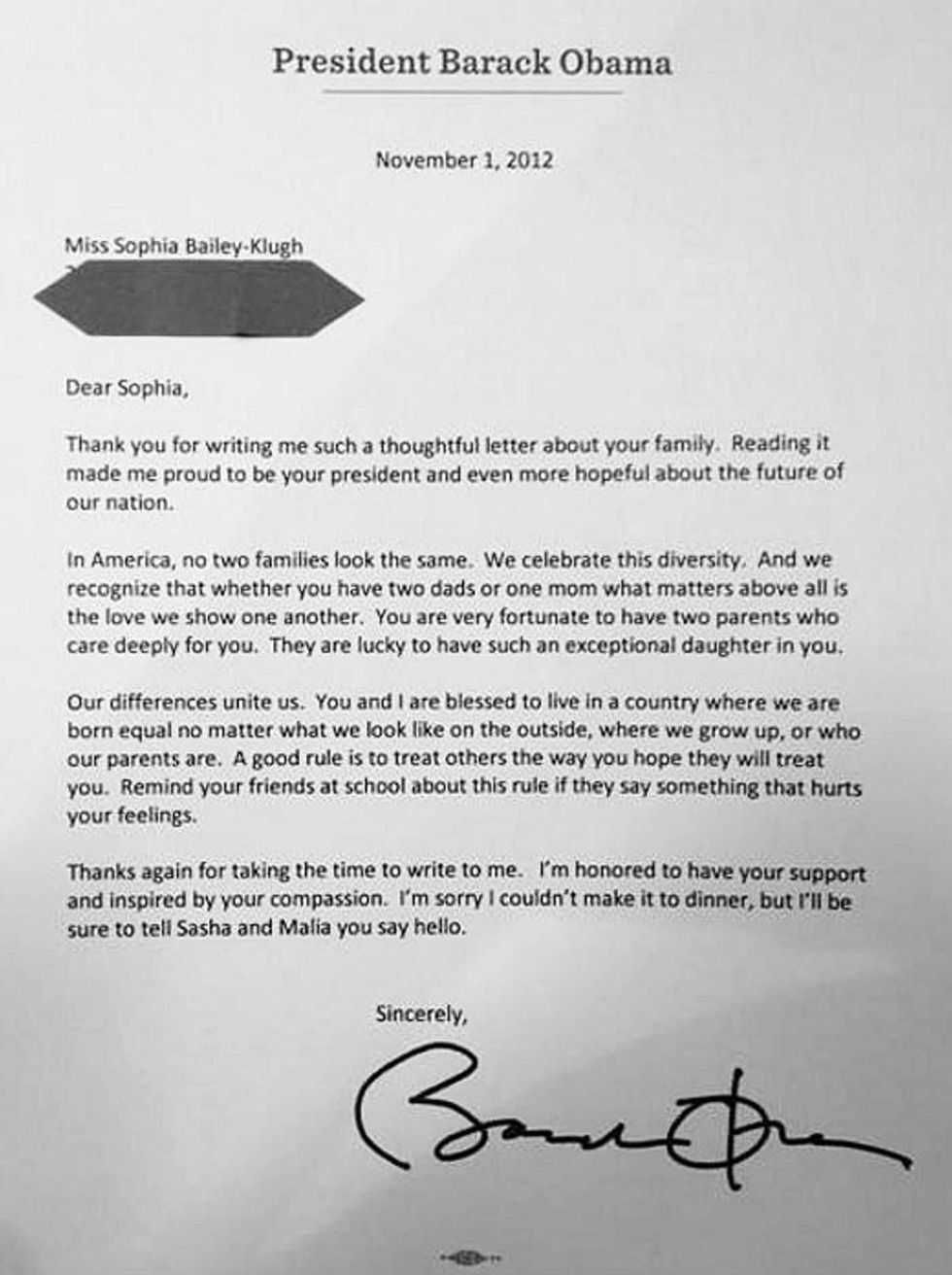 Barack Obama's letter to Sophia
 Gif of Obama saying "The torch has been passed" via
 A mom is very angry with her sonCanva
 Gif of two women high-fiving via
 Representative Image: Accents reveal heritage and history.
  Representative Image: Even unseen you can learn a lot from an accent.

 Photo of a handwritten letter from Heidi Johnson's Facebook page
 Gif of someone repeating "shame" via