
“We would work for months at a time, and we would just sit on the floor of the storage room opening up bags and boxes,” said Marcelo Gabriel Yáñez, co-curator of the new exhibition “dearly Loved friends:” Photographs by Sheyla Baykal, 1965-1990 featuring the work of photographer Sheyla Baykal.

Baykal passed away in 1997 from cervical cancer, but had been photographing the downtown avant-garde performance art scenes in New York City for over 30 years. When she learned she had terminal cancer, she willed her archive to her friend, the performance artist Penny Arcade. For decades, Arcade had been trying to get people to consider Baykal’s work, which documented with love one of the last great bohemian eras in New York. There were fits and starts. A review of a 2000 group show featuring Baykal’s work in The New York Times shared that “her work deserves to be better known,” but until now it mostly hasn’t been.
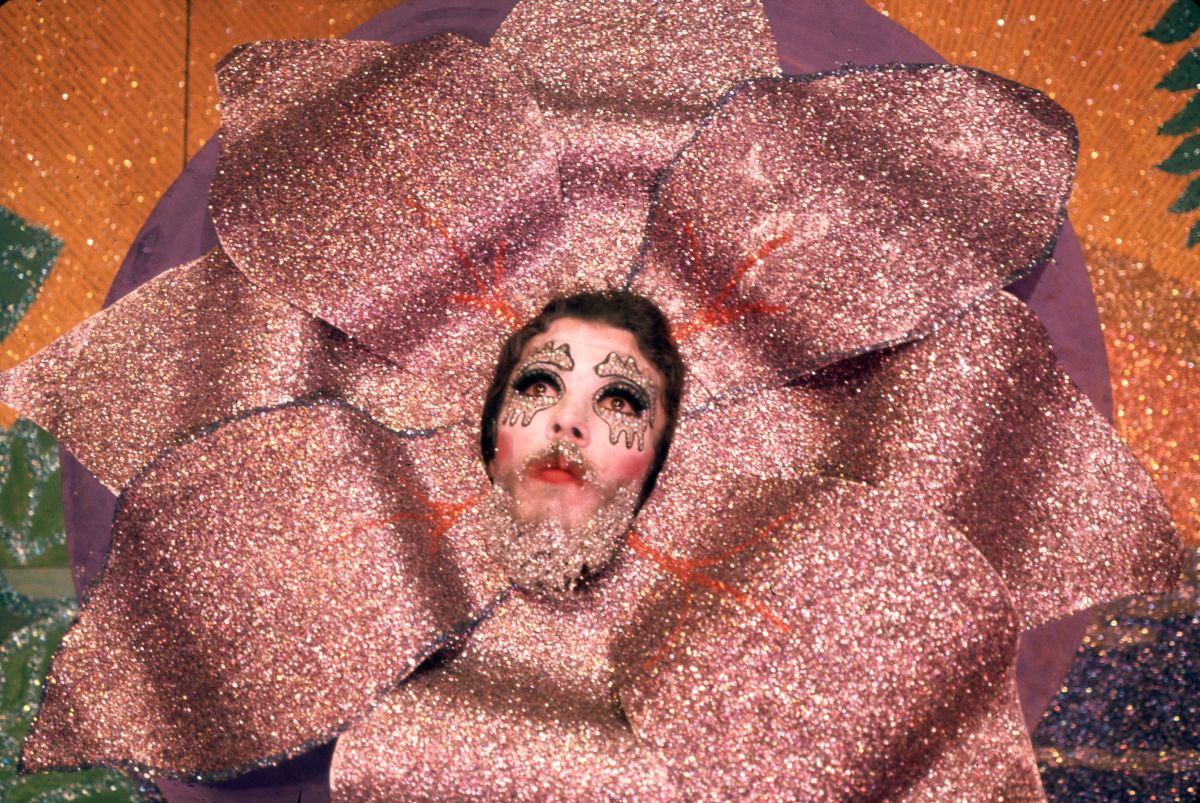
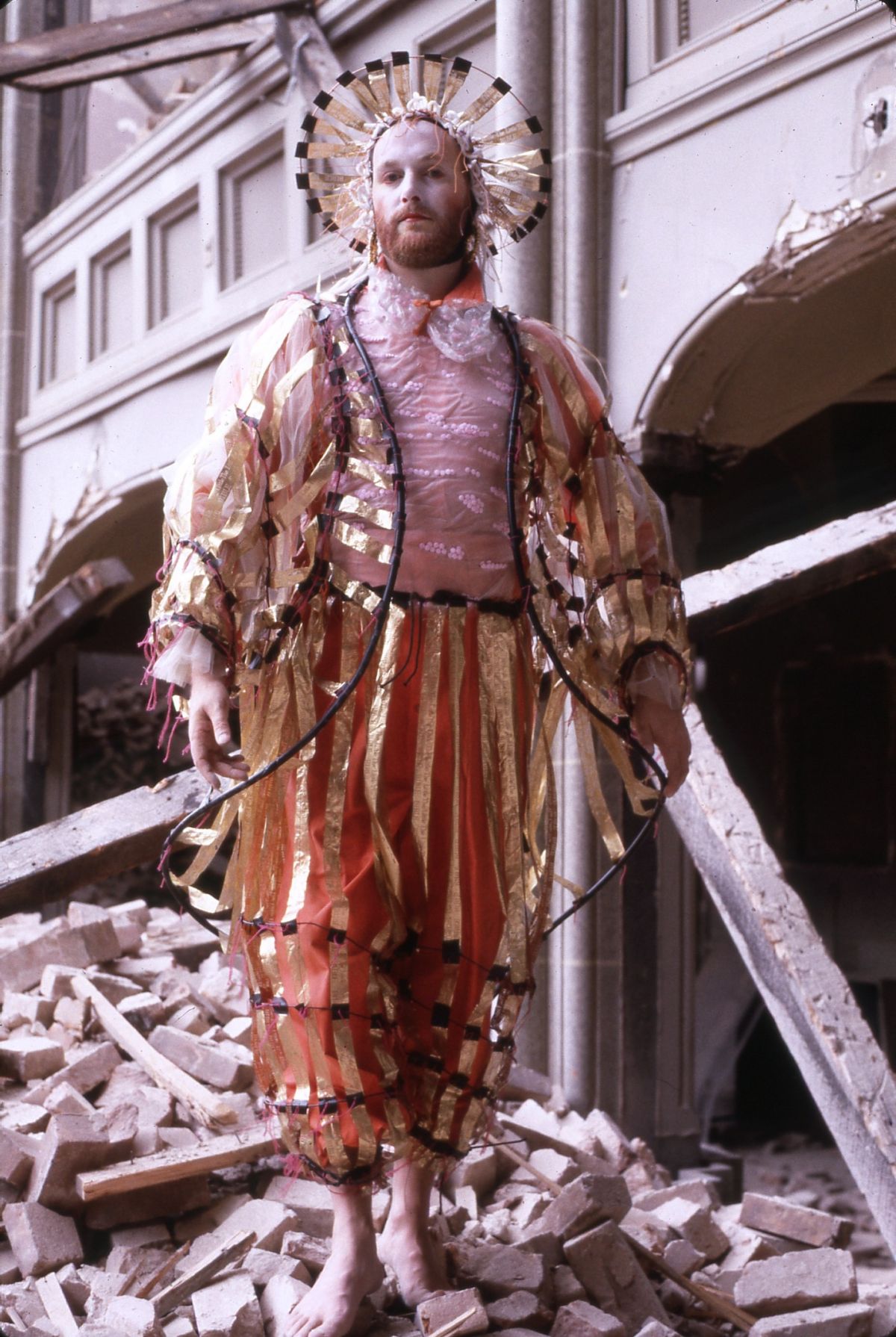
Sheyla Baykal, Angels of Light performance Gossamer Wings, Theatre for the New City, 1973. Scan from 35mm color slide. u00a9 2025 Estate of Sheyla Baykal. Courtesy Penny Arcade, Marcelo Gabriel Yu00e1u00f1ez and Soft Network.

“dearly Loved friends,” curated by Yáñez with Penny Arcade, features Baykal’s photographs of New York artistic and literary stars like Frank O’Hara, Willem de Kooning, Candy Darling, and countless others. It is the first solo exhibition of Baykal’s work since 1993 and her fourth solo show ever, despite a lifetime dedicated to the people in its images. “Sheyla should have always [been] among the most famous because she had such an incredible background,” Arcade said.

Indeed, Baykal did lead a fascinating life, having run away from her native Canada at 18 only to immediately join the New York art world of 1962. A family friend was in the same circles as the artists, playwrights, and poets that comprised the city’s downtown scene at the time, and Baykal soon entered the fray. In fact, she even appears in two Alex Katz paintings from the time. To make extra money, lauded photographer and friend Peter Hujar suggested she become a model, and in 1964 she joined the famed Ford Modeling Agency, now Ford Models. While at Ford, she posed for outstanding photographers like Richard Avedon, Irving Penn, and Hiro. Shots from her modeling portfolio even appear in the exhibition. Baykal’s personal relationship to a life behind the lens, however, began in 1965 when she purchased her own camera, a Nikon F. “She’s that real model who went behind the camera, you know,” Arcade says. “So there’s a real human interest story there, besides the fact that she was outrageously beautiful and the fact that she was part of a coterie of artists…she was really in the center of hugely creative circles that were culture-defining.”
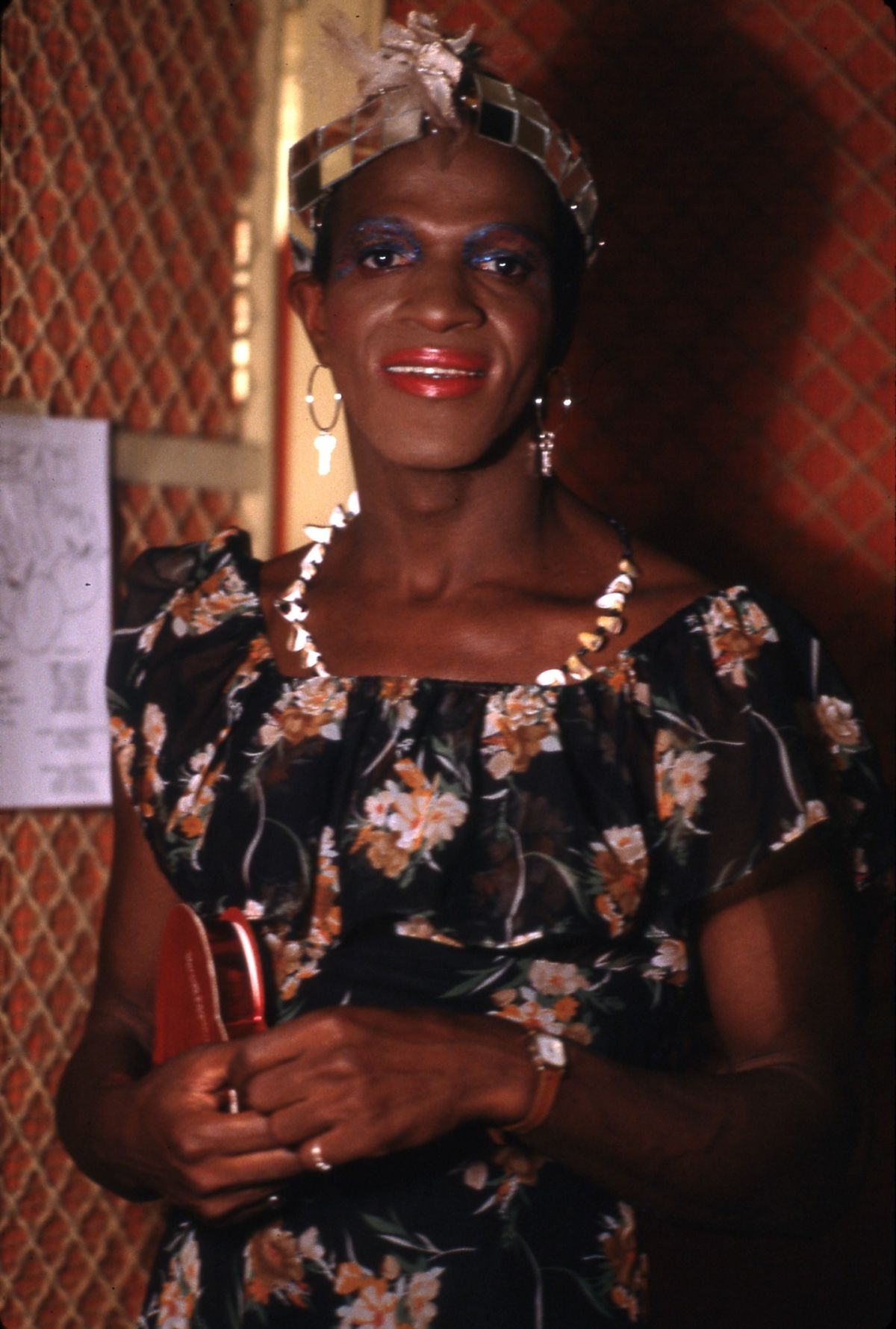
Sheyla Baykal, Marsha P. Johnson from Butt in!, 1988.u00a0Scan from 35mm color slide from slide show created by Sheyla Baykal with a selection of her portraits of friends spanning1973-1987, originally presented May 1988 at 7 East Third Street, Bill Riceu2019s apartment gallery. u00a9 2025 Estate of Sheyla Baykal. Courtesy Penny Arcade, Marcelo Gabriel Yu00e1u00f1ez and Soft Network.

Baykal continued to expand her practice for the next several years, whether she was documenting drag balls or protests or photographing on the Hippie Trail between Europe and Asia or producing emotional portraits. Her images were published in the influential Newspaper, “a wordless, picture-only periodical that ran for fourteen issues and featured the disparate practices of over forty artists,” which was co-edited by Hujar and later hung in the Museum of Modern Art.

Baykal also performed with the legendary performance art troupe The Angels of Light, known for their commitments to gender-and-genre-bending, glittery revelry on stage. This became another of the worlds Baykal inhabited downtown, and beginning in 1974 she produced and directed the now-historic Palm Casino Revue shows, which brought together performers and nightlife denizens of all stripes. As its former lighting operator Steve Turtell described it, “Take a big slice of vaudeville, top with a hefty dollop of musical comedy, add in some thrift-shop, nineteen-thirties Hollywood glamour, season it with early punk rock and the nascent, Lower-East-Side art scene…and you’ll get some idea of the wild ride that the Palm Casino Revue gave to its lucky audiences.” The show ended, however, when Baykal faced non-Hodgkins lymphoma, and lived quietly for two years in Oakleyville on Fire Island with the artists Paul Thek and Peter Hujar.
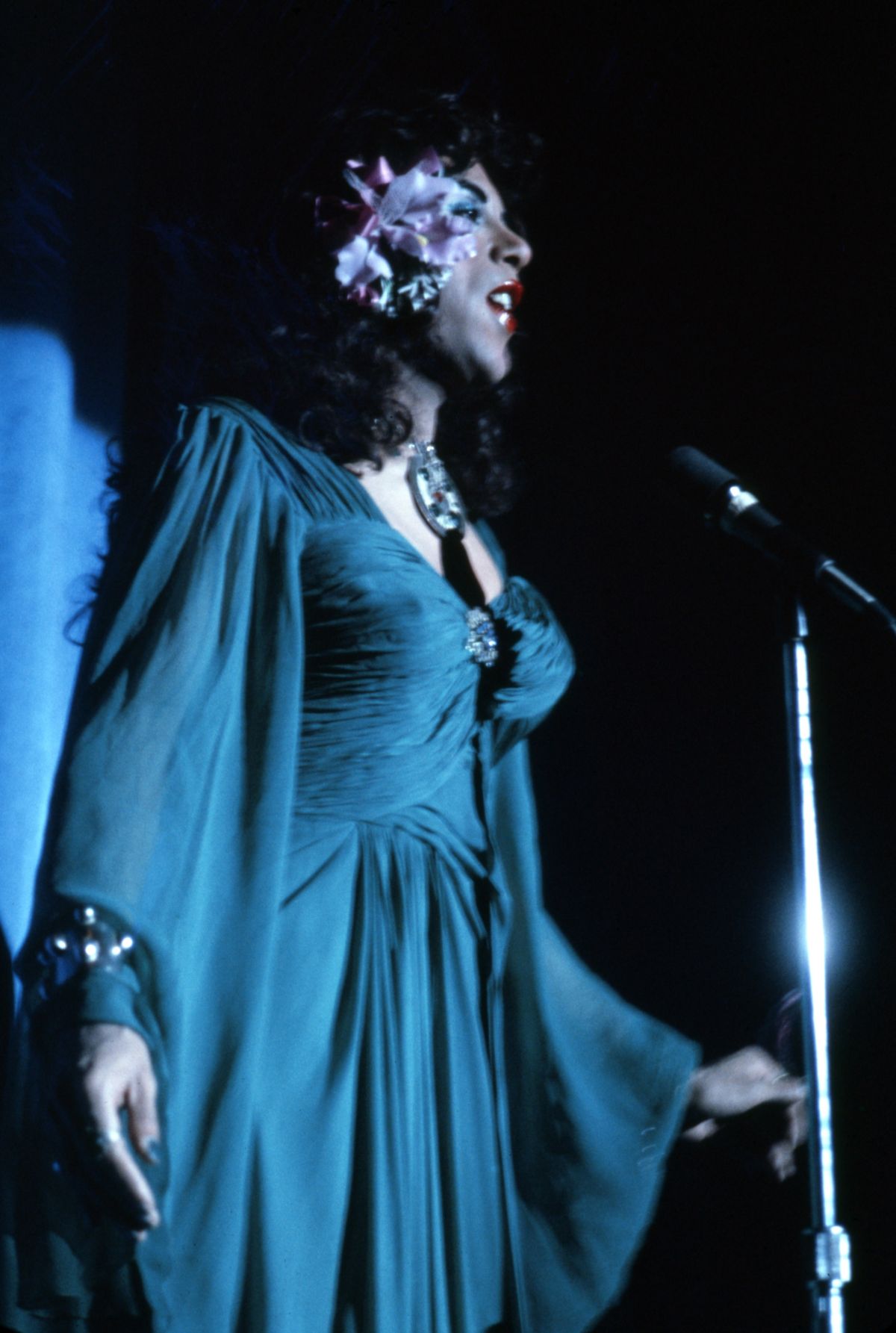
Sheyla Baykal, Mario Montez, Palm Casino Revue, 1973-74. Scan from 35mm color slide. u00a9 2025 Estate of Sheyla Baykal. Courtesy Penny Arcade, Marcelo Gabriel Yu00e1u00f1ez and Soft Network.

Yáñez learned about Baykal briefly in 2015, but it was with Newspaper, on which Yáñez wrote his 2018 undergraduate thesis that he then adapted into a 2023 book, that he met Arcade, licensing Baykal’s work for publication. Later, Yáñez had been researching Paul Thek, and hoped to find more information about work the artist made on Fire Island. Yáñez contacted Arcade to see if there might be anything amongst Sheyla’s belongings in storage.

Arcade’s storage room had moved a number of times and all the boxes had shifted. “I had the patience and the interest to sit down with Penny and go through everything and start to categorize and separate,” Yáñez said. “I just was in awe at the sheer amount of work, and I have never seen any of it outside of what was published in Newspaper,” Yáñez continued. “I think that’s also why the exhibition is such a big deal. Nobody has seen this work and it’s really good, and there’s so much of it.” The process took about two years, and he connected Arcade to the organization Soft Network, where the exhibition takes place, to move forward.

Soft Network “preserves and provides access to the work of vital yet often vulnerable experimental artists and those who care for them.” When an artist passes away, they leave behind work like canvases or photographs or sculptures, and that work needs to find a home lest it be abandoned, stuck in storage, or worse. Soft Network helps artists and people who’ve been left artist estates to catalog and care for the work that remains, creating potential for its life moving forward, be it in a museum, a gallery, or another archive. One of the ways they do this is through their Archive-in-Residence program, which lasts for two years. Baykal is the current Archive-in-Residence and her work arrived at Soft Network six months ago; there were about 25-30 Bankers Boxes of material. During the residence, her work will be “accessible through cataloging, digitization, research, programs, and exhibitions,” and Marina Ruiz-Molina, a conservator at the Metropolitan Museum of Art, will counsel on steps for preservation, the organization shares.
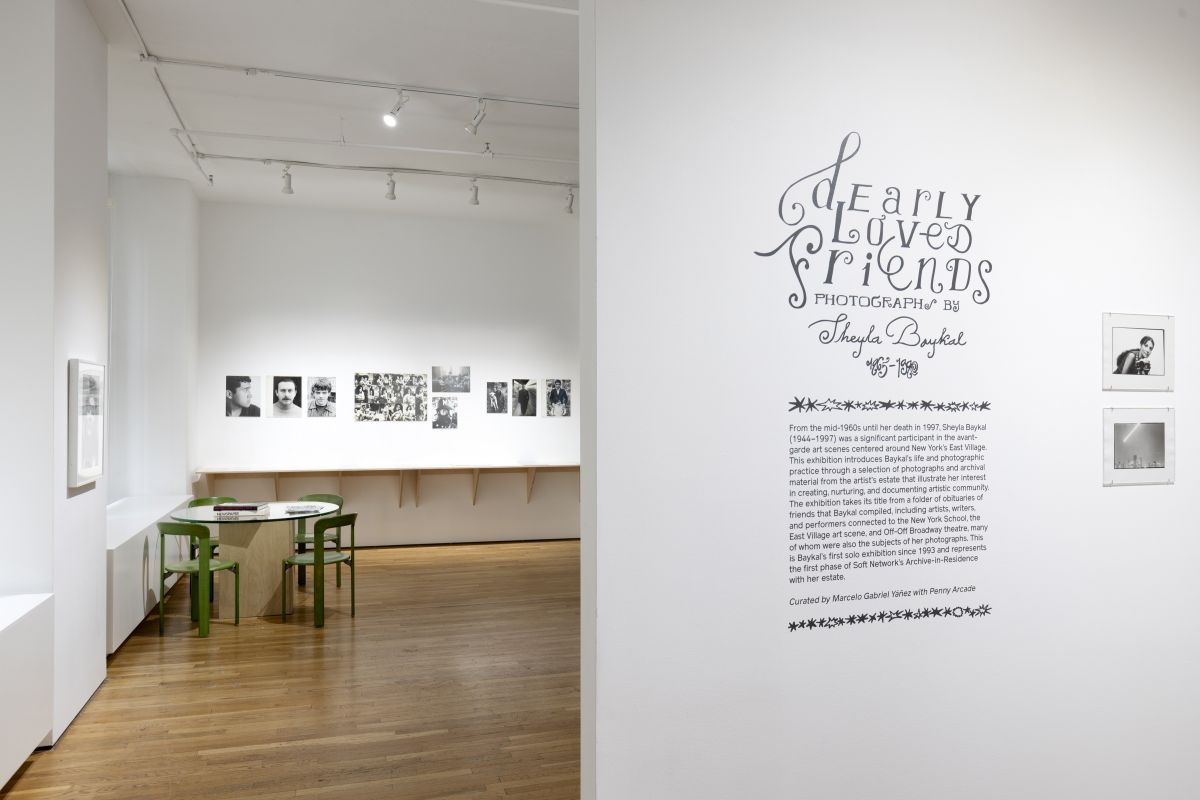
dearly Loved friends: Photographs by Sheyla Baykal, 1965u20131990. Installation view, Soft Network, New York City, 2025. Photo: Alexa Hoyer

Soft Network Executive Director Chelsea Spengemann says the goals for Baykal’s archive include constructing a timeline of her life, introducing her work to people, organizing contact sheets and negatives, digitizing slides, developing a database of her work, and developing a best-practice system to print the works as Baykal wished. There will be another show next year as all of these processes continue.

Yet the question of why Baykal’s work stood unrecognized for so long still stands. “It’s connected to the lack of a market, mostly, but she just wasn’t operating in that system,” Spengemann says. “Sheyla and her community, and what’s so appealing about them, is that they were surviving and thriving outside of any art market or commercial market.” The appetite for photography like Baykal’s in the 80s and 90s was also not what it is now, Spengemann says, plus Baykal said she did not have money to make prints for an artist portfolio and bring it to galleries. After her passing, Baykal’s archive also didn’t have a foundation or structure behind it previously besides Arcade, the way some artists do; a huge reason an organization like Soft Network exists is because managing and maintaining an artist’s archive is a tremendous undertaking for anyone.
Sheyla Baykal, John Eric Broaddus, 1981. Scan from 35mm color slide. u00a9 2025 Estate of Sheyla Baykal. Courtesy Penny Arcade, Marcelo Gabriel Yu00e1u00f1ez and Soft Network.

Baykal made prints for some time, but as she ran out of money, she stopped printing formal photographs and instead began using “laminated color Xerox and laser prints as well as slide shows as a means of exhibition,” Soft Network writes. The work she ended up making through the 1980s became a testament to the friends she made in the downtown scene, many of whom lost their lives to AIDS. Her work became as much a love letter as a document. “She documented a group of people who are no longer here, who died largely because of government neglect and during the AIDS crisis, and it was a huge loss of life, and it’s a lot of people whose stories have not been told,” Yáñez says, adding that one of the goals of Baykal’s Archive-in-Residence is to identify artists in the images and prepare biographies of them. “[Baykal] was at her core a portraitist, and so the stories of the people in the photographs do matter. And I think that was very important to her.”

“dearly Loved friends” consists of portraits and documentary images, slideshows and ephemera; the latter includes an installation Yáñez made of funeral programs and obituaries Baykal kept as her friends passed on. In this way, the show chronicles Baykal’s life as well as those of her friends, who wind through her images. These were people who lived vibrantly and creatively in a New York where they could do that; they knew what it meant to have an artistic, alternative life in another time. “We live in a culture where more and more the existence of the alternative is erased…I think when people see Sheyla’s work, see Sheyla, they’ll be inspired into their own individuality and authenticity, because she was this hugely authentic, creative being who was completely committed to her community,” Arcade says. “If you want a quick route into Bohemia 101, Sheyla is one portal.”
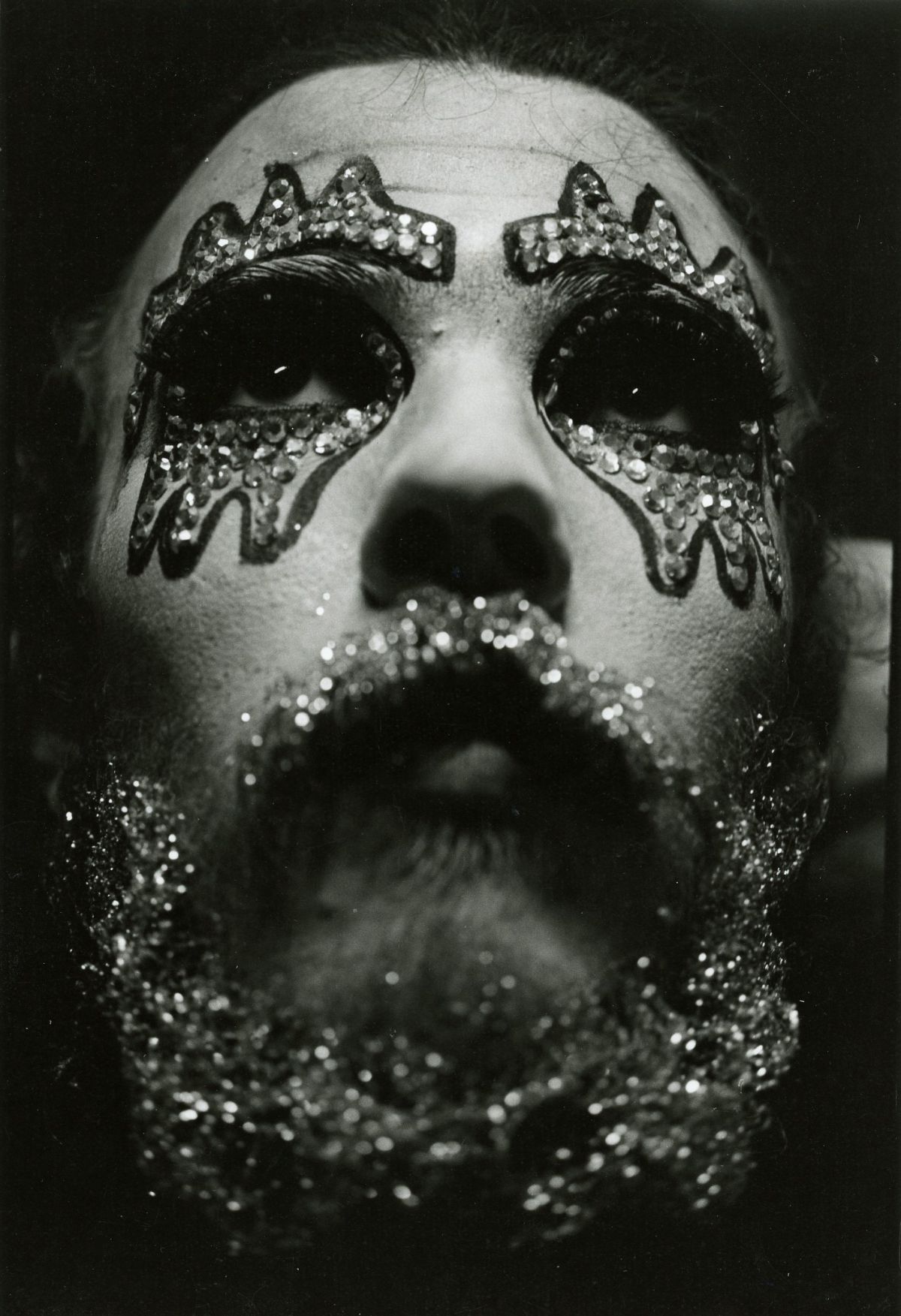

Sheyla Baykal, Angel Jack, 1973. Silver gelatin print mounted on board, 10 x 8 inches. u00a92025 Estate of Sheyla Baykal. Courtesy Penny Arcade, Marcelo Gabriel Yu00e1u00f1ez and Soft Network.


  • Despite all the likes, literallys and dropped g’s, English isn’t decaying before our eyes
    Photo credit: LisaStrachan/iStock via Getty Images Fear not: There isn’t anything that needs saving.

    As a linguistics professor, I’m often asked why English is decaying before our eyes, whether it’s “like” being used promiscuouslyt’s being dropped deleteriously or “literally” being deployed nonliterally.

    While these common gripes point to eccentric speech patterns, they don’t point to grammatical annihilation. English has weathered far worse.

    Let’s start with something we can all agree on: Old English, spoken from approximately A.D. 450 to 1100, is pretty unintelligible to us today. Anyone who’s had the pleasure of reading “Beowulf” in high school knows how different English back then used to sound. Word endings did a lot more grammatical work, and verbs followed more complicated patterns. Remnants of those rules fuel lingering debates today, such as when to use “whom” over “who,” and whether the past tense of “sneak” is “snuck” or “sneaked.”

    The language went on to experience centuries of tumult: Viking invasions, which introduced Old Norse influence; Anglo-Norman French rule, which shifted the language of the elite to French; and 18th-Century grammarians, who dictated norms with their elocution and grammar guides.

    In that time, English has lost almost all of the more complex linguistic trappings it was born with to become the language we know and – at least, sometimes – love today. And as I explain in my new book, “Why We Talk Funny: The Real Story Behind Our Accents,” it was all thanks to the way that language naturally evolves to meet the social needs of its speakers.

    From dropping the ‘l’ to dropping the ‘g’

    The things we tend to label as “bad” or sloppy English – for instance, the “g” that gets lost from our -ing endings or the deletion of a “t” when we say a word like “innernet” – actually reflect speech habits that are centuries old.

    Take, for example, “often.” Originally spoken with the “t,” that pronunciation gradually became less favored around the 15th century, alongside that “l” in “talk” and the “k” in know. Meanwhile, the “s” now stuck on the back of verbs like “does” and “makes” began as a dialectal variant that only became popular in 16th-century London. It gradually replaced “th” whenever third persons were involved, as in “The lady doth protest too much.”

    While dropping the “l” in talk may have been initially frowned upon, today it would be strange if you pronounced the letter. And the shift makes sense: It smoothed out some linguistic awkwardness for the sake of efficiency.

    If people learned to look at language more like linguists, they might come around to seeing that there is more than one perspective on what good speech consists of.

    And yes, that absolutely is a sentence ending with a preposition – something many modern grammar guides discourage, even though the idea only took hold after 18th-century grammarian Robert Lowth intimated it was a less elegant choice based on the model of Latin.

    Though Lowth voiced no hard and fast rule against it, many a grammar maven later misconstrued his advice as an admonition. Just like that, a mere suggestion became grammatical law.

    The rise of the grammar sticklers

    Many of today’s ideas about what constitutes correct English are based on a singular – often mistaken – 19th-century view of the forces that govern our language.

    In the late 18th century, the English-speaking world began experiencing class restructuring and higher literacy rates. As greater class mobility became possible, accent differences became class markers that separated new money from old money.

    Emulation of upper-crust speech norms became popular among the nouveau riche. With literacy also on the rise, grammarians and elocutionists raced to dictate the terms of “proper” English on and off the page, which led to the rise of usage guides and dictionaries that were eager to sell a certain brand of speech.

    Another example of grammarian angst reconfiguring the view of an otherwise perfectly fine form is the droppin’ of the “g.” It became so tied to slovenly speech that it was branded with an apostrophe in the 19th century to make sure no one missed its lackadaisical and nonstandard nature.

    Up until the 19th century, however, no one seemed to care whether one pronounced it as “-in” or “-ing.”

    Evidence suggests that -ing wasn’t even heard as the correct form. Many elocution guides from the 18th century provide rhyming word pairs like “herring/heron,” “coughing/coffin” and “jerking/jerkin,” which suggest that “-in” may have been the preferred pronunciation of words ending with “-ing.” Even writer and satirist Jonathan Swift – a frequent lobbyist for “proper” English – rhymes “brewing” with “ruin” in his 1731 poem “Verses on the Death of Dr. Swift, D.S.P.D..”

    Embrace the change

    Language has always shifted and evolved. People often bristle at changes from what they’ve known to what is new. And maybe that’s because this process often begins with speakers that society usually looks less favorably on: the young, the female, the poor, the nonwhite.

    But it’s important to remember that being disliked and bad are not the same thing – that today’s speech pariahs are driven by the same linguistic and social needs as the Londoners who started going with “does” instead of “doth” or dropped the “t” in often.

    So if you think the speech that comes from your lips is the “correct” version, think again. Thou, like every other English speaker, art literally the product of centuries of linguistic reinvention.

    This article originally appeared on The Conversation. You can read it here.

  • 10 boys and 10 girls were left alone in separate houses and the different results are just wild
    Photo credit: Canva(L) Kids wrestling in the yard; (R) young children playing chess

    It sounds like the plot of William Golding’s Lord of the Flies. However, in the mid-2000s, it was a very real and very controversial reality television experiment.

    Footage from the UK Channel 4 documentary Boys and Girls Alone is captivating audiences all over again. It offers a fascinating and chaotic look at what happens when you remove parents from the equation.

    The premise was simple but high stakes. Twenty children, aged 11 and 12, were split into two groups by gender. Ten boys and ten girls were placed in separate houses and told to live without adult supervision for five days.

    The Setup

    While there were safety nets in place, the day-to-day living was entirely up to the kids. A camera crew was present but instructed not to intervene unless safety was at risk. The children could also ring a bell to speak to a nurse or psychiatrist.

    The houses were fully stocked with food, cleaning supplies, toys, and paints. Everything they needed to survive was there. They just had to figure out how to use it.

    The Boys: Instant Chaos

    In the boys’ house, the unraveling was almost immediate. The newfound freedom triggered a rapid descent into high-energy anarchy.

    They engaged in water pistol fights and threw cushions. In one memorable instance, a boy named Michael covered the carpet in sticky popcorn kernels just because he could.

    The destruction eventually escalated to the walls. The boys covered the house in writing, drawing, and paint. But the euphoria of freedom eventually crashed into the reality of consequences.

    “We never expected to be like this, but I’m really upset that we trashed it so badly,” one boy admitted in the footage. “We were trying to explore everything at once and got too carried away in ourselves.”

    Their attempts to clean up were frantic and largely ineffective. Nutrition also took a hit. Despite having completed a cooking course, the boys survived mostly on cereal, sugar, and the occasional frozen pizza. By the end of the week, the house was trashed, and the group had fractured into opposing factions.

    The Girls: Organized Society

    The girls’ house looked like a different planet.

    In stark contrast to the mayhem next door, the girls immediately established a functioning society. They organized a cooking roster, with a girl named Sherry preparing their first meal. They baked cakes. They put on a fashion show. They even drew up a scrupulous chores list to ensure the house stayed livable.

    While their stay wasn’t devoid of interpersonal drama, the experiment highlighted a fascinating divergence in socialization. Left to their own devices, the girls prioritized community and maintenance. The boys tested the absolute limits of their environment until it broke.

    The documentary was controversial when it aired, with critics questioning the ethics of placing children in unsupervised situations for entertainment. But what made it so enduring, and why footage keeps resurfacing years later, is what it reveals about how kids are socialized long before anyone puts them in a house together. The boys weren’t born anarchists and the girls weren’t born organizers. They arrived at those houses already shaped by years of being told, implicitly and explicitly, what boys do and what girls do. Whether that’s a nature story or a nurture story is the question the documentary keeps asking without quite answering, which is probably why people are still watching and arguing about it nearly two decades later.

    This article originally appeared two years ago. It has been updated.

  • 9-year-old girl asks Steph Curry why his shoes aren’t in girls’ sizes. The response was perfect.
    Photo credit: Wikicommons(L) A young girl's letter to Steph Curry asking about women's shoe sizes; (R) Steph Curry.
    ,

    9-year-old girl asks Steph Curry why his shoes aren’t in girls’ sizes. The response was perfect.

    “… it seems unfair that the shoes are only in the boys,” Riley Morrison wrote, starting a chain reaction of positive change.

    Nine-year-old Riley Morrison from Napa, California is a huge basketball fan. She roots for the Golden State Warriors and her favorite player is four-time NBA champion Steph Curry. Morrison loves to play basketball so she went online to pick up a pair of Curry’s Under Armour Curry 5 shoes, but there weren’t any available in the girls’ section of the site.

    But instead of resigning herself to the fact she wouldn’t be able to drive the lane in a sweet pair of Curry 5’s, she wrote a letter to the man himself. Her father posted it on social media:

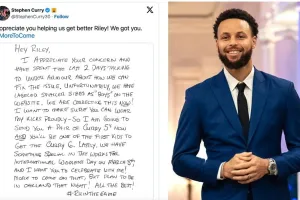
    “My name is Riley (just like your daughter), I’m 9 years old from Napa, California. I am a big fan of yours. I enjoy going to Warriors games with my dad. I asked my dad to buy me the new Curry 5’s because I’m starting a new basketball season. My dad and I visited the Under Armour website and were disappointed to see that there were no Curry 5’s for sale under the girls section. However, they did have them for sale under the boy’s section, even to customize. I know you support girl athletes because you have two daughters and you host an all girls basketball camp. I hope you can work with Under Armour to change this because girls want to rock the Curry 5’s too.”

    “I wanted to write the letter because it seems unfair that the shoes are only in the boys’ section and not in the girls’ section,” Riley told Teen Vogue. “I wanted to help make things equal for all girls, because girls play basketball, too.”

    The letter got to Curry and he gave an amazing response on X (formerly Twitter).

    Many might be surprised that a megastar like Curry took a nine-year-old’s letter seriously, but he’s long been a vocal supporter of women’s issues.

    That August, Curry wrote an empowering letter that was published in The Player’s Tribune where he discussed closing the gender pay gap, hosting his first all-girls basketball camp, and what he’s learned from raising two daughters.

    In the essay he shared a powerful lesson his mother taught him. “Always stay listening to women to always stay believing in women, and — when it comes to anyone’s expectations for women — to always stay challenging the idea of what’s right,” he wrote.

    Curry clearly practices what he preaches because when a nine-year-old girl spoke up, he was all ears.

    Steph Curry and Under Armour didn’t just fix the girls’ sizing issue, they launched a special edition Curry 6 “United We Win” co-designed by Riley, created a $30K annual scholarship for girls, and shifted to unisex sizing across Curry Brand shoes.

    Since then, Curry has stayed active in promoting gender equity: he’s hosted girls’ camps, added girls to his elite training programs, mentored players like Azzi Fudd, and launched the Curry Family Women’s Athletics Initiative to fund 200+ scholarships at Davidson College.

    Riley and Steph bumped into each other at an event where they caught up and took photos. She is now a high school athlete at Vintage High School in Napa, still playing basketball. And yes, still rocking Currys.

    This article originally appeared seven years ago. It has been updated.

Explore More Culture Stories

Culture

Despite all the likes, literallys and dropped g’s, English isn’t decaying before our eyes

Culture

10 boys and 10 girls were left alone in separate houses and the different results are just wild

Media

9-year-old girl asks Steph Curry why his shoes aren’t in girls’ sizes. The response was perfect.

Art

Why Michelangelo’s ‘Last Judgment’ endures