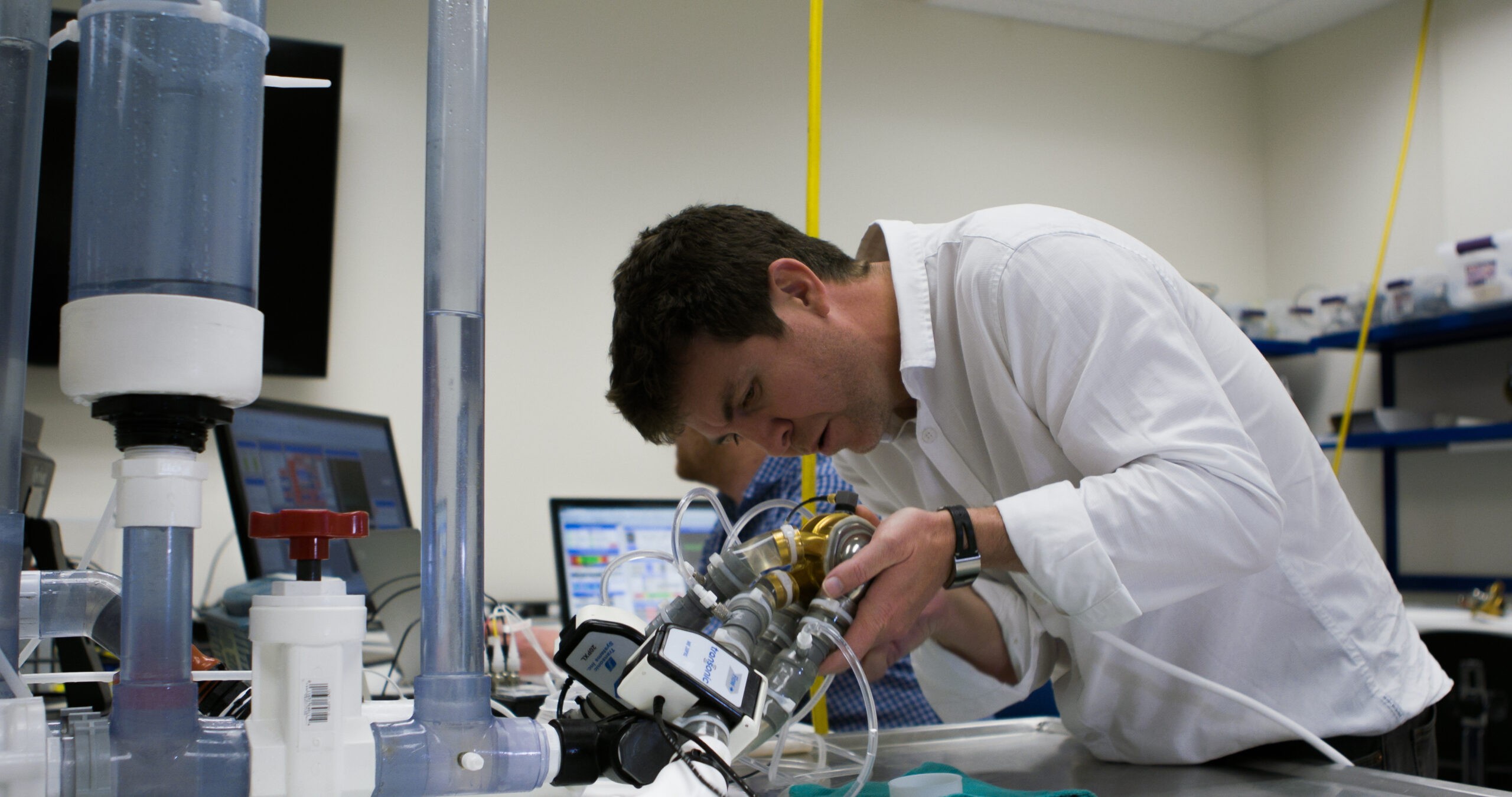
An Australian man has made medical history, reportedly becoming the first person worldwide discharged from the hospital with a durable titanium artificial heart implant. The patient, an unidentified man in his 40s who was experiencing severe heart failure, volunteered as the first Australian recipient of a BiVACOR Total Artificial Heart—living for 105 days with the implant while he awaited a donor transplant.
Melbourne’s Monash University, who led the study as part of their Artificial Heart Frontiers Program, says the man received the artificial heart during surgery in November 2024 at Sydney Hospital St. Vincent’s. He stayed in the ICU for a few weeks, followed by a period of observation in the ward, and was discharged in early February before receiving his donor heart transplant on March 6. He's now "recovering well."

“It’s a complete game-changer,” said Dr. Paul Jansz, the cardiothoracic and transplant surgeon who led the six-hour procedure. “It’s a device that solves a lot of the problems that we have with mechanical circulatory support. This device is very easy to implant, very straightforward to run, and works exceptionally well.”
The BiVACOR is still in the trial stage and not cleared for widespread use. However, this recent success offers hope for a long-term treatment against heart failure, potentially even replacing the need for human heart donors altogether.
Professor Chris Hayward, a cardiologist at St. Vincent’s, believes the Artificial Heart will usher in "a whole new ball game for heart transplants," both in Australia and throughout the world. "Within the next decade," he said, "we will see the artificial heart becoming the alternative for patients who are unable to wait for a donor heart or when a donor heart is simply not available."
- YouTubewww.youtube.com
Dr. Daniel Timms, who founded BiVACOR and invented the device, praised the patient for his "bravery," saying "countless more patients [will] receive this lifesaving technology." He added that it’s "exhilarating to see decades of work come to fruition."
A description on the BiVACOR website highlights the TAH's simple construction: "One motor and a single magnetically levitated rotor that simultaneously pumps blood to both the body and the lungs." The company claims the device is small but powerful, "suitable in size for most men and women."
According to the U.S. Health Resources & Services Administration, nearly 3,500 patients were on the waiting list for a donor heart as of September 2024, while over 4,500 received heart transplants in 2023. "A quarter of the people waiting for a transplant [used to] die," Dr. Jansz told the Australian Broadcast Corporation. "[T]hat’s changed now with devices like this."
- YouTubewww.youtube.com
The TAH had previously been tested in the U.S. through the Food and Drug Administration’s Early Feasibility Study. Five patients successfully received the implant between July and November 2024, then received a heart transplant and were discharged from the hospital. Following this news, the FDA greenlit the EFS to include an additional 15 patients.
According to the CDC, heart disease is the leading cause of death for "men, women, and people of most racial and ethnic groups" in the U.S., leading to 702,880 deaths in 2022.


Robin Williams performs for military men and women as part of a United Service Organization (USO) show on board Camp Phoenix in December 2007
Gif of Robin Williams via 
A woman conducts a online color testCanva
A selection of color swatchesCanva
A young boy takes a color examCanva 

Pictured: A healthy practice?
Will your current friends still be with you after seven years?
Professor shares how many years a friendship must last before it'll become lifelong
Think of your best friend. How long have you known them? Growing up, children make friends and say they’ll be best friends forever. That’s where “BFF” came from, for crying out loud. But is the concept of the lifelong friend real? If so, how many years of friendship will have to bloom before a friendship goes the distance? Well, a Dutch study may have the answer to that last question.
Sociologist Gerald Mollenhorst and his team in the Netherlands did extensive research on friendships and made some interesting findings in his surveys and studies. Mollenhorst found that over half of your friendships will “shed” within seven years. However, the relationships that go past the seven-year mark tend to last. This led to the prevailing theory that most friendships lasting more than seven years would endure throughout a person’s lifetime.
In Mollenhorst’s findings, lifelong friendships seem to come down to one thing: reciprocal effort. The primary reason so many friendships form and fade within seven-year cycles has much to do with a person’s ages and life stages. A lot of people lose touch with elementary and high school friends because so many leave home to attend college. Work friends change when someone gets promoted or finds a better job in a different state. Some friends get married and have children, reducing one-on-one time together, and thus a friendship fades. It’s easy to lose friends, but naturally harder to keep them when you’re no longer in proximity.
Some people on Reddit even wonder if lifelong friendships are actually real or just a romanticized thought nowadays. However, older commenters showed that lifelong friendship is still possible:
“I met my friend on the first day of kindergarten. Maybe not the very first day, but within the first week. We were texting each other stupid memes just yesterday. This year we’ll both celebrate our 58th birthdays.”
“My oldest friend and I met when she was just 5 and I was 9. Next-door neighbors. We're now both over 60 and still talk weekly and visit at least twice a year.”
“I’m 55. I’ve just spent a weekend with friends I met 24 and 32 years ago respectively. I’m also still in touch with my penpal in the States. I was 15 when we started writing to each other.”
“My friends (3 of them) go back to my college days in my 20’s that I still talk to a minimum of once a week. I'm in my early 60s now.”
“We ebb and flow. Sometimes many years will pass as we go through different things and phases. Nobody gets buttsore if we aren’t in touch all the time. In our 50s we don’t try and argue or be petty like we did before. But I love them. I don’t need a weekly lunch to know that. I could make a call right now if I needed something. Same with them.”
Maintaining a friendship for life is never guaranteed, but there are ways, psychotherapists say, that can make a friendship last. It’s not easy, but for a friendship to last, both participants need to make room for patience and place greater weight on their similarities than on the differences that may develop over time. Along with that, it’s helpful to be tolerant of large distances and gaps of time between visits, too. It’s not easy, and it requires both people involved to be equally invested to keep the friendship alive and from becoming stagnant.
As tough as it sounds, it is still possible. You may be a fortunate person who can name several friends you’ve kept for over seven years or over seventy years. But if you’re not, every new friendship you make has the same chance and potential of being lifelong.